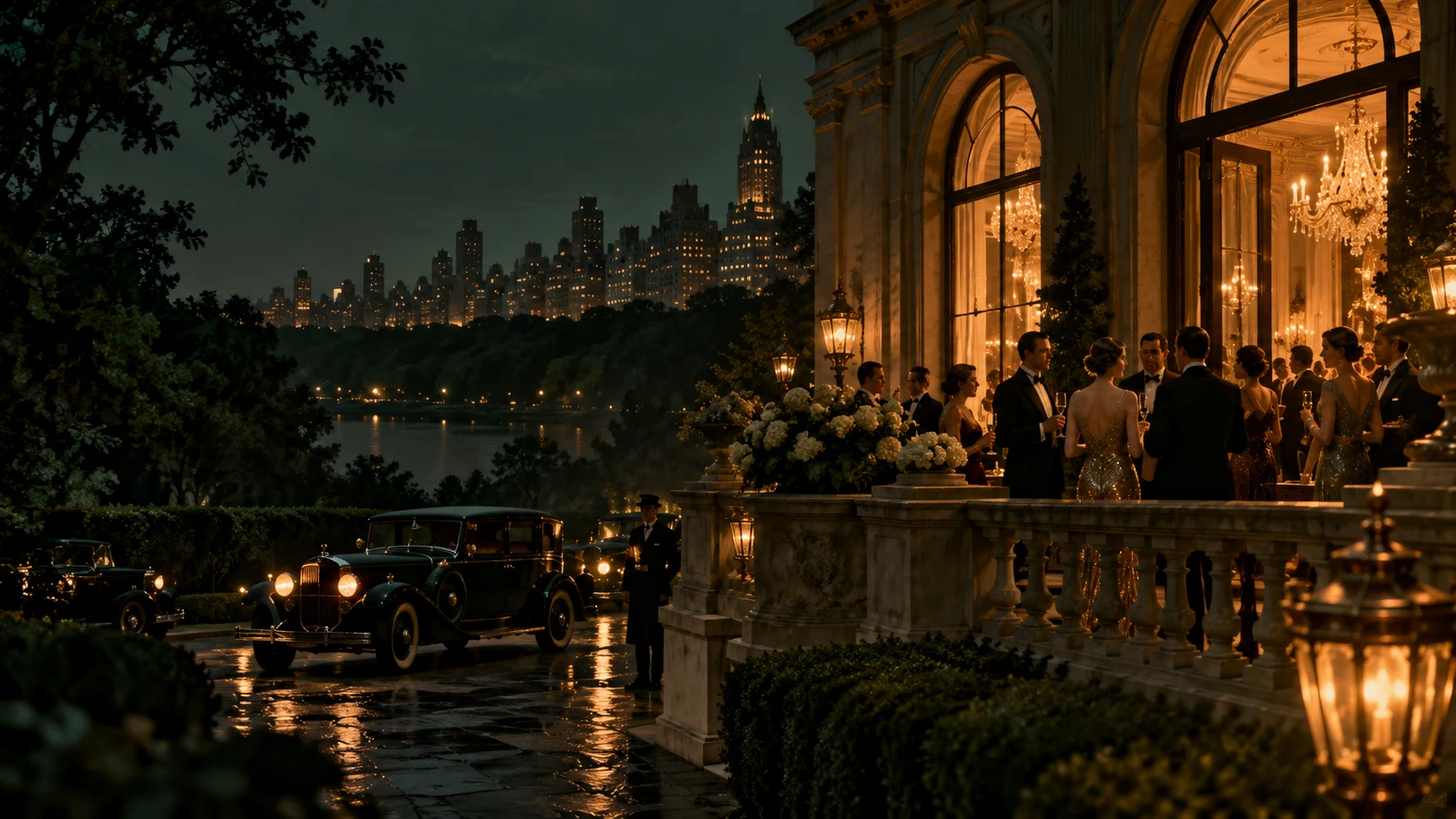
7.30 Mental uplift. 7.45 Breakfast. 8. Psycho-analysis. 8.15 See cook. 8.30 Silent Meditation. 8.45 Facial massage.
Pauline Manford’s morning schedule, Twilight Sleep (1927)
That is the start of a single morning in the life of a New York society mother, as typed out by her long-suffering secretary. The list goes on to a dancing lesson and a birth control committee, and it was published by Edith Wharton at sixty-five, living in France and supposedly the chronicler of a world of the 1870s.
Yes, Edith Wharton wrote Jazz Age novels. After The Age of Innocence (1920) looked back half a century and won the Pulitzer Prize, she turned to the present, and through the 1920s she published a novel or a book of novellas almost every year about the newly rich, the casually divorced and the children left to cope with them. One of them went to the top of the best-seller list.
- 1920
The Age of Innocence is published
- 1921
It wins the Pulitzer Prize for the Novel, the first won by a woman
- 1922
The Glimpses of the Moon, a comedy of honeymooners living on borrowed villas
- 1923
Allan Dwan films The Glimpses of the Moon; Wharton visits America to receive an honorary doctorate from Yale
- 1924
Old New York, four novellas set in the city’s past
- 1925
The Mother’s Recompense, after a serial run in Pictorial Review
- 1927
Twilight Sleep reaches number one on the best-seller list
- 1928
The Children, filmed the next year as The Marriage Playground
- 1929
Hudson River Bracketed, a novel about a young writer
Edith Wharton’s 1920s novels to start with
- $15.99
The Age of Innocence
1920. Newland Archer’s New York of half a century before, recalled from the far side of the war. The novel that opened her last decade of big success, and the first by a woman to win the Pulitzer Prize for the Novel.
- $14.99
The Glimpses of the Moon
1922. Susy and Nick Lansing, clever and broke, marry on the understanding that they will live off borrowed villas for as long as the welcome lasts and part if either finds a better match. A modern comedy that turns tender.
- $14.99
The Mother's Recompense
1925. Kate Clephane, who walked out on her husband and baby daughter years ago, is summoned home from the Riviera to New York, and finds the past she ran from waiting for her. The darkest of the four.
- $15.99
Twilight sleep
1927. A tirelessly busy mother, a bored daughter-in-law with film-star dreams, a sharp-eyed daughter and a household determined to feel no pain. Wharton’s satire of 1920s New York, and a best-seller.



The Glimpses of the Moon: honeymoon on credit
The Glimpses of the Moon takes its title from Hamlet, and its premise from the age of easy divorce. Susy Branch and Nick Lansing are attractive, well connected and penniless, and they agree to marry, live for a year on the villas and wedding presents of their friends, and release each other the moment a richer prospect turns up. Wharton is merciless about the people who lend them houses and quietly hopeful about the couple. Its first sentence sets the tone:
It rose for them—their honey-moon—over the waters of a lake so famed as the scene of romantic raptures that they were rather proud of not having been afraid to choose it as the setting of their own.
Edith Wharton, The Glimpses of the Moon (1922)
Paramount filmed it in 1923, directed by Allan Dwan, with Bebe Daniels as Susy; the film is now lost. F. Scott Fitzgerald did uncredited writing work on it, and the Edith Wharton Society reports that he was paid for his contribution. Wharton did meet Fitzgerald, and the editors of her letters call it “one of the better known failed encounters in the American literary annals.” For the decade’s other great chronicler, see F. Scott Fitzgerald’s early books in order.
The Mother’s Recompense and Twilight Sleep
The Mother’s Recompense is the most painful of Wharton’s 1920s books. Kate Clephane has spent nearly twenty years in shabby hotels on the Riviera after leaving her husband, and the novel opens in one, with the morning sun across her bed. When her daughter Anne summons her home to New York, she is given a second chance at motherhood, and then a moral dilemma that is best left for you to discover. Wharton borrowed the title from a Victorian novel by Grace Aguilar, and apologised for it in a prefatory note:
My excuses are due to the decorous shade of Grace Aguilar, loved of our grandmothers, for deliberately appropriating, and applying to uses so different, the title of one of the most admired of her tales.
Edith Wharton, The Mother’s Recompense (1925)
Twilight Sleep is the comic counterweight. Its title comes from a fashionable childbirth treatment of the day, in which mothers were given scopolamine and morphine to dull the pain and forget the experience, and Wharton turns it into a picture of a family determined to anaesthetise every unpleasant feeling. Pauline Manford is booked in quarter-hour slots, her son’s wife Lita wants to dance and act in pictures, and only her daughter Nona sees what is happening. It went to number one on the best-seller list within two months of publication. Critics were less sure, but many now read it as one of her most modern books.

The rest of the decade
Old New York (1924) gathers four novellas set between the 1840s and 1870s, and one of them, The Old Maid, became a Zoë Akins play that won the 1935 Pulitzer Prize for Drama and a 1939 Warner Bros. film. The Children (1928) follows a brood of half-brothers and half-sisters trailed around Europe by parents who marry and divorce at will, and the man who tries to help them; Paramount filmed it as The Marriage Playground with Fredric March in 1929. Hudson River Bracketed (1929) and its sequel The Gods Arrive (1932) close the period with the story of a young Midwestern writer.
For the novel that began it all, read Did you know Edith Wharton was the first woman to win the Pulitzer Prize for fiction? and The Age of Innocence on screen. For the quieter books of her earlier years, see Edith Wharton’s overlooked books, and for the decade itself, the Jazz Age in fiction.
Start with the honeymoon. The Glimpses of the Moon is the lightest of these novels and the best proof that the author of The Age of Innocence could write about her own decade as sharply as about her mother’s.
Questions readers ask
What did Edith Wharton write in the 1920s?
Her 1920s books include The Age of Innocence (1920), The Glimpses of the Moon (1922), A Son at the Front (1923), Old New York (1924), The Mother’s Recompense (1925), Twilight Sleep (1927), The Children (1928) and Hudson River Bracketed (1929).
Was Twilight Sleep a best-seller?
Yes. Twilight Sleep reached number one on the best-seller list within two months of its publication in 1927 and finished the year among the top ten, even though many critics were puzzled by it.
Why is Edith Wharton’s novel called Twilight Sleep?
Twilight sleep was a fashionable childbirth treatment that used scopolamine and morphine to dull pain and memory. Wharton used it as a metaphor for a family that tries to avoid ever feeling anything unpleasant.
 The House of Mirth314 pages · $17.99
 Ethan Frome96 pages · $10.99
 The Custom of the Country368 pages · $18.99
 Summer154 pages · $12.99