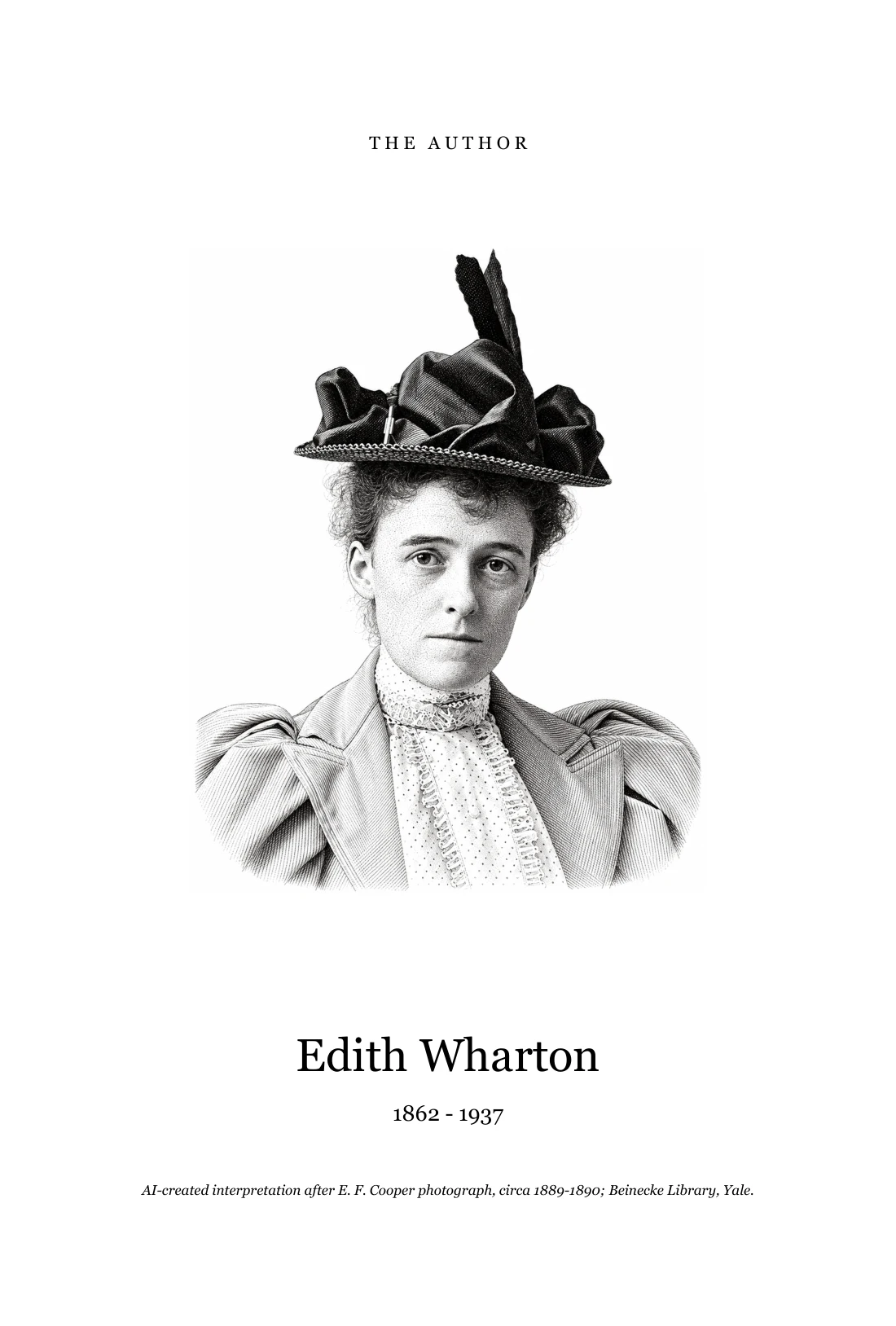
Edith Wharton was thirty-seven when her first book of fiction came out, in March 1899, and she had first tried to write a novel at the age of eleven. Scribner’s brought out The Greater Inclination on 28 March, and within about three months the whole first printing, 1,250 copies, was gone.
That modest success began the career of Edith Wharton, but the books from those first years, and several of the quieter ones that followed The House of Mirth (1905), are the Wharton almost nobody reads now. Five of them are on our shelves. Together they show a writer teaching herself, quite quickly, how to become the author of Ethan Frome and The Age of Innocence.
- 1899
The Greater Inclination, her first collection of stories
- 1900
The Touchstone, her first novella
- 1901
Crucial Instances, a second collection
- 1902
The Valley of Decision, her first full-length novel, set in eighteenth-century Italy
- 1903
Sanctuary, a novella in two parts
- 1905
The House of Mirth makes her famous
- 1907
The Fruit of the Tree and Madame de Treymes
- 1911
Ethan Frome
- 1912
The Reef
- 1913
The Custom of the Country
Edith Wharton’s lesser-known books, in order
- $12.99
The Greater Inclination
1899. Seven stories and a play, including “Souls Belated”, about a woman who has left her husband for another man and finds that freedom has its own rules, and “The Pelican”, a sly portrait of a widow who lectures for a living.
- $10.99
The Touchstone
1900. A young man who needs money to marry sells the love letters a famous novelist once wrote to him, and finds he cannot live with what he has done. A short study of conscience, set in New York.
- $10.99
Sanctuary
1903. In two parts: a young woman marries a man she knows to be morally compromised, resolved to protect the children they will have from his weakness; years later her son, an architect, faces a temptation of his own.
- $20.99
The Fruit of the Tree
1907. A reforming mill manager, the heiress who owns the mill and the nurse who comes between them, in a Massachusetts factory town. Her one real ‘problem novel’, tackling industrial reform and the ethics of mercy killing.
- $16.99
The Reef
1912. An American diplomat on his way to rejoin the widow he loves spends a few idle days in Paris with a young woman, and the past catches up with him at the widow’s French château.


The Greater Inclination: a late beginning
Wharton came to fiction late and from an unpromising direction. Her first published book, apart from a privately printed volume of teenage verse, was The Decoration of Houses (1897), a guide to interior design written with the architect Ogden Codman. The Greater Inclination followed two years later, and its stories are already recognisably hers: clever people in comfortable rooms, discovering that their freedoms come with terms and conditions.
“Souls Belated”, the best of them, opens in a railway carriage in Italy, with a woman who has run away with her lover and has just received the papers announcing her divorce. It ought to be a romance. Wharton turns it into a sharp, sad comedy about whether two people who have defied society can bear to live entirely without it.
Two novellas about conscience
The Touchstone (1900) and Sanctuary (1903) are both short enough for an evening, and both turn on a single moral choice. In The Touchstone, Stephen Glennard sees a notice in The Spectator asking friends of the dead novelist Margaret Aubyn for her letters, and realises that the letters she wrote to him, years before, when she loved him far more than he loved her, could pay for his marriage. Critics long dismissed it as sentimental; some now read it as a satire on sentiment.
Sanctuary is stranger and harder. Its heroine, Kate Orme, learns just before her wedding that her fiancé’s inheritance was kept at the cost of a woman and child who later died, and she marries him anyway, so that she can stand between his nature and the children they will have. The second half jumps a generation, to her son, a young architect with a competition to win and a dead friend’s drawings within reach. Readers of Where to start with Edith Wharton’s ghost stories and novellas will find both of these mentioned there; here they get the space they deserve.
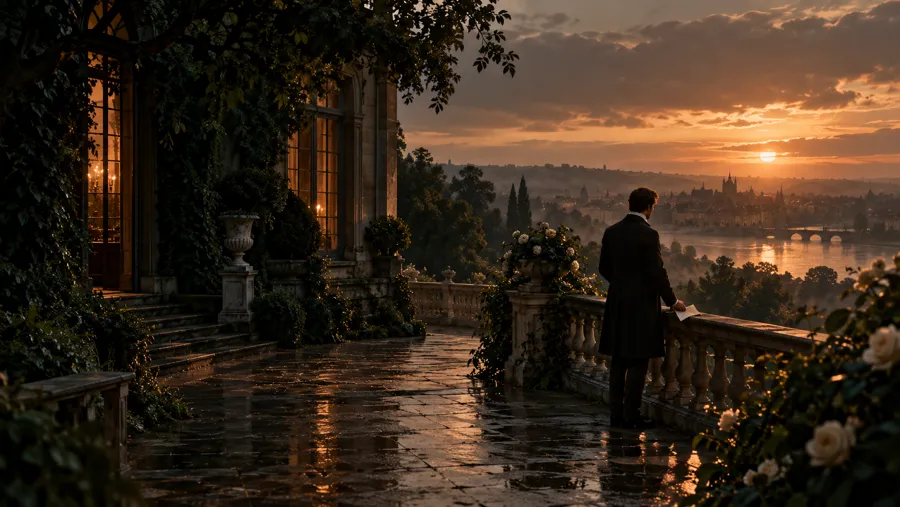
The Fruit of the Tree: Wharton’s problem novel
The Fruit of the Tree (1907) was her third full-length novel, after The Valley of Decision and The House of Mirth, and it is unique in her fiction for taking on two public questions of its day. John Amherst, assistant manager of a cotton mill in the fictional town of Westmore, wants to improve the workers’ conditions; Bessy Westmore, the young widow who owns the mill, marries him and then loses patience with his reforms. The second question, whether it can ever be right to end a suffering patient’s life, arrives later in the book, and Wharton does not make it easy. The title, chosen on a friend’s suggestion, points back to Adam and Eve.
The Reef: the book she doubted
In November 1912 Wharton wrote to her friend Bernard Berenson about her new novel, calling it a “poor miserable lifeless lump” and asking him to remember that it was not really her. Readers have been disagreeing with her ever since. The Reef is set largely at the château of Givré, among Americans in France, and it is often called the most Jamesian of her novels: four people, one guilty secret and a series of conversations in which every sentence means two things. A film was made of it in 1999, directed by Robert Allan Ackerman.
If these whet your appetite, the famous Wharton is waiting: The House of Mirth, Ethan Frome and The Age of Innocence. For what she did after the war, see Edith Wharton’s Jazz Age novels, and for her friend and master, Where to start with Henry James.
Start where she did. The Greater Inclination is short, its stories can be read one at a time, and in “Souls Belated” you can watch Edith Wharton becoming Edith Wharton on a train out of Bologna.
Questions readers ask
What was Edith Wharton’s first book?
Her first book of fiction was The Greater Inclination, a collection of seven stories and a short play published by Scribner’s in March 1899. Before that she had co-written The Decoration of Houses (1897) and privately printed a book of verse.
What are Edith Wharton’s lesser-known books?
Among the least read are The Greater Inclination (1899), The Touchstone (1900), The Valley of Decision (1902), Sanctuary (1903), The Fruit of the Tree (1907) and The Reef (1912).
Is The Reef worth reading?
Yes, especially if you enjoy Henry James. Wharton herself was harsh about it, but it is a subtle, intense novel about four people at a French château and a secret that changes all their relationships.
 The Age of Innocence250 pages · $15.99
 The House of Mirth314 pages · $17.99
 Ethan Frome96 pages · $10.99
 The Custom of the Country368 pages · $18.99