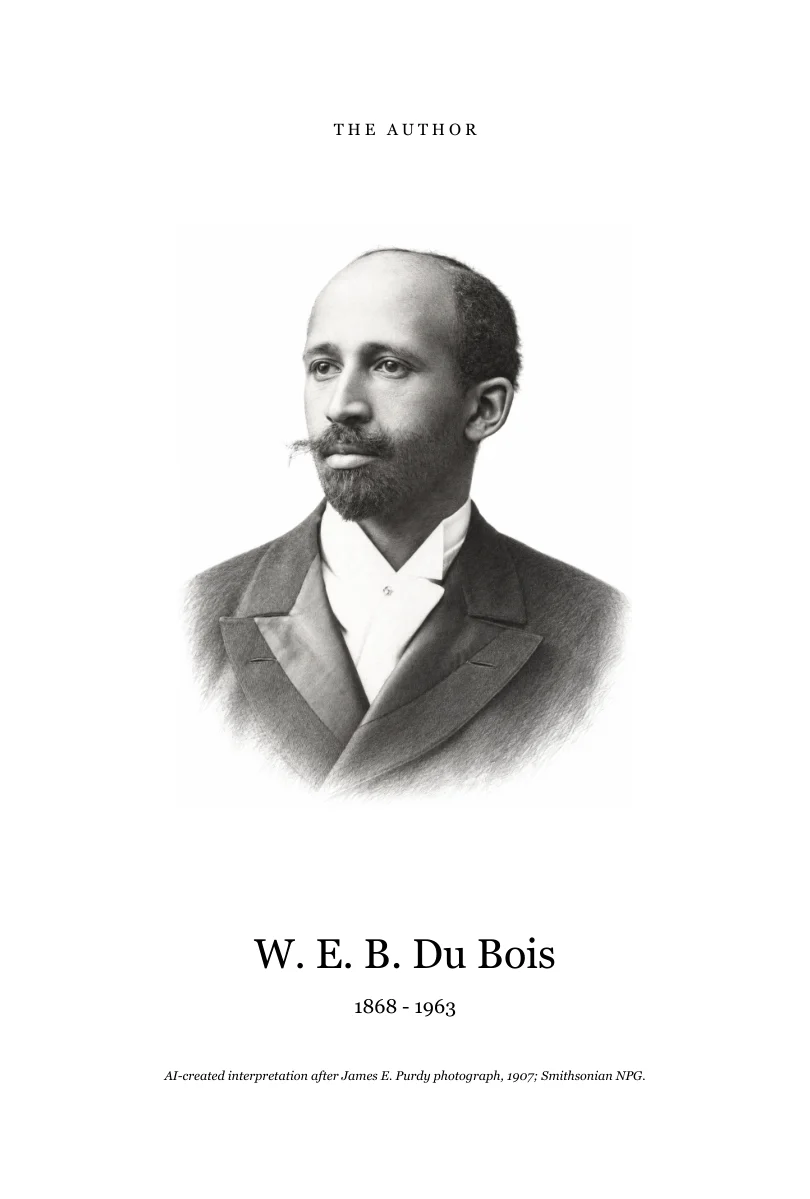
“How does it feel to be a problem?” That is the question W. E. B. Du Bois says white acquaintances circle without ever asking outright. They mention a fine coloured man they know in town, or a battle they fought in the Civil War, and he smiles and lets the real question pass. On the first page of The Souls of Black Folk, published in Chicago in April 1903, he finally answers it.
The answer is a phrase that has outlived almost everything else written in America that year: double consciousness. Du Bois uses it for the experience of seeing yourself through the eyes of people who hold you in contempt, and of carrying two identities, American and Black, that the country refuses to let sit together.
It is a peculiar sensation, this double-consciousness, this sense of always looking at one’s self through the eyes of others, of measuring one’s soul by the tape of a world that looks on in amused contempt and pity.
W. E. B. Du Bois, The Souls of Black Folk, “Of Our Spiritual Strivings”
What does double consciousness mean in The Souls of Black Folk?
Du Bois describes it in three linked images. The first is the veil: as a small boy in a New England schoolhouse, a newcomer refused the visiting card he offered her, and he realised he was “shut out from their world by a vast veil”. The second is a kind of second sight, a self-knowledge that the world only allows through other people’s eyes. The third is the twoness itself, which he describes as “two souls, two thoughts, two unreconciled strivings; two warring ideals in one dark body”.
What Du Bois describes is not a wish to choose between the halves. The American Negro, he writes, would not “Africanize America”, nor bleach his Negro soul “in a flood of white Americanism”. He simply wishes to be both a Negro and an American without being cursed and spat upon, or having the doors of opportunity closed roughly in his face. That refusal to pick a side is what makes the idea so durable. It describes a wound, and also a stubborn kind of wholeness.

Did Du Bois invent the term?
Not quite. “Double consciousness” was already in use in nineteenth-century psychology, for minds that seemed split between two states. Du Bois had studied under the philosopher and psychologist William James at Harvard, where in 1895 he became the first African American to earn a doctorate. What he did was take a clinical-sounding phrase and turn it into a description of a whole people’s social experience. That is the sense in which almost everyone uses it now.
What is in the rest of the book?
The Souls of Black Folk is fourteen chapters and a short Forethought, and its range is part of its power. The Forethought holds its most quoted sentence: “the problem of the Twentieth Century is the problem of the color line.” From there Du Bois moves through history, sociology, memoir, polemic and even fiction.
- Early chapters trace what Emancipation meant and how the Freedmen’s Bureau succeeded and failed.
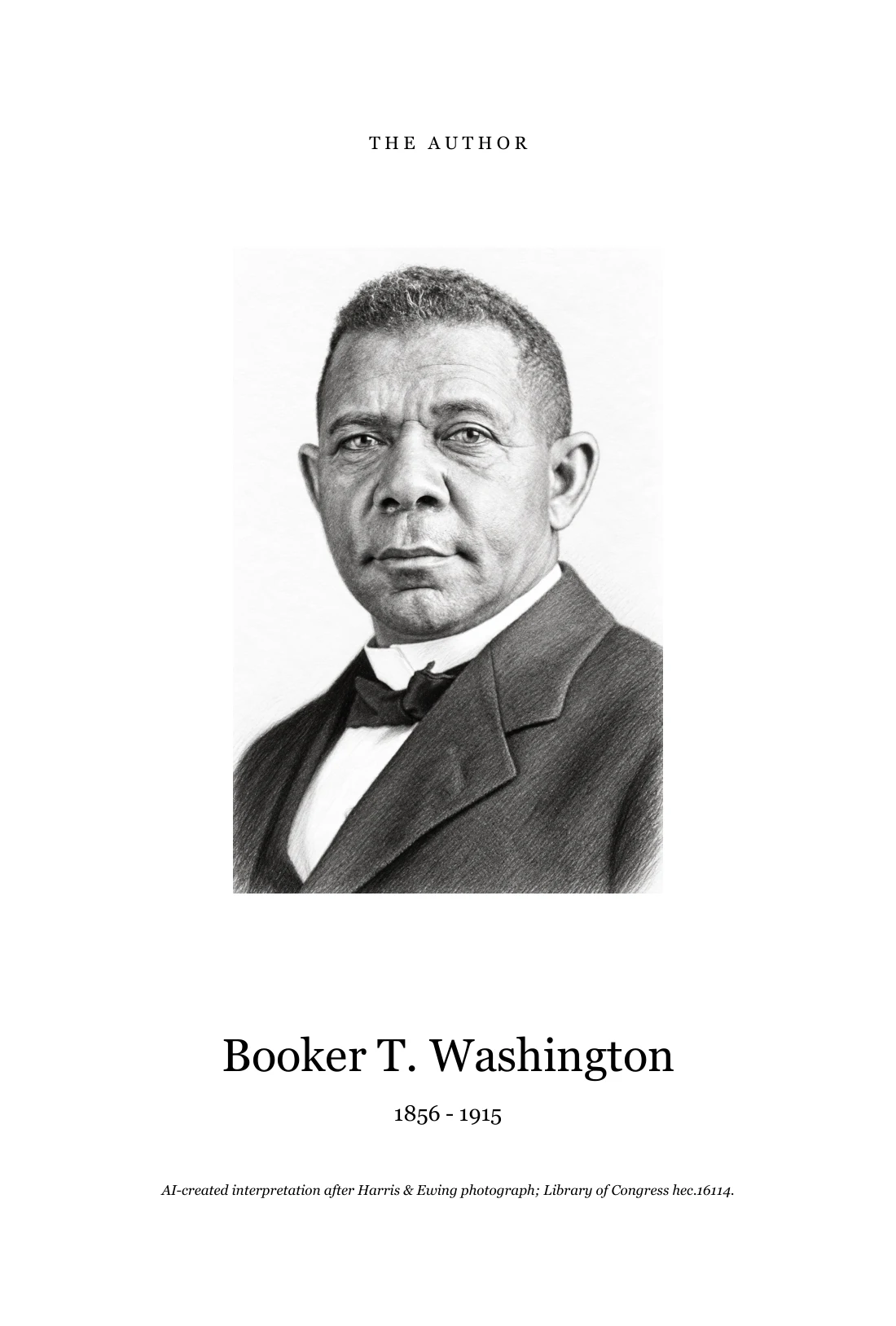
- “Of Mr. Booker T. Washington and Others” is a direct challenge to the most powerful Black leader of the day, arguing that Washington’s emphasis on industrial training and his accommodation with the South asked too much and gave up too much.
- Middle chapters move from Atlanta’s scramble for wealth to the cotton country of Georgia’s Black Belt, with close-grained studies of land, debt and labour.
- “Of the Passing of the First-Born” is a father’s grief for his infant son Burghardt, who died in Atlanta in 1899. The book is dedicated to him and to Du Bois’s daughter Yolande, “The Lost and the Found”.
- “Of the Coming of John” is what Du Bois calls “a tale twice told but seldom written”, and “Of the Sorrow Songs” closes the book with the spirituals.
That last chapter explains a detail readers often miss. Every chapter opens with two epigraphs: a few lines of poetry, from writers as varied as Byron, Schiller, Whittier and Tennyson, and a bar of music from a spiritual, printed without its words. Du Bois called the spirituals “the only American music which welled up from black souls in the dark past”, and by setting them beside the poets he quietly claimed them as their equals.

How should you read The Souls of Black Folk?
Begin with the first chapter, which takes about half an hour and contains the whole argument in miniature. Then read in order if you can, because the book is built to move from the outside of the veil to the inside: from politics and economics towards religion, grief and song. If time is short, the first, third, eleventh and fourteenth chapters make a strong selection.
Du Bois rarely stays inside one register for long. A page of statistics on land ownership can give way to a sentence of startling lyricism. In one chapter he writes that he sits with Shakespeare “and he winces not”, a scholar claiming his place in the world of letters while the world outside the library tries to deny it.
The Souls of Black Folk
1903. Fourteen essays that move from the Freedmen’s Bureau to the spirituals, and introduce the veil, the color line and double consciousness.
Darkwater
1920. Du Bois’s angrier companion volume, published just after the First World War, mixing essays, poems and stories, among them the apocalyptic tale “The Comet”.
Up from Slavery
1901. Booker T. Washington’s own account of his rise from slavery to Tuskegee. Read it beside the third chapter of Souls to hear both sides of the great argument.


Reading on from Du Bois
Du Bois’s quarrel with Washington is set out from the other side in Up from Slavery: Booker T. Washington’s own story, and the wider tradition the two men inherited is traced in The slave narratives that changed history. For writers who took up Du Bois’s questions in the next generation, see The Harlem Renaissance: where to start reading, and for a broader shelf, Classics by Black writers to read this Black History Month.
But start with the question on page one. Open The Souls of Black Folk, read Du Bois’s answer, and notice how much of the century that followed it seems to be already there.
Questions readers ask
What is double consciousness according to Du Bois?
In The Souls of Black Folk, Du Bois describes double consciousness as “this sense of always looking at one’s self through the eyes of others”: the experience of Black Americans holding two identities, American and Black, in a society that treats them as incompatible.
When was The Souls of Black Folk published?
It was published by A. C. McClurg & Co. of Chicago in April 1903. Some chapters began as essays in magazines, including The Atlantic Monthly.
What is the main idea of The Souls of Black Folk?
Du Bois argues that “the problem of the Twentieth Century is the problem of the color line”, and explores what it means to live behind the “veil” of race, through history, sociology, memoir and the spirituals.
How long is The Souls of Black Folk?
It has fourteen chapters plus a Forethought and an Afterthought. Most readers can finish it in a few evenings, and the first chapter alone makes a good introduction.