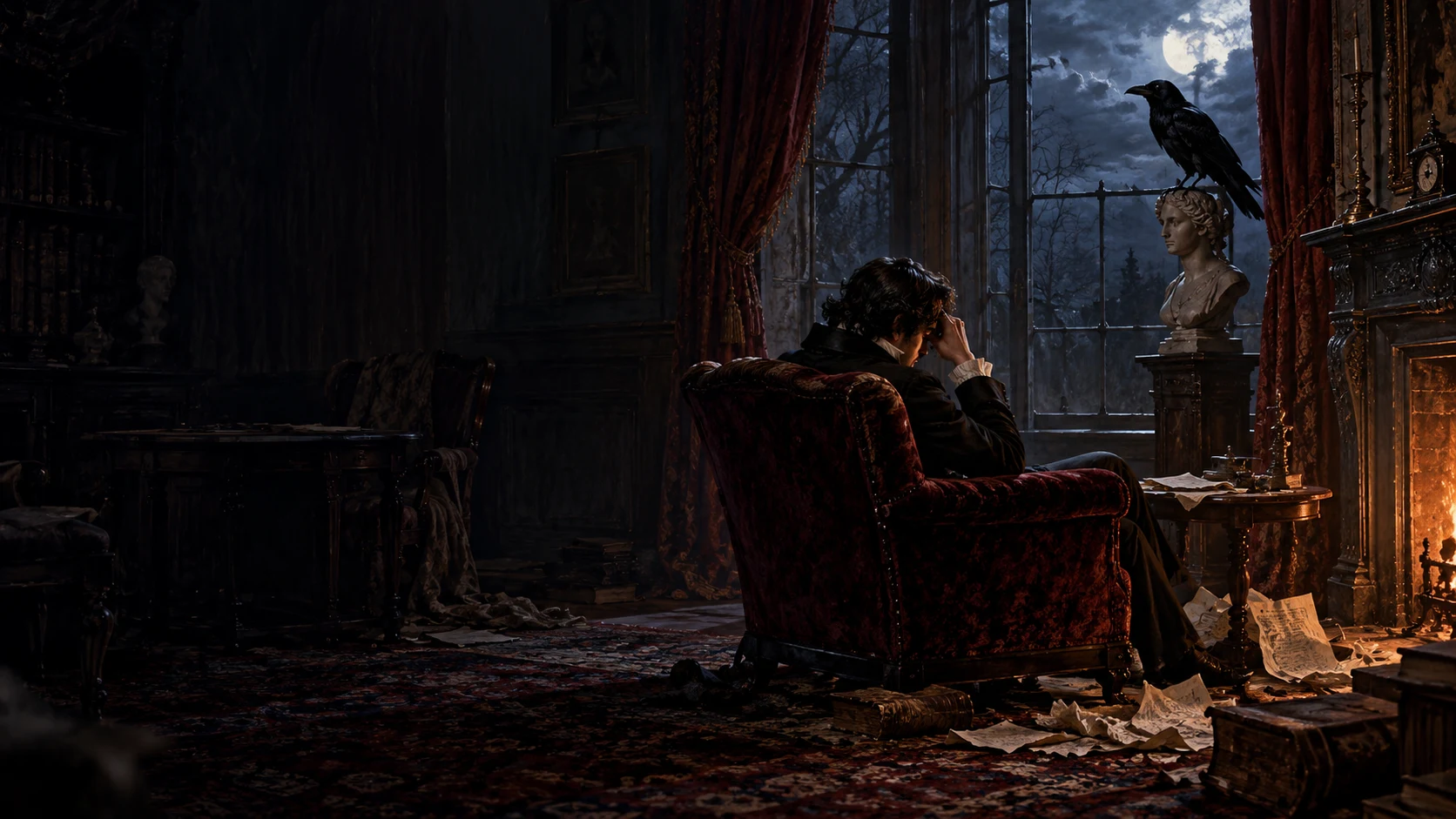
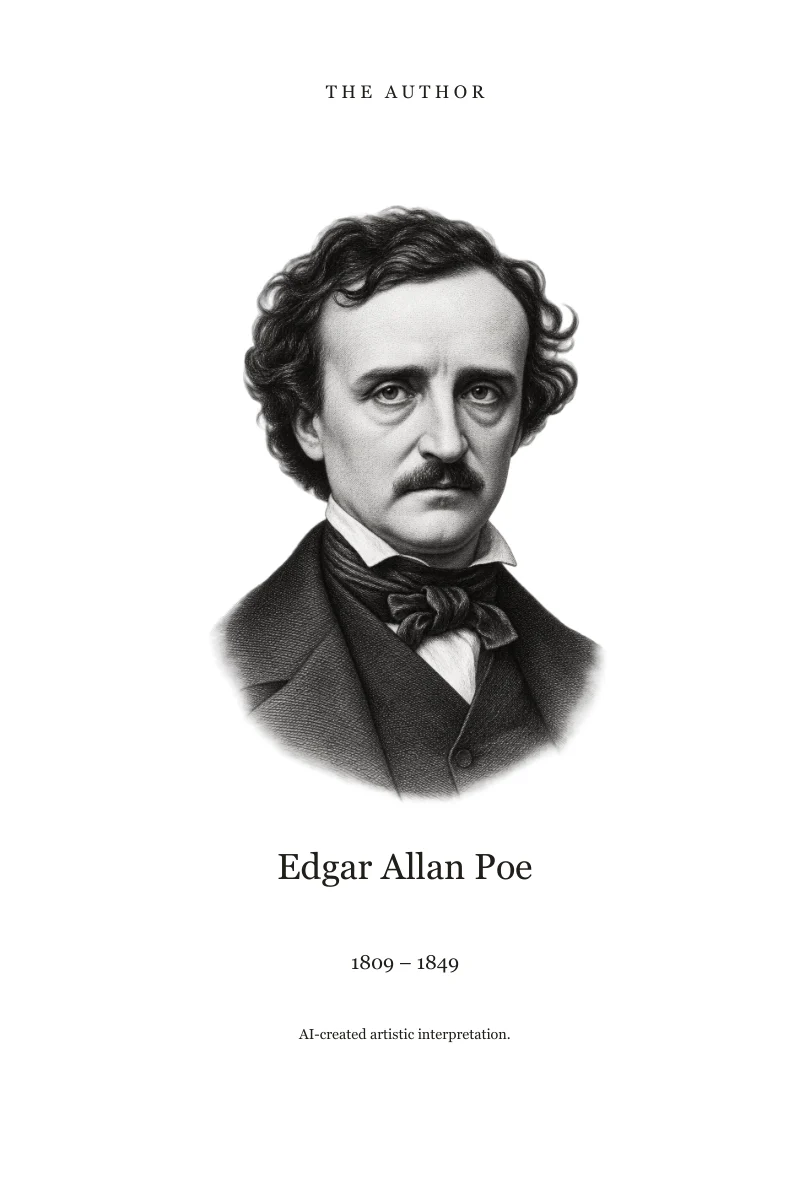
Read the three Dupin stories from end to end and one word never turns up: detective. Edgar Allan Poe had no need of it. His hero, C. Auguste Dupin, holds no office and draws no salary. He is a reclusive Parisian of good family who likes to sit in the dark, read, and solve the crimes that defeat the police.
The first of these stories, “The Murders in the Rue Morgue”, appeared in Graham’s Magazine in April 1841, and it is the reason Poe is so often credited with inventing the detective story. The claim needs one small caveat. Earlier writers had told tales of clever deduction, from Voltaire’s Zadig in the 1740s to E. T. A. Hoffmann’s “Das Fräulein von Scuderi” of 1819, which is sometimes put forward as the true first. What Poe did was assemble the whole machine at once, and nearly everyone who came after him used his parts.
What exactly did Poe invent?
Poe called these stories his tales of ratiocination, an old word for reasoning things through step by step. Strip them down and you find a set of conventions that later writers treated almost as law:
- The amateur who outthinks the professionals: Dupin is scornful of the Paris police and of the celebrated real-life detective Vidocq, whom he dismisses as “a good guesser”.
- The admiring friend who tells the story: Dupin’s companion and narrator is never named, but he is the ancestor of Dr Watson and Captain Hastings.
- The impossible crime: The first story turns on a killing in a room that seems to have been sealed from the inside, which makes it one of the earliest locked-room mysteries.
- The armchair solution: In “The Mystery of Marie Rogêt” Dupin works almost entirely from newspaper reports, a method a long line of armchair detectives would borrow.
- The explanation saved for last: Each story ends with the reasoning laid out, so the reader can see how the trick was done.
We will not tell you who, or what, is behind the deaths in the Rue Morgue. It remains one of the strangest solutions in the genre, and it lands best unspoiled.
- Apr 1841
“The Murders in the Rue Morgue” appears in Graham’s Magazine.
- 1842–43
“The Mystery of Marie Rogêt” is serialised in Snowden’s Ladies’ Companion, transplanting the real murder of Mary Rogers in New York to Paris.
- June 1843
“The Gold-Bug”, a treasure hunt solved by cracking a cipher, wins Poe a $100 prize from the Dollar Newspaper.
- 1844
“The Purloined Letter” appears in the gift annual The Gift for 1845, issued at the end of 1844.
- 1887
Sherlock Holmes makes his debut in A Study in Scarlet and promptly sneers at Dupin.
- 1909
Arthur Conan Doyle chairs a London dinner for Poe’s centenary and gives him the credit.
- 1946
The Mystery Writers of America present the first Edgar Awards, named after Poe.
Why does Sherlock Holmes owe Dupin a debt?
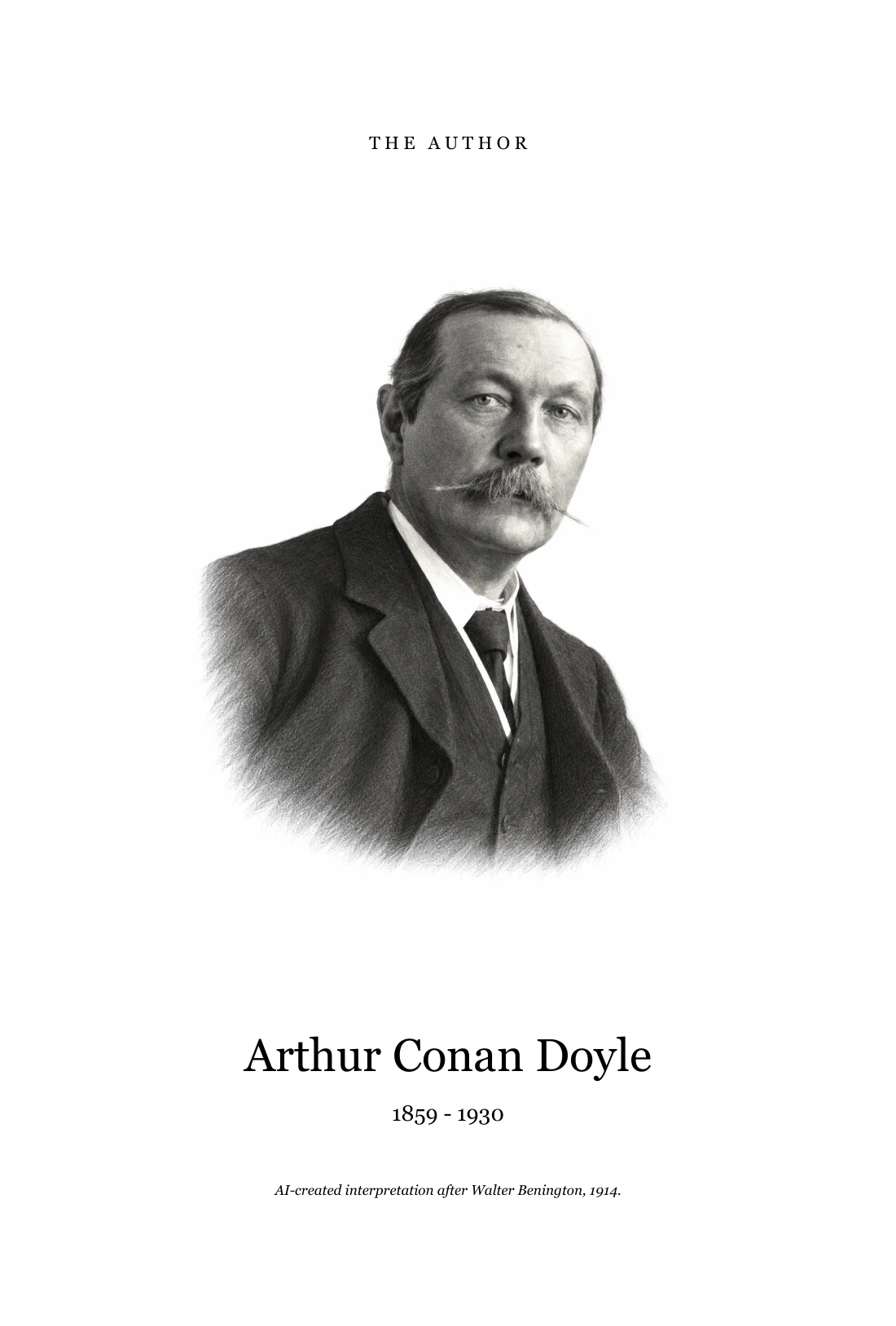
Arthur Conan Doyle knew perfectly well where his detective came from, which may be why he let Holmes be so rude about it. Early in A Study in Scarlet, Watson compares his new friend to Poe’s hero and gets a cold reply:
Now, in my opinion, Dupin was a very inferior fellow.
Sherlock Holmes in A Study in Scarlet (1887)
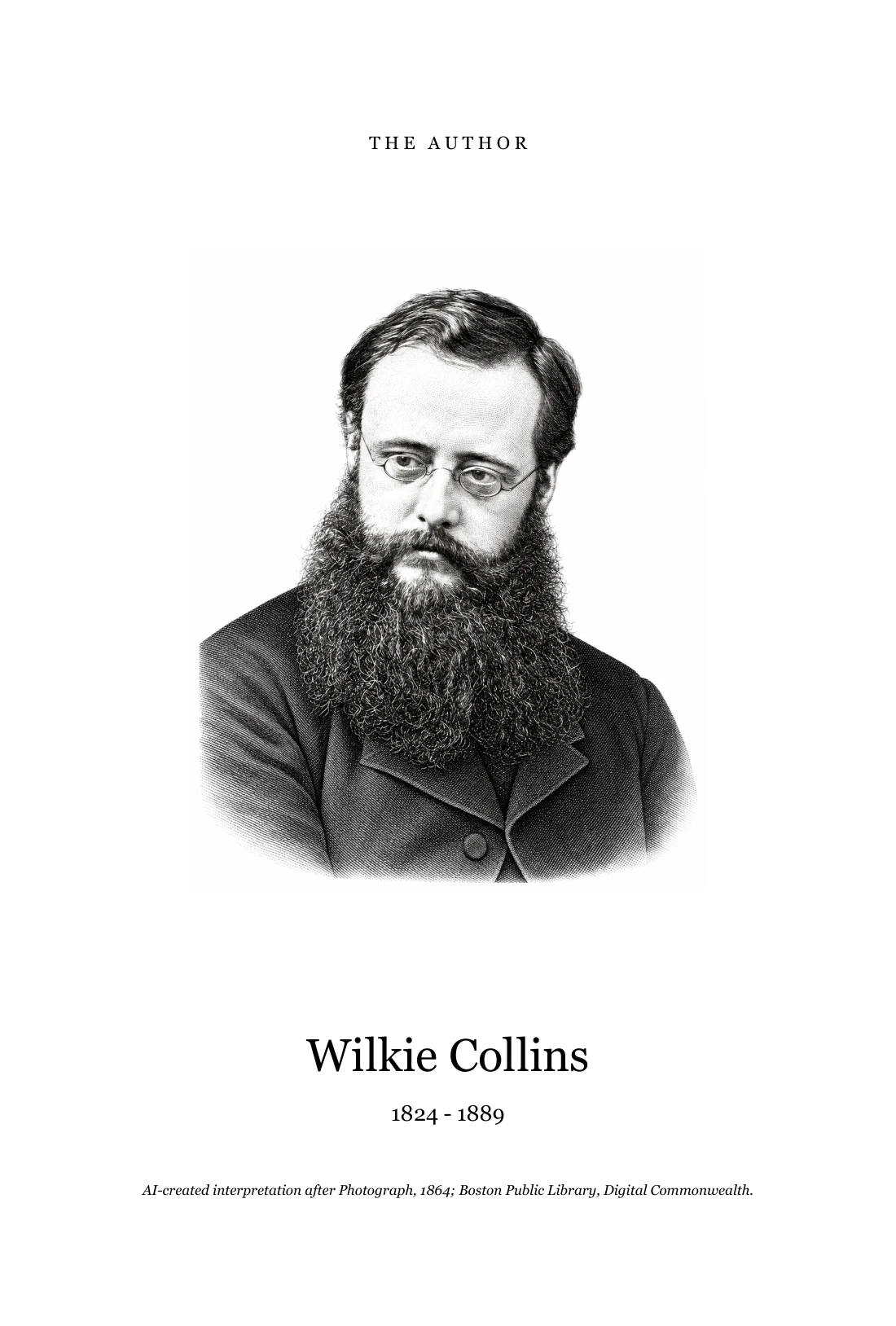
Doyle himself was far more generous. Chairing the Authors’ Club dinner for Poe’s centenary in 1909, he asked the room, “Where was the detective story until Poe breathed the breath of life into it?” He named “The Gold-Bug” in the same speech as the father of every cipher-cracking treasure hunt that followed. The influence runs through the whole history of the form, from The Moonstone to the detectives who followed Holmes.
Where to start with Edgar Allan Poe’s detective side
The Dupin stories are short enough to read in a single evening, and they appear in almost every anthology of early crime fiction. But Poe’s puzzle-solving mind is at work well beyond them. In “The Philosophy of Composition”, published in 1846, he explained how he had written his most famous poem, and the explanation reads like Dupin unpicking a crime:
It is my design to render it manifest that no one point in its composition is referable either to accident or intuition—that the work proceeded, step by step, to its completion with the precision and rigid consequence of a mathematical problem.
Edgar Allan Poe, “The Philosophy of Composition” (1846)
Few readers believe the process was quite that tidy, and some suspect Poe was enjoying himself. Either way, it is a good reason to read the poem with a detective’s eye.
The Raven
1845. A grieving scholar, a midnight visitor and one word repeated until it becomes a verdict. Poe claimed he engineered every effect backwards from the ending.
The Narrative of Arthur Gordon Pym of Nantucket
1838. Poe’s only complete novel: a stowaway’s voyage of mutiny, shipwreck and starvation towards a South Pole that grows stranger with every degree of latitude. Jules Verne wrote a sequel to it in 1897.
A Study in Scarlet
1887. Holmes and Watson meet, take rooms in Baker Street and solve a murder in an empty house. Dupin’s influence is everywhere, however much Holmes protests.
The Moonstone
1868. A cursed Indian diamond vanishes from a Yorkshire country house, and a chorus of narrators each tell part of the story. The great English novel-length descendant of Poe’s tales.
The Leavenworth Case
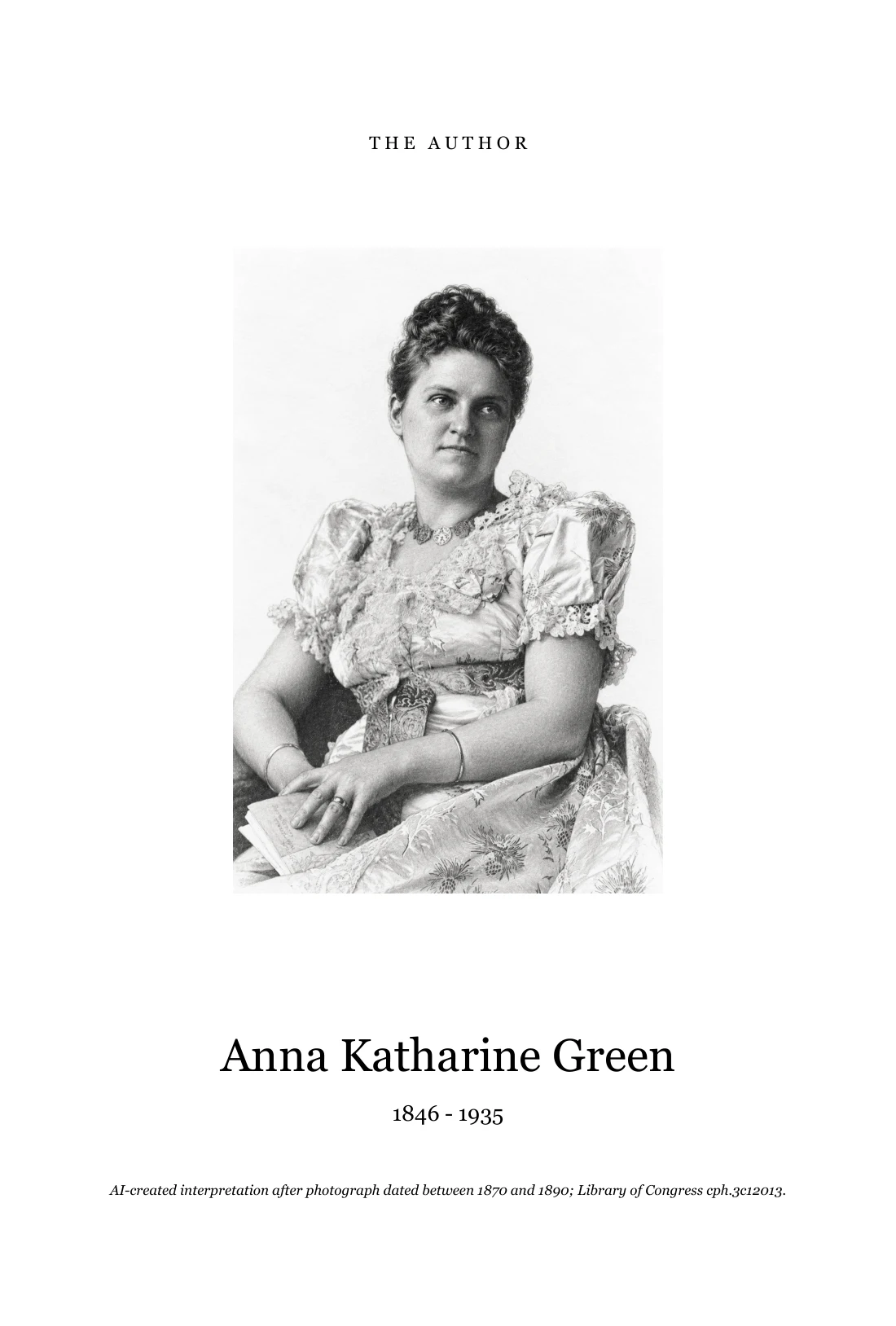
1878. A rich New Yorker is found shot in his library, and the patient Inspector Gryce takes the case. Anna Katharine Green’s first novel and an American bestseller.


For the full family tree of Holmes, start with the Sherlock Holmes books in order, and for the American line that runs from Poe to Green, see Anna Katharine Green, the mother of the detective novel. The rest of our crime shelf is in the mystery collection.
And if you want to watch Poe’s analytical habit at its most famous, begin with The Raven. Count the repetitions, notice where the refrain changes its meaning, and you will be reading it the way its author claimed to have built it.
Questions readers ask
What was the first detective story?
Edgar Allan Poe’s “The Murders in the Rue Morgue”, published in Graham’s Magazine in April 1841, is generally called the first modern detective story. Earlier tales of deduction exist, such as E. T. A. Hoffmann’s “Das Fräulein von Scuderi” (1819), but Poe’s story established the form.
Who was Edgar Allan Poe’s detective?
C. Auguste Dupin, a brilliant amateur living in Paris, whose cases are narrated by an unnamed friend. He appears in “The Murders in the Rue Morgue”, “The Mystery of Marie Rogêt” and “The Purloined Letter”.
How many detective stories did Poe write?
Poe wrote three Dupin stories between 1841 and 1844. “The Gold-Bug” (1843), a treasure hunt solved through code-breaking, is often counted alongside them as one of his tales of ratiocination.
Did Sherlock Holmes copy Dupin?
Arthur Conan Doyle openly acknowledged Poe’s influence and praised him as the creator of the detective story, even though Holmes dismisses Dupin as “a very inferior fellow” in A Study in Scarlet.