Before Miss Marple, there was Amelia Butterworth, a nosy spinster who helps the police. Before Sherlock Holmes, there was Ebenezer Gryce of the New York police. Both were created by Anna Katharine Green, and Gryce made his first appearance in The Leavenworth Case in 1878, the novel that earned its author the nickname “the mother of the detective novel”.
The nickname is affectionate, and only partly accurate. Green did not invent the detective novel, and she was not even the first American woman to write one. But The Leavenworth Case was an immediate best-seller, and it helped show that a full-length mystery built around evidence could hold a mass audience.
Was Anna Katharine Green the first woman to write a detective novel?
No, though she is often described that way. Metta Victoria Fuller Victor, writing as Seeley Regester, published The Dead Letter in 1866, twelve years earlier. The detective story itself goes back to Edgar Allan Poe in the 1840s, and Wilkie Collins’s The Moonstone appeared in England in 1868. Green’s achievement was different: she wrote a detective novel that became a sensation, and then kept writing them for four decades, building one of the first detective series in the process.

What is The Leavenworth Case about?
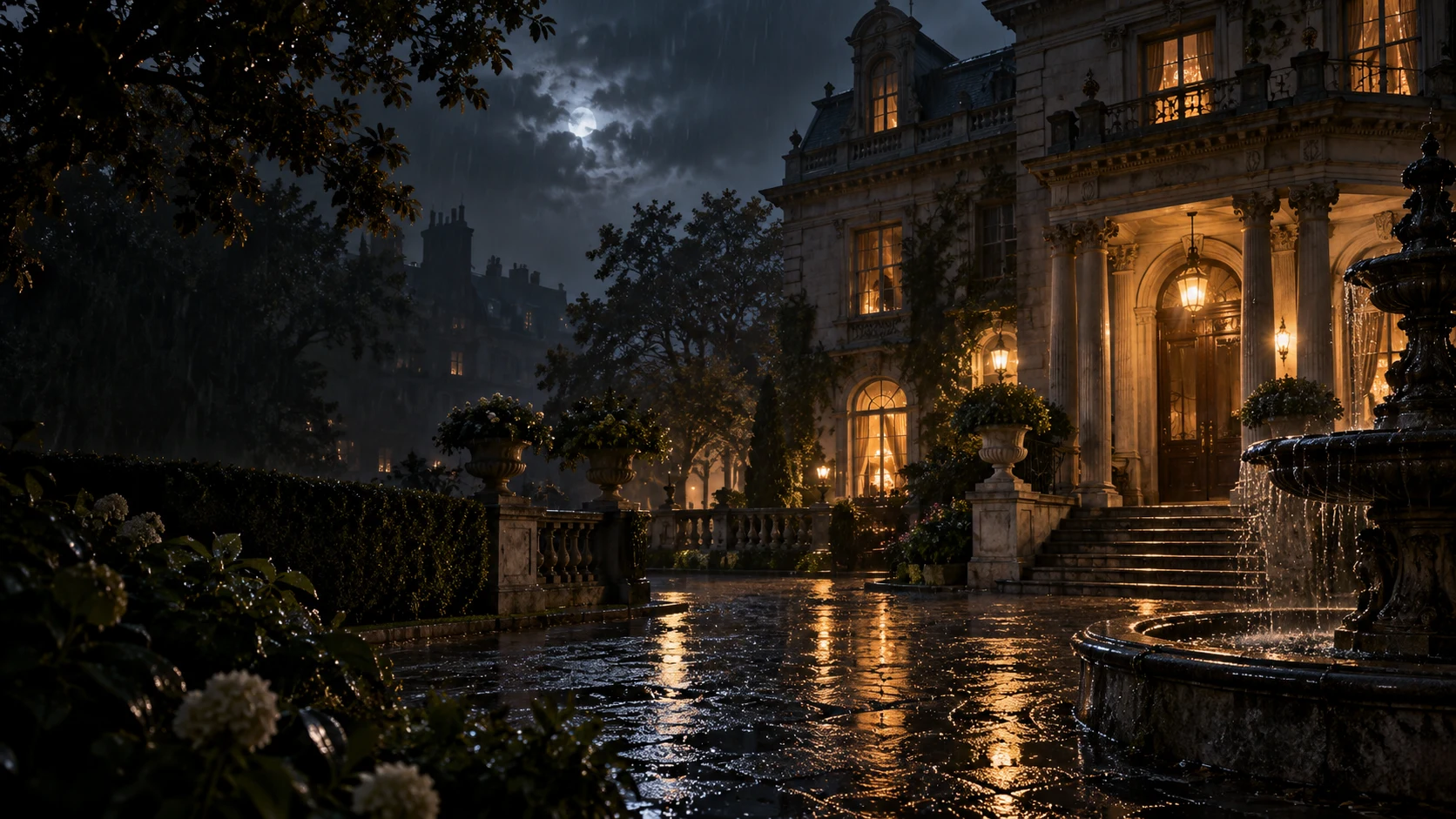
Horatio Leavenworth, a wealthy retired merchant, is found shot dead at his library table in his New York mansion. Nothing has been stolen, the house was locked, and the pistol is missing. Living under his roof are his two orphaned nieces, Mary and Eleanore, one of whom is his heiress. The story is told by Everett Raymond, a junior partner in a law firm, who is drawn into the inquest and then into the investigation alongside Mr Gryce.
Gryce is one of the genre’s first great originals, and Green introduces him by deliberately disappointing the reader’s expectations.
Mr. Gryce, the detective, was not the thin, wiry individual with the piercing eye you are doubtless expecting to see. On the contrary, Mr. Gryce was a portly, comfortable personage with an eye that never pierced, that did not even rest on you.
Anna Katharine Green, The Leavenworth Case, Chapter I
He talks to door-knobs, inkstands and buttons rather than to the person in front of him, and he misses very little. The plot turns on testimony, keys, handwriting and a chapter frankly titled “Circumstantial Evidence” — the legal detail lives up to the subtitle, and Green’s handling of it has often been praised.
The Leavenworth Case
1878. A millionaire shot at his desk, two beautiful nieces, one inheritance and a detective who will not look you in the eye. The American best-seller that came nine years before Holmes.
The Moonstone
1868. Wilkie Collins’s great English detective novel, a decade earlier and an ocean away. Read the two together to see how differently the genre began on each side of the Atlantic.


How successful was The Leavenworth Case?
Very. The book was an immediate best-seller, praised by Wilkie Collins and widely read in Europe as well as America. It is said to have prompted a debate in the Pennsylvania State Senate over whether a woman could really have written it. Green adapted it for the stage in 1891, and it was filmed in 1923 and again in 1936.
Its reach went further still. Agatha Christie mentions The Leavenworth Case in her autobiography, remembering the story from her childhood, when her elder sister Madge told it to her, and Green’s later creation, Amelia Butterworth, who first appeared in That Affair Next Door (1897), is often seen as a forerunner of Miss Marple.
- 1846
Anna Katharine Green is born in Brooklyn
- 1866
Seeley Regester’s The Dead Letter, an earlier American detective novel by a woman
- 1878
The Leavenworth Case introduces Ebenezer Gryce
- 1884
Green marries the actor and furniture maker Charles Rohlfs
- 1887
Sherlock Holmes makes his debut in A Study in Scarlet
- 1897
Amelia Butterworth appears in That Affair Next Door
- 1935
Green dies in Buffalo, New York, aged 88
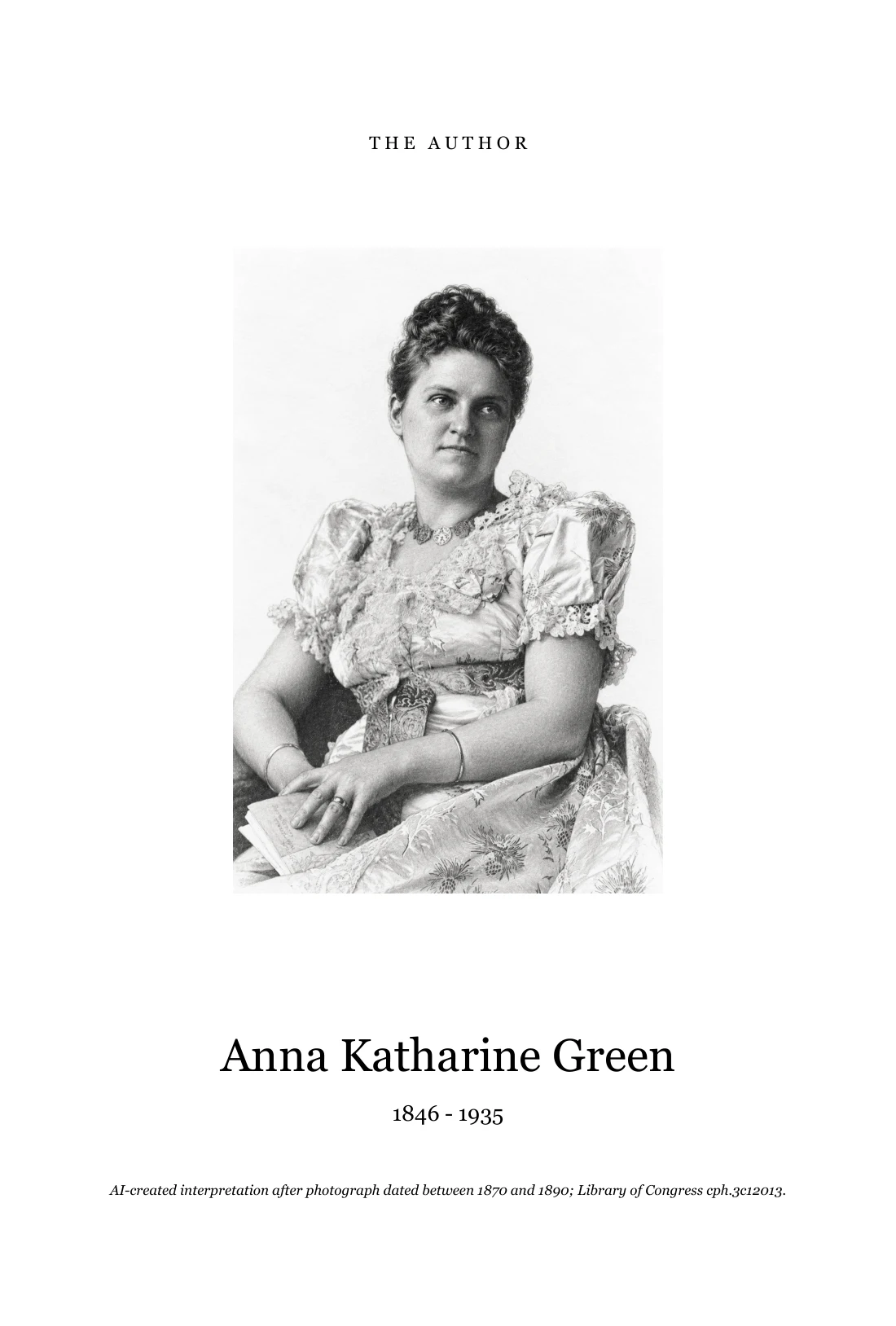
Who was Anna Katharine Green?
Green was born in Brooklyn in 1846 and wanted, at first, to be a poet. She corresponded with Ralph Waldo Emerson, but her verse never found the readers she hoped for, and she turned to fiction. After her great success she married Charles Rohlfs, an actor who later became celebrated as a furniture designer, and they settled in Buffalo. She published dozens of books over some forty years, including The Filigree Ball and stories about Violet Strange, a society debutante with a secret talent for detection, often counted among the first girl detectives.
Is The Leavenworth Case worth reading today?
Yes, with some patience for Victorian melodrama. The heroines faint and declaim, and the romance can feel stiff. But the puzzle is carefully built, Gryce is a delight, and you can spot so many later conventions — the inquest, the floor plan, the household full of secrets — already in place. For more women who shaped the genre, see Female detectives in classic fiction, and for the English side of the family tree, Did you know The Moonstone is often called the first English detective novel?.
Begin in Raymond’s law office, as an agitated young man bursts in with news from the Leavenworth house. Then follow him uptown, and watch Mr Gryce make a confidant of the door-knob.
Questions readers ask
Who is called the mother of the detective novel?
Anna Katharine Green, author of The Leavenworth Case (1878), is often called the mother of the detective novel. The title is an honorific: earlier detective novels exist, including The Dead Letter (1866) by Metta Victoria Fuller Victor.
When was The Leavenworth Case published?
It was published in 1878 by G. P. Putnam’s Sons in New York, with the subtitle A Lawyer’s Story. It was Green’s first novel.
Who is the detective in The Leavenworth Case?
Ebenezer Gryce of the New York police, a stout, unassuming detective who returned in several of Green’s later novels.