The admission is in a footnote. In June 1955 J. R. R. Tolkien wrote a long letter to the poet W. H. Auden about how his books had come to be written. Mentioning that his children had liked The Hobbit well enough, he added a note saying they had not liked it any better than The Marvellous Land of Snergs, by E. A. Wyke-Smith, published by Ernest Benn in 1927. Then he went further. Seeing the date, he wrote, the book was probably an “unconscious source-book” for the Hobbits, though not, he insisted, “of anything else”.
That last phrase matters. Tolkien was not saying The Hobbit borrowed its plot from Wyke-Smith. He was saying that his hobbits, the people, may owe something to the Snergs. Read the two books side by side and it is easy to see why he thought so.
Who are the Snergs?
Wyke-Smith introduces them early, in a chapter of their own, with the deadpan precision of a naturalist describing a newly found species.
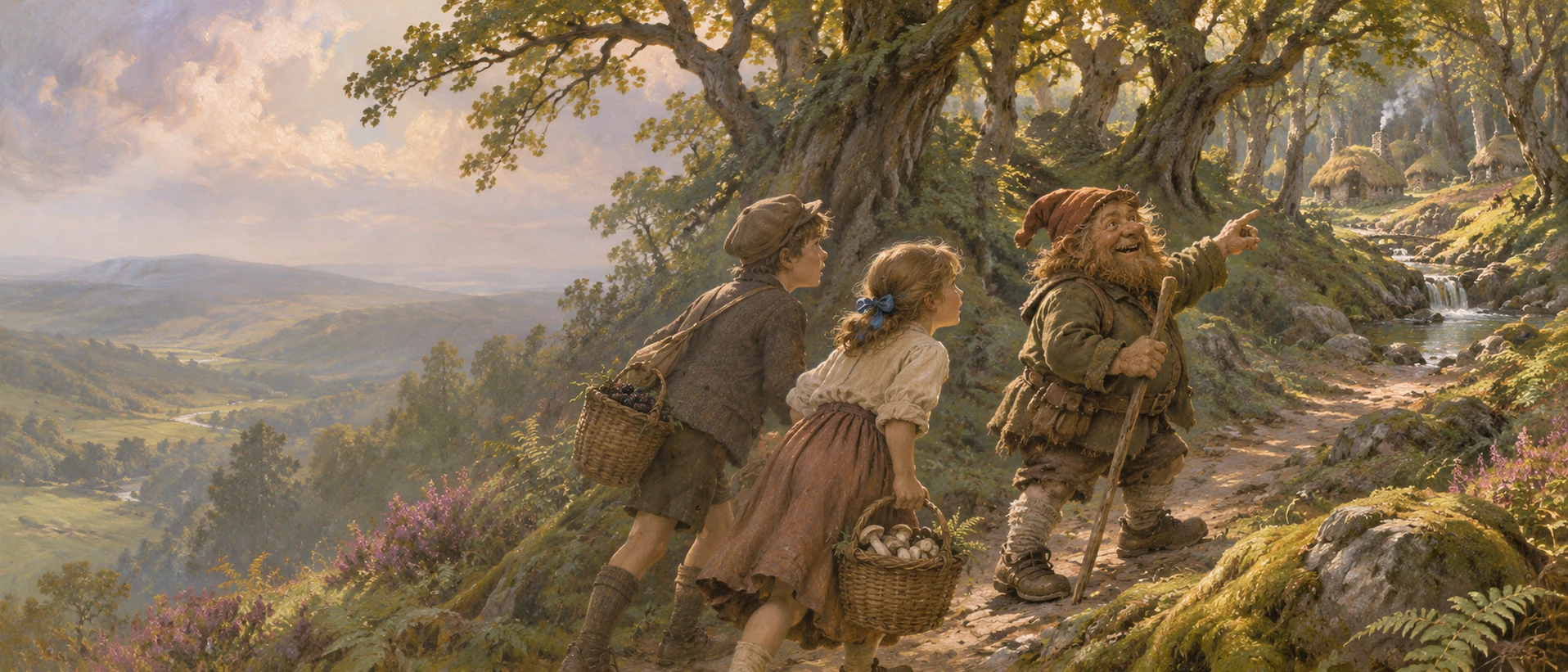
The Snergs are a race of people only slightly taller than the average table but broad in the shoulders and of great strength.
E. A. Wyke-Smith, The Marvellous Land of Snergs
They live in a rambling town of top-heavy timber houses, propped against each other and endlessly extended. They live about as long as oaks: the old gaffers remember William the Conqueror landing, while the babies date from Trafalgar. They are gregarious, fond of visiting, and above all fond of feasts, held in the open air at long tables that follow the bends of the main street. They are sometimes so short of reasons for a feast that they once held one because it was nobody’s birthday.
Anyone who remembers the opening chapters of The Hobbit, or Bilbo’s birthday party at the start of The Lord of the Rings, will feel a jolt of recognition.
Snergs and hobbits: the similarities
- Both are small, sturdy, well-fed people living a settled life on the edge of a wilder world.
- Both love food, company and celebration, with feasts and birthdays as the high points of the year.
- Both books send an unlikely, homely hero through dark forests and dangerous places beneath the earth.
- The names sound alike: Gorbo the Snerg and Bilbo the hobbit.
None of this proves direct borrowing, and Tolkien himself framed it as an unconscious debt. A scholar of old northern languages and legends, he had many sources, and the hobbits have many ancestors. But the Snergs are a striking match, and we know his children loved the book.
What is The Marvellous Land of Snergs about?
The setting is an island somewhere hard to reach, where a formidable Miss Watkyns runs a colony for children rescued from neglectful homes. The Snergs live nearby and do the heavy work: building, gardening, swabbing floors, and fishing out any child who gets into trouble while swimming. Across the river lies a forest of real danger, with an ogre who has supposedly reformed and a witch called Mother Meldrum.
Two of the children, Sylvia and Joe, run away for an adventure and do not get far before they need help. It arrives in the shape of Gorbo, a cheerful, utterly irresponsible Snerg who has failed at pottery and most other things. He is the best thing in the book: brave by accident, helpful in the wrong way, and so good-natured that when Miss Watkyns calls him a fraud he heartily agrees, because he does not like to contradict people.
The tone is very much of its time, with a narrator who chats to the reader and jokes over the children’s heads, and the plot rambles. But it is warm and odd and genuinely funny, and the dangers in the forest are real enough to give a young listener a pleasant chill.
Who was E. A. Wyke-Smith?
Edward Augustine Wyke-Smith, born in 1871, led a life that sounds like adventure fiction. He served in the Horse Guards, sailed on a windjammer, worked as a cowboy in the American West, and then became a mining engineer managing mines in Mexico, Spain, Norway and elsewhere. He began writing fantasy for his own children after the First World War. He died in 1935, two years before The Hobbit was published, and never knew what his Snergs would come to mean to Tolkien’s readers.
The Marvellous Land of Snergs
1927. Runaway children, a reformed ogre who is relapsing, a witch, and Gorbo, the most likeable incompetent in children’s fantasy. A story best read aloud, with a forest that is properly frightening.
The Worm Ouroboros: A Romance
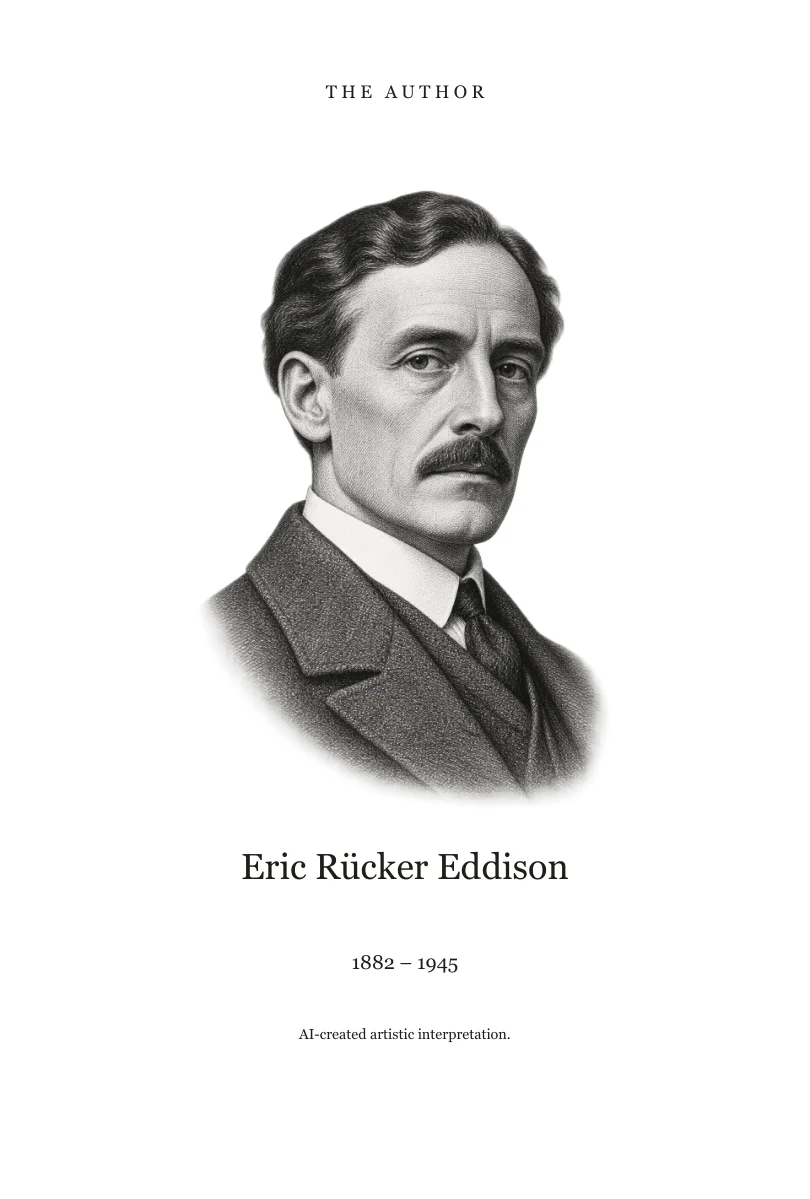
1922. Another book that sat on Tolkien’s shelf: Eddison’s high, gorgeous saga of war between two great houses, which Tolkien read and admired with reservations.
The Princess and the Goblin
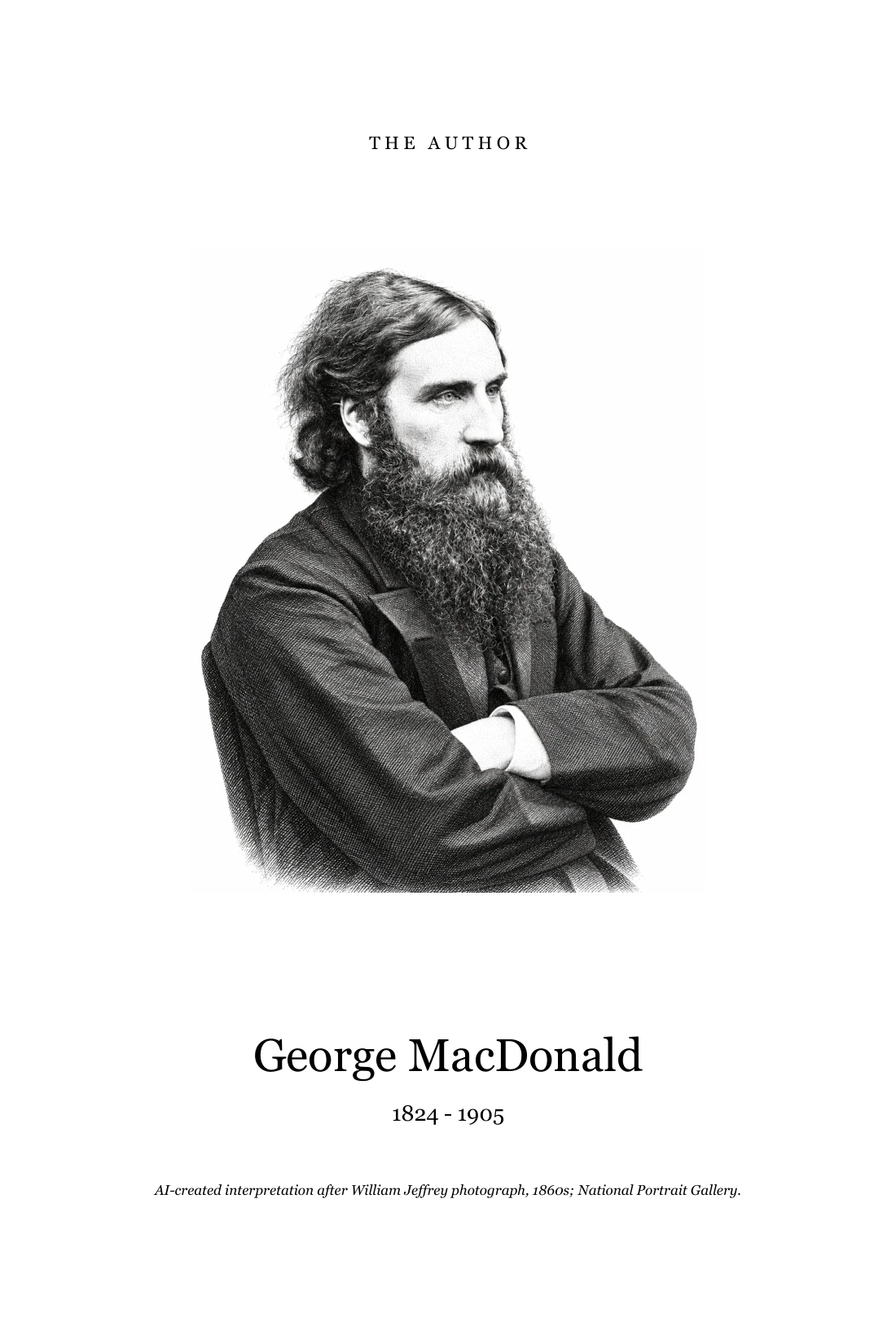
1872. George MacDonald’s goblins under the mountain, which Tolkien acknowledged as a debt when he came to create his orcs.


Tolkien’s other reading is a story in itself. We trace it in fantasy before Tolkien, in The Worm Ouroboros and Tolkien and in how George MacDonald inspired Tolkien and Lewis. For younger readers ready for more, try books like Narnia.
Then meet Gorbo for yourself. Open The Marvellous Land of Snergs, read the chapter on the Snergs aloud, and see how long it takes your listeners to say the word “hobbits”.
Questions readers ask
Did The Marvellous Land of Snergs inspire The Hobbit?
Tolkien thought it probably did, unconsciously. In a 1955 letter to W. H. Auden he called it a probable “unconscious source-book” for the Hobbits, the people, while adding that it was not a source for anything else.
What are Snergs?
In E. A. Wyke-Smith’s 1927 book, Snergs are a race of small, broad, very strong people who live for centuries, love feasts and company, and help look after a colony of rescued children.
Who is Gorbo the Snerg?
Gorbo is the good-natured, hopelessly unreliable Snerg who joins two runaway children, Sylvia and Joe, on their adventure. Tolkien called him “the gem of dunderheads”.
When was The Marvellous Land of Snergs published?
It was published in Britain by Ernest Benn in 1927, ten years before The Hobbit, and in the United States in 1928.