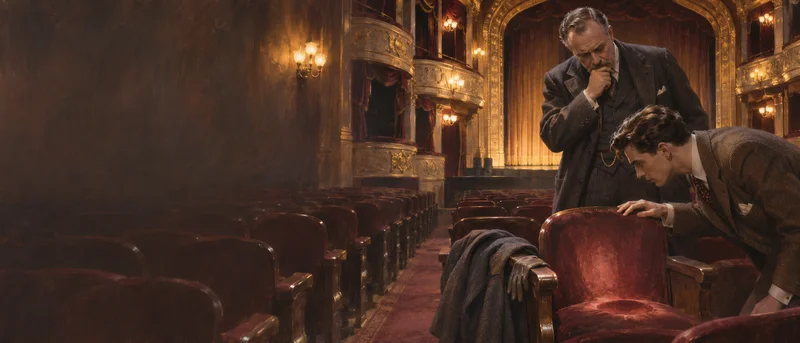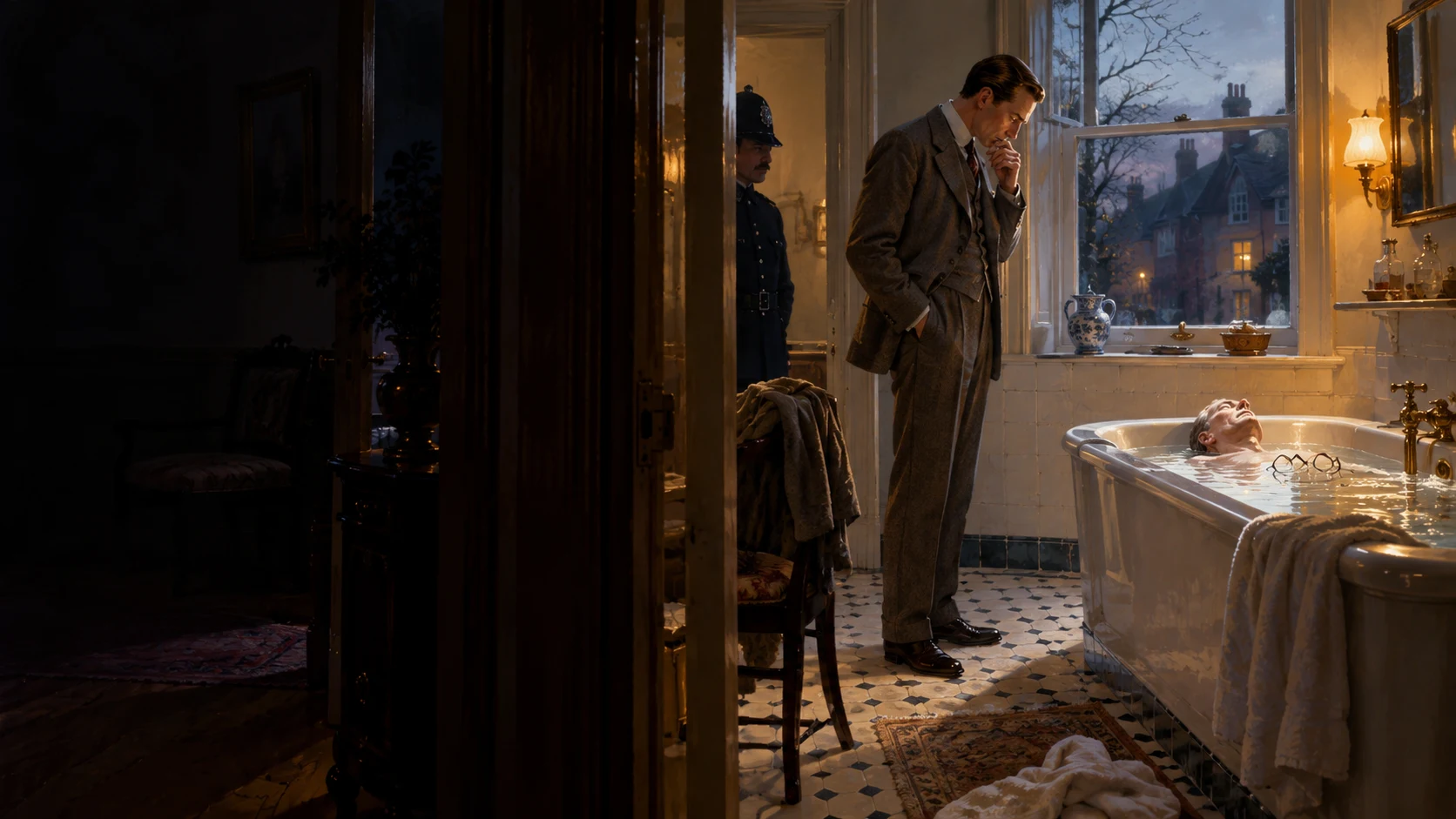
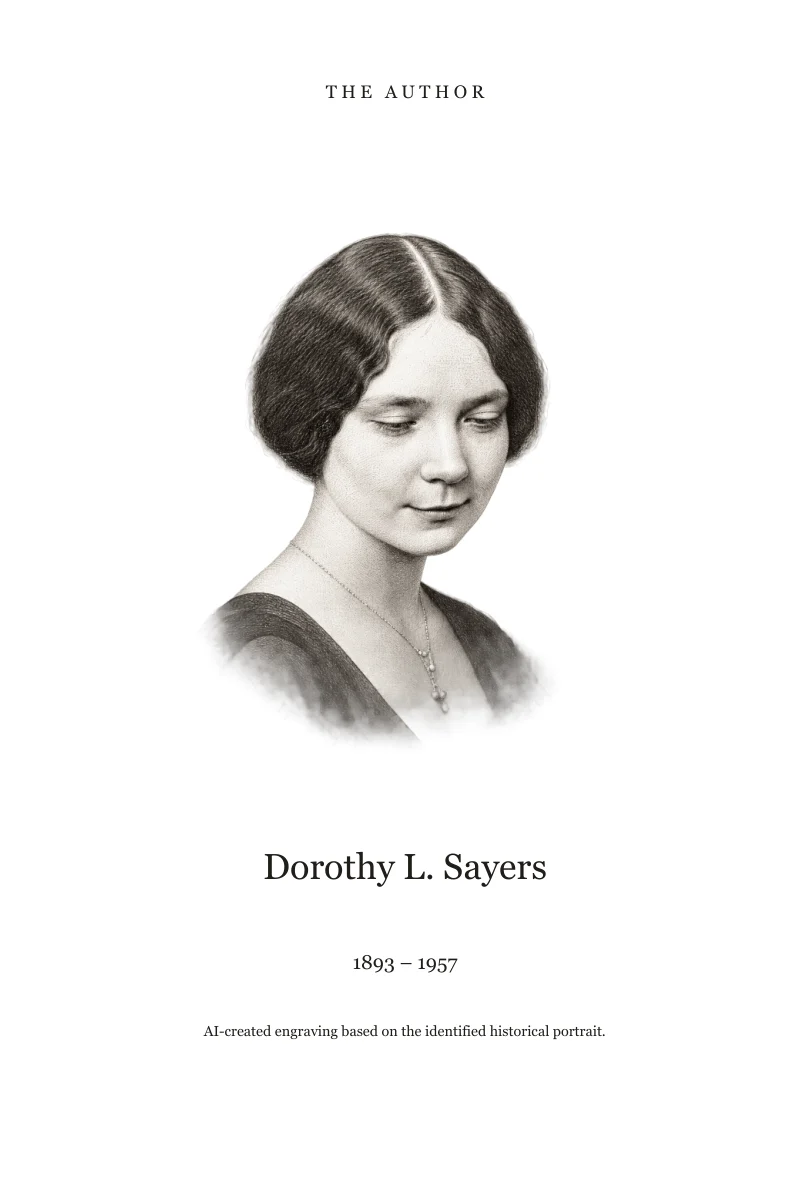
The first crisis of Lord Peter Wimsey’s career is not a murder. It is a forgotten catalogue. Dorothy L. Sayers’s first novel opens with Wimsey swearing in a taxi at Piccadilly Circus because he has left behind his list for a rare-book sale. Within a few pages his mother has telephoned to say that a quiet architect in Battersea has found a dead stranger in his bath, wearing nothing but a pair of pince-nez, and one of the great gentleman detectives of the Golden Age is on his way.
Sayers wrote eleven Lord Peter Wimsey novels between 1923 and 1937, and the Lord Peter Wimsey books in order begin with Whose Body? (1923), Clouds of Witness (1926), Unnatural Death (1927), The Unpleasantness at the Bellona Club (1928) and Strong Poison (1930). That is the order to read them in. Each is a complete mystery, but Wimsey, his friends and his family change from book to book, and the series is best enjoyed as a story about him.
The first Lord Peter Wimsey books in order
- $13.99
Whose Body?
1923. A body in a bath in Battersea and a missing financier, two puzzles that refuse to stay separate. Wimsey at his most flippant, with flashes of the war-damaged man beneath.
- $15.99
Clouds of Witness
1926. Wimsey’s own brother, the Duke of Denver, is charged with murder after a shooting at a Yorkshire lodge, and tried by the House of Lords. A family drama with a courtroom climax.
- $15.99
Unnatural Death
1927. An elderly woman’s death looks natural to everyone except Wimsey, who cannot leave it alone. Introduces the wonderful Miss Climpson.
- $15.99
The Unpleasantness at the Bellona Club
1928. A very old general is found dead in his armchair at his club on Armistice Day, and a fortune depends on exactly when he died. Sharp, funny and full of post-war unease.
- $15.99
Strong Poison
1930. A mystery writer, Harriet Vane, is on trial for poisoning her former lover, and Wimsey falls in love with her across the courtroom. The turning point of the series.



Whose Body? (1923)
The first book is the lightest. Wimsey is a collector of old books, a lover of music and food, and a dandy who talks in dropped g’s, and Sayers clearly enjoys him. He works alongside Charles Parker, a Scotland Yard detective who becomes his closest friend, and is looked after by Mervyn Bunter, his former sergeant from the war and now his valet. Read closely and there is already more to Wimsey than the chatter: the war has left its mark on him, and the book does not pretend otherwise.
Clouds of Witness (1926)
The second novel brings the case home. The fiancé of Wimsey’s sister, Lady Mary, is found shot near the family’s shooting lodge at Riddlesdale, and the revolver belongs to Wimsey’s brother Gerald, the Duke of Denver, who refuses point-blank to help his own lawyers. As a peer he is tried by the House of Lords, and Sayers makes the most of the pageantry. It is a bigger, more sprawling book than Whose Body?, and the first to show how much Wimsey cares about the people around him.

Unnatural Death (1927)
Published in America as The Dawson Pedigree, the third case begins with an idle conversation and a death that a country doctor thought suspicious. Wimsey and Parker look into the case of Agatha Dawson, an elderly cancer patient who died months sooner than her doctor expected, and Wimsey sends Miss Climpson, a spinster of tireless curiosity, to make enquiries among the village gossips. She becomes one of the great supporting characters of the series.
The Unpleasantness at the Bellona Club (1928)
Old General Fentiman, ninety years old, is found dead in his chair at the Bellona Club on the evening of Armistice Day. His estranged sister died the same day, and her will means that a fortune turns on which of them died first. The club doctor cannot say, so Wimsey is asked to find out. It is a puzzle about time, wrapped in a portrait of men who came back from the war and never quite settled.
Strong Poison (1930): enter Harriet Vane
With the fifth book the series changes key. Harriet Vane, a detective novelist, stands trial for poisoning her former lover, Philip Boyes. The jury cannot agree, a retrial is ordered, and Wimsey, convinced she is innocent, sets out to find the truth before the retrial. He also proposes, and she says no. The relationship between them carries the rest of the series, through Have His Carcase and Gaudy Night to Busman’s Honeymoon.
Strong Poison puts Miss Climpson to brilliant use, and it is one of several Wimsey novels in which Sayers quotes Ernest Bramah’s storyteller; see Who is Kai Lung?
Where should I start with Lord Peter Wimsey?
With Whose Body? if you want to watch the character grow, which is the great pleasure of the series. Some readers prefer to start with Strong Poison, because it begins the Harriet Vane story, but Wimsey’s later depth means more once you have met the flippant young man of 1923. There is also a collection of stories, Lord Peter Views the Body (1928), from the same years.
For the wider Golden Age, see Golden Age detective novels to start with and The Golden Age of detective fiction, explained. Agatha Christie’s first detective is mapped in Hercule Poirot’s first books in order.
Start in the taxi, with the forgotten catalogue. Whose Body? is short and very funny, and by the time Bunter has developed his photographs and Wimsey has met the body in the bath, you will see why readers followed him through eleven novels.
Questions readers ask
What is the first Lord Peter Wimsey book?
Whose Body? (1923) is the first Lord Peter Wimsey novel, and Dorothy L. Sayers’s first book of detective fiction.
What order should I read the Lord Peter Wimsey books in?
Read them in publication order: Whose Body?, Clouds of Witness, Unnatural Death, The Unpleasantness at the Bellona Club, Strong Poison, then the later novels through Busman’s Honeymoon (1937).
Which Lord Peter Wimsey book introduces Harriet Vane?
Strong Poison (1930), the fifth novel, in which Harriet Vane is on trial for murder and Wimsey sets out to clear her name.
How many Lord Peter Wimsey novels are there?
Dorothy L. Sayers wrote eleven Lord Peter Wimsey novels, plus several collections of short stories.