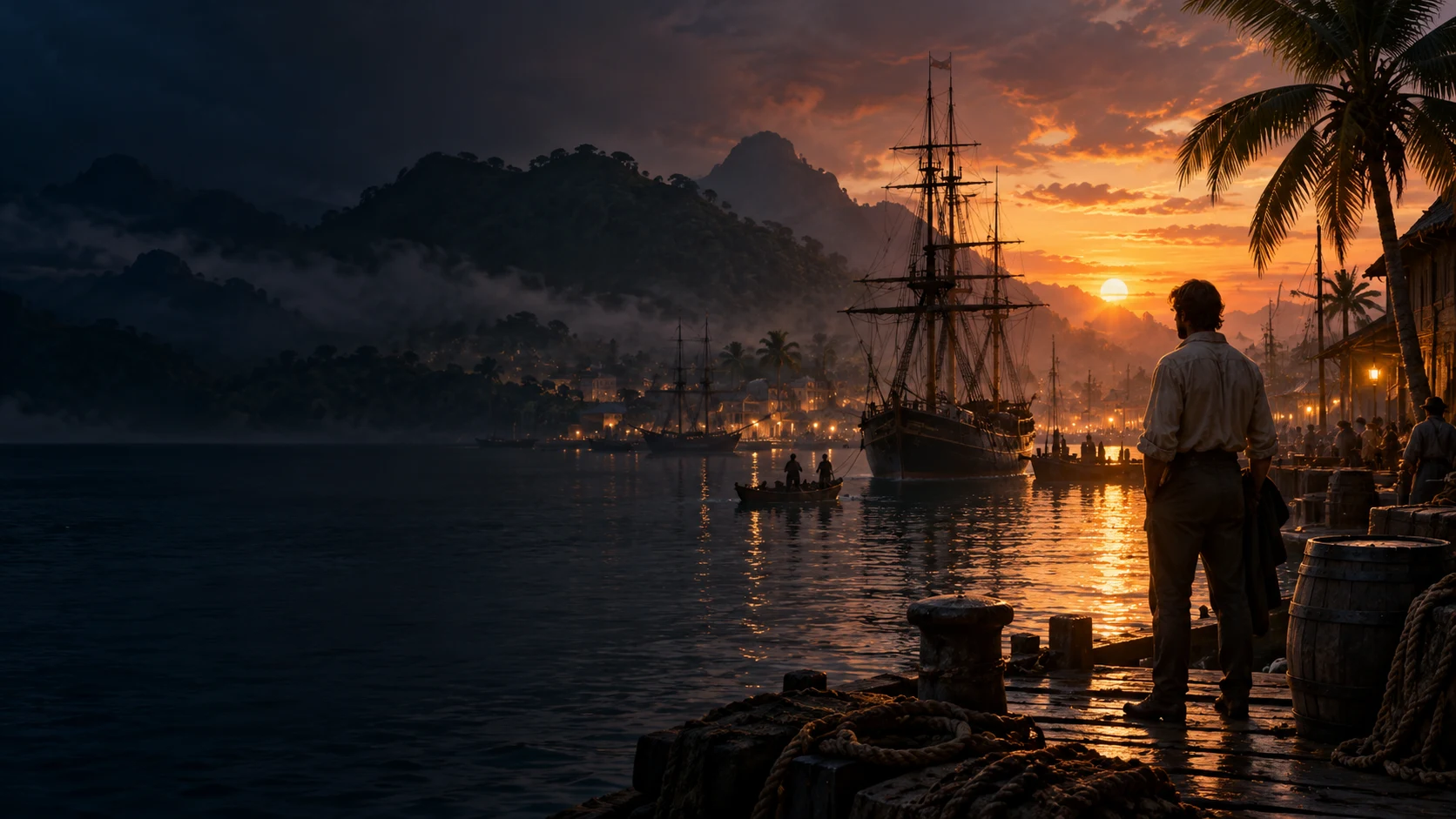
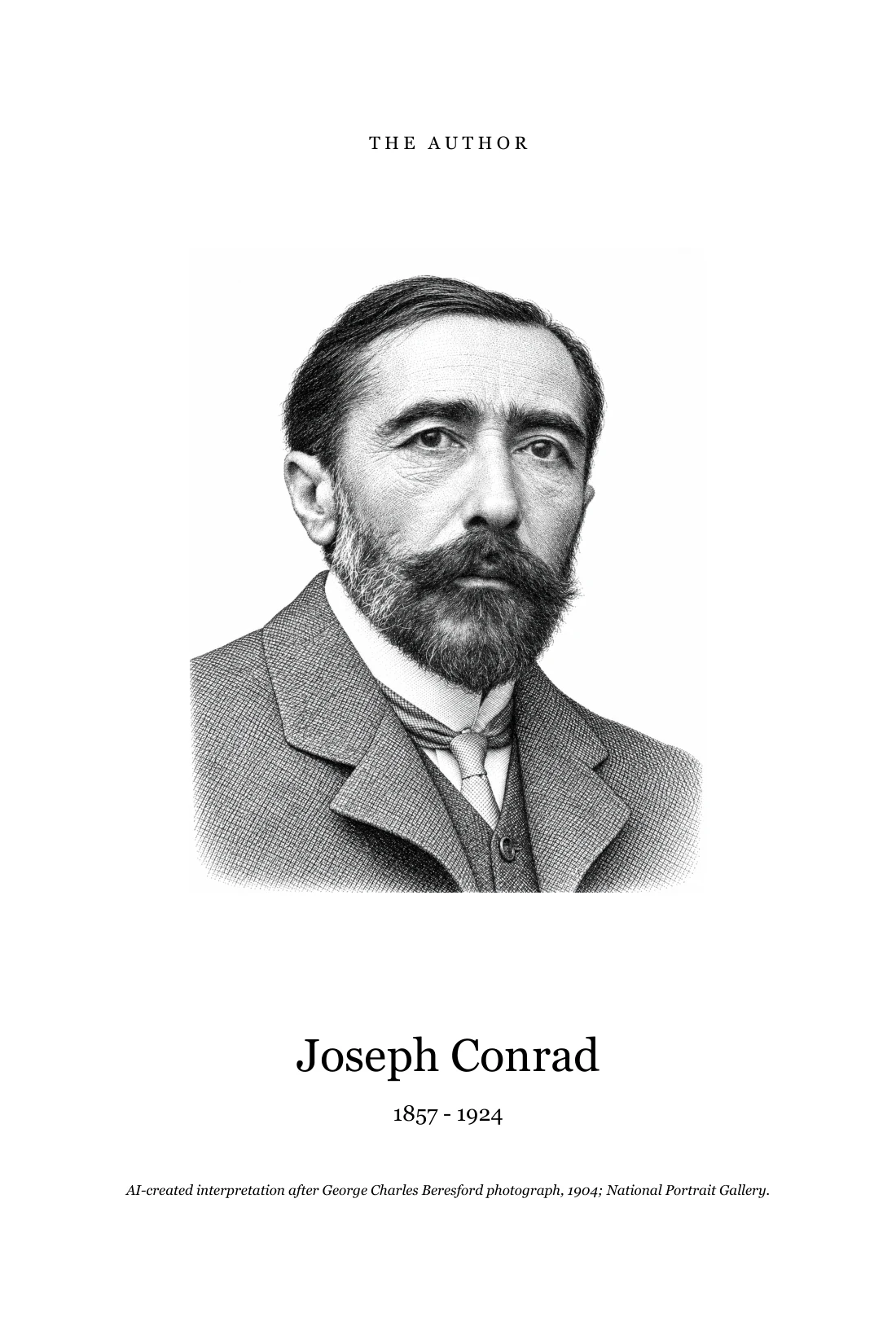
When Lord Jim came out as a book in 1900, some reviewers decided that Joseph Conrad had lost control of it. Most of the novel is one long yarn told by Marlow after dinner, and critics objected that no man could talk for that long, or expect his friends to sit and listen. Conrad, writing an author’s note after “something like sixteen years” of thinking it over, owned up to half the charge.
But, seriously, the truth of the matter is, that my first thought was of a short story, concerned only with the pilgrim ship episode; nothing more.
Joseph Conrad, author’s note to Lord Jim
Short stories that turned into novels, novels abandoned for twenty years and finished late: Conrad’s career resists a tidy list. The order below keeps to the major fiction, eight books published between 1899 and 1917, which are the ones most readers mean when they talk about Conrad. His early Malay novels and late romances follow in the timeline.
Joseph Conrad’s books in order
- $11.99
Heart of Darkness
Serialised in Blackwood’s Magazine in 1899, in book form in 1902. Marlow’s account of a steamer trip into the heart of Africa and the company man waiting at the end of it. The shortest great book here, and the most fiercely argued over.
- $17.99
Lord Jim
Blackwood’s, October 1899 to November 1900. A young mate jumps from a ship full of pilgrims and spends the rest of his life trying to outrun the moment. Marlow again, telling it in loops rather than a straight line.
- $10.99
Typhoon
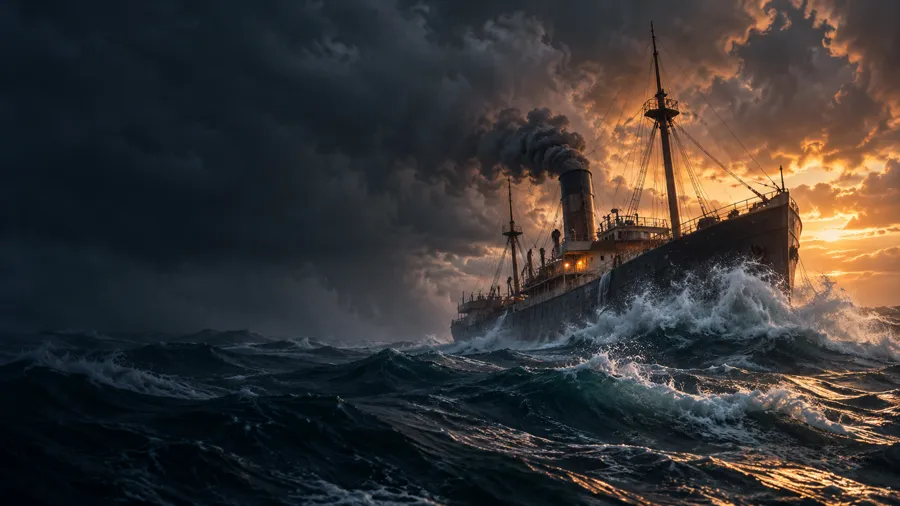
Serialised in 1902, published in Britain in Typhoon and Other Stories in 1903. Captain MacWhirr, too literal-minded to be frightened, steers straight into a storm in the China seas. Plain, gripping and, unexpectedly, comic.
- $20.99
Nostromo
1904. Silver, revolution and an Italian sailor everyone trusts, in the invented South American republic of Costaguana. His largest and most ambitious novel; save it for a long holiday.
- $15.99
The Secret Agent
1907. A Soho shopkeeper who is also a police informer and a foreign embassy’s spy is ordered to blow up the Greenwich Observatory. Bleak, ironic and startlingly modern.
- $16.99
Under Western Eyes
1911. A St Petersburg student is drawn into a political assassination he wanted nothing to do with, and the story follows him to Geneva. Often read as Conrad’s reply to Dostoevsky.
- $17.99
Victory
1915. A solitary Swede who has sworn off all attachments carries a young woman away from a ladies’ orchestra playing in Java to his island hideaway. Then the visitors arrive.
- $11.99
The Shadow Line: A Confession
1917. A young officer takes over his first command: a becalmed ship and a sick crew. Drawn from Conrad’s own only command, the barque Otago, which he took over in 1888 after its captain died.



The complete list of Conrad’s novels
For completists, here is every novel in publication order, with the best-known novellas. Conrad also co-wrote three books with Ford Madox Ford and published several collections of shorter stories, which are not listed.
- 1895
Almayer’s Folly, his first novel, set on a Borneo river
- 1896
An Outcast of the Islands, from the same corner of the Malay world
- 1897
The Nigger of the “Narcissus”, a sea novel whose title makes it hard to recommend today
- 1899
Heart of Darkness runs in Blackwood’s Magazine
- 1900
Lord Jim, the short story that would not stay short
- 1902
Typhoon is serialised; Heart of Darkness appears in the book Youth
- 1904
Nostromo
- 1907
The Secret Agent
- 1911
Under Western Eyes
- 1913
Chance, his first commercial success
- 1915
Victory, published in September, in wartime
- 1917
The Shadow-Line
After that come The Arrow of Gold (1919), The Rescue (1920) and The Rover (1923), with the unfinished Suspense published in 1925, the year after his death. The Rescue has the strangest history of all: Conrad began it in the 1890s, set it aside in 1898 for Lord Jim and Heart of Darkness, and only came back to it in the summer of 1918.
Should you read Conrad in order?
Not necessarily. Each book stands alone, and Conrad’s order of publication is partly an accident of what he could finish and sell. It makes more sense to think of three groups. The Marlow stories, Heart of Darkness and Lord Jim, are about honour and failure far from home. The political novels, Nostromo, The Secret Agent and Under Western Eyes, take on revolution, terrorism and the secret police. And the late books, Victory and The Shadow-Line, return to the islands and the sea with a new, autumnal calm.
If you have never read Conrad, start short. Typhoon is direct and often comic, and The Shadow-Line is a perfect novella about growing up in a single voyage. Then read Heart of Darkness, and our accounts of the journey up the Congo behind it and how it became Apocalypse Now. Its portrayal of Africans has been fiercely debated since Chinua Achebe’s 1975 lecture, and it is best read with that argument in mind.
The success that came late
For most of his career Conrad was admired and poor. That changed with Chance (1913), a Marlow novel unusual in his work for putting a young woman, Flora de Barral, at its centre. It was his greatest commercial success on first publication, nearly twenty years after Almayer’s Folly, and it brought him, at last, the wide readership he had waited for.
The Shadow-Line, written in 1915, looks back much further, to Conrad’s own first command. Many readers also hear the war in it, with its young men suddenly responsible for other lives, and Conrad dedicated it to his elder son Borys, who served and was wounded in the First World War. If you have come to Conrad through the Greenwich bomb plot instead, Hitchcock turned The Secret Agent into his 1936 film Sabotage; see Hitchcock films based on classic books.
For the man behind the books, read Did you know Joseph Conrad didn’t learn English until his twenties?, and for more storms and calms, the greatest sea stories ever written. But begin with Marlow on a verandah after dinner, among the cane chairs and cigar-ends, starting a story that would not stay short. Lord Jim is the book where Conrad found out how long a yarn could run.
Questions readers ask
What order should I read Joseph Conrad’s books in?
Publication order works: Heart of Darkness (1899), Lord Jim (1900), Typhoon (1902), Nostromo (1904), The Secret Agent (1907), Under Western Eyes (1911), Victory (1915) and The Shadow-Line (1917). The books stand alone, so you can also start with the shorter ones.
What was Joseph Conrad’s first book?
Almayer’s Folly, published in 1895, when Conrad was in his late thirties. It is set on a river in Borneo and was followed by a second Malay novel, An Outcast of the Islands, in 1896.
Which Joseph Conrad book should I read first?
Typhoon or The Shadow-Line, both short and direct, or Heart of Darkness if you want the famous one. Lord Jim and Nostromo are best saved until you are used to his looping way of telling a story.
 The Rescue334 pages · $17.99
 Almayer’s Folly152 pages · $12.99
 An Outcast of the Islands256 pages · $15.99
 The Arrow of Gold258 pages · $15.99