Yes: Apocalypse Now (1979) is based on Joseph Conrad’s Heart of Darkness. Francis Ford Coppola and his co-writer John Milius moved Conrad’s story from colonial Africa in the 1890s to the Vietnam War, turned the river steamer into a navy patrol boat, and made Kurtz, the ivory trader who has set himself up as a god, into a renegade American colonel played by Marlon Brando. The film shared the Palme d’Or at Cannes in 1979.
Conrad’s novella first appeared as a magazine serial in 1899 and in book form in 1902. It is short enough to read in an evening or two, and it is one of the most discussed short novels in English. Here is what Coppola kept, what he changed, and why the book is worth reading on its own terms.
Apocalypse Now and Heart of Darkness: what the film keeps
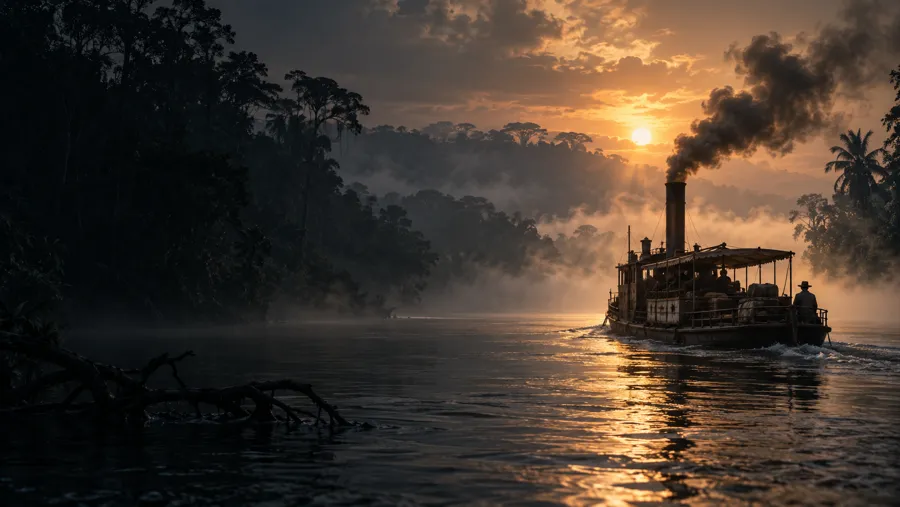
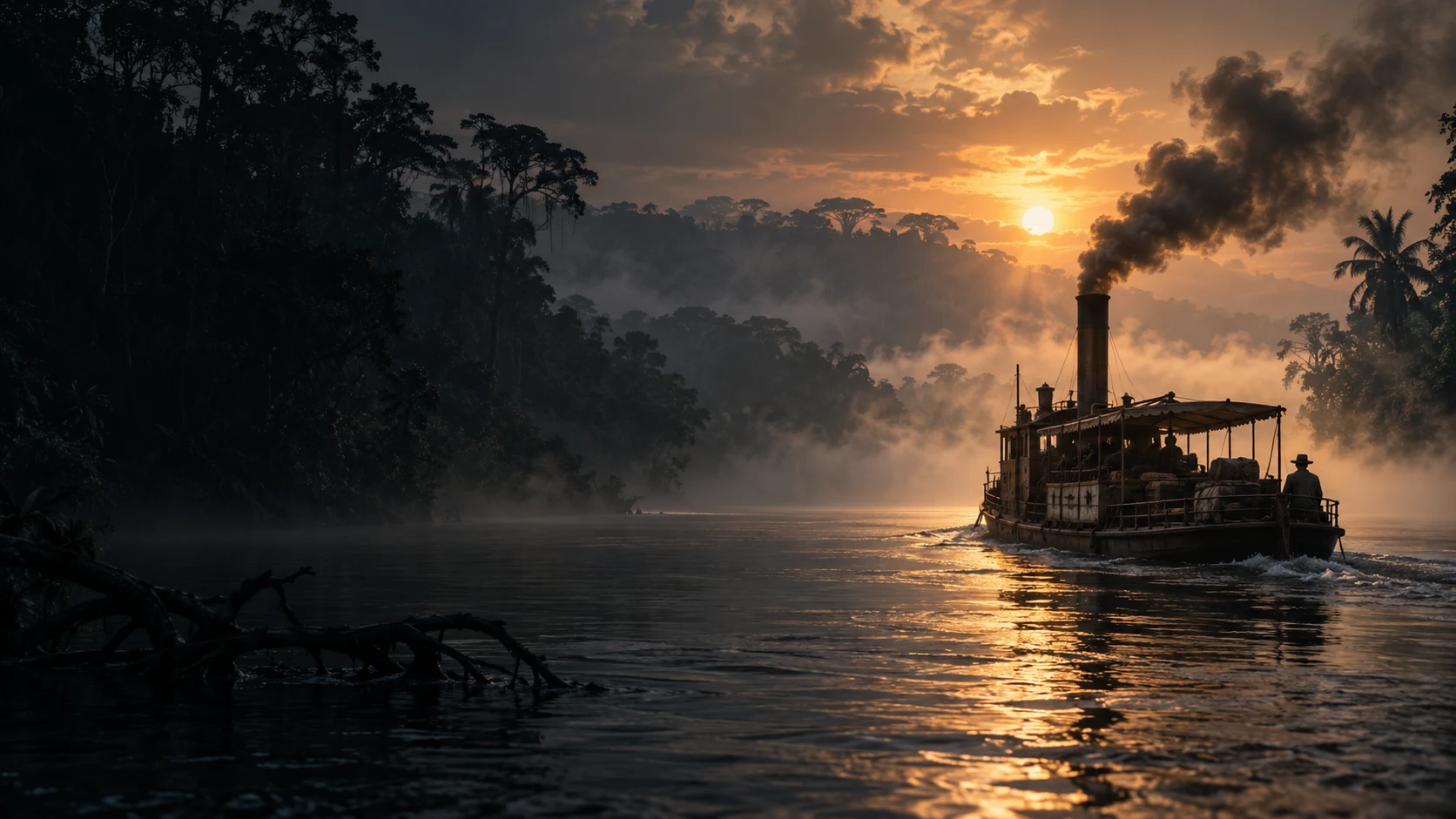
The skeleton is Conrad’s. In the novella, a seaman called Marlow tells his friends how he once took a job with a European trading company and travelled up a great African river to find Kurtz, the company’s most successful agent, who has gone silent deep in the interior. In the film, Captain Willard, played by Martin Sheen, is sent up a river in Vietnam and across the border into Cambodia to find Colonel Kurtz, who has stopped answering to anyone.
Both journeys work in the same way. Each stop on the river shows the traveller something worse than the last, and long before he arrives, he has become obsessed with the man he is going to find. In both, Kurtz is a gifted man who has been given almost unlimited power far from home and has used it monstrously.
The horror! The horror!
Kurtz, in Joseph Conrad, Heart of Darkness (1899)
Coppola keeps Kurtz’s famous last words, and he keeps Conrad’s sense of a whole system gone mad, not just one man. The film’s Kurtz even has a babbling disciple, a photojournalist played by Dennis Hopper, who echoes the young Russian in patched, harlequin clothes whom Marlow meets near Kurtz’s station.
What Apocalypse Now changes
The biggest change is the setting, and with it the target. Conrad was writing about European imperialism in Africa, and in particular about the brutal exploitation of the Congo under the Belgian king Leopold II, though the novella names neither. Coppola turned the story into an indictment of the American war in Vietnam, with helicopters, surfboards and napalm in place of ivory and rivets.
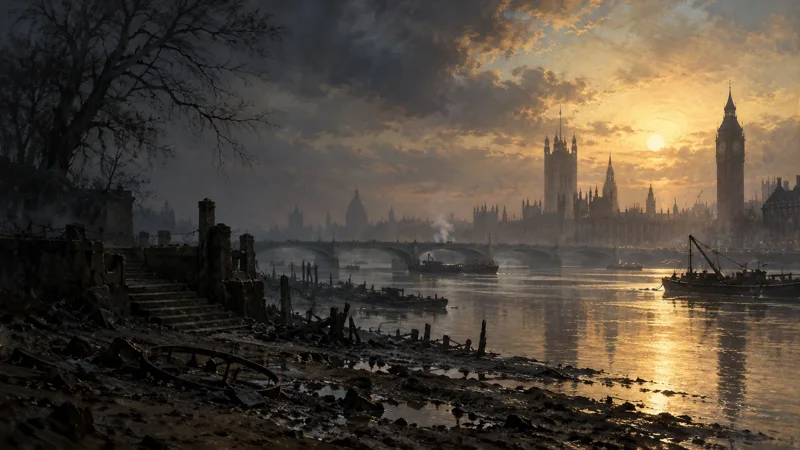
The film also drops Conrad’s frame. The novella is told by Marlow to friends on a yacht at anchor in the Thames estuary as night falls, and the frame matters: Marlow’s first words remind his listeners that London, too, “has been one of the dark places of the earth”. The film also leaves out the book’s quiet, devastating last scene back in Europe, with the woman Kurtz was engaged to marry.
In return, Coppola added a great deal of his own: Robert Duvall’s surf-mad lieutenant colonel, the chaotic show for the troops, the tiger in the jungle and the long, hallucinatory approach to the Kurtz compound.
The trouble with Heart of Darkness
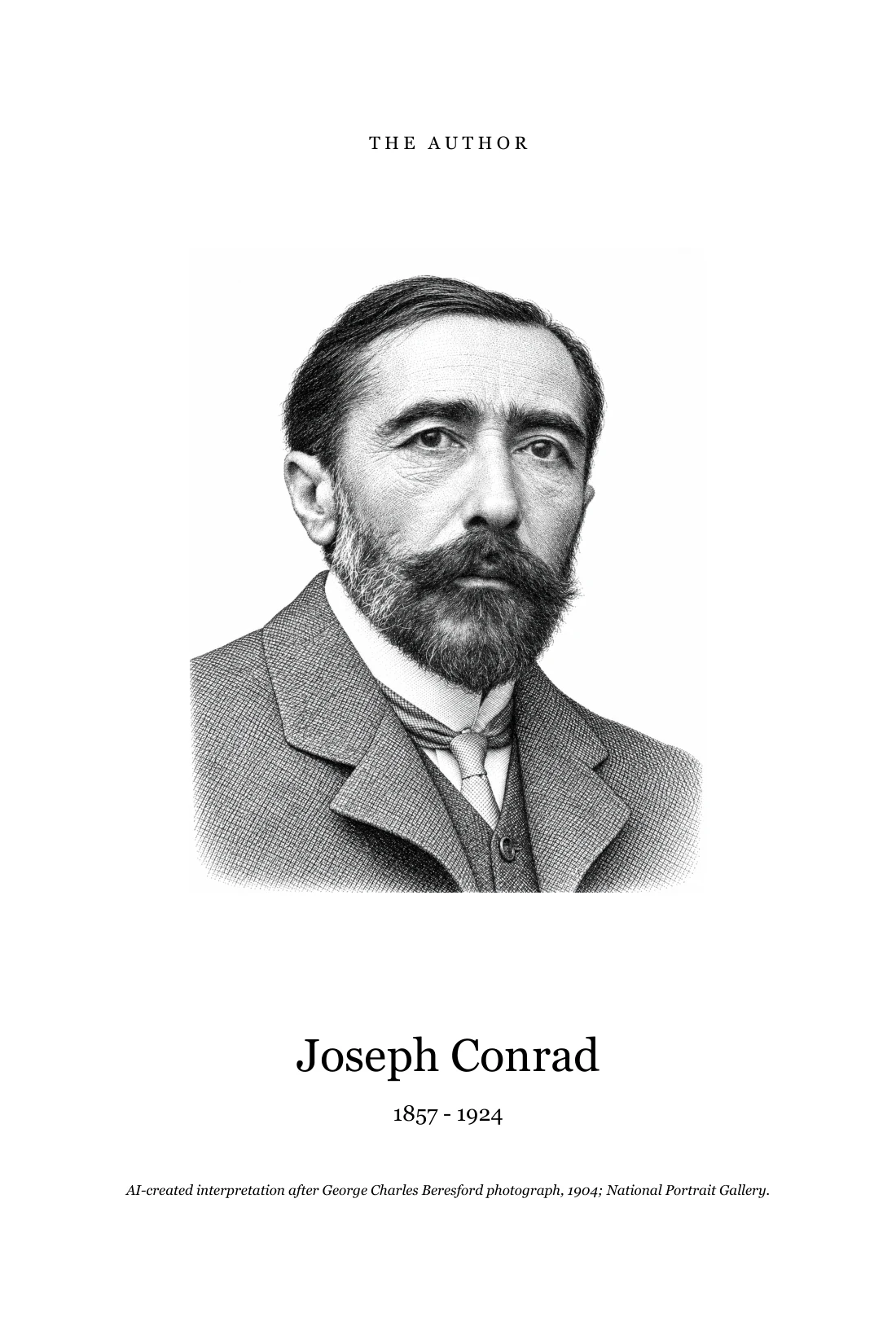
Heart of Darkness is a fierce attack on the greed and hypocrisy of colonialism, written by a man who had seen the Congo for himself: Conrad worked on a river steamer there in 1890, briefly in command, and the experience left a deep mark on him. More in Conrad’s Congo journey.
But the book’s Africans are almost entirely silent, seen only through Marlow’s eyes, and it uses the racist language of its time. In 1975 the Nigerian novelist Chinua Achebe gave a lecture, “An Image of Africa”, arguing that Conrad was a racist and that the novella reduces Africa to a backdrop for a European’s crisis. The debate has continued ever since, and it is now part of reading the book. It is worth reading the two side by side.
Other films of Heart of Darkness
Orson Welles planned Heart of Darkness as his first Hollywood film in 1939, to be told through the camera as Marlow’s own eyes, but the project was abandoned and he made Citizen Kane instead. Nicolas Roeg’s television film, first shown in 1994, starred Tim Roth as Marlow and John Malkovich as Kurtz. And the troubled making of Apocalypse Now is the subject of a documentary, Hearts of Darkness: A Filmmaker’s Apocalypse (1991).
Heart of Darkness
1899. Marlow’s journey up an African river in search of Kurtz. The source of Apocalypse Now, and short enough for an evening or two.
The Waste Land
1922. T. S. Eliot’s poem, which he once planned to open with a line from Heart of Darkness.
Lord Jim
1900. Marlow returns as narrator in Conrad’s next novel, the story of a young officer haunted by a single act of cowardice.


Conrad wrote all this in his third language; see Joseph Conrad learned English in his twenties. And if you want more short books with long shadows, try our classics you can read in one evening.
Read Heart of Darkness first, then watch the film. Coppola’s river is louder; Conrad’s is quieter, stranger, and harder to forget.
Questions readers ask
Is Apocalypse Now based on Heart of Darkness?
Yes. Apocalypse Now (1979), directed by Francis Ford Coppola, adapts Joseph Conrad’s novella Heart of Darkness, moving its journey upriver from colonial Africa to the Vietnam War.
What are the differences between Heart of Darkness and Apocalypse Now?
The film moves the story from the Congo to Vietnam and Cambodia, makes Kurtz an American army colonel, and drops the novella’s storytelling frame and its final scene in Europe. It keeps the river journey, the obsession with Kurtz and his last words.
Who plays Kurtz in Apocalypse Now?
Marlon Brando plays Colonel Kurtz, and Martin Sheen plays Captain Willard, the Marlow figure sent upriver to find him.
How long does it take to read Heart of Darkness?
It is a novella, short enough for most readers to finish in an evening or two.
 The Secret Agent246 pages · $15.99
 Nostromo438 pages · $20.99
 Victory330 pages · $17.99
 Under Western Eyes298 pages · $16.99