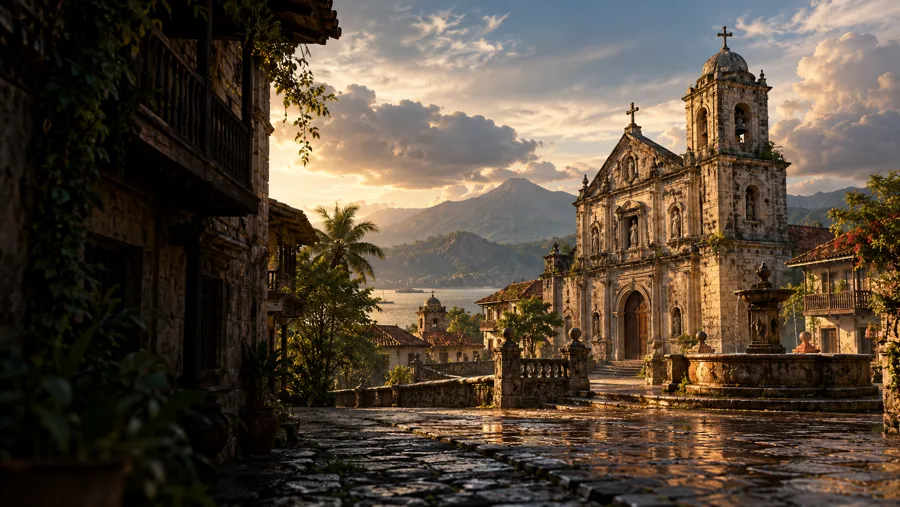
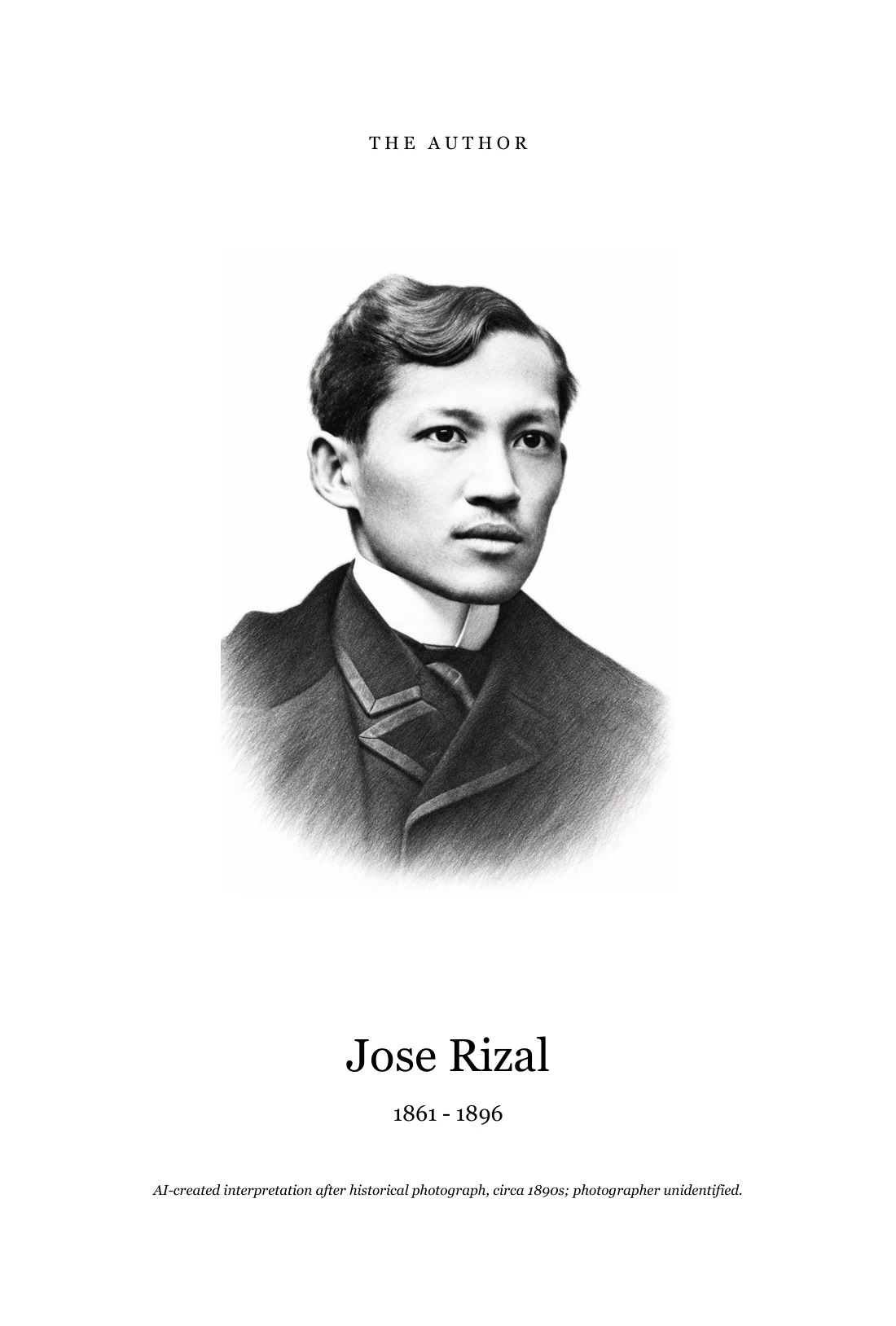
The family visited his cell in Fort Santiago on the afternoon of 29 December 1896. When they got the stove home, they found a folded sheet of paper with fourteen stanzas on it, unsigned and untitled. It became “Mi último adiós”, “My Last Farewell”, now one of the best-known poems in the Philippines. The next morning, José Rizal was shot by a Spanish firing squad in Manila. He was thirty-five.
He is remembered as the national hero of the Philippines, though no law has ever formally given him that title; it was conferred by everyone else. Above all, he is remembered for two novels, Noli Me Tangere (1887) and El Filibusterismo (1891), which students in the Philippines still study by law. In English, the best-known versions are Charles Derbyshire’s 1912 translations, The Social Cancer and The Reign of Greed.
Who was José Rizal?
A man who seems to have been good at everything. Born in Calamba, south of Manila, in 1861, the seventh child of prosperous farmers who leased their land from the Dominican friars, he wrote poetry as a schoolboy, sculpted and painted, and went to Spain to study medicine. He went on to train as an eye specialist in Heidelberg, later operated on his own mother’s eyes, and practised as an ophthalmologist in Hong Kong and in exile.
He was also a historian, a linguist who corresponded in several European languages, and a reformer. With other young Filipinos in Europe, the so-called Propaganda Movement, he campaigned for political reform of the colony. He never asked for armed revolution. That did not save him. Exiled to Dapitan, on Mindanao, he spent four years teaching local boys, practising medicine and studying the natural world, and there he met Josephine Bracken, an Irishwoman who became his common-law wife.
- 1861
Born in Calamba, Laguna, on 19 June.
- 1882
Leaves for Spain to continue his studies.
- 1887
Noli Me Tangere is printed in Berlin, paid for with a loan from his friend Máximo Viola.
- 1890
Publishes an annotated edition of Antonio de Morga’s 1609 history of the Philippines.
- 1891
El Filibusterismo is printed in Ghent.
- 1892
Founds La Liga Filipina in Manila, is arrested within days and exiled to Dapitan, Mindanao.
- 1896
Sails to volunteer as a doctor in Cuba; arrested on the way, tried for rebellion and executed on 30 December.
- 1912
Charles Derbyshire’s complete English translations of both novels are published in Manila.
- 1956
The Rizal Law requires Philippine schools and colleges to teach his life and works.
José Rizal’s novels: what are they about?
Noli Me Tangere follows Crisóstomo Ibarra, a young Filipino who comes home from Europe to marry and build a school, and finds the town of San Diego run by friars, officials and their hangers-on. It is part social comedy, part melodrama and part exposé, with a huge cast drawn from every level of colonial society. Rizal opened it with a dedication to his country that explains the Derbyshire title.
Recorded in the history of human sufferings is a cancer of so malignant a character that the least touch irritates it and awakens in it the sharpest pains.
José Rizal, dedication to Noli Me Tangere, translated by Charles Derbyshire (1912)
El Filibusterismo is set thirteen years later and is far darker. A rich, mysterious jeweller called Simoun moves through Manila society with a plan of his own, and the students who still believe in reform are made to look naive. Where the first novel diagnoses the disease, the second asks whether anything short of violence could cure it, and refuses an easy answer.
- $22.99
The Social Cancer: A Complete English Version of Noli Me Tangere
1887. Ibarra’s homecoming, his engagement to María Clara, and the town that will not let him change it. Comic, angry and full of people you will recognise.
- $17.99
The Reign of Greed
1891. The sequel, in which a jeweller with a past returns to Manila. Shorter, bleaker and more urgent, it is the book Rizal wrote after reform had failed him.


How to read Rizal today
In order, and without worrying about knowing the history first. The novels explain their world as they go, and they are surprisingly funny: Derbyshire saw Don Quixote behind many of their sketches, and Rizal loved a set piece. A grand dinner, a fiesta, a picnic on the lake, a riverboat full of bickering passengers: the satire usually arrives through comedy before it turns serious. The chapters are short, which makes even the long first novel easy to read in stages.
How the first novel was banned, smuggled and read in secret is the subject of Did you know a novel helped inspire the Philippine Revolution?. For other books that unsettled the powerful, see Banned and challenged classics, and for writers who worked under lock and key, Classic books written in prison.
The first novel opens with a dinner party in Manila, half of polite society in attendance and a quarrelsome friar already holding forth. Take your seat at the table in The Social Cancer, and let Rizal introduce you to his country.
Questions readers ask
What are José Rizal’s two novels?
Noli Me Tangere (1887) and its sequel El Filibusterismo (1891), both written in Spanish. In early English translations by Charles Derbyshire they are titled The Social Cancer and The Reign of Greed.
Why is José Rizal a national hero?
His novels and essays exposed the abuses of Spanish colonial rule and helped shape Filipino national consciousness, and his execution in 1896 made him a martyr. He is universally regarded as the national hero, though no law has formally proclaimed it.
Should I read Noli Me Tangere or El Filibusterismo first?
Noli Me Tangere. El Filibusterismo is a direct sequel set thirteen years later and depends on characters and events from the first book.