
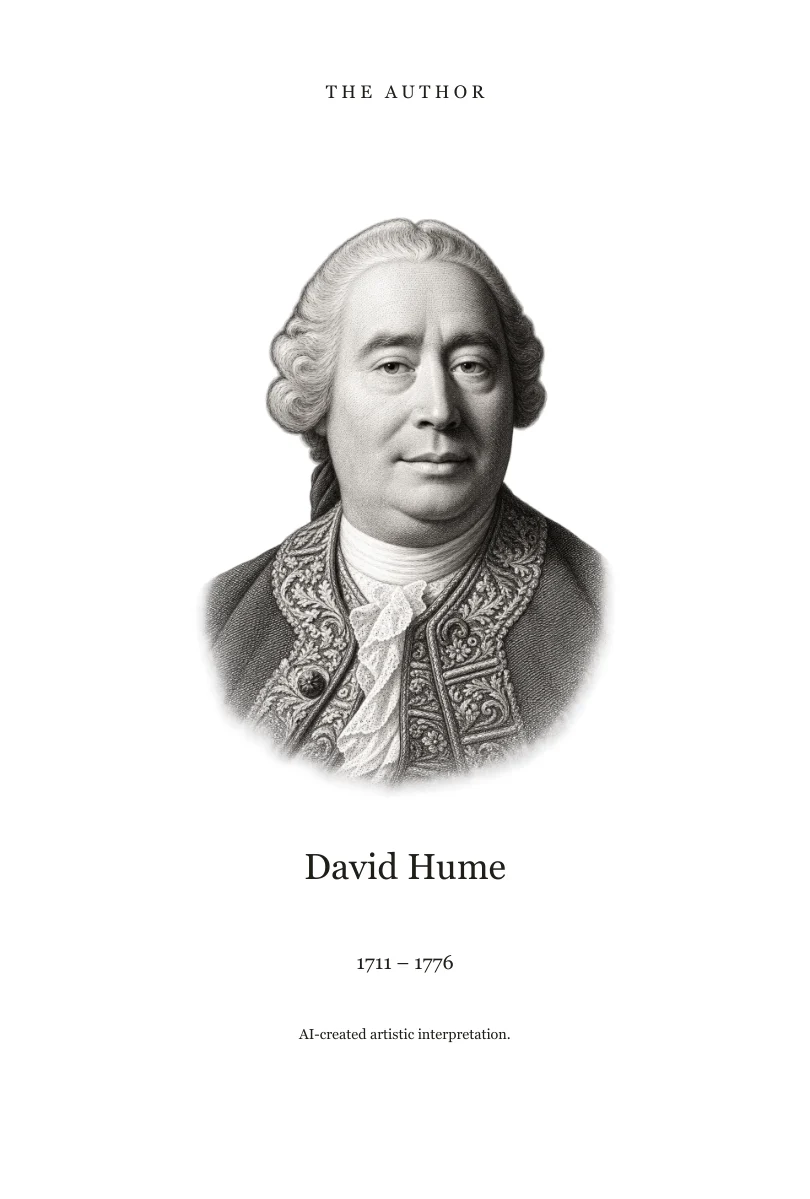
David Hume was twenty-seven when the first two volumes of A Treatise of Human Nature came out in London in early 1739. He had worked on them for years, mostly in rural France, living frugally on a slender inheritance, and they set out nothing less than a new science of the human mind. The title page did not carry his name. The book sold poorly, drew one long and mocking review, and then sank.
In April 1776, a few months before he died, David Hume wrote a short autobiography, My Own Life, and looked back on that first disappointment with the dry humour that was his trademark.
Never literary attempt was more unfortunate than my Treatise of Human Nature. It fell dead-born from the press, without reaching such distinction, as even to excite a murmur among the zealots.
David Hume, *My Own Life* (1776)
In other times a scandalous book could at least hope for a scandal. Hume’s did not even provoke the religious zealots he had expected to outrage. Today, A Treatise of Human Nature is widely regarded as his most important work and one of the most influential books in the history of philosophy.
Was A Treatise of Human Nature really a failure?
Commercially, yes, and Hume felt it keenly. A few months after publication he wrote from his family’s home in Scotland to his friend Henry Home that the success of his philosophy was “but indifferent, if I may judge by the sale of the book”.
I am now out of humour with myself; but doubt not, in a little time, to be only out of humour with the world, like other unsuccessful authors.
David Hume, letter to Henry Home, June 1739
Strictly speaking it was not quite dead-born. A London periodical, The History of the Works of the Learned, gave it a long review in November 1739, mostly sarcastic but admitting that the author had “a soaring genius”. And Hume tried to help it along himself, publishing an anonymous pamphlet in 1740, An Abstract of a Book lately Published, that summarised its main arguments in plainer form. Nothing worked. As he put it in My Own Life, being “naturally of a cheerful and sanguine temper”, he soon recovered from the blow and went back to his studies.
His luck turned within a few years. In 1742 he printed the first part of his Essays in Edinburgh; they were well received and, he wrote, soon made him entirely forget his former disappointment. The essays, not the Treatise, first made his name.
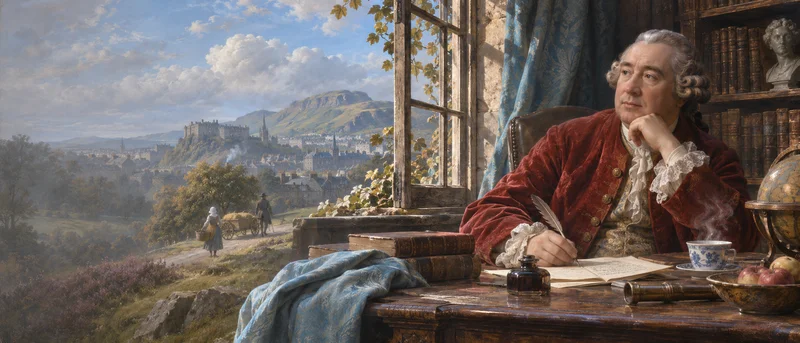
What is in the Treatise?
Hume’s ambition was to do for the study of human nature what Newton had done for the physical world: to build it on experience and observation rather than on assumptions. The book is in three parts, “Of the Understanding”, “Of the Passions” and “Of Morals”, and each contains ideas philosophers are still arguing about. Our belief that one event causes another, Hume argued, rests not on reason but on habit and custom. The self is not a single thing we can find inside us. And reason does not rule our actions at all.
Reason is, and ought only to be the slave of the passions, and can never pretend to any other office than to serve and obey them.
David Hume, *A Treatise of Human Nature*, Book 2 (1739)
He knew the line would startle. “As this opinion may appear somewhat extraordinary,” he went on, “it may not be improper to confirm it by some other considerations.”
Treatise vs Enquiry: which should you read?
Hume decided that the fault lay “more from the manner than the matter”, and that he had been guilty of going to the press too early. So he rewrote it. The first book became Philosophical Essays Concerning Human Understanding (1748), later retitled An Enquiry Concerning Human Understanding; the third became An Enquiry Concerning the Principles of Morals (1751), which Hume came to think, of all his writings, incomparably the best. Even then the first Enquiry did little better at first. Hume’s fame in his lifetime came mainly from his essays and his best-selling History of England.
Late in life he went further and disowned the Treatise. An advertisement for the posthumous edition of his essays asked readers to judge him only by the later works, and complained that critics still attacked “that juvenile work, which the author never acknowledged”. They kept attacking it, and later philosophers kept reading it, which is why it is now so famous.
A Treatise of Human Nature
1739–40. Hume’s first and most ambitious book: the mind, the passions and morality rebuilt on experience. Demanding, exhilarating and the source of most of his famous ideas.
An Enquiry Concerning Human Understanding
1748. Hume’s second attempt at the first book of the Treatise, shorter, clearer and more pointed, with the famous sections on miracles and on cause and effect.


If you are new to Hume, start with the Enquiry, as he wanted. If you have read the Enquiry, go back to the Treatise to see the bolder, stranger book he was trying to forget. Our philosophy books for beginners and how to read philosophy can help with both, and Did Samuel Johnson really write Rasselas in a week? tells another story of an eighteenth-century book and its author’s money worries.
Then open A Treatise of Human Nature at the section “Of personal identity”, where Hume looks for himself and cannot find anything but perceptions. It is hard to believe that anything so alive was ever dead-born.
Questions readers ask
What did Hume mean by “dead-born from the press”?
That A Treatise of Human Nature attracted almost no attention when it was published in 1739–40. He used the phrase in his short autobiography, My Own Life, written in 1776.
What is the difference between Hume’s Treatise and his Enquiry?
The Enquiry Concerning Human Understanding (1748) is Hume’s shorter, more accessible rewriting of Book 1 of the Treatise. He later asked readers to treat the Enquiries, not the Treatise, as the statement of his views.
How old was Hume when he wrote A Treatise of Human Nature?
He worked on it for about four years from his early twenties, and was twenty-seven when the first two volumes were published in 1739.
Is A Treatise of Human Nature hard to read?
It is long and demanding, but Hume writes clearly and often wittily. Many readers start with the shorter Enquiry Concerning Human Understanding and then turn to the Treatise.