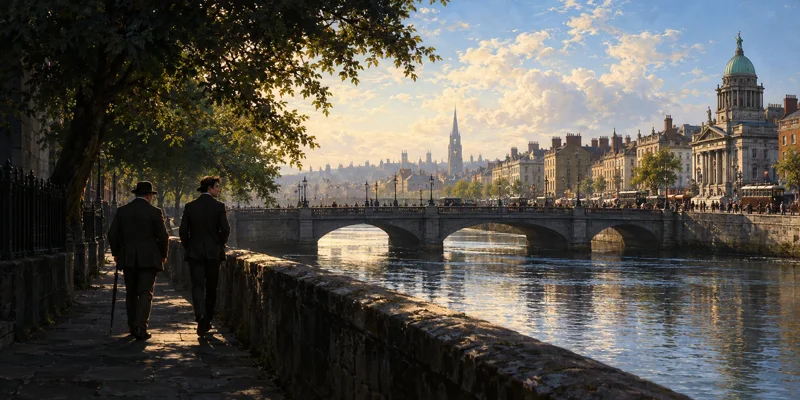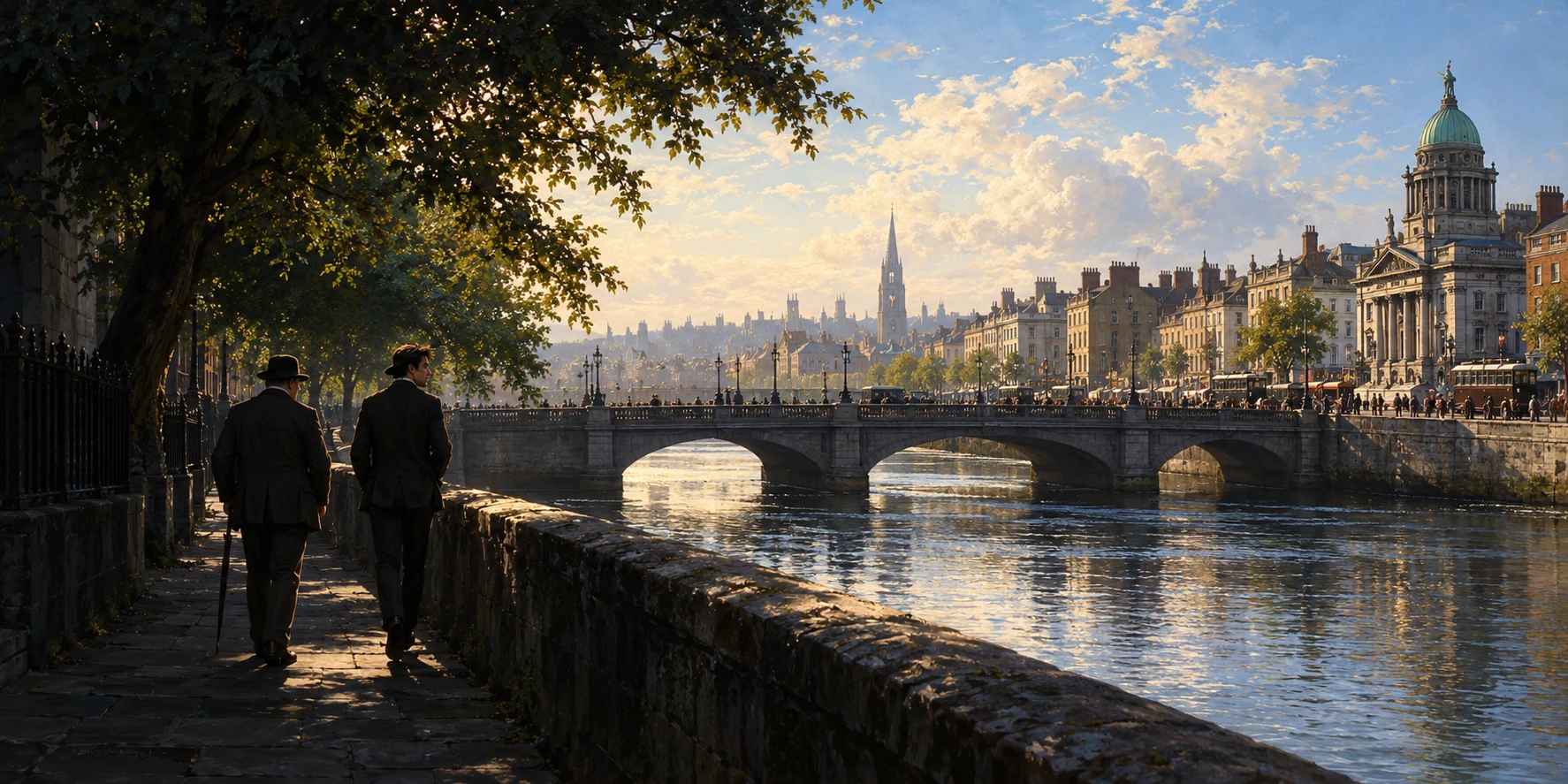
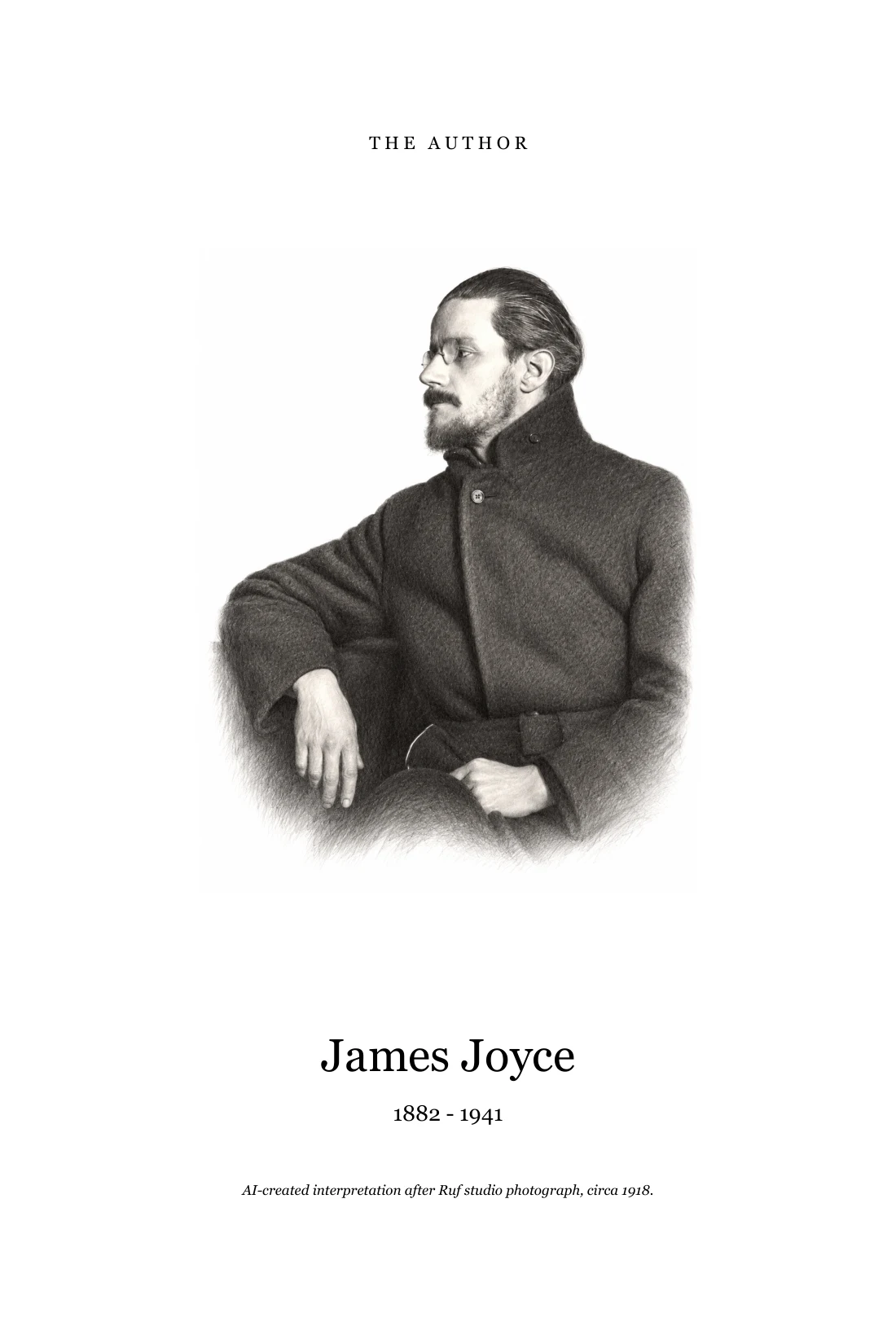
The best way to read Ulysses is to know its simple shape before you begin, to accept that you won’t catch everything, and to keep going through the difficult early chapters until you meet Leopold Bloom. The whole novel follows a handful of Dubliners through a single ordinary day, 16 June 1904, and each of its eighteen episodes is written in a different style. Once you know that, much of the apparent chaos starts to look like play.
James Joyce published Ulysses in Paris in 1922. It had already been partly serialised in an American magazine, which led to an obscenity prosecution, and the book could not be legally published in the United States until a court ruled in its favour in 1933. A century on, it remains a book people are proud to have read, and slightly afraid to start.
What is Ulysses about?
Very little happens, and everything does. Stephen Dedalus, the young writer from A Portrait of the Artist as a Young Man, wakes in a tower by the sea, teaches a class and walks on the beach. Leopold Bloom, a mild, curious, kindly advertising salesman, makes breakfast for his wife Molly, goes to a funeral, works a little, eats lunch, wanders Dublin and worries about Molly’s afternoon visitor. Late at night his path crosses Stephen’s. The final episode belongs to Molly.
The title points to Homer. Ulysses is the Latin name for Odysseus, and each episode loosely parallels an adventure from The Odyssey: Bloom is the wandering hero, Stephen a kind of lost son, Molly the waiting wife. The parallels are often comic, and you do not need to know the Odyssey well to enjoy the book, but a one-page summary of Homer’s plot is useful to have beside you.
Stately, plump Buck Mulligan came from the stairhead, bearing a bowl of lather on which a mirror and a razor lay crossed.
James Joyce, Ulysses (1922)
How to read Ulysses: practical tips
- Learn the shape. The book has three parts: three episodes following Stephen, twelve following Bloom (and sometimes Stephen) through the day and into the night, and three about the journey home.
- Push past episode three. The opening chapters are Stephen’s, and the third, a dense interior monologue on Sandymount Strand, is where many readers stall. Episode four introduces Bloom and the book suddenly warms up.
- Don’t chase every reference. Joyce packed the book with allusions, puns and Dublin gossip. Enjoy what you catch, let the rest go, and trust that the story will carry on.
- Read it aloud. Joyce’s prose is full of music, voices and jokes that come alive when spoken. Many passages that look baffling on the page make sense when heard.
- Use a guide, but sparingly. A short summary of each episode, read before or after, keeps you oriented without spoiling the pleasure of discovery.
- Take it an episode at a time. Eighteen episodes in eighteen days is a manageable pace, and each one is a world of its own.
Why does every chapter feel different?
Because Joyce designed it that way. Each episode experiments with a new style suited to its subject. The newspaper-office episode is broken up by headlines. The episode set in a hotel bar is built like a piece of music. One chapter imitates the whole history of English prose, from Latin-flavoured chronicle to modern slang; another is written as a play script full of hallucinations; another as a long series of questions and answers. The last is Molly Bloom’s unpunctuated night-time monologue, which ends with one of the most famous words in fiction.
Knowing that each change is deliberate makes them far less disorienting. When the style suddenly shifts, it is not you; it is Joyce trying something new, and part of the fun is working out what he is up to.
Should you read Joyce’s other books first?
It helps, though it isn’t essential. A Portrait of the Artist as a Young Man introduces Stephen Dedalus and makes the opening chapters of Ulysses far easier to follow. Dubliners, Joyce’s collection of short stories, is the gentlest introduction to his city and his eye for ordinary lives, and several of its minor characters reappear in Ulysses. Our guide on how to start reading James Joyce suggests an order.
If you are worried about length, Ulysses is a big book but not the longest classic you might attempt; see where it sits in the longest classic novels. And if you want to brush up on Homer first, try how to read the Odyssey.
Bloomsday: the best time to start
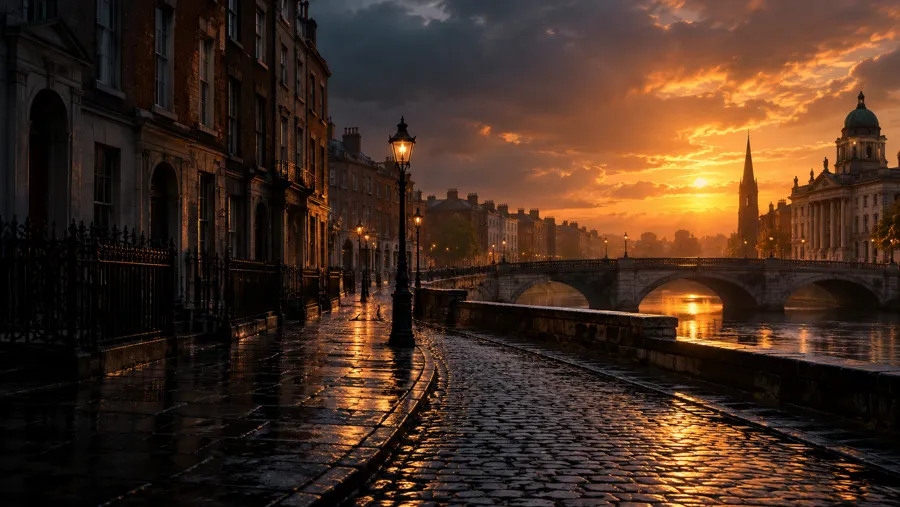
Every 16 June, readers in Dublin and around the world celebrate Bloomsday, the day on which the novel is set. There are readings, walks along the routes the characters take, and people in Edwardian costume eating Bloom’s breakfast of kidneys. The date is traditionally said to be the day Joyce first walked out with Nora Barnacle, the woman he later married.
Bloomsday makes a perfect starting line. Open Ulysses on 16 June, read the first episode with Stephen and Buck Mulligan in their tower, and see how far an ordinary day can take you. You do not have to understand everything. You just have to keep walking with Bloom.
Questions readers ask
Is Ulysses hard to read?
It can be, mainly because each episode uses a different style and the early chapters are dense. Knowing the book’s structure, reading aloud and not stopping for every reference make it far more approachable, and much of it is very funny.
Do I need to read the Odyssey before Ulysses?
No. Each episode loosely parallels part of Homer’s Odyssey, and a brief summary of the Odyssey is helpful, but you can enjoy Ulysses without having read Homer.
What day is Ulysses set on?
Ulysses takes place on 16 June 1904 in Dublin. Fans celebrate the date every year as Bloomsday, after the novel’s hero, Leopold Bloom.
Should I read A Portrait of the Artist before Ulysses?
It helps. Portrait introduces Stephen Dedalus, who opens Ulysses, so reading it first makes the early chapters easier to follow, but it isn’t essential.
 Dubliners186 pages · $13.99
 A Portrait of the Artist as a Young Man230 pages · $14.99