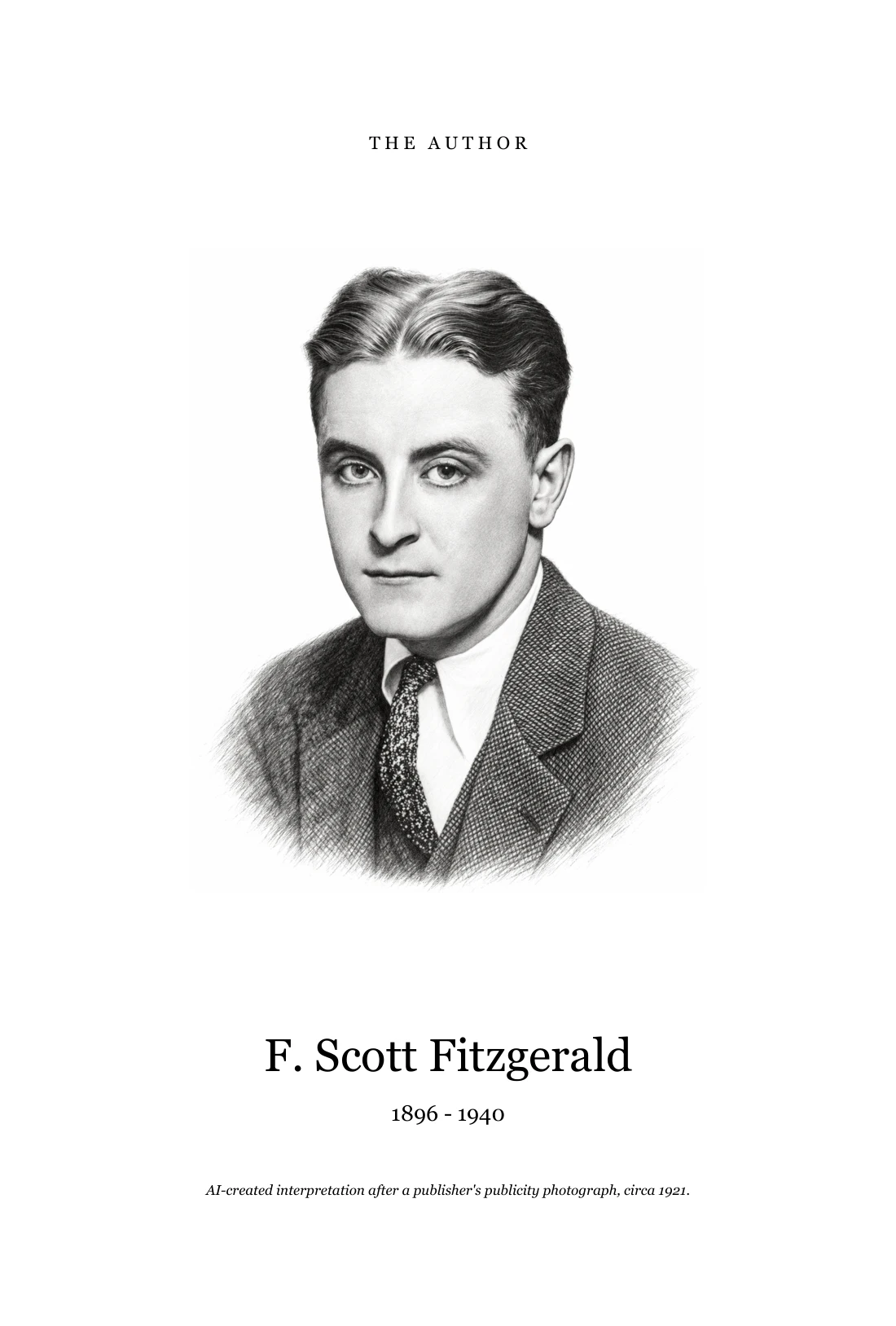
The Great Gatsby was published by Scribner’s on 10 April 1925, and by the standards F. Scott Fitzgerald had set for himself, it was a disappointment. His first two novels, This Side of Paradise and The Beautiful and Damned, had each run to around 50,000 copies. Gatsby, the book he believed was his best, had sold fewer than 20,000 by October 1925, and sales soon tailed off.
Fitzgerald was crushed. He had told his editor, Maxwell Perkins, that he was aiming at something new and finely made, and he had pinned his hopes on it. When he died in Hollywood in December 1940, aged forty-four, it is often said that he thought of himself as a failure, and unsold copies of Gatsby were reportedly still sitting in his publisher’s warehouse.
Was The Great Gatsby a success when it came out?
Commercially, it was a disappointment rather than a disaster: it sold modestly, and a 1926 Broadway play and silent film of the story brought in money. Critically, it was mixed. Some reviewers dismissed it as a slight story about unpleasant people; others saw at once that Fitzgerald had done something remarkable. The most famous admirer was T. S. Eliot, who wrote to Fitzgerald that the novel seemed to him “the first step that American fiction has taken since Henry James”.
Praise like that mattered to Fitzgerald, but it did not pay the bills. He spent much of the following fifteen years writing short stories for magazines and, eventually, screenplays, while his reputation as a novelist faded. His last completed novel, Tender Is the Night (1934), also disappointed.
How did The Great Gatsby become famous?
The revival began just after his death. Friends and critics started championing his work in the early 1940s, and during the Second World War The Great Gatsby was one of the books printed in cheap paperback Armed Services Editions and handed out free to American servicemen. A generation of young readers met it in their kitbags.
Through the 1950s it found its way onto school and university reading lists, and it has rarely left them since. Today it is routinely named among the greatest American novels, and its cover, Francis Cugat’s painting of a woman’s face floating over the lights of an amusement park, is one of the most recognisable in publishing. The book entered the public domain in the United States in 2021, which is part of why so many new editions and adaptations have appeared since; we explain how that works in Why so many classic books are in the public domain.
What is The Great Gatsby like to read today?
Short, beautiful and much sadder than the parties suggest. The narrator, Nick Carraway, rents a small house on Long Island next door to the mansion of the mysterious Jay Gatsby, and slowly learns why his neighbour throws such lavish parties and who he hopes will come. The book is barely longer than a novella, and almost every sentence is working hard.
It also has one of the great unreliable narrators. Nick tells you early on that he is inclined to reserve all judgements, and then spends the whole book judging everyone, himself included. Watching where he is honest and where he is not is one of the real pleasures of a second reading.
Readers who were made to study it at school often find it reads completely differently a few years later. The jokes are sharper, the loneliness is more obvious, and the famous last lines land with real force:
So we beat on, boats against the current, borne back ceaselessly into the past.
F. Scott Fitzgerald, The Great Gatsby (1925)
The Great Gatsby
1925. Nick Carraway is drawn into the world of his glamorous, secretive neighbour Jay Gatsby one summer on Long Island. A commercial disappointment in its day, a classic ever since.
This Side of Paradise
1920. Fitzgerald’s debut, the bestseller that made him famous overnight. Fascinating to read alongside Gatsby to see how far he came in five years.


Where to go next
To follow Fitzgerald’s career from the start, see F. Scott Fitzgerald’s early books in order, and for his short fiction try Tales of the Jazz Age. If Gatsby is on a school list near you, it keeps company with the others in High school required reading: the classics on every list.
Whether it is your first time or your fifth, it is a book that rewards the evening you give it. Open The Great Gatsby and watch for the green light across the bay.
Questions readers ask
Was The Great Gatsby a success when it was published?
Not commercially. It sold fewer copies than Fitzgerald’s first two novels and drew mixed reviews, though some writers, notably T. S. Eliot, praised it highly.
When did The Great Gatsby become popular?
After Fitzgerald’s death in 1940. Copies were given to American servicemen during the Second World War, and from the 1950s it became a staple of school and university reading lists.
Did Fitzgerald know The Great Gatsby would become a classic?
No. He believed it was his best work, but when he died in 1940 it was out of fashion and he is often said to have considered himself a failure.
 The Beautiful and Damned364 pages · $18.99
 Tales of the Jazz Age266 pages · $15.99
 All the Sad Young Men194 pages · $13.99