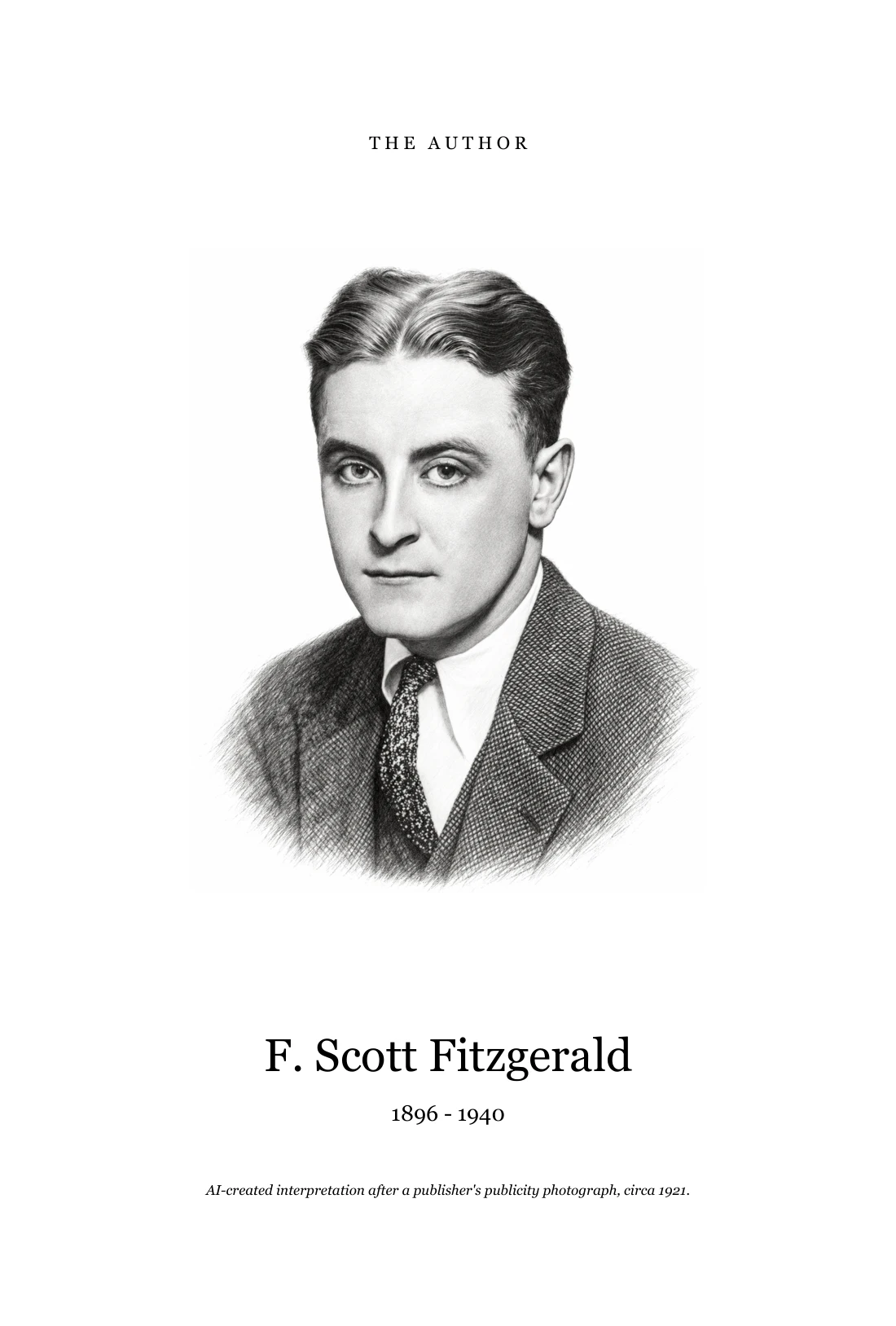
Of the first Great Gatsby film, nothing survives but a trailer made up of short clips. Paramount released it in 1926, directed by Herbert Brenon, with Warner Baxter as Gatsby and Lois Wilson as Daisy, and the rest is lost. The novel had been published on 10 April 1925 and sold disappointingly, yet by February 1926 it was a Broadway play, and by the end of that year a film. F. Scott Fitzgerald and his wife Zelda are said to have walked out of a screening partway through.
Of all the Great Gatsby movies, it is the one we can judge least, and in some ways it is the most telling. F. Scott Fitzgerald had written a book whose plot is a short melodrama, and whose magic lives almost entirely in the sentences. A silent film had the melodrama and none of the sentences.
Every Great Gatsby film, in order
- 1926: Herbert Brenon’s silent, from Owen Davis’s stage adaptation, which opened on Broadway in February that year under the direction of George Cukor. Lost, apart from the trailer.
- 1949: Elliott Nugent’s version for Paramount, with Alan Ladd as Gatsby and Betty Field as Daisy. The censors at the Production Code Administration rejected the first script as immoral, and the rewrites added moralising touches Fitzgerald never wrote.
- 1974: Jack Clayton’s film, from a screenplay by Francis Ford Coppola, with Robert Redford, Mia Farrow as Daisy, Sam Waterston as Nick and Bruce Dern as Tom. It won Academy Awards for Theoni V. Aldredge’s costumes and Nelson Riddle’s score.
- 2000: a television film directed by Robert Markowitz, with Toby Stephens, Mira Sorvino and Paul Rudd as Nick, shown on the BBC and then on A&E in the United States.
- 2013: Baz Luhrmann’s film, with Leonardo DiCaprio, Carey Mulligan, Tobey Maguire as Nick and Joel Edgerton as Tom. It won Oscars for production design (Catherine Martin, with the set decorator Beverley Dunn) and costume design (Catherine Martin).
Why is The Great Gatsby so hard to film?
Because the novel is told by Nick Carraway, and Nick is the book. He is the one who notices the green light at the end of Daisy’s dock, who tells us what Gatsby’s smile felt like, who judges and forgives. On screen, Nick tends to become a bystander in a white suit, and the story that is left, a bootlegger, a married woman and a car accident, can look thin. Gatsby himself is kept at a distance in the book: Nick glimpses him alone on his lawn at the end of the first chapter, and they are not introduced until the third, when a stranger at a party turns out to be the host. Films, which need their star on screen, tend to bring him forward.
The films have tried different answers. The 1974 version leans on period beauty and a slow, faithful pace. Luhrmann’s 2013 film invents a frame in which Nick, an alcoholic veteran in a sanatorium, writes the story down at his doctor’s suggestion, so that Fitzgerald’s sentences can appear on screen as words. Both have their admirers. Neither quite solves the problem, which may be unsolvable.
So we beat on, boats against the current, borne back ceaselessly into the past.
F. Scott Fitzgerald, The Great Gatsby (1925), last line
Which Great Gatsby movie is best?
The 1974 film is arguably the most faithful to the novel’s plot and mood, and the most restrained. The 2013 film is the most energetic and the most divisive, and it grossed more than $350 million worldwide. The 1949 film is a curiosity, shaped by the censors, and the 1926 film exists only as a fragment. If you have seen just one, the novel will surprise you: it is shorter, funnier and stranger than any of them, and it takes a single afternoon.
Gatsby on stage
The book has also been an opera and a musical. John Harbison’s opera, commissioned by the Metropolitan Opera, had its premiere on 20 December 1999. A Broadway musical with music by Jason Howland, lyrics by Nathan Tysen and a book by Kait Kerrigan opened in April 2024, and the novel’s entry into the US public domain on 1 January 2021 has made new retellings easier to produce.
The Great Gatsby
1925. A summer on Long Island, a mysterious host, a woman across the bay. Short enough for one sitting, and every page repays rereading.
Tales of the Jazz Age
1922. Fitzgerald’s second story collection, with “The Curious Case of Benjamin Button” and the novella-length “May Day”.
This Side of Paradise
1920. The debut that made his name, following a young man from Princeton into the post-war world.


For the book’s rocky start, read Did you know The Great Gatsby disappointed in Fitzgerald’s lifetime?, and for everything else he wrote, F. Scott Fitzgerald’s books in order. If Gatsby leaves you wanting more of the same mood, see books like The Great Gatsby.
Then read the novel, slowly, for Nick’s voice. Open The Great Gatsby and you will see at once what every film has been chasing.
Questions readers ask
How many Great Gatsby movies are there?
Five screen versions are best known: the lost 1926 silent, the 1949 film with Alan Ladd, the 1974 film with Robert Redford, a 2000 television film with Toby Stephens and Baz Luhrmann’s 2013 film with Leonardo DiCaprio.
Which Great Gatsby movie is most faithful to the book?
The 1974 film, directed by Jack Clayton from a Francis Ford Coppola screenplay, follows the novel’s plot and tone most closely. The 2013 film adds a framing story in which Nick writes the book in a sanatorium.
Does the 1926 Great Gatsby film still exist?
No. The 1926 silent film is lost. Only a short trailer survives.
Is The Great Gatsby in the public domain?
Yes, in the United States. The novel, published in 1925, entered the US public domain on 1 January 2021.
 The Beautiful and Damned364 pages · $18.99
 All the Sad Young Men194 pages · $13.99