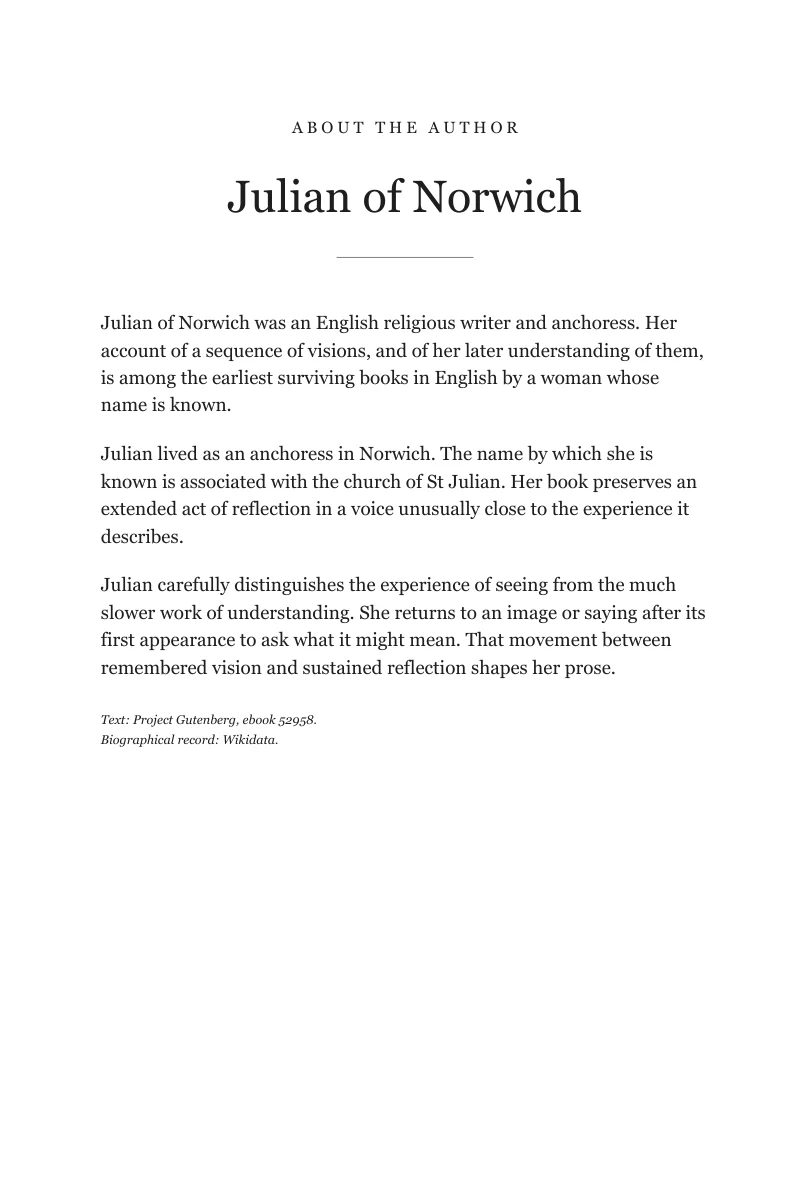
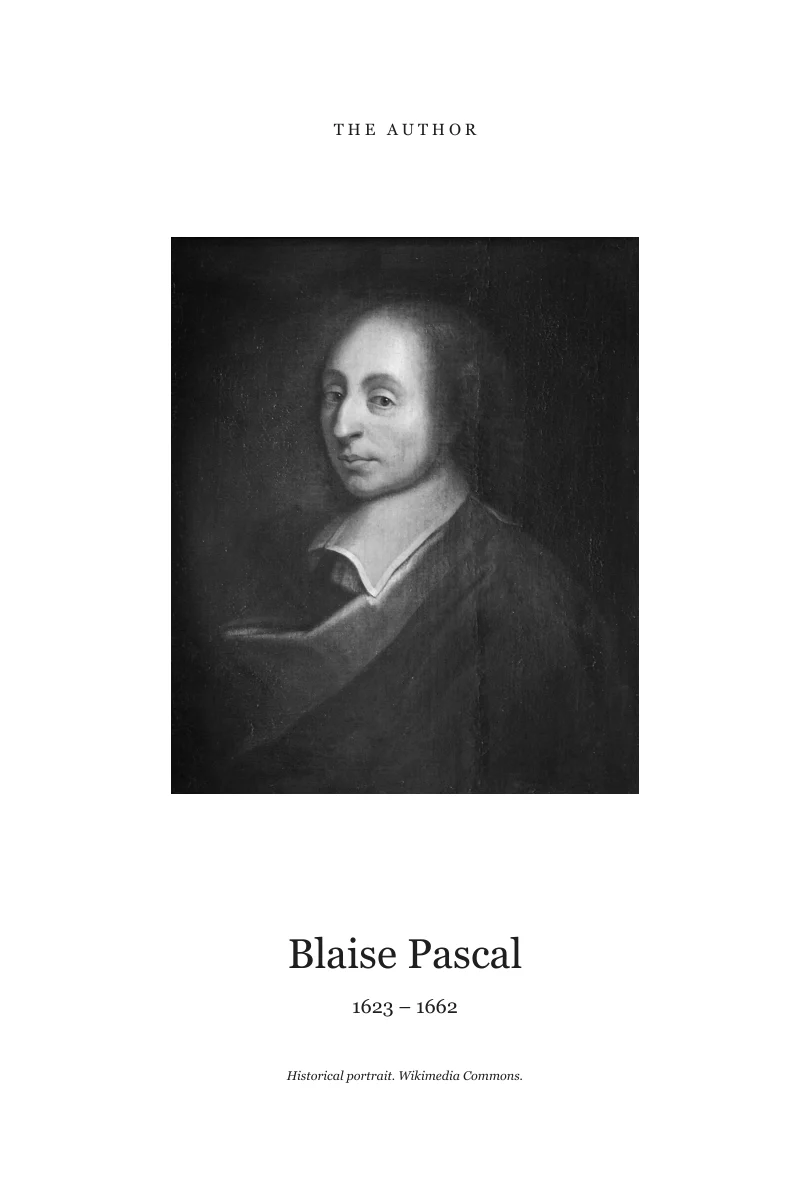
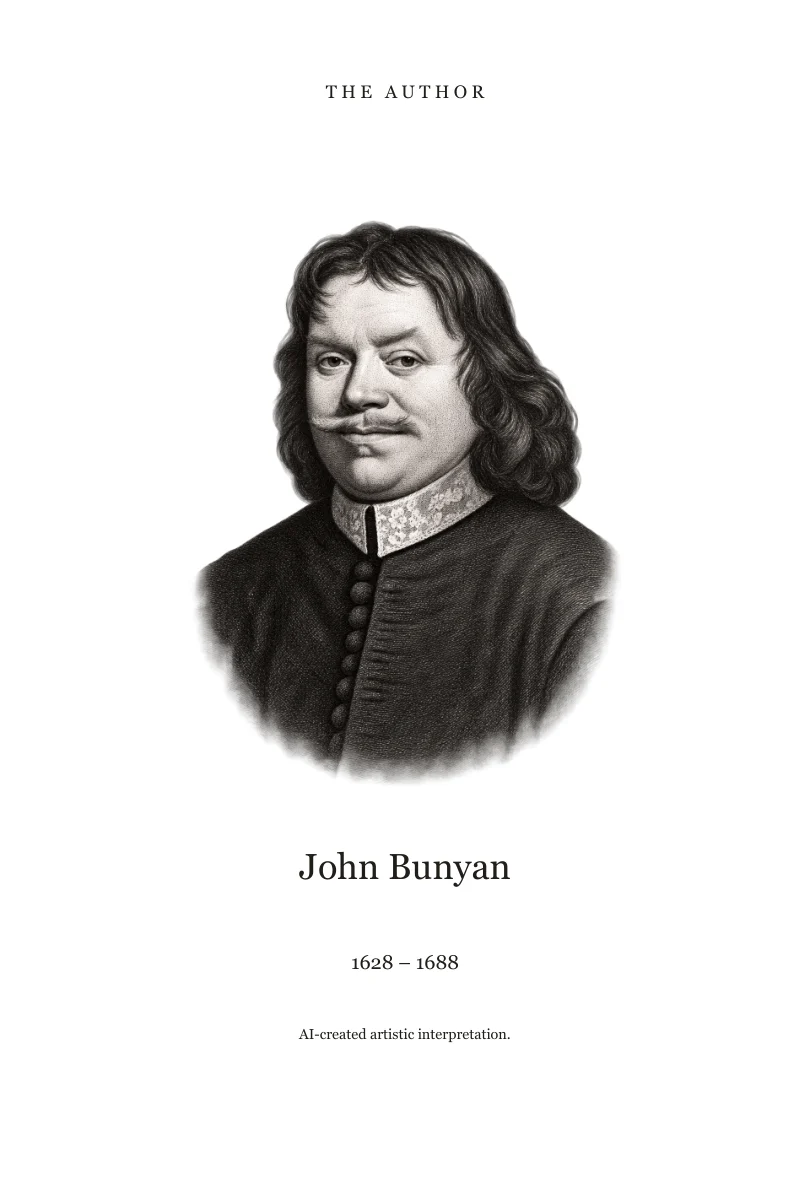
In 1670 two very different books about the inner life were printed for the first time. In France, friends of Blaise Pascal, eight years dead, published the bundles of notes he had left behind as the Pensées. And a Benedictine monk, Serenus de Cressy, put into print the long version of a book written nearly three centuries earlier by a woman who spent her life in a cell attached to a church in Norwich.
Those two books sit at opposite ends of this list of classic spiritual books: one is a brilliant mind arguing with itself, the other a quiet record of what one woman saw. Between them come a bishop’s confession, a prisoner’s dream, a psychologist’s case-book and a journalist’s history of the human race.
- 397–400
Augustine writes the Confessions in Latin, in his early forties
- May 1373
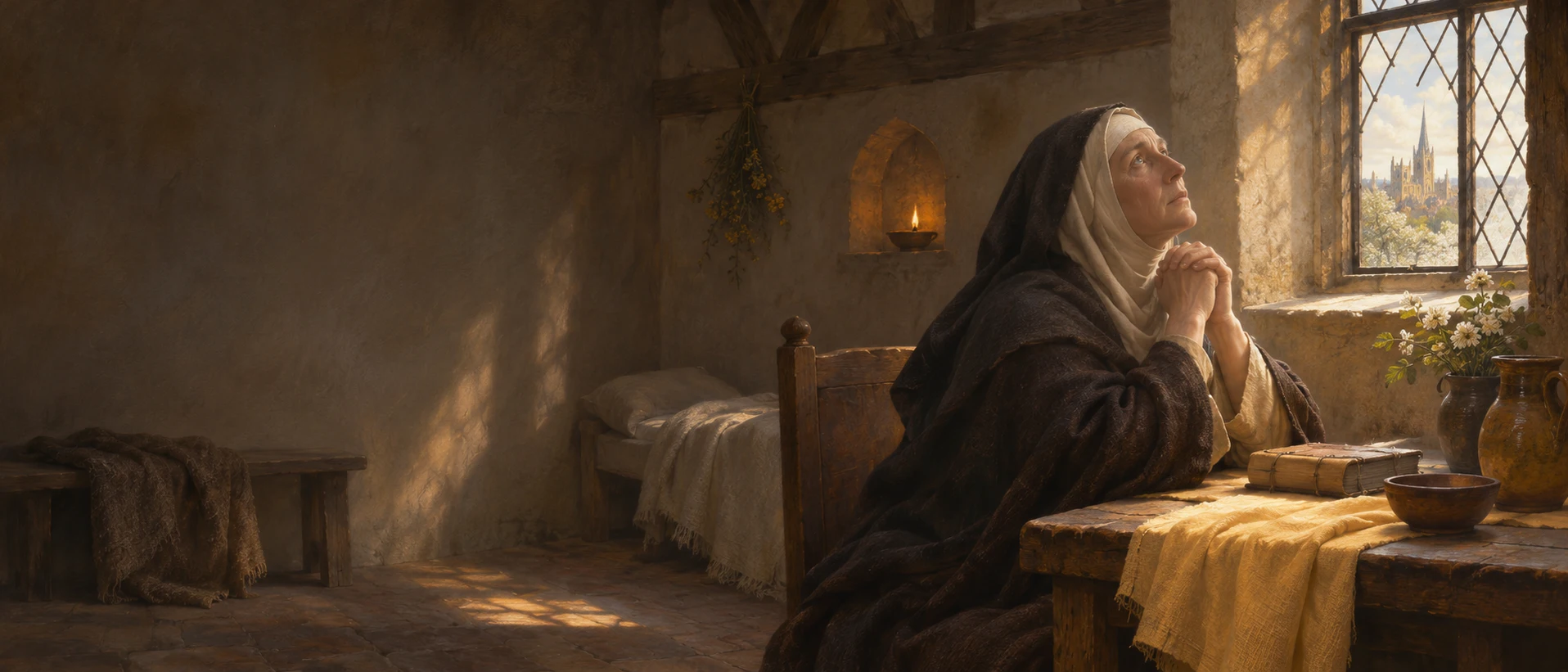
Julian of Norwich, gravely ill at thirty and a half, receives the visions behind Revelations of Divine Love
- 1654
On the night of 23 November, Pascal has the experience he records on a scrap of paper and keeps sewn into his coat
- 1670
The Pensées are published, eight years after Pascal’s death; Julian’s Long Text is printed the same year
- 1678
John Bunyan publishes The Pilgrim’s Progress, begun in Bedfordshire’s county prison
- 1902
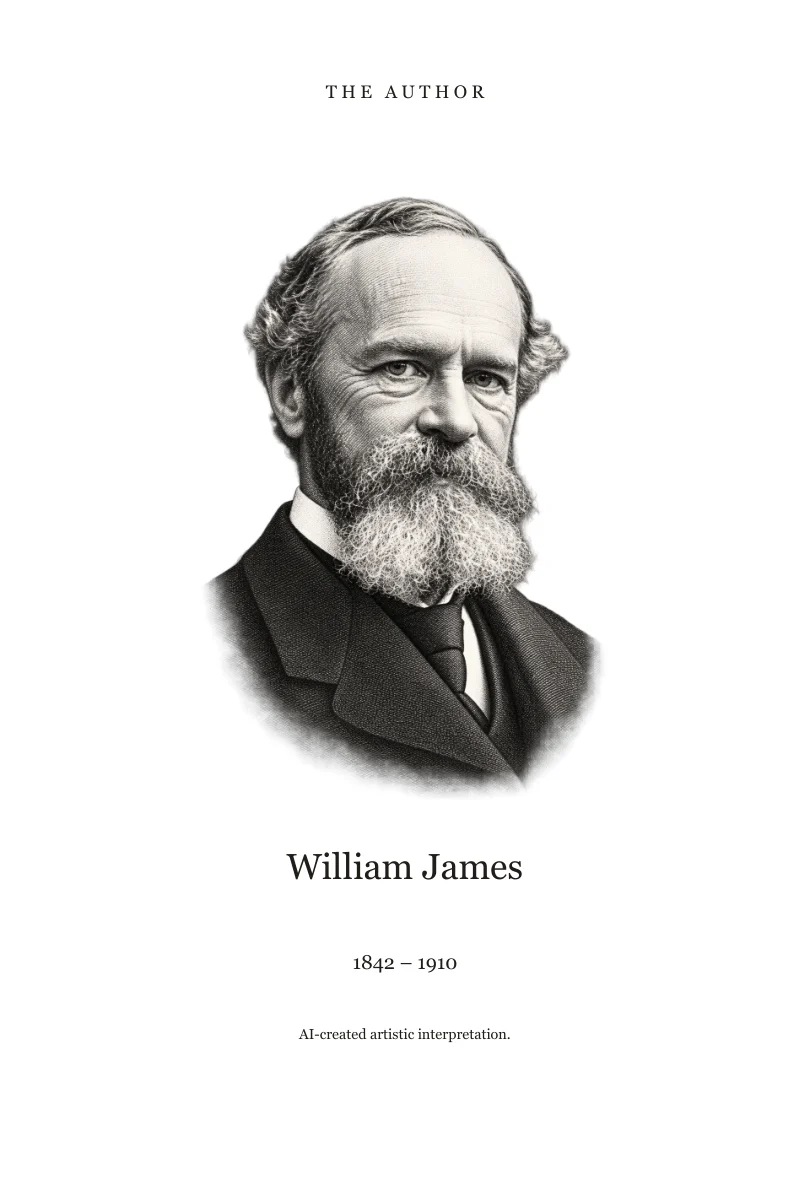
William James’s Edinburgh lectures become The Varieties of Religious Experience
- 1925
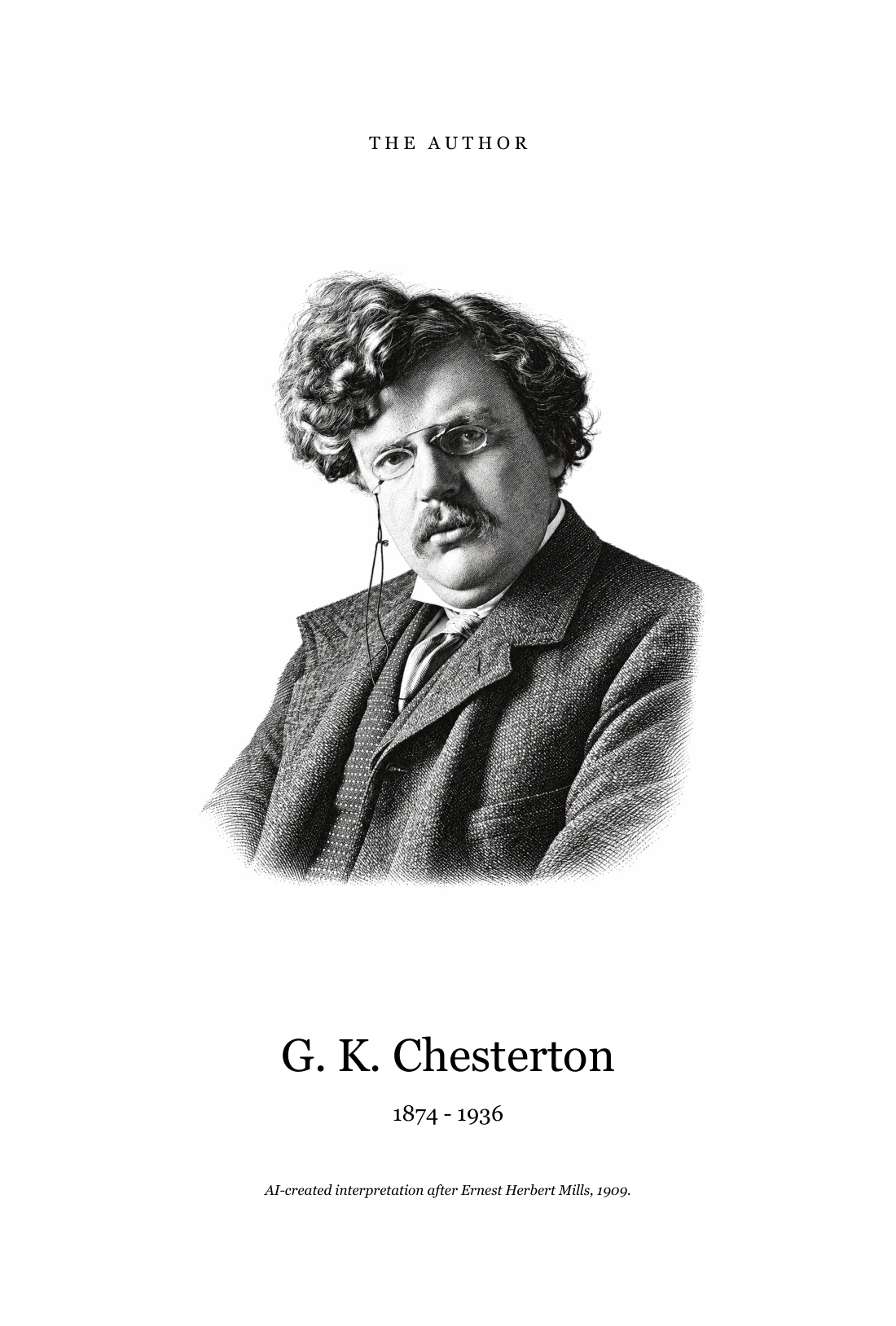
G. K. Chesterton answers H. G. Wells with The Everlasting Man
The first-person classics: Augustine and Julian
Saint Augustine invented a way of writing about the soul that is still in use. The Confessions runs to thirteen books, and the first nine are a life story told directly to God: a clever, restless boy in North Africa, a career teaching rhetoric, a mother who would not stop praying for him. Its most famous small scene is a theft of pears at sixteen, committed, he insists, not from hunger but for the pleasure of doing wrong.
Thou madest us for Thyself, and our heart is restless, until it repose in Thee.
Augustine, *Confessions*, Book I (tr. E. B. Pusey)
Almost a thousand years later, Julian of Norwich gave English its first book known to have been written by a woman. We do not know her real name; she is called after St Julian’s Church in Norwich, where she lived as an anchoress, walled into a cell. In May 1373, at thirty and a half, she fell so ill that she was given the last rites, and in that illness she saw the series of visions she spent the rest of her life thinking about. She wrote a short account soon after, and a much longer one many years later.
Her book is tender where Augustine is anguished. The line everyone knows comes from the thirteenth showing, and in context it is not a platitude but an answer to the hardest question she could ask, about why sin was allowed at all. Her reputation spread: the mystic Margery Kempe recorded going to her for counsel.
It behoved that there should be sin; but all shall be well, and all shall be well, and all manner of thing shall be well.
Julian of Norwich, *Revelations of Divine Love* (ed. Grace Warrack)
The Confessions of St. Augustine
The original spiritual autobiography. Read the first nine books as a memoir of a brilliant, unhappy young man; the last four turn to memory, time and Genesis.
Revelations of Divine Love
Sixteen showings, fifteen of them on a single May morning in 1373 and the last the following night, pondered for decades. Gentle, strange and surprisingly modern in its picture of Christ as mother.



Faith under pressure: Pascal and Bunyan
Pascal was one of the great mathematicians of his century before he was a religious writer, and the Pensées read like it: compressed, numbered, sometimes a single sentence. He died in 1662, aged thirty-nine, leaving notes for a defence of Christianity he never finished. His editors could not work out the intended order, so they published the fragments, and the unfinished state turned out to be the book’s strength. You can open it anywhere. Fragment 277 is the one people quote without knowing its source: “The heart has its reasons, which reason does not know.”
John Bunyan began The Pilgrim’s Progress in prison, jailed for preaching outside the Church of England. The book is framed as a dream: Christian leaves the City of Destruction with a burden on his back and walks towards the Celestial City, by way of the Slough of Despond, Vanity Fair and a fight with Apollyon. It is the most readable book on this list, an adventure story whose every hill and giant stands for something.
Pascal's Pensées
Fragments on boredom, diversion, the two infinities and the famous wager. Best read a few pages at a time, the way it was written.
The Pilgrim’s Progress
A quest narrative written by a prisoner, with names like Mr Worldly Wiseman and Giant Despair. Shorter and livelier than its reputation.


The modern argument: William James and Chesterton
William James, elder brother of the novelist Henry, was a psychologist, and The Varieties of Religious Experience began as twenty Gifford Lectures at the University of Edinburgh in 1901–02. James quotes conversion stories, mystics and ordinary believers at length and asks what these experiences are like and what they do to people, which makes it the most generous book here towards readers of any belief or none.
G. K. Chesterton wrote The Everlasting Man (1925) partly as a reply to H. G. Wells’s The Outline of History, which told the human story as a smooth climb from the animals. Chesterton argues that seen plainly, man is a very odd animal and Christ a very odd figure. C. S. Lewis later credited the book with first showing him the Christian outline of history in a form that made sense to him, and called it the best popular apologetic he knew.
The Varieties of Religious Experience: A Study in Human Nature
Lectures on conversion, saintliness and mysticism, built from first-hand accounts. A landmark of psychology as much as of religion.
The Everlasting Man
Cave paintings, ancient empires and the Gospels, argued with Chesterton’s usual paradox and gusto. His detective stories are another way in.


Which of these classic spiritual books should you read first?
It depends on the reader. If you like stories, start with The Pilgrim’s Progress. If you like aphorisms and argument, the Pensées. If you want a voice speaking directly to you across centuries, Julian or Augustine. If you are curious about belief from the outside, William James.
These books also sit naturally beside the philosophers. Marcus Aurelius’s private notebook is discussed in Did you know Marcus Aurelius never meant Meditations to be read?, the ancient thinkers who came before Augustine in Ancient wisdom beyond Plato, and Chesterton’s fiction in Where to start with G. K. Chesterton.
For a first evening, though, choose the shortest door. Revelations of Divine Love was written by someone who called herself “a simple creature unlettered”, and it has been read for six hundred years by people who are neither.
Questions readers ask
What are the most famous classic spiritual books?
Augustine’s Confessions, Julian of Norwich’s Revelations of Divine Love, Pascal’s Pensées and Bunyan’s The Pilgrim’s Progress are among the most widely read. William James’s The Varieties of Religious Experience and Chesterton’s The Everlasting Man are the best-known modern additions.
Who was Julian of Norwich?
Julian was an English anchoress who lived in a cell attached to St Julian’s Church in Norwich. After a near-fatal illness in May 1373 she wrote down a series of visions, and her Revelations of Divine Love is the earliest surviving book in English known to have been written by a woman.
Where does “the heart has its reasons” come from?
It is from Blaise Pascal’s Pensées, fragment 277 in the standard English translation: “The heart has its reasons, which reason does not know.” The Pensées were published in 1670, eight years after his death.
Do you need to be religious to read these books?
No. They are classics of autobiography, psychology and argument as well as faith, and William James in particular writes for readers of any belief or none.