In the churchyard of Trinity Church, at the head of Wall Street in New York, there is a stone bearing the name Charlotte Temple. Nobody knows whether anyone lies beneath it, and the girl it names is the heroine of a novel. In 1900 a New York newspaper called it “the Mecca of sentimental visitors”, reporting about fifty callers a day.
That is how deep Charlotte Temple went. Susanna Rowson’s little novel, first published in London in 1791 and in Philadelphia in 1794, became one of the earliest best-sellers in American history. It is often described as the most popular novel in the United States until Uncle Tom’s Cabin arrived in 1852.
Was Charlotte Temple the first American best-seller?
It has a strong claim to be one of the first, though “first” depends on how you count. The book was written in England by an English-born author, but it was in America, after Mathew Carey published it in Philadelphia in 1794, that it took off. Counts of its editions vary — some accounts put the total above two hundred, and bibliographers have kept finding more since the first attempts to list them — but on any reckoning it was reprinted for generations.
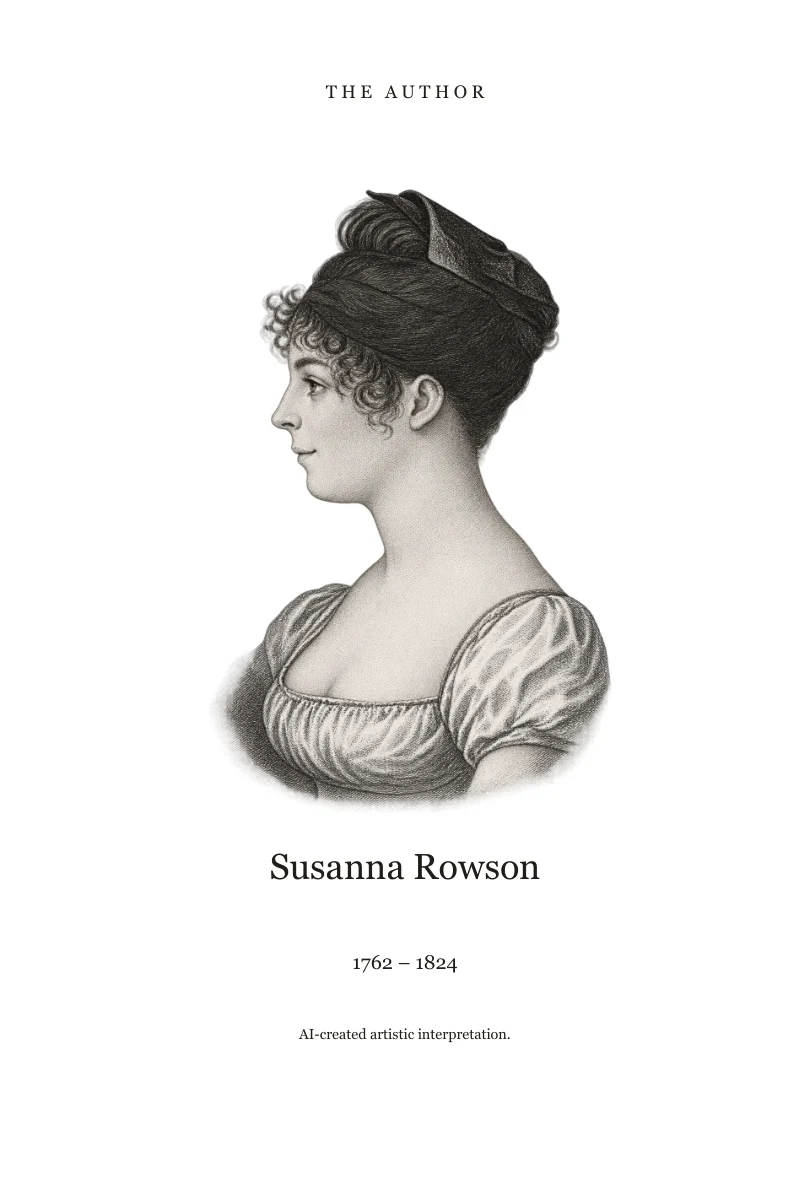
Rowson herself straddled the two countries. Born in Portsmouth in 1762, she was taken to Massachusetts as a small child, where her father, a British naval officer, had been posted. Because he stayed loyal to the Crown, the family’s property was confiscated during the Revolution and they were sent back to England in 1778. She later returned to America as an actress, joined a theatre company in Philadelphia, and in 1797 left the stage to open the Young Ladies’ Academy in Boston. She died there in 1824.
What is Charlotte Temple about?
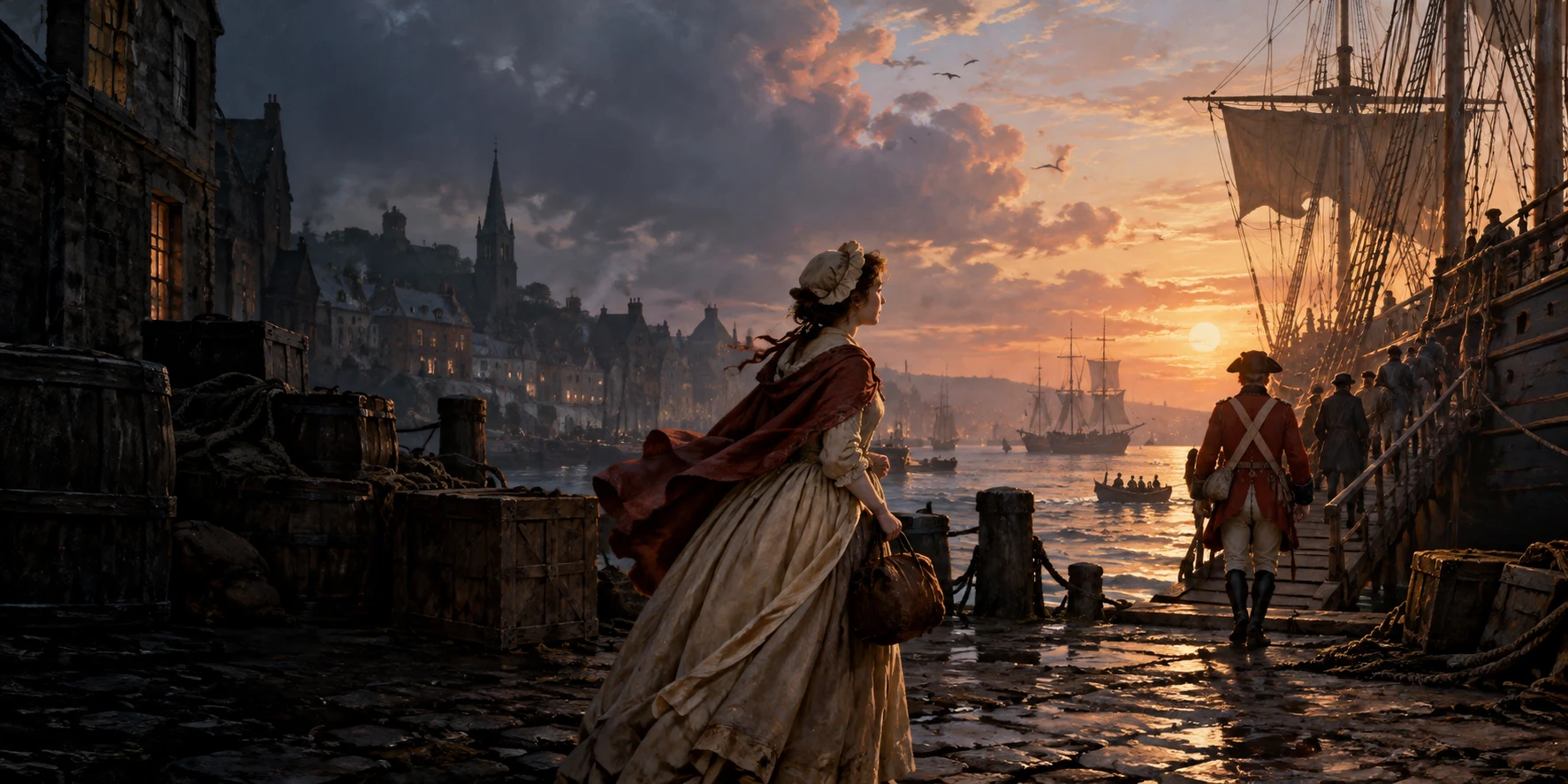
Charlotte is fifteen, the much-loved only child of a gentle family, at boarding school in Chichester. A dashing lieutenant, Montraville, notices her as his regiment waits to sail for the war in America. With the help of a scheming French teacher, Mademoiselle La Rue, and Montraville’s faithless friend Belcour, she is persuaded to run away with him. In New York, far from home, she is left to face the consequences alone.
The war is never far off. Montraville and Belcour are British officers about to sail against the rebellious colonies, and when Montraville first sighs over Charlotte, Belcour reminds him that “a musket ball from our friends, the Americans, may in less than two months make you feel worse.” For the novel’s American readers a generation later, the villains of the piece were wearing the enemy’s red coat.
It does not end well, and Rowson never pretends it will. What made readers weep was not suspense but sympathy, and the novel’s insistence that what happened to Charlotte could happen to them. Rowson claimed in her preface that the story had been told to her by an old lady who had known the real Charlotte, and scholars think Montraville may owe something to her own cousin, John Montresor.
I am writing a tale of truth: I mean to write it to the heart.
Susanna Rowson, Charlotte Temple
A narrator who speaks to you
The surprise for modern readers is the voice. Rowson’s narrator interrupts the story constantly, addressing anxious mothers, sceptical readers and, above all, young women. She apologises for digressions, argues with imagined critics, and pleads with her audience to learn from Charlotte’s mistakes.
Oh my dear girls—for to such only am I writing—listen not to the voice of love, unless sanctioned by paternal approbation.
Susanna Rowson, Charlotte Temple, Chapter VI
It can sound preachy, but it is also oddly intimate, like reading over someone’s shoulder as she writes a letter to her daughter. Rowson even gives one chapter the title “Which People Void of Feeling Need Not Read”.
Is Charlotte Temple worth reading today?
Yes, if you are curious about where the American novel began, or about how earlier readers read. At 114 pages in our edition it is quickly read, and it gathers speed once Charlotte leaves school. It also sits at the start of a line that runs through the great nineteenth-century best-sellers; see Did you know Uncle Tom’s Cabin was the best-selling novel of the 19th century? for the book that finally overtook it, and Essential American classics for where to go next. For women who wrote the books that shaped their age, try our feminist classics.
Begin with the preface, where Rowson insists the tale is true, then follow two officers into a Chichester churchyard as a school comes out of church. By the time Montraville tips his hat, you will know why a whole country read on.
Questions readers ask
Who wrote Charlotte Temple?
Susanna Rowson, an English-born novelist, actress and teacher who spent much of her life in America. It was first published in London in 1791 and in Philadelphia in 1794.
Is Charlotte Temple a true story?
Rowson called it a “tale of truth” and said it was based on a story told to her by someone who knew the real Charlotte. The characters may draw on real people, including Rowson’s cousin John Montresor, but the novel is fiction.
Is Charlotte Temple buried in Trinity Churchyard?
A stone bearing Charlotte Temple’s name stands in Trinity Church’s churchyard in New York, but it is not known whether anyone is buried there. It became a place of pilgrimage for the novel’s readers.