
In the same way, these two romances form a pair, like twins of opposite sexes.
Honoré de Balzac, dedication to Cousin Betty (1846), translated by James Waring
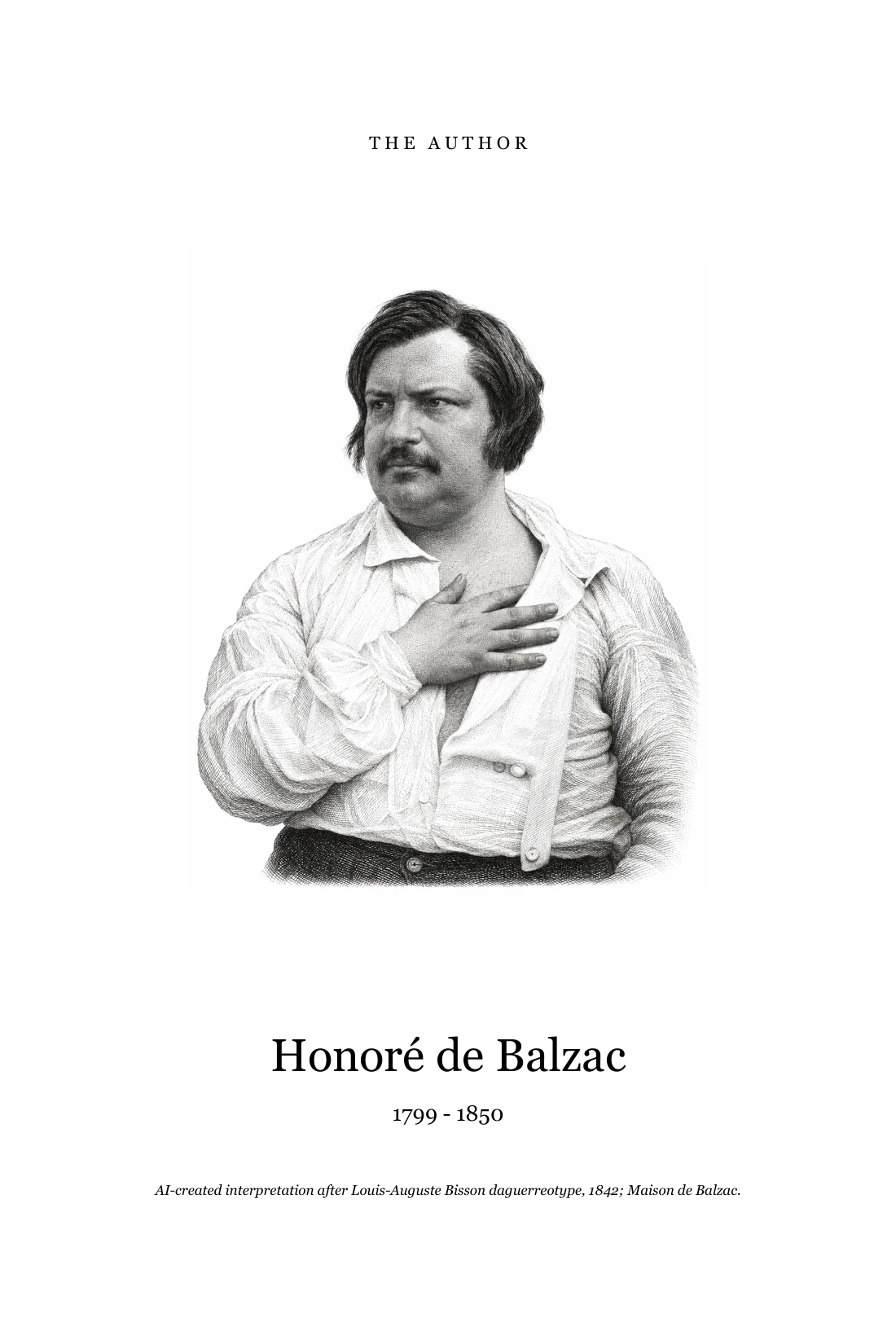
The twins are La Cousine Bette and Le Cousin Pons, which Honoré de Balzac published under one title, Les Parents pauvres, or The Poor Relations. One is about a poor female relation, the other about a poor male one, and both are about what a comfortable Parisian family does to the cousin it tolerates. They were among the last novels he finished before his death in August 1850, and many critics count Cousin Bette the last of his masterpieces.
The two share a theme, not a plot, so either can be read alone. If you want both, read Cousin Bette first, the order in which they appeared, and keep Cousin Pons for afterwards: it is shorter, gentler on the surface and, in the end, just as unforgiving.
Which came first, Cousin Pons or Cousin Bette?
Pons, strictly speaking. After a week’s rest at the Château de Saché in June 1846, Balzac went back to Paris and started a short story called “Le Parasite”, about a sponging old musician. He meant from the start to pair it with a second story, and for that one he borrowed a premise from his sister, Laure Surville, who had published a tale called “La Cousine Rosalie” in a children’s journal in 1844.
The second story overtook the first. Balzac wanted to prove he could beat Eugène Sue, the king of the newspaper serial, at his own game, and he wrote Cousin Bette, one of his longest novels, in about two months. It ran in Le Constitutionnel from 8 October to 3 December 1846. Normally he rewrote furiously on the printer’s proofs; this time he sent the copy in piece by piece without seeing a single proof, averaging eight pages a day. Le Parasite then grew, during 1847, into the full-length Cousin Pons.

Cousin Bette: the poor relation’s revenge
Lisbeth Fischer is the peasant cousin of the beautiful Adeline Hulot, unmarried at forty-two, patronised by the family and seething. Adeline’s husband, Baron Hulot, is ruining them all with his mistresses. When the Hulots’ daughter steals the one thing Bette loves, a penniless Polish sculptor named Wenceslas Steinbock, Bette sets about destroying the family from inside, with the help of the ravishing and entirely mercenary Valérie Marneffe.
Bette says it plainly early in the book, in a line that could stand as the motto for the pair:
But what can a poor relation do against a rich family?
Honoré de Balzac, Cousin Betty (1846), translated by James Waring
The answer is: a great deal. Several of Balzac’s regulars wander in, including the perfumer’s clerk turned rich man Célestin Crevel, from César Birotteau, and Marshal Hulot, who first appeared as a colonel in The Chouans. Critics have compared the novel to Othello, and some read it as an early example of the naturalism Zola would make his own; see What is naturalism?.
Cousin Pons: the collector
Sylvain Pons is an elderly musician in a boulevard theatre orchestra with two passions, good dinners and collecting art. He has quietly assembled a magnificent collection, bought for small sums over decades, and he cadges meals from rich relations, the Camusot de Marville family, who put up with him as a bore. His only true friend is a German pianist, Wilhelm Schmucke, as kind and unworldly as Pons himself.
Then the relatives discover what the collection is worth. In the second half, a whole circle of vultures closes in: the concierge Madame Cibot, the junk dealer Rémonencq, the Jewish dealer Élie Magus and a seedy lawyer called Fraisier. Critics have long said that the real heroine of the book is the collection itself. Its picture of Magus draws on the stereotypes of its time, and a modern reader will notice them.
- $20.99
Cousin Betty
1846. A spinster cousin, a family she has resented for decades and a revenge carried out with perfect patience. Long, crowded and ferocious, and the one to start with.
- $16.99
Cousin Pons
1847. A kindly old musician, a priceless art collection and the relatives, servants and dealers who want it. Shorter than Bette and quietly devastating.



Cousin Bette on screen
Cousin Bette has been filmed several times. The BBC made a five-part serial in 1971 with Margaret Tyzack as Bette and Helen Mirren as Valérie Marneffe. In 1998 Des McAnuff directed a feature film with Jessica Lange in the title role and Bob Hoskins as Crevel, though it cut Valérie out altogether and changed the ending. The film in particular strays far from the book, which is darker and much funnier.
If these are your first Balzac, our guide to the Human Comedy and where to start sets them in context, and French classics everyone should read and classic novels set in Paris suggest where to go next. For the writer who learned most from these books, see Émile Zola: where to start.
Start with the spinster in her shabby room near the Louvre, sewing gold braid and nursing a grudge. Cousin Bette is Balzac at full power, and by the time you reach Cousin Pons you will know exactly what a poor relation can do.
Questions readers ask
Is Cousin Pons a sequel to Cousin Bette?
No. Balzac wrote them as a pair under the title The Poor Relations, but they have separate stories and characters. They share a theme: the poor cousin in a prosperous Parisian family.
Should I read Cousin Bette or Cousin Pons first?
Cousin Bette first, since it was serialised first, in 1846, and is the more famous. Either works alone, though, and Cousin Pons (1847) is the shorter of the two.
What does Les Parents pauvres mean?
It means The Poor Relations. It is the collective title Balzac gave to La Cousine Bette and Le Cousin Pons, his matched pair of novels about the family members the rich would rather forget.
 Father Goriot260 pages · $15.99
 Eugenie Grandet186 pages · $13.99
 The Magic Skin246 pages · $15.99
 The Chouans286 pages · $16.99