Two members of a Philadelphia balloon club are snatched out of the air at the climax of Robur the Conqueror, rescued from their own crashing airship by the flying machine they swore could never work. Then its builder lets them go, makes a short speech to the crowd below, and leaves. His last words are a promise that his invention will be shared with humanity once humanity is ready for it.
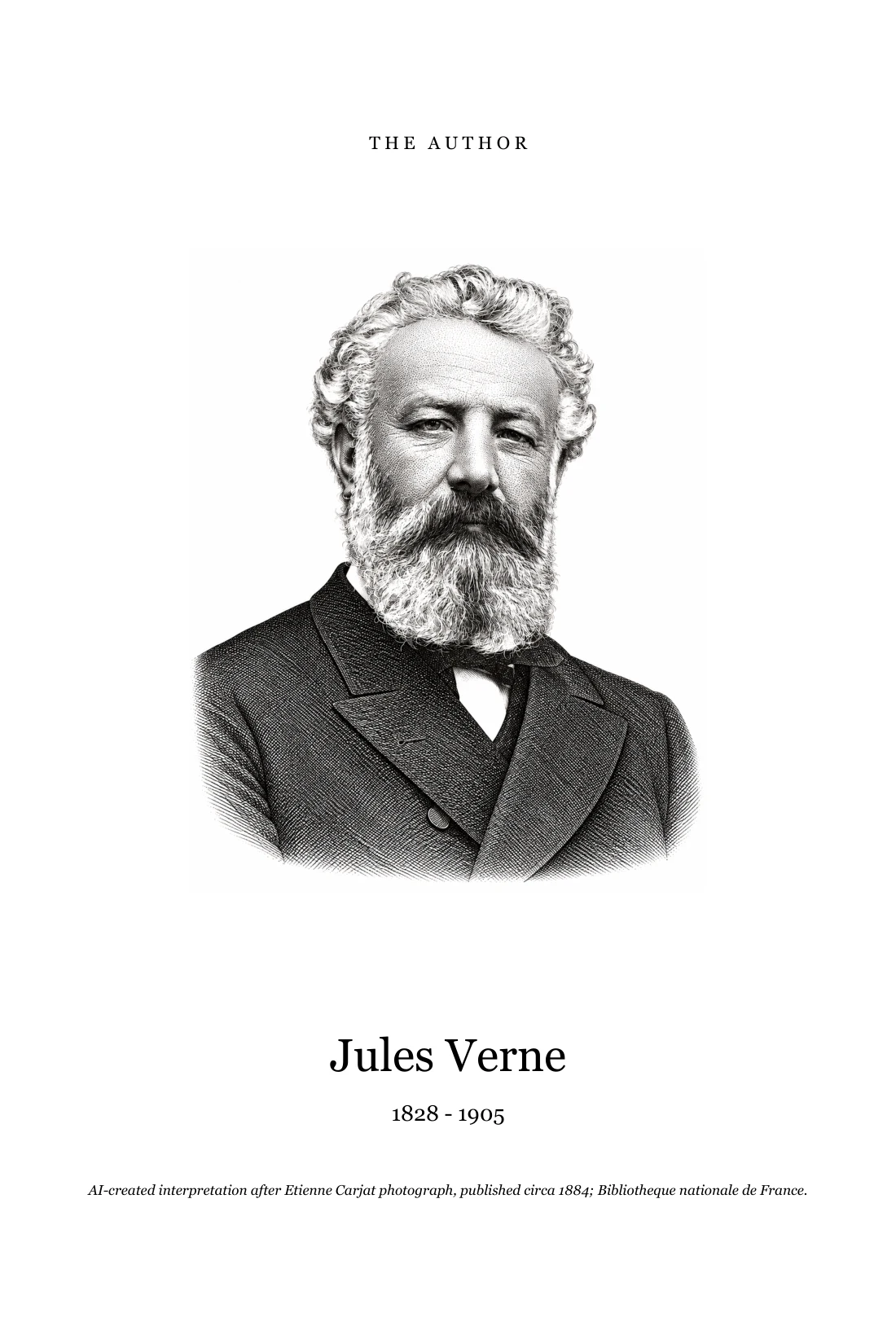
Jules Verne published that ending in 1886. In 1904, ill and nearing the end of his life, he published the sequel. Master of the World (Maître du monde) brings Robur back with a new machine and a new attitude, and it is the only other book in which he appears. So the answer to the search is short: Robur the Conqueror has one sequel, and you should read the two in publication order.
Robur the Conqueror: heavier than air
The first book is an argument about flight. The Weldon Institute of Philadelphia is certain that the future belongs to balloons, and its members are busy quarrelling over where to put the propeller on their giant dirigible, the Go-ahead. A stranger walks into their meeting and tells them they are all wrong: the future belongs to machines heavier than air. His name is Robur, from the Latin for oak and, by extension, strength.
To prove it he kidnaps the club’s president, Uncle Prudent, and its secretary, Phil Evans, and carries them round the world aboard the Albatross, a clipper-like ship lifted by a forest of vertical airscrews. The book is part travelogue, part comedy of two furious hostages, and part demonstration that Verne could imagine something like the helicopter decades before anyone flew one. Robur is proud and high-handed, but his parting words sound almost hopeful.
I go, then; and I take my secret with me. But it will not be lost to humanity. It will belong to you the day you are educated enough to profit by it and wise enough not to abuse it.
Jules Verne, Robur the Conqueror (1886)
Master of the World: the sequel to Robur the Conqueror
By 1904 the tone has changed completely. Master of the World is narrated by John Strock, a head inspector of the federal police in Washington, sent to investigate a string of strange events: rumblings from a flat-topped mountain in North Carolina called the Great Eyrie, and a vehicle that tears along the roads at a speed Strock puts at a hundred and fifty miles an hour. Then the same machine turns up at sea, then under water.
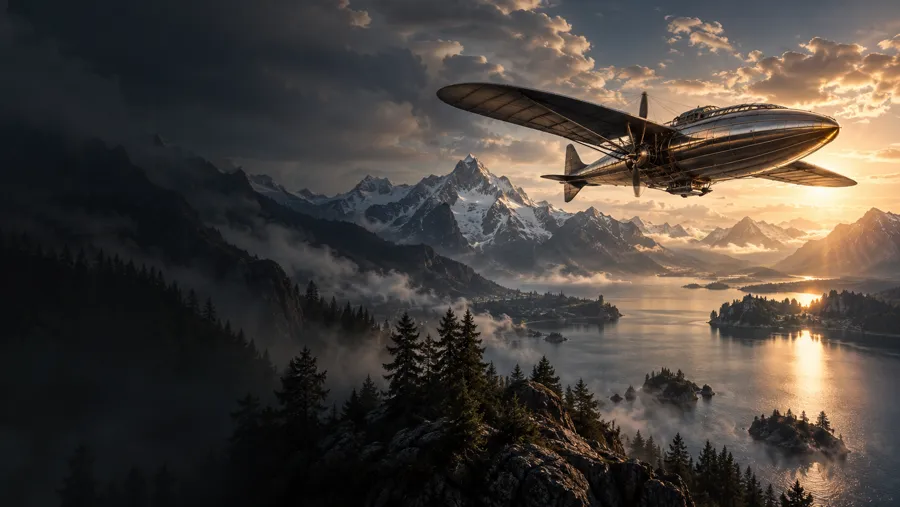
The Terror is car, boat, submarine and aircraft in one, and its owner wants the world to know he cannot be stopped. When the governments of Europe and America bid against each other to buy it, he answers with an open letter.
With it, I hold control of the entire world, and there lies no force within the reach of humanity which is able to resist me, under any circumstances whatsoever.
Jules Verne, The Master of the World (1904)
Verne keeps the writer’s name back until late in the book, though the sequel has never been much of a secret. The real surprise is what has happened to Robur in eighteen years. The man who once promised to share his secret when the world grew wise enough now uses it as a threat, and Verne no longer seems sure the world will ever be ready.
Robur the Conqueror and its sequel, in order
- $12.99
Robur the Conqueror
1886. A balloon club, a kidnapping and a world tour by flying ship. Comic, argumentative and full of Verne’s delight in machines.
- $11.99
The Master of the World
1904. A detective story that turns into a portrait of a genius gone sour. Shorter, faster and darker, published the year before Verne died.



Why read the two together?
Each stands alone, but together they make one of the clearest shifts in Verne’s whole career. Many readers know the confident Verne of Twenty Thousand Leagues and Around the World in Eighty Days, the writer who seemed to believe that engineers would make everything better. Master of the World belongs to his late, gloomier period, and it is hard not to read it as a man in his seventies looking at the new century’s machines and wondering who would end up holding them.
Robur also invites comparison with Captain Nemo, the other great Verne loner who builds a machine to put himself beyond the reach of nations. Nemo stays in the sea; Robur takes to the air, and in the sequel to everything else. For Nemo’s story, see Did you know Twenty Thousand Leagues Under the Sea is a distance, not a depth?
The 1961 film Master of the World, directed by William Witney, blends the two books, with Vincent Price as Robur and Charles Bronson as Strock, and keeps the Albatross as his ship. For where these two fit among Verne’s many novels, try Jules Verne’s Extraordinary Voyages: where to start and Jules Verne beyond the famous five, and for the inventions he got right, Classic books that predicted the future.
Start in the meeting hall in Philadelphia, with the propeller argument in full cry. Open Robur the Conqueror, and when Robur sails off promising to return, The Master of the World is waiting to show you what he came back as.
Questions readers ask
Is there a sequel to Robur the Conqueror?
Yes. Jules Verne’s Master of the World (1904) brings Robur back with a new machine, the Terror, eighteen years after the first book.
Is Robur the Conqueror the same as The Clipper of the Clouds?
Yes. The Clipper of the Clouds is an alternative English title for Robur the Conqueror (Robur-le-Conquérant, 1886).
Do you need to read Robur the Conqueror before Master of the World?
It is not essential, since the sequel recaps Robur’s first appearance, but reading them in order lets you see how far the character has changed.
What is the Terror in Master of the World?
The Terror is Robur’s second invention, a single vehicle that can drive as a car, sail as a boat, dive as a submarine and fly.
 Journey to the Centre of the Earth246 pages · $15.99
 Around the World in Eighty Days190 pages · $13.99
 The Mysterious Island556 pages · $24.99
 The Survivors of the Chancellor: Diary of J.R. Kazallon, Passenger170 pages · $13.99