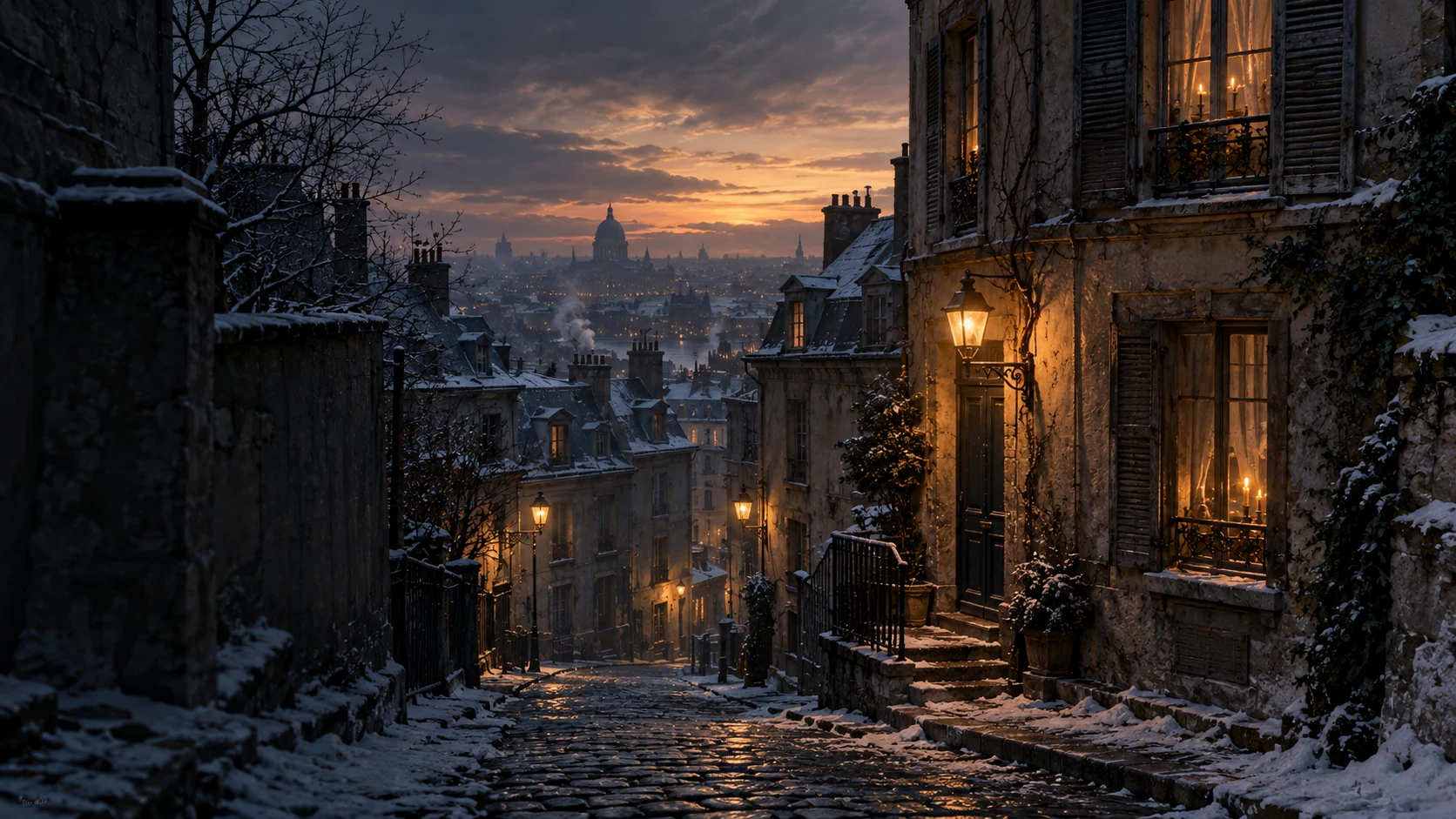
An 1810s Paris boarding house on a steep narrow street at winter dusk
PIPCUB CINEMATIC EDITIONS / PAPERBACK BOOKS

Father Goriot

Honoré de Balzac

In a shabby Paris boarding house, the ambitious young Rastignac meets an old man whose devotion to his daughters has consumed his fortune.

$15.99

Printed for you. Shipping calculated at checkout.

Checkout opening soon. Shipping & delivery Returns
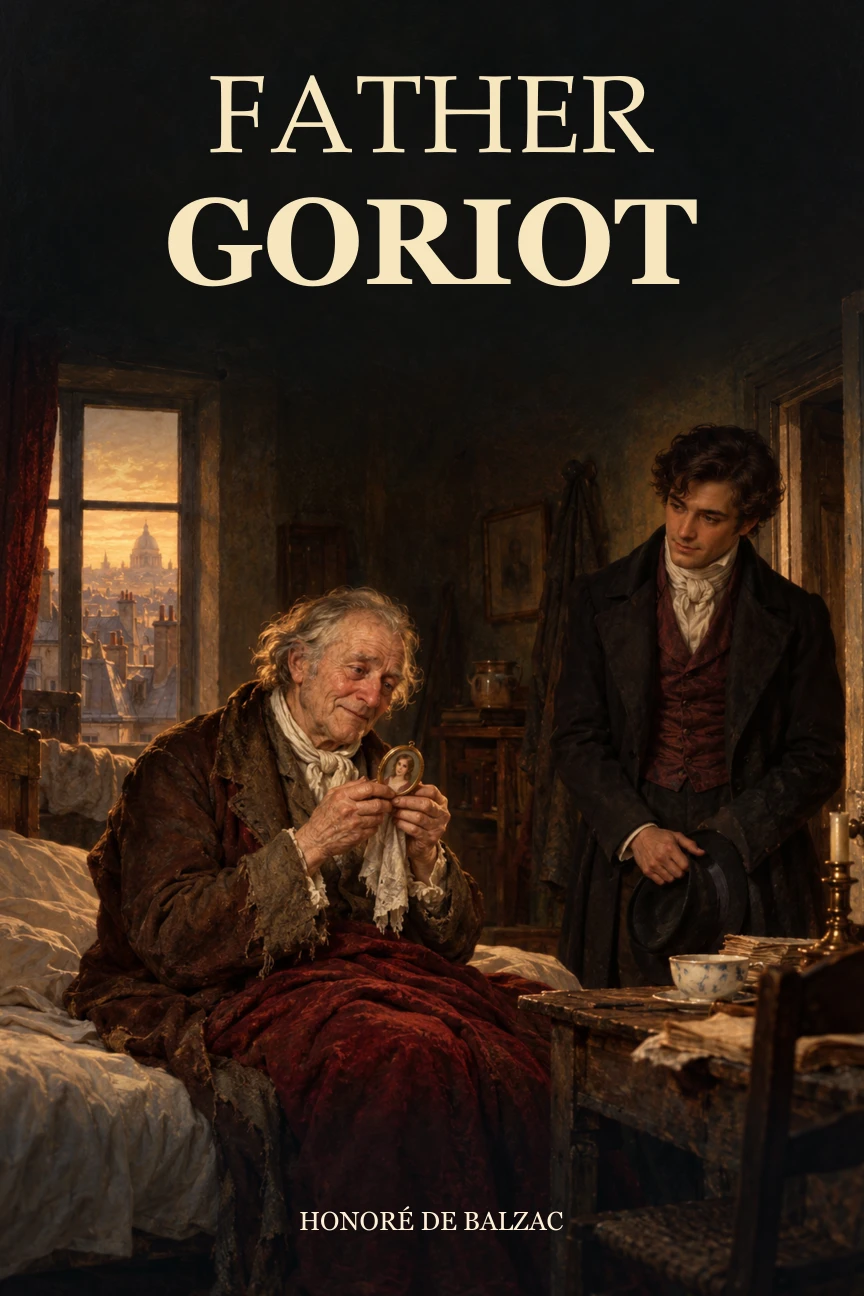
Father Goriot — actual Pipcub paperback cover
SCROLL INTO THE STORYAN IMAGINED WORLD · ORIGINAL AI ART
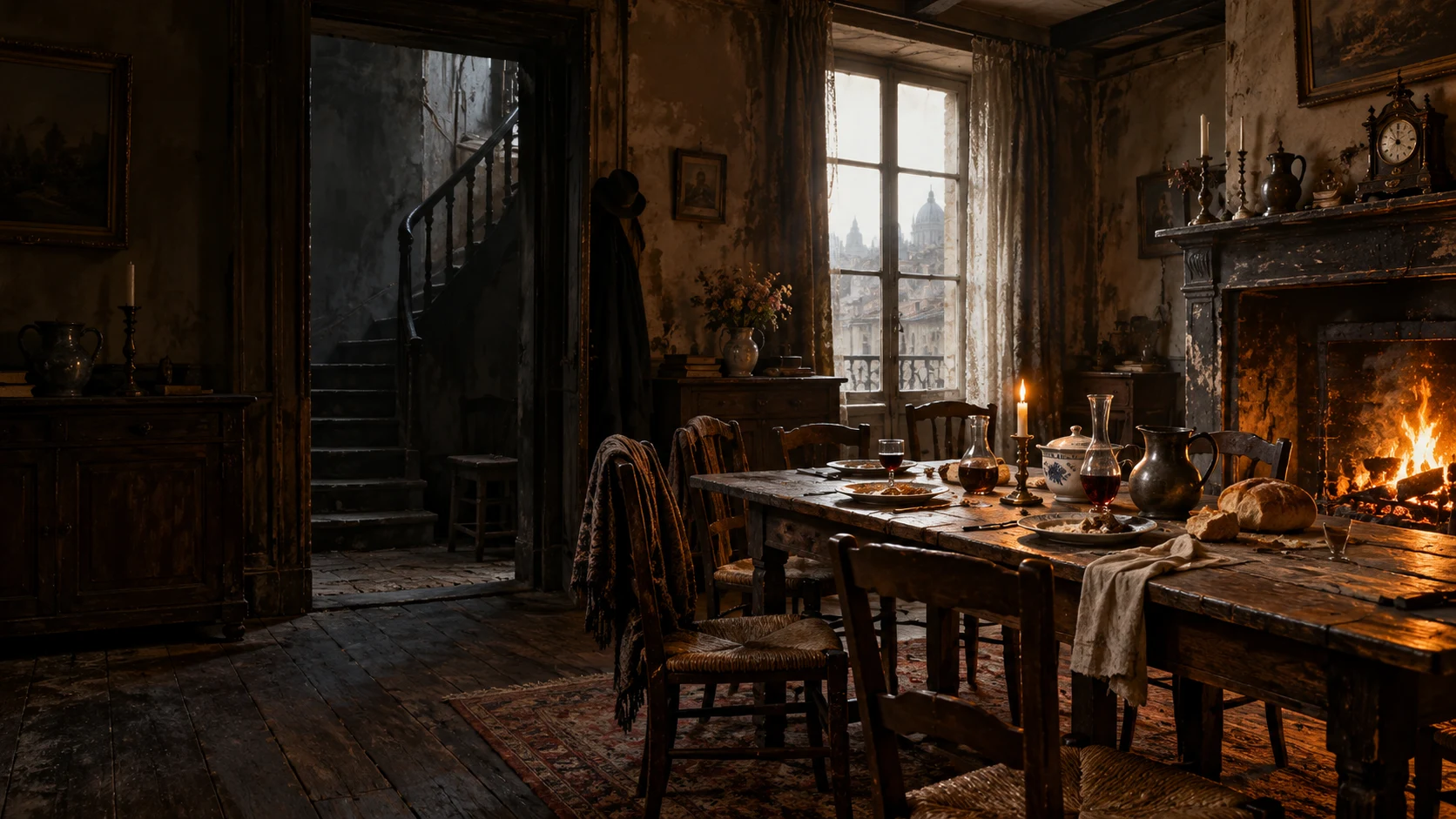
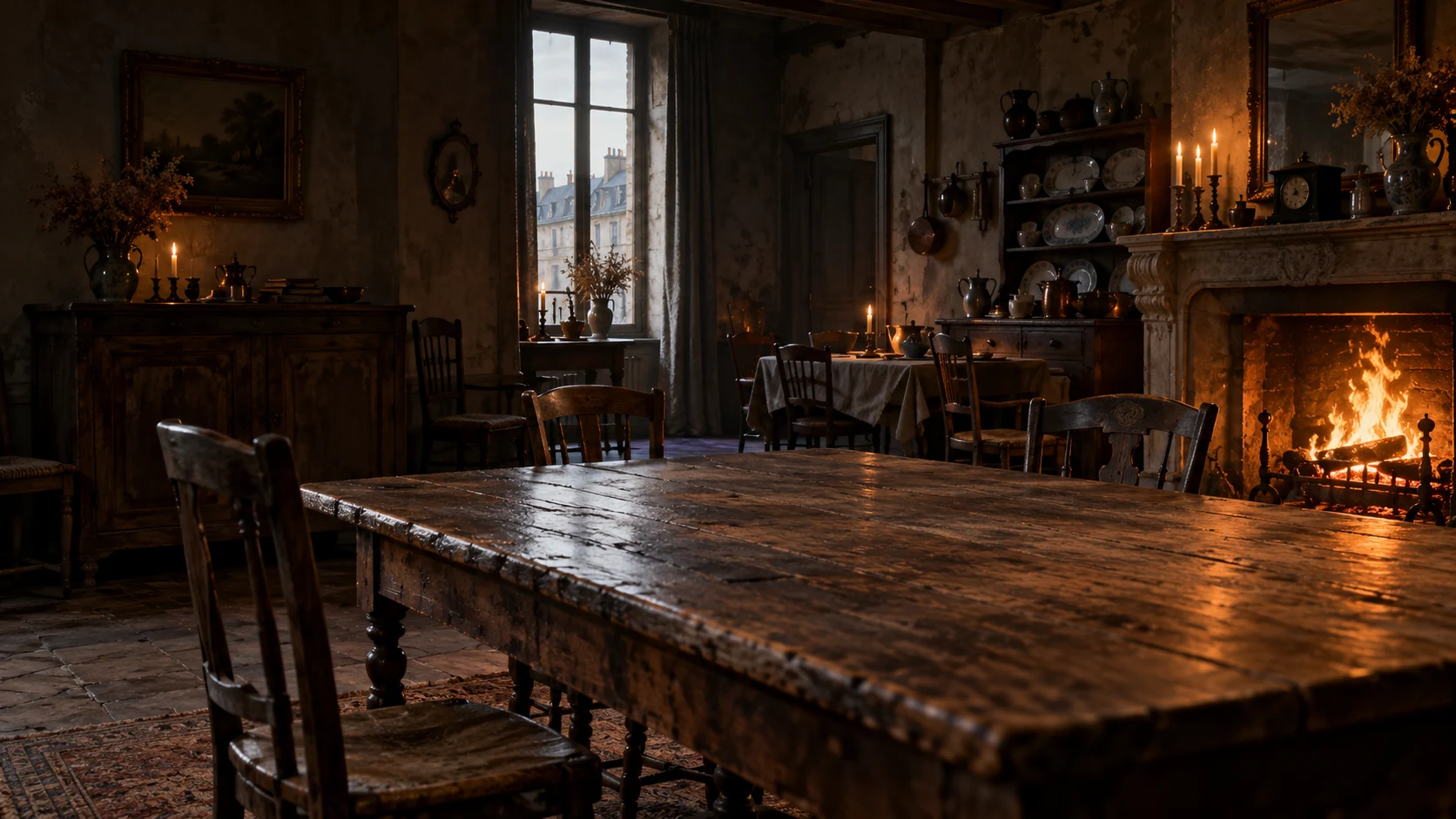
A shabby early nineteenth-century boarding-house dining room with mismatched chairs and a low fire

THE STORY

A father gives everything. Paris asks for more.

In a shabby Paris boarding house, the ambitious young Rastignac meets an old man whose devotion to his daughters has consumed his fortune.
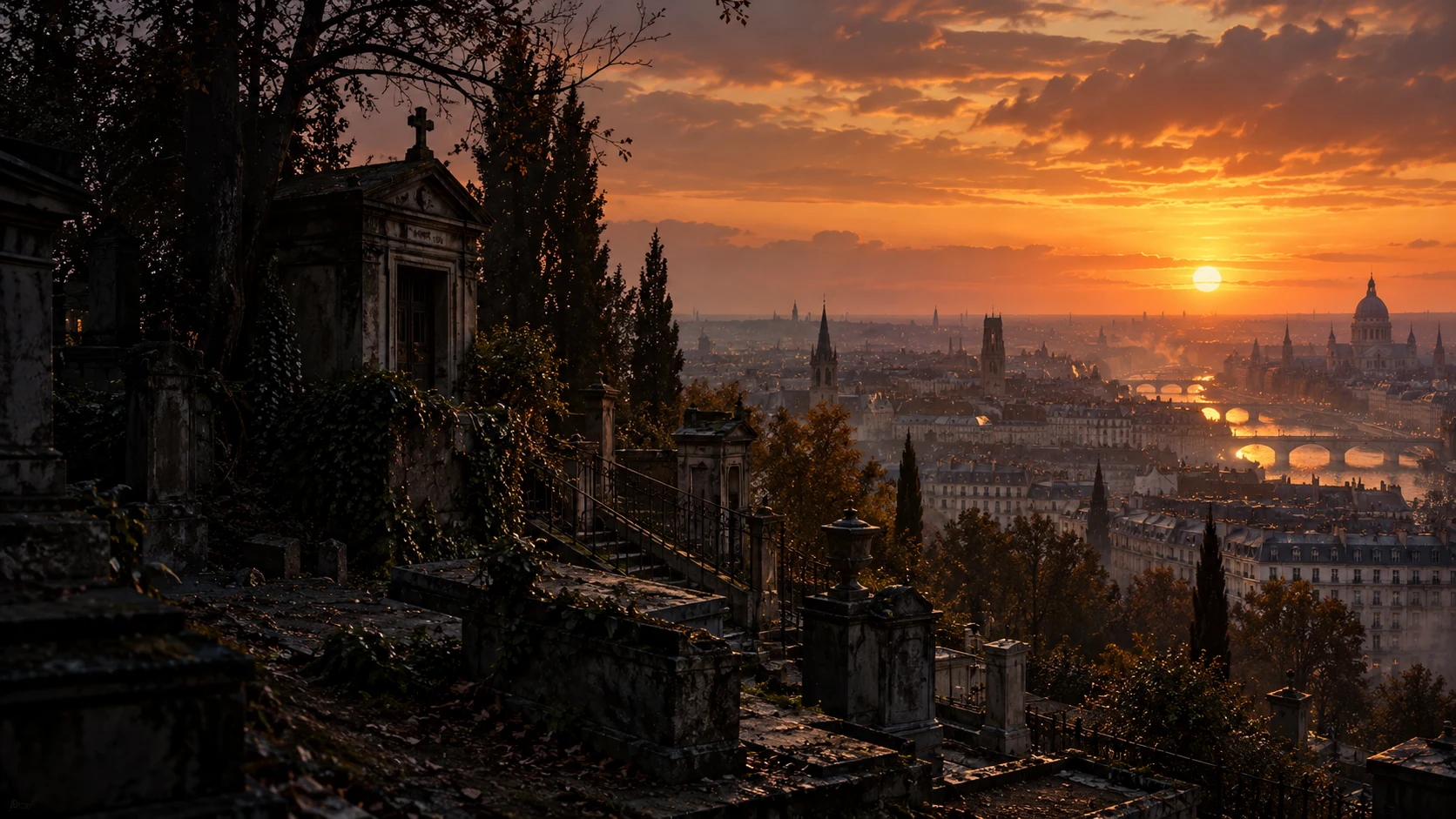
A view over Restoration-era Paris from Pere Lachaise cemetery at sunset, no modern landmarks

THE WORLD OF THE BOOK

Paris from the boarding house.

Their intertwined lives expose a city where love, status, and money are dangerously entangled. Balzac’s portrait of family sacrifice and social ambition remains devastatingly human.
Father Goriot front cover
Read the interior preview

LOOK INSIDE

Open a book.
Enter a world.

Preview six pages from this edition. Select a page to enlarge it, or use the arrows to keep reading.

Spread 1 of 3
Father Goriot · PDF page 6
Actual interior PDF page 6 of Father Goriot
Read accessible text

4 hand will sink back among the cushions of your armchair, and say to yourself, “Perhaps this may amuse me.” You will read the story of Father Goriot’s secret woes, and, dining thereafter with an unspoiled appetite, will lay the blame of your insensibility upon the writer, and accuse him of exaggeration, of writing romances. Ah! once for all, this drama is neither a fiction nor a romance! All is true,—so true, that every one can discern the elements of the tragedy in his own house, perhaps in his own heart. The lodging-house is Mme. Vauquer’s own property. It is still standing in the lower end of the Rue Nueve-Sainte-Genevieve, just where the road slopes so sharply down to the Rue de l’Arbalete, that wheeled traffic seldom passes that way, because it is so stony and steep. This position is sufficient to account for the silence prevalent in the streets shut in between the dome of the Pantheon and the dome of the Val-de-Grace, two conspicuous public buildings which give a yellowish tone to the landscape and darken the whole district that lies beneath the shadow of their leaden-hued cupolas. In that district the pavements are clean and dry, there is neither mud nor water in the gutters, grass grows in the chinks of the walls. The most heedless passer-by feels the depressing influences of a place where the sound of wheels creates a sensation; there is a grim look about the houses, a suggestion of a jail about those high garden walls. A Parisian straying into a suburb apparently composed of lodging-houses and public institutions would see poverty and dullness, old age lying down to die, and joyous youth condemned to drudgery. It is the ugliest quarter of Paris, and, it may be added, the least known. But, before all things, the Rue Nueve-Sainte-Genevieve is like a bronze frame for a picture for which the mind cannot be too well prepared by the contemplation of sad hues and sober images. Even so, step by step the daylight decreases, and the cicerone’s droning voice grows hollower as the traveler descends into the Catacombs. The comparison holds good! Who shall say which is more ghastly, the sight of the bleached skulls or of dried-up human hearts? The front of the lodging-house is at right angles to the road, and looks out upon a little garden, so that you see the side of the house in section, as it were, from the Rue Nueve-Sainte-Genevieve. Beneath the wall of the house front there lies a channel, a fathom wide, paved

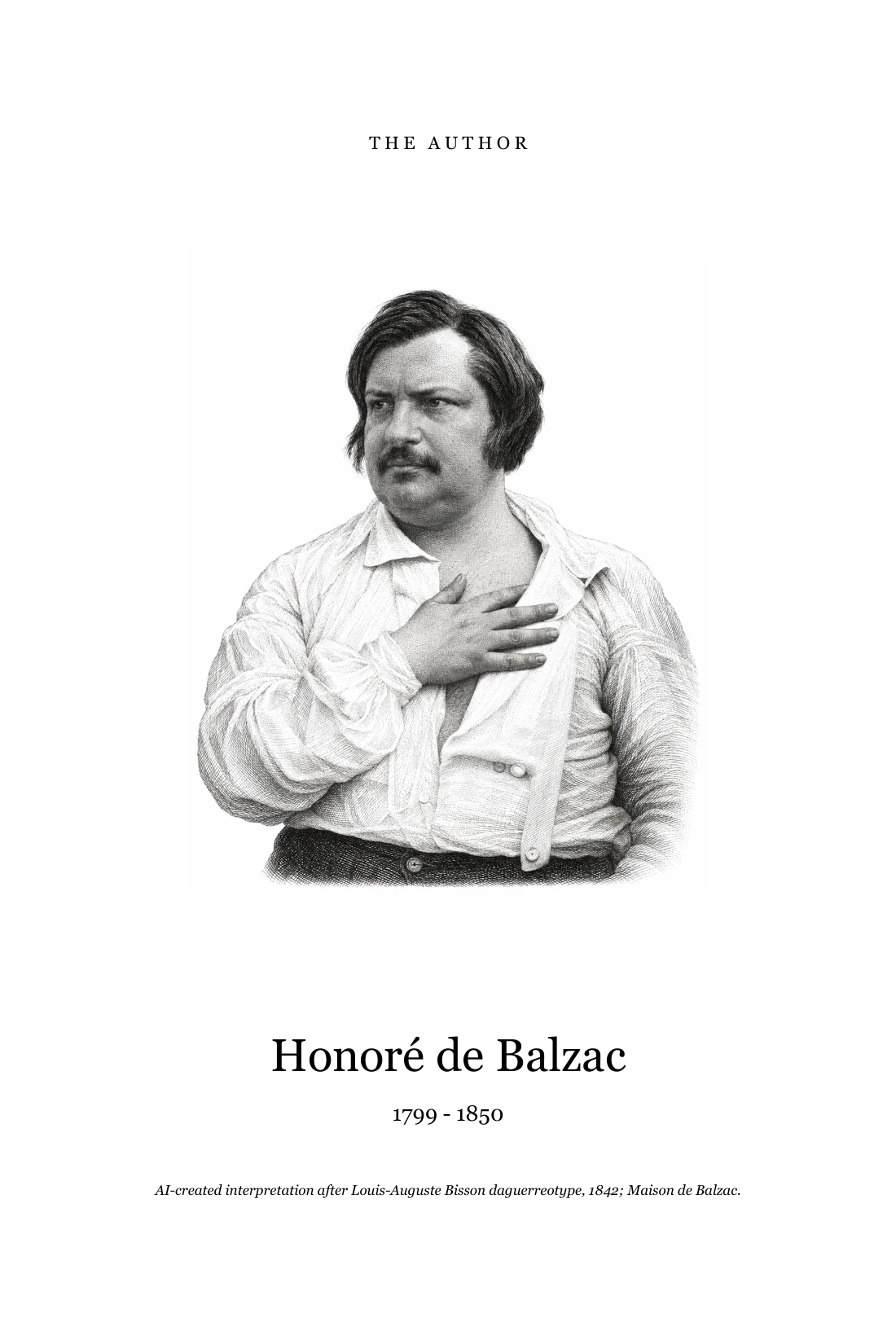
Honoré de Balzac portrait page from this edition

ABOUT THE AUTHOR

Honoré de Balzac

Honoré de Balzac was a French novelist and playwright whose fiction presents an expansive picture of society after the Napoleonic period. His great interconnected sequence, La Comédie humaine, brings together stories of ambition, family life, money and social change.

More about the author ↗

Discover the author behind the story. This portrait and biography are included in your edition.

FREE TO READ

Take it with you.

Father Goriot is in the public domain, so its words belong to everyone. Download our edition free. No account needed.

Read it in your browser ↗
Add it to your reading app
iPhone & iPad
Tap download, then open the file from Safari’s downloads, tap Share and choose Books. It stays in your Apple Books library.
Android
Tap download, open the file and choose Google Play Books. Or, in Play Books, go to Library, tap ⋮ and choose Upload files.
Kindle
Send the file to your Kindle library with Amazon’s Send to Kindle.
Kobo, Moon+ Reader and other apps
Open the downloaded file with the app, or use the app’s import option.

KEEP BROWSING

More from the library.

Exit cover

Exit

Harold Bell Wright

Facing the Flag cover

Facing the Flag

Jules Verne

Far from the Madding Crowd cover

Far from the Madding Crowd

Thomas Hardy

Fathers and Sons cover

Fathers and Sons

Ivan Turgenev

Faust, Part One cover

Faust, Part One

Johann Wolfgang von Goethe

Felix Holt, the Radical cover

Felix Holt, the Radical

George Eliot

Browse the complete library ↗
YOUR NEXT CHAPTER

Your book bag 0

A little escape. A story to keep.

Loading your book bag…