Is there an At the Mountains of Madness movie? No. There has never been a feature film of H. P. Lovecraft’s Antarctic novella, though for more than three decades Guillermo del Toro has tried harder than anyone to make one. In 2010 it was officially announced at Universal, in 3-D, with James Cameron producing and Tom Cruise wanted for the lead. By March 2011 the studio had declined to give it the green light.
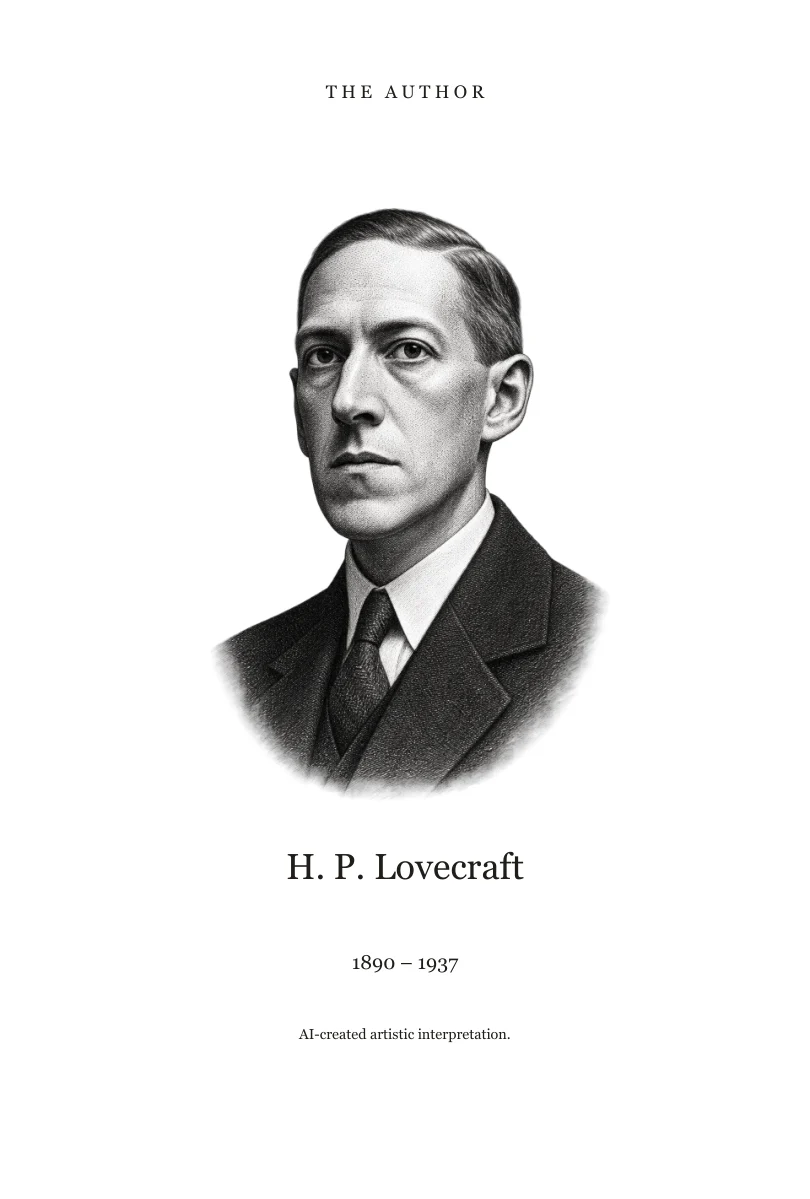
The film’s stop-start history has an odd echo in the book’s own. Lovecraft finished the story in March 1931 and saw it rejected that summer; it took five years to reach print, and when it did, it was cut and rewritten without his consent. It would be more than fifty years before readers saw it as he wrote it.
What happened to the At the Mountains of Madness movie?
Del Toro has said he began sketching images for an adaptation as early as 1993 and finished a first draft of a screenplay around five years later. At the time, the digital effects needed to render Lovecraft’s shapeless, shifting creatures did not yet exist. The project then passed through several studios before the version that came closest to being made.
- 1993
Del Toro begins sketching designs for an adaptation
- c. 1998
He completes a first draft of the screenplay
- 2003
He is reported to be co-writing the script with Matthew Robbins
- 2006
Del Toro takes the project to Warner Bros., but financing proves difficult
- 2007
Universal acquires it as part of a first-look deal; plans are later put on hold when he signs on to The Hobbit, which he eventually leaves
- July 2010
Universal officially announces the film, in 3-D, with James Cameron producing and Tom Cruise wanted for the lead
- March 2011
Universal declines to greenlight it, over a budget of about $150 million and del Toro’s insistence on an R rating
- 2012
Del Toro says the similarity of Ridley Scott’s Prometheus means a long pause, if not the project’s end
- 2021
He reveals he pitched it to Netflix, in a smaller and stranger version
- 2025
He tells Empire it is the bucket-list project he expects to stay there: “too big, too crazy, too R-rated”
Reports at the time said del Toro had delivered a presentation that met the studio’s budget but would not accept a PG-13 rating. His own summary was that the R rating sank it, though he later said he would consider a PG-13 version. Within weeks he had moved on to the film that became Pacific Rim (2013).
None of this means the film was cancelled midway through shooting. It never reached production. What survives is preparation: del Toro has said his team made more than three hundred pieces of artwork, along with storyboards and models, for a film no one has seen.
Why is it so hard to film?
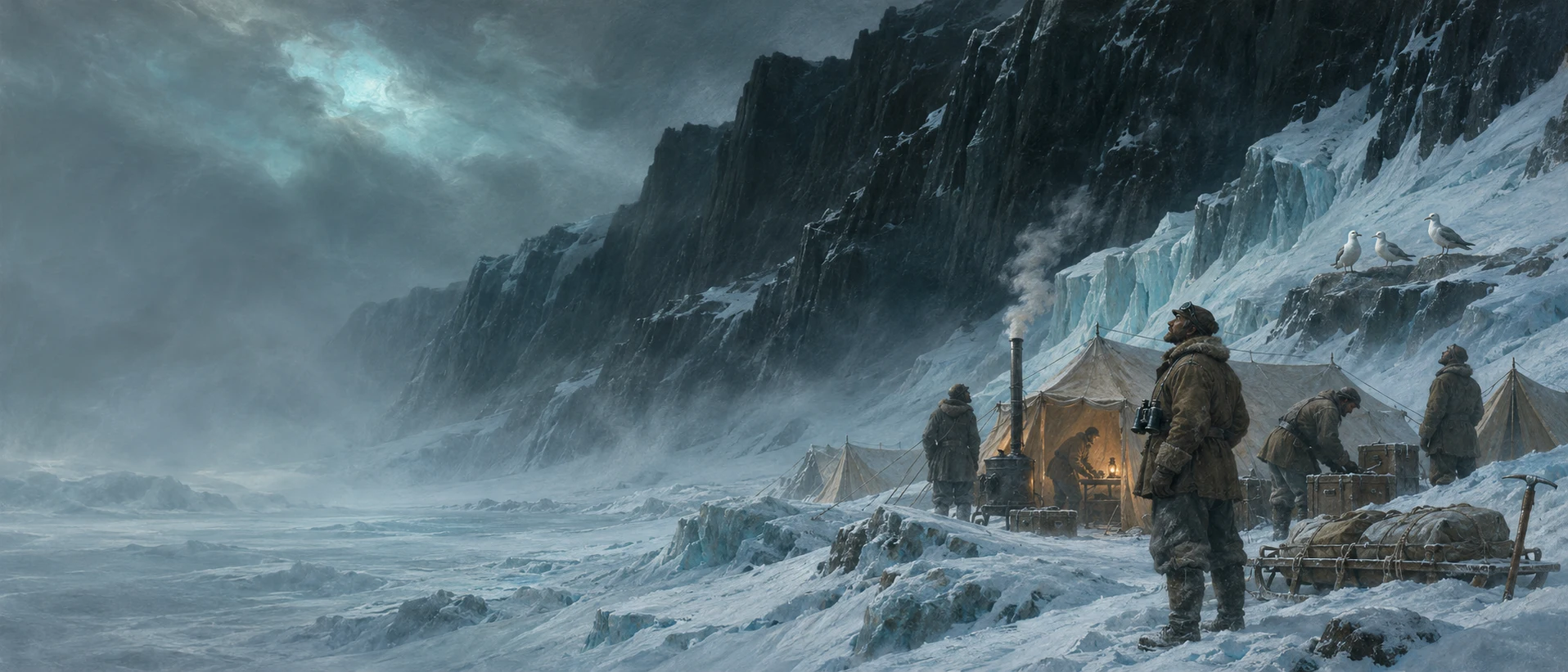
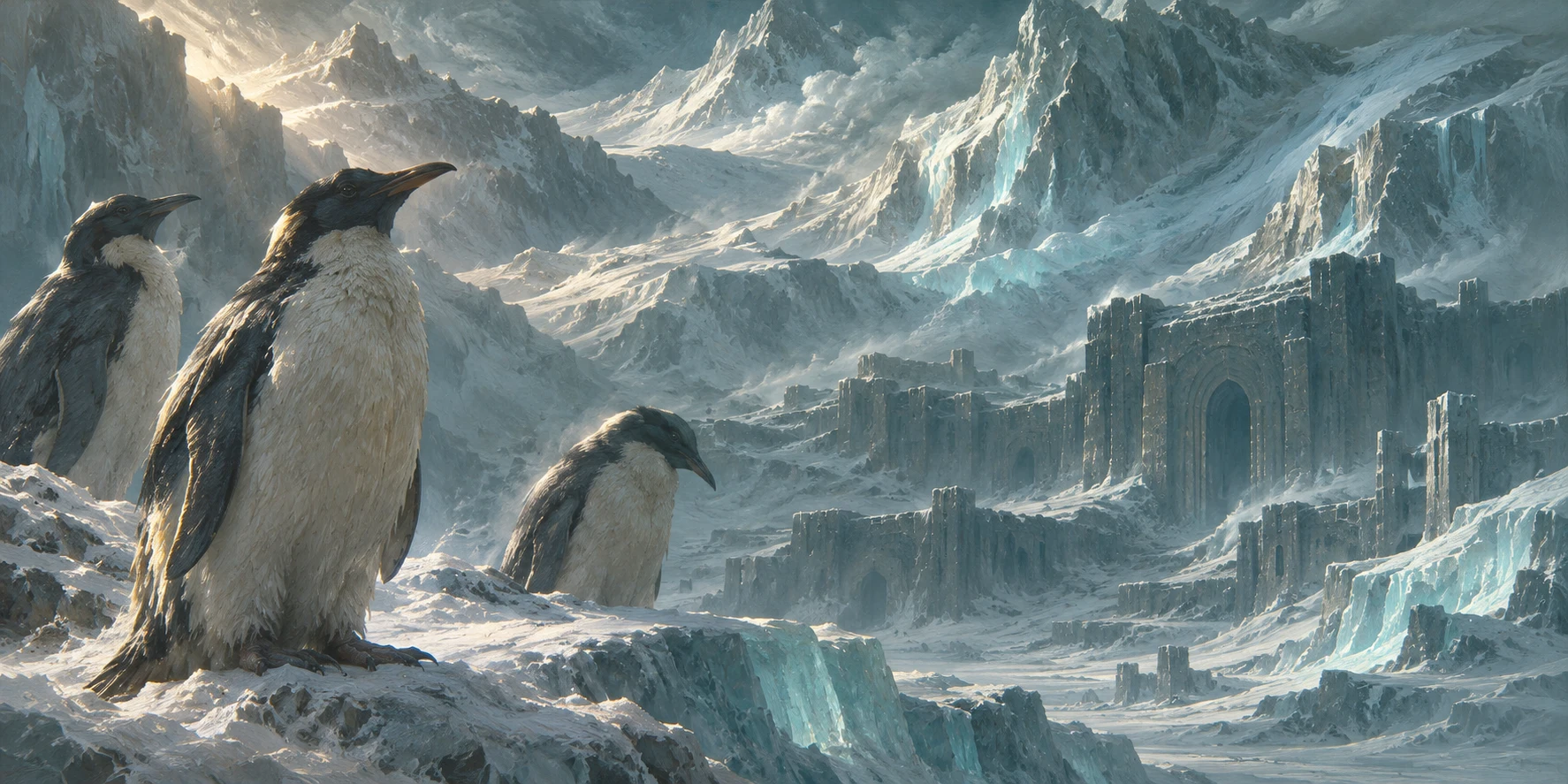
Del Toro’s own explanation is that studios balk at a period-set, R-rated blockbuster with a bleak ending and no love story. Read the book and you see his point. It is narrated by a geologist, William Dyer of Miskatonic University, recalling a 1930 expedition to Antarctica that went horribly wrong. There are no women, no romance and very little dialogue. Long stretches consist of two men walking through an empty alien city, reading its history from carvings on the walls.
I am forced into speech because men of science have refused to follow my advice without knowing why.
H. P. Lovecraft, *At the Mountains of Madness*
That opening tells you what kind of story it is: a warning, written to stop a second expedition from going back. Dyer and a graduate student named Danforth fly over a mountain range taller than the Himalayas and find the ruins of the Elder Things, a star-headed race that came to Earth long before humanity. What happened to the advance party, and what still moves in the tunnels, is the book’s slow-burning horror.
Lovecraft drew openly on Edgar Allan Poe’s The Narrative of Arthur Gordon Pym, borrowing its mysterious cry “Tekeli-li”, and on Richard E. Byrd’s first Antarctic expedition, which ended in 1930, shortly before he began writing.
The novella’s own rejection
Weird Tales, the pulp magazine that had published many of his stories, turned it down in July 1931; its editor, Farnsworth Wright, objected to its length. We tell the story of an earlier rejection in The Call of Cthulhu and Weird Tales. Lovecraft took the refusal badly and put the manuscript away. It reached Astounding Stories only in 1935, through a literary agent, and ran in the February, March and April 1936 issues.
The magazine’s editing infuriated him. His British spellings were Americanised, his long paragraphs broken up and about a thousand words cut from the ending. A text based on his typescript was not published until 1985, nearly half a century after his death.
For the writers who fed into it, see the authors who influenced H. P. Lovecraft and weird fiction before Lovecraft; for the magazines that kept him in print, the pulp magazines that gave us Tarzan, John Carter and Cthulhu.
Until someone films it, the only way to see the city beyond the mountains is the way Dyer did. Start At the Mountains of Madness on a cold night, and let Lovecraft do the special effects.
Questions readers ask
Is there an At the Mountains of Madness movie?
No feature film has been made. Guillermo del Toro’s adaptation was announced at Universal in 2010, with James Cameron producing, but the studio declined to greenlight it in March 2011.
Why was del Toro’s At the Mountains of Madness cancelled?
Universal was wary of a budget of about $150 million combined with the R rating del Toro insisted on. It never went into production.
Was Tom Cruise in At the Mountains of Madness?
Del Toro wanted Tom Cruise for the lead in the planned 2011 Universal version, but the film was never made, so he never played the role.
When was At the Mountains of Madness published?
Lovecraft wrote it in February and March 1931. After Weird Tales rejected it, it was serialised in Astounding Stories in February, March and April 1936.
 The Call of Cthulhu42 pages · $9.99