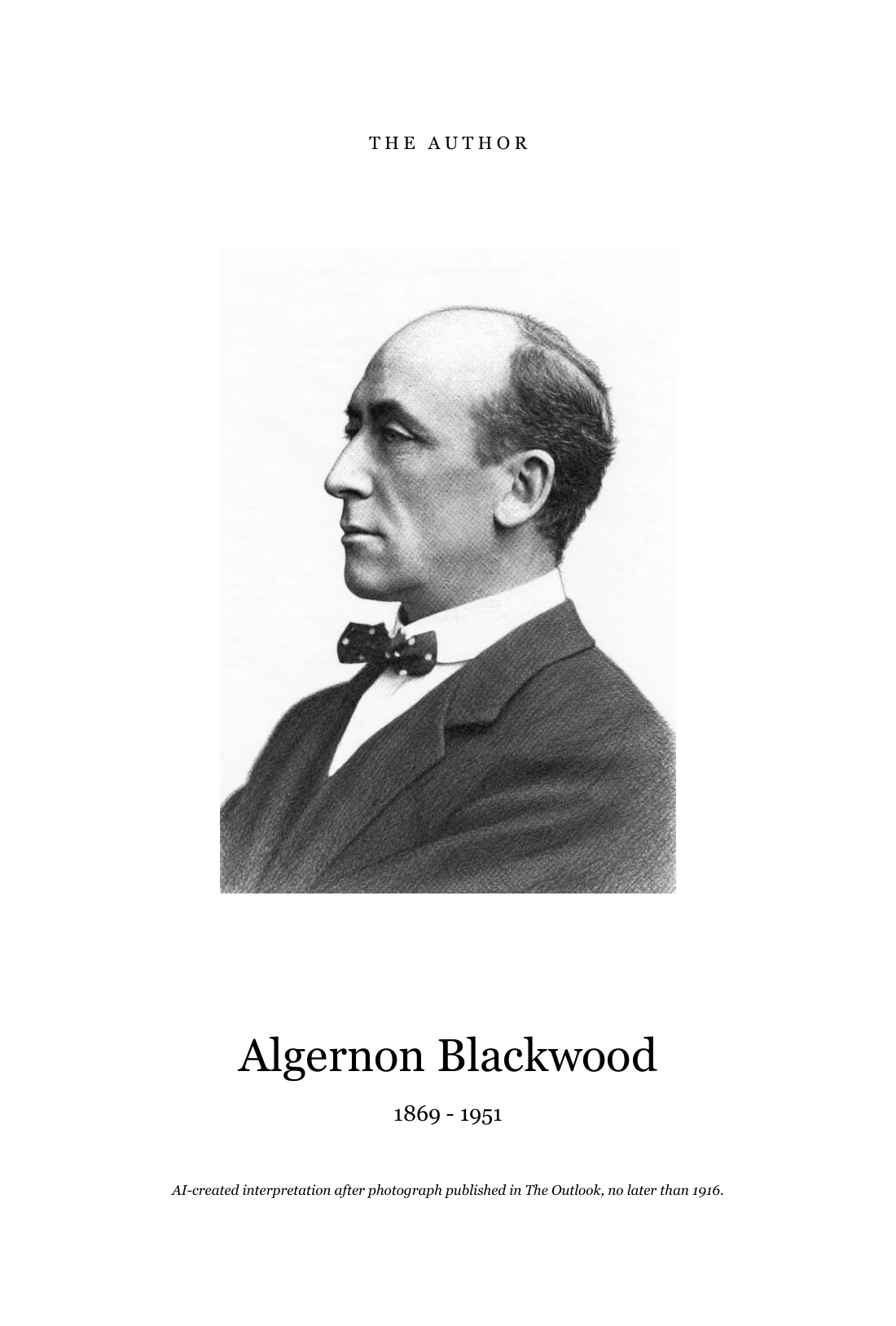
Algernon Blackwood was born in Kent in 1869, the son of a strictly religious senior civil servant, and went to Canada as a young man with no particular plan. In Toronto he ran a dairy that failed. In New York he worked as a newspaper reporter and posed for artists to make ends meet. And for one long summer he escaped with a friend to an island on Lake Rosseau in Ontario, paddling and camping for days in the backwoods, and fell in love with wild country for the rest of his life.
He was in his late thirties when his first collection, The Empty House and Other Ghost Stories, appeared in 1906. Over the next forty-five years he wrote so many stories, often at short notice for newspapers, that even his biographers are unsure of the total, along with fourteen novels and a number of plays, and in old age he became a familiar voice telling ghost stories on radio and television. If you want the best of the Algernon Blackwood books, go first to the pair of long stories that came out of his years outdoors, The Willows and The Wendigo.
The canoe that leads to The Willows
In his memoir of his early years, Episodes Before Thirty (1923), Blackwood describes learning to handle a canoe on Lake Rosseau, in Ontario, until “the kneeling occupant should feel himself actually a part of his canoe”. That skill, he adds, came in useful years later when he took a canoe down the Danube, from its source in the Black Forest to Budapest.
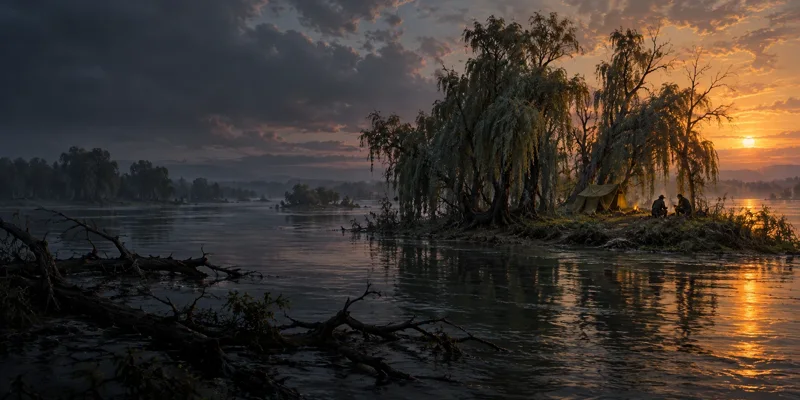
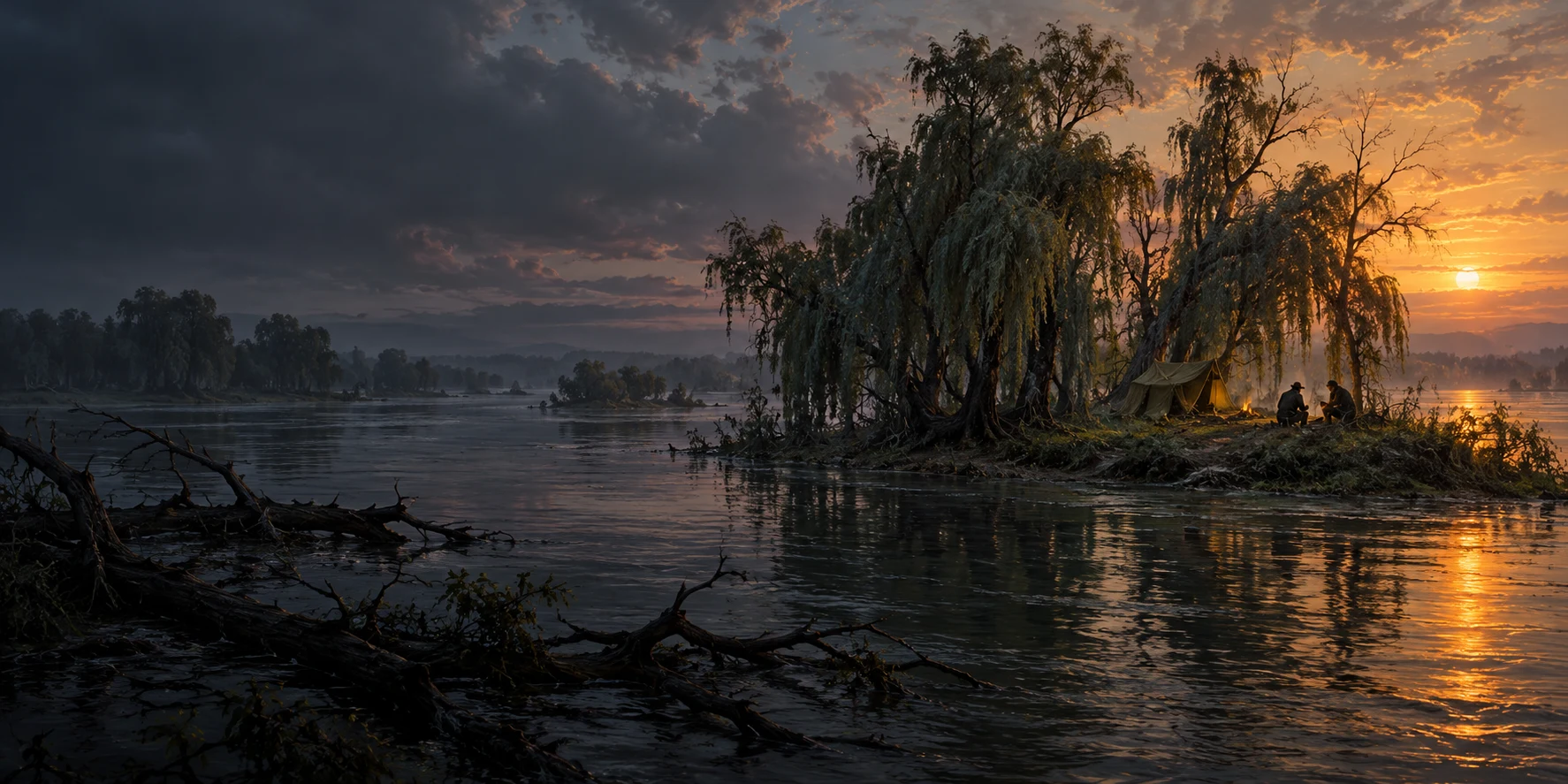
The Danube trip became The Willows, first published in 1907. Two men in a Canadian canoe make camp on a sandbank in the flooded marshland below Vienna, surrounded by miles of shivering willow bushes, and slowly come to feel that they have strayed into a place that does not belong to the human world. Almost nothing happens, and it is terrifying.
After leaving Vienna, and long before you come to Budapest, the Danube enters a region of singular loneliness and desolation, where its waters spread away on all sides regardless of a main channel, and the country becomes a swamp for miles upon miles, covered by a vast sea of low willow-bushes.
Algernon Blackwood, The Willows (1907)
H. P. Lovecraft thought it the finest weird tale he knew, and we explore why in Why did H. P. Lovecraft rate The Willows so highly?
The Wendigo and the Canadian backwoods
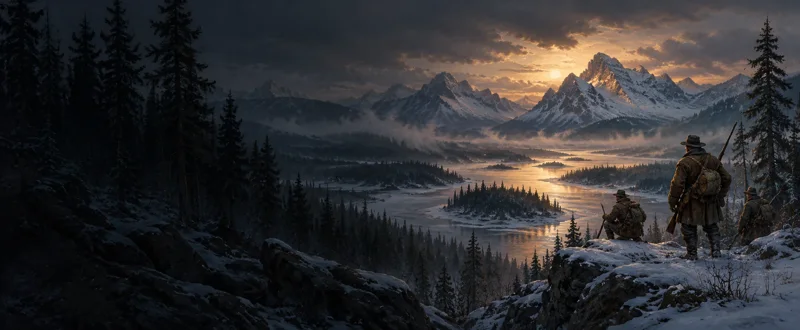
The Wendigo (1910) goes back to Canada. A moose-hunting party in the northern forests splits up for a few days; a young Scottish divinity student and his French-Canadian guide, Défago, camp beside a lake, and in the night something calls the guide’s name. What follows is about the sheer scale of the wilderness, and the way it can unmake a mind.
Blackwood took the wendigo from the folklore of the Algonquian-speaking peoples, among whom it is a malevolent, cannibal spirit of winter and famine. His version is an outsider’s, filtered through the campfire talk of hunters and guides, but the story did a great deal to spread the word itself: the spelling “wendigo” owes much of its popularity in English to his novella.
The Algernon Blackwood books to read first
- $9.99
The Willows
1907. Two friends, a canoe and an island in the Danube marshes where the willows seem to move. The obvious starting point, and his most celebrated story.
- $9.99
The Wendigo
1910. A hunting trip in the northern forests, a guide who hears his name on the wind, and one of the great wilderness horror stories. Read it in one sitting.
- $13.99
The Empty House and Other Ghost Stories
1906. His first book: haunted houses, a Canadian island, a private secretary sent on a sinister errand by his New York employer, and other early tales. More conventional ghost stories, with flashes of what was to come.


Ghost stories without ghosts
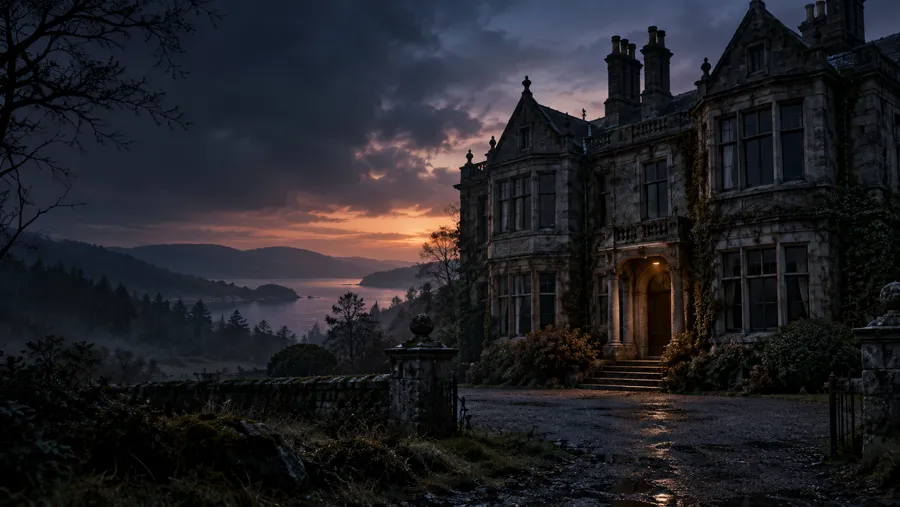
Blackwood’s best work is not really about ghosts at all. His interest, he said in later life, was in the hidden powers of the human mind and in the possibility that consciousness might expand to perceive a larger world. Nature is his great subject: rivers, forests, winds and mountains that seem to have a will of their own. He was a member of a branch of the Golden Dawn, like Arthur Machen, and a keen skier and climber, and both sides of him show in the fiction.
That makes him different from the antiquarian ghost stories of M. R. James, with their cathedral libraries and cursed manuscripts. Blackwood’s terrors live outdoors, a long way from help. For more of his contemporaries, see Arthur Machen: the Welsh master of the weird and The golden age of the English ghost story.
Blackwood died in 1951, and his ashes were scattered in the Swiss Alps he had loved for forty years. Save The Willows for a windy evening. Follow the canoe past Pressburg into the marshes, and listen.
Questions readers ask
What is Algernon Blackwood’s best story?
The Willows (1907) is usually considered his masterpiece; H. P. Lovecraft rated it the finest weird tale he knew. The Wendigo (1910) is a close second.
Where should I start with Algernon Blackwood?
Start with The Willows, then The Wendigo. Both are long short stories, each a single sitting. His first collection, The Empty House and Other Ghost Stories (1906), is a good next step.
Is The Wendigo based on a real legend?
Yes. The wendigo comes from the folklore of Algonquian-speaking peoples such as the Ojibwe and Cree, among whom it is a cannibal spirit linked with winter and starvation. Blackwood’s 1910 story helped popularise the name in English.