Cecil B. DeMille did not trust American audiences with the word “admirable”. When he filmed J. M. Barrie’s play in 1919 he changed the title, later explaining that he was sure the public would take The Admirable Crichton for a naval picture. A film history of the 1960s gave a similar account: Paramount feared viewers would confuse “admirable” with “admiral” and stay away. So the play reached American cinemas as Male and Female, and audiences got Gloria Swanson in a sunken bath and, later, posed with a real lion.
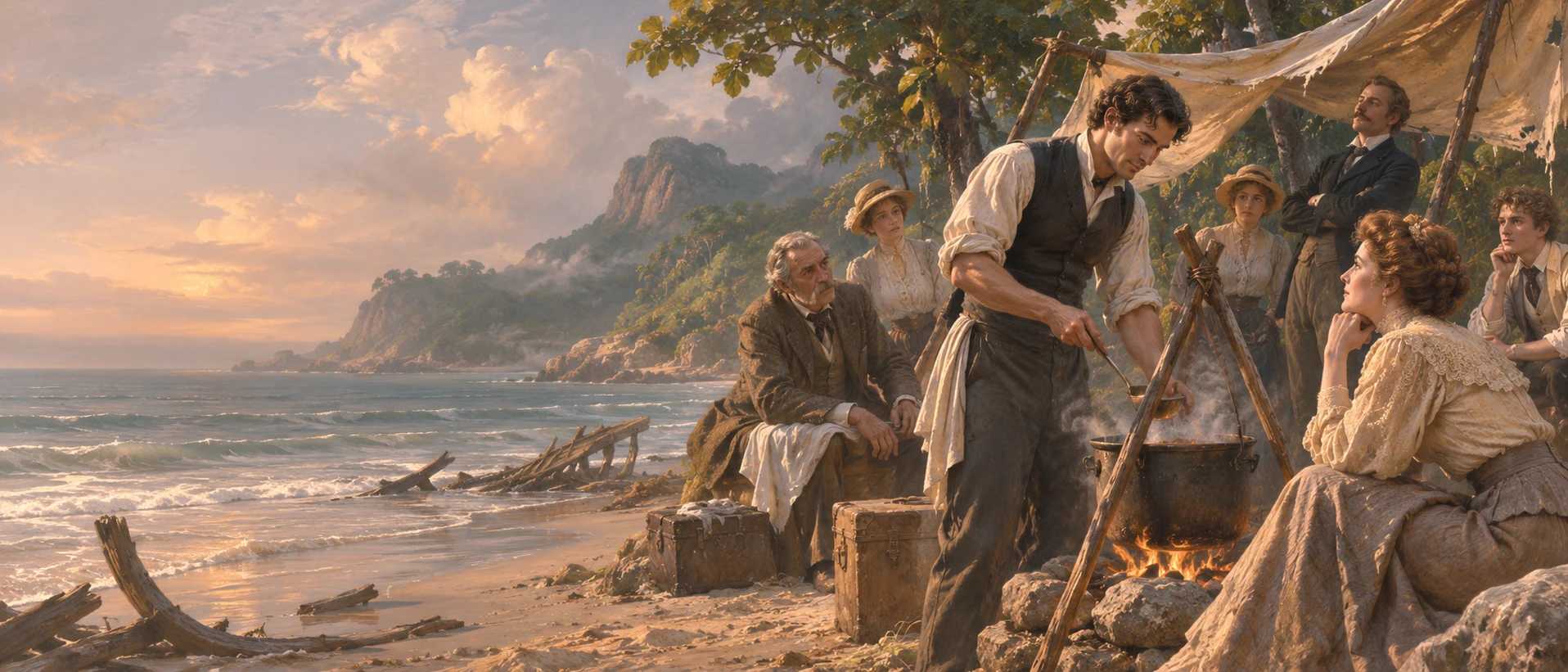
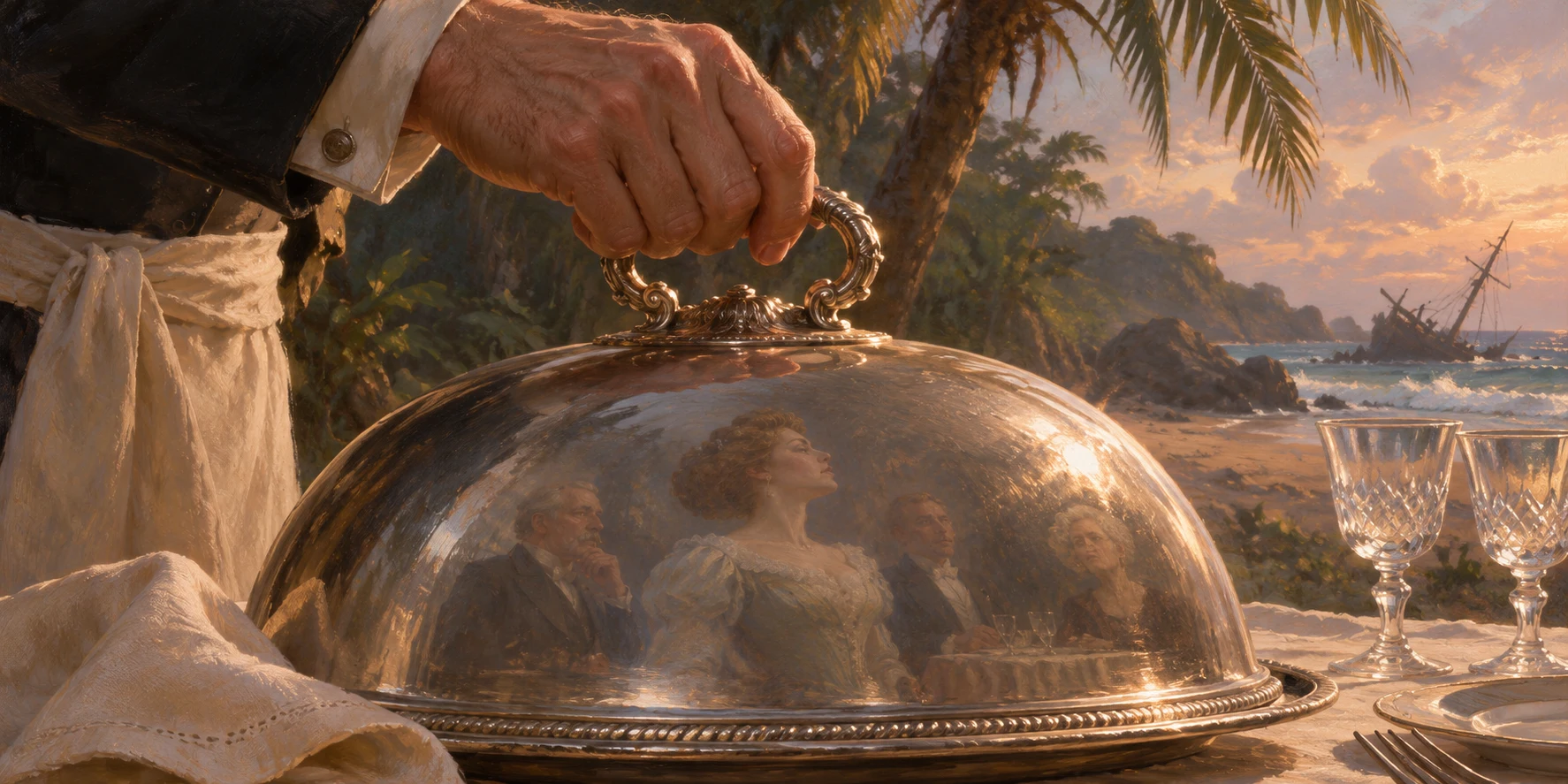
That is a long way from J. M. Barrie’s stage comedy of 1902, but the story underneath survived. A household of aristocrats is shipwrecked; their butler, Crichton, is the only one who knows how to do anything; and within two years he is the master and they are his willing servants. Then a ship appears on the horizon.
What is The Admirable Crichton about?
The play opens at Loam House in Mayfair, where once a month the Earl of Loam compels his servants to come up for tea as his equals, to everyone’s misery. Nobody hates the custom more than Crichton, who believes in rank as firmly as his master pretends not to.
The divisions into classes, my lord, are not artificial. They are the natural outcome of a civilised society.
Crichton, *The Admirable Crichton*, Act I
Barrie’s joke is that Crichton is right, just not in the way he means. On the island in Act II, nature produces a new hierarchy based on competence, and Crichton rises to the top of it. By Act III he is “the Gov.”, ruling a comfortable settlement of his own building, and Lady Mary, the Earl’s proud eldest daughter, has fallen in love with him. The title comes from the nickname of a real sixteenth-century Scot, James Crichton, a celebrated polymath and swordsman.
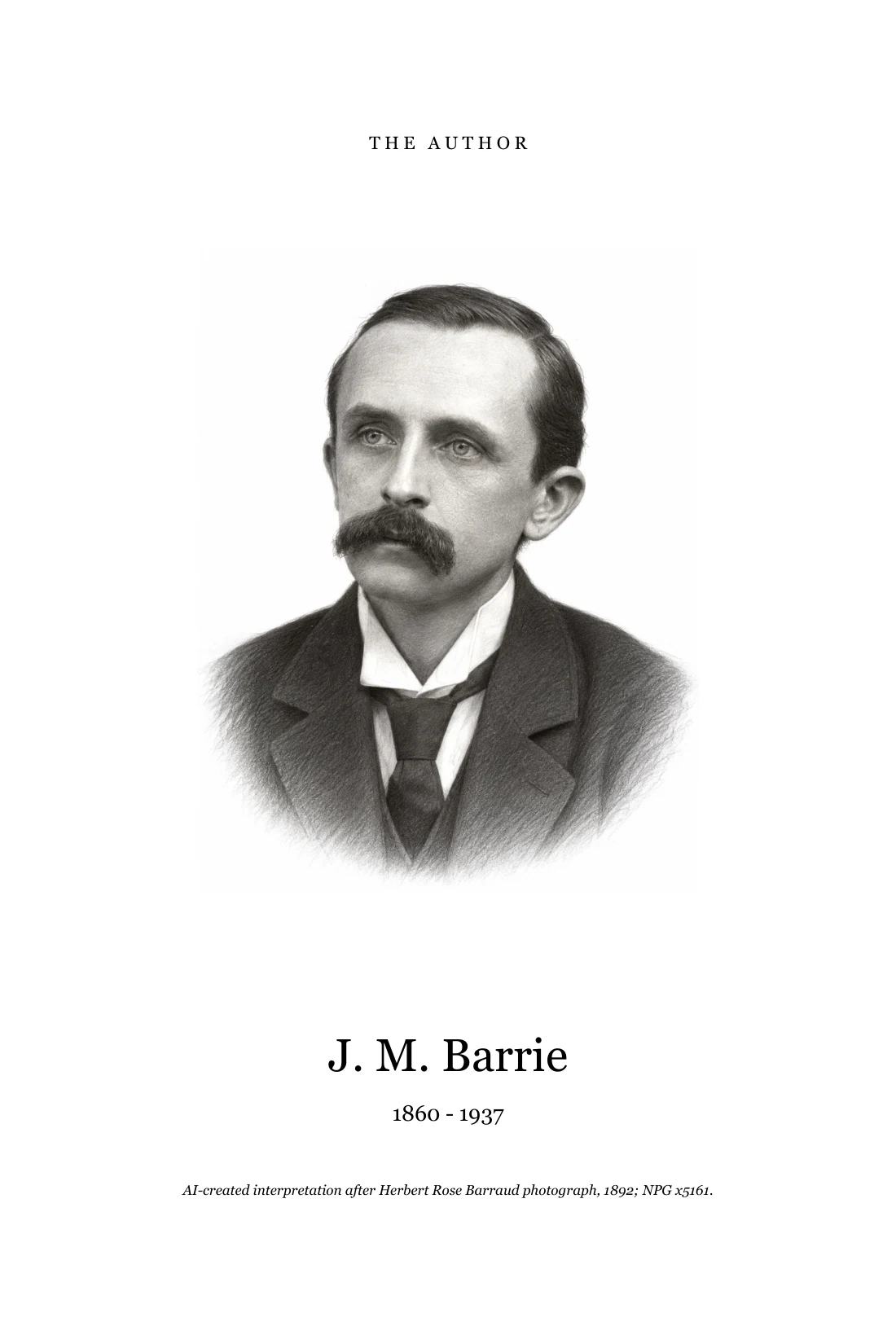
Barrie noted that one source of the idea was a remark by Arthur Conan Doyle in 1893: that if a king and a sailor were wrecked together on an island for life, the sailor would end as king. The play opened at the Duke of York’s Theatre in London on 4 November 1902 and ran for 328 performances, two years before Peter Pan opened at the same theatre.
The Admirable Crichton films: 1918 and Male and Female (1919)
The first film was British, directed by G. B. Samuelson in 1918, with Basil Gill as Crichton and Mary Dibley as Lady Mary. DeMille’s Male and Female followed a year later for Paramount, with Thomas Meighan as Crichton and Gloria Swanson as Lady Mary.
DeMille kept Barrie’s outline and added his own trademarks. An early scene shows Swanson being bathed by two maids in rosewater and bath salts, and a fantasy sequence set in ancient Babylon has her posed as Gabriel von Max’s painting The Lion’s Bride, photographed with a live lion. These were exactly the kind of lavish, slightly scandalous set pieces that made DeMille famous, and neither has anything to do with Barrie.
The Admirable Crichton (1957): Kenneth More
The sound version came in 1957, directed by Lewis Gilbert in Technicolor and released in the United States as Paradise Lagoon. Kenneth More played Crichton, reuniting with Gilbert after Reach for the Sky, with Sally Ann Howes as Lady Mary, Cecil Parker as the Earl and Diane Cilento as Tweeny, the between-maid who loves Crichton. It was shot partly on Bermuda and was the third most popular film at the British box office that year.
Gilbert said openly that he adapted the play freely to suit his star. The film moves the action to 1905, adds a suffragette arrest to explain why the family sails for the South Seas, and gives the voyage a steam yacht whose engines explode in a storm. More plays Crichton as lighter and more straightforwardly heroic than Barrie wrote him. More later starred in a musical version, Our Man Crichton, in 1964.
How the endings differ (spoilers)
Barrie’s fourth act, called “The Other Island”, returns everyone to London, where the old order resumes uneasily and Crichton and Lady Mary part with regret. Both films soften this. DeMille’s Crichton turns from Lady Mary to Tweeny and the two leave for America; Gilbert’s takes Tweeny with him to start a business on the pearls he gathered on the island. Barrie leaves you with an ache; the films leave you with a happy couple.
The idea has kept travelling. Hollywood’s We’re Not Dressing (1934), with Bing Crosby and Carole Lombard, borrowed it, and Ruben Östlund’s Triangle of Sadness (2022) has been seen as a modern descendant.
For Barrie’s other great stage success, see Peter Pan was a play before it was a novel; for more comedies of manners, the funniest classic plays and the sharpest satires in classic literature.
Watch Kenneth More if you want a sunny afternoon, but read The Admirable Crichton for the play Barrie actually wrote. It takes an evening, and its last scene stays with you longer than either film’s.
Questions readers ask
Is Male and Female based on The Admirable Crichton?
Yes. Cecil B. DeMille’s 1919 film Male and Female, starring Gloria Swanson and Thomas Meighan, is an adaptation of J. M. Barrie’s 1902 play, retitled because the studio feared audiences would think it was about the navy.
Who starred in The Admirable Crichton 1957 film?
Kenneth More played Crichton, with Sally Ann Howes, Diane Cilento and Cecil Parker. Lewis Gilbert directed, and it was released in the US as Paradise Lagoon.
What is The Admirable Crichton about?
An aristocratic family and their butler, Crichton, are shipwrecked on a desert island. Crichton’s practical skills make him the leader, until rescue restores the old order.
How many times has The Admirable Crichton been filmed?
It has been filmed under its own title twice, in 1918 and 1957, and as DeMille’s Male and Female in 1919. There have also been television versions, including one by NBC in 1968.
 Peter and Wendy134 pages · $12.99
 The Little White Bird178 pages · $13.99