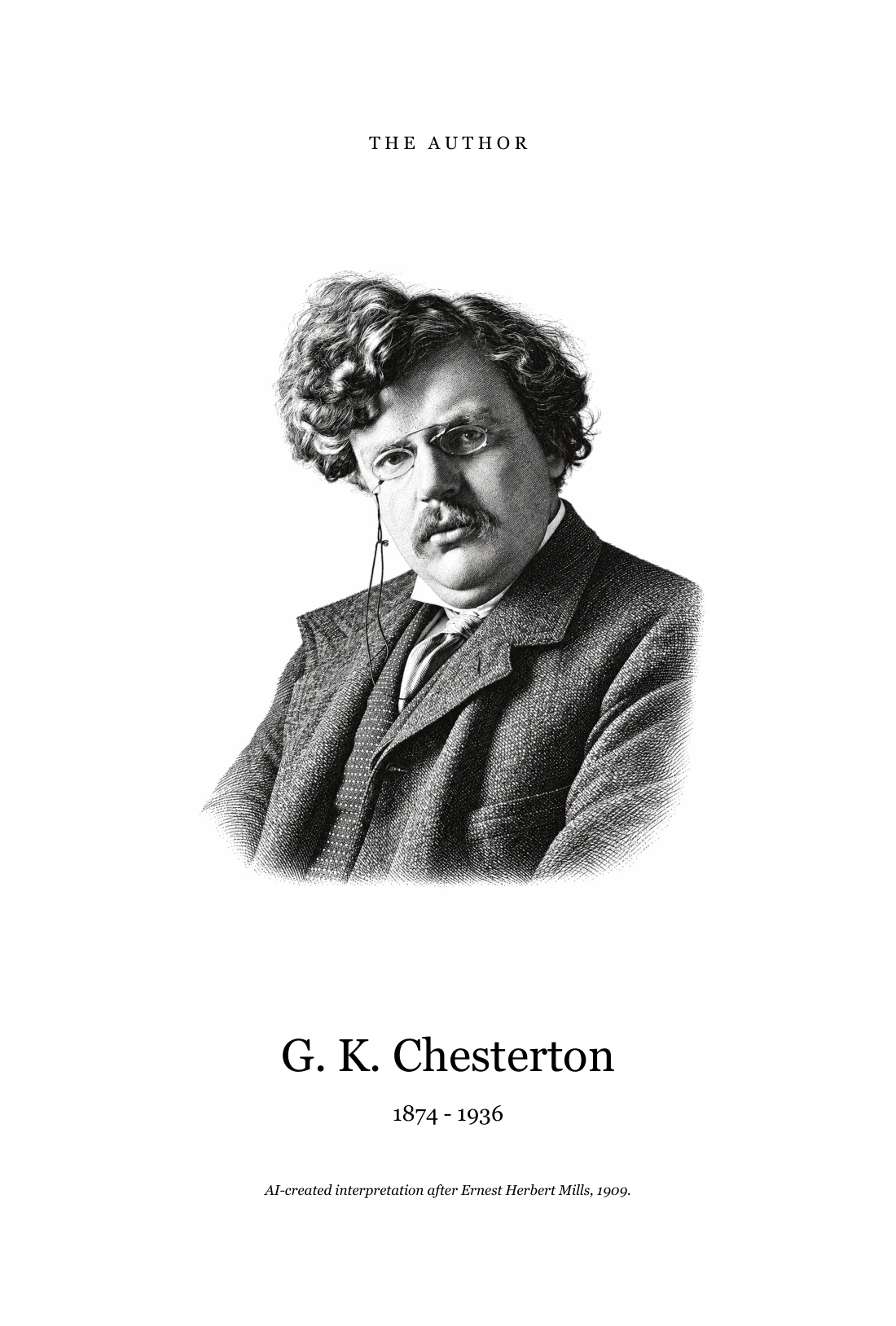
Father Brown appears in five collections of short stories by G. K. Chesterton: The Innocence of Father Brown (1911), The Wisdom of Father Brown (1914), The Incredulity of Father Brown (1926), The Secret of Father Brown (1927) and The Scandal of Father Brown (1935). There are no Father Brown novels. Chesterton wrote just over fifty stories about him in all, two of which never made it into the collections.
The Father Brown books in order follow publication, and that is the best order to read them. The stories are self-contained, but Father Brown’s friendship with the reformed thief Flambeau develops across the early books, and some later stories look back to earlier ones.
The Father Brown books in order
- $14.99
The Innocence of Father Brown
1911. The first twelve stories, beginning with “The Blue Cross”, in which Father Brown meets the great thief Flambeau. Includes “The Invisible Man” and “The Hammer of God”.
- $13.99
The Wisdom of Father Brown
1914. Twelve more stories, among them “The Absence of Mr Glass”, in which Father Brown gently dismantles a rival detective’s theory.
- $13.99
The secret of Father Brown
1927. Father Brown explains his method to an American visitor, in a framing story that sheds light on everything before it. The cases in between are some of Chesterton’s best.


The Incredulity of Father Brown (1926) comes between the second and third books above, and The Scandal of Father Brown (1935) closes the series. Both are later collections that are not in our catalogue, and you can read the three above without them.

How many Father Brown books are there?
There are five Father Brown books, all short-story collections. Some later editions gather every story into a single omnibus, sometimes with one or two stories that never made it into the original collections. If you want to sample before committing, The Innocence of Father Brown contains many of the most famous.
What makes Father Brown different?
Most detectives of his era followed Sherlock Holmes: brilliant, eccentric men who read clues from cigar ash and mud. Father Brown is the opposite. He is small, clumsy, forgetful and unremarkable to look at, forever losing his umbrella, and people tend to forget he is in the room. That is exactly why he notices things.
His real gift is moral imagination. As he explains in The Secret of Father Brown, he solves crimes by putting himself in the criminal’s place, imagining his way into the frame of mind that leads a person to murder. And because he hears confessions, as he points out in the very first story, he knows exactly what people are capable of. It is a darker and more humane idea of detection than Holmes’s, and it gives the stories their unusual depth.
Chesterton loved paradox, and the stories are full of it. The solutions are rarely about who did it in the usual sense; they turn instead on something everyone has seen but no one has noticed. That is why the best Father Brown stories reward rereading even after you know the answer.

Where should you start?
Start with The Innocence of Father Brown, and with its first story, “The Blue Cross”. It introduces Father Brown through the eyes of Valentin, the head of the Paris police, who is pursuing Flambeau across London and has no idea who the odd little priest is. It is a lovely piece of misdirection, and a perfect introduction to the way Chesterton plays with his readers.
After that, read the collections in order. Flambeau’s story in particular develops across the first two books, and you will appreciate The Secret of Father Brown more once you know the cases it looks back on.
Father Brown on screen
Father Brown has been adapted many times, most recently in a long-running BBC series that began in 2013. The television versions are loosely based, moving the priest to an English village in the 1950s and inventing most of the cases. The original stories range far more widely, from Cornish cliffs to Paris and the American Midwest, and are sharper and stranger than any adaptation.
More mysteries and more Chesterton
Chesterton wrote much more than detective stories. His surreal spy novel The Man Who Was Thursday is one of the oddest and best books of its era. For more detectives who followed, and challenged, Holmes, see books like Sherlock Holmes and locked-room mysteries, and for the original great detective, the Sherlock Holmes books in order.
But begin in London, with a French detective, a tall thief and a short priest carrying brown paper parcels. Open The Innocence of Father Brown, and see who notices what.
Questions readers ask
How many Father Brown books are there?
G. K. Chesterton wrote five Father Brown collections, published between 1911 and 1935, containing around fifty short stories in all. There are no Father Brown novels.
What order should I read the Father Brown books in?
In publication order: The Innocence of Father Brown, The Wisdom of Father Brown, The Incredulity of Father Brown, The Secret of Father Brown and The Scandal of Father Brown.
What is the first Father Brown story?
“The Blue Cross”, first published in 1910 and collected in The Innocence of Father Brown (1911). It introduces both Father Brown and the thief Flambeau.
Is the Father Brown TV series based on the books?
Loosely. The BBC series that began in 2013 uses Chesterton’s character but moves him to the 1950s and mostly invents new cases.
 The Man Who Was Thursday162 pages · $12.99
 The Napoleon of Notting Hill156 pages · $12.99
 The Man Who Knew Too Much156 pages · $12.99
 Orthodoxy152 pages · $12.99