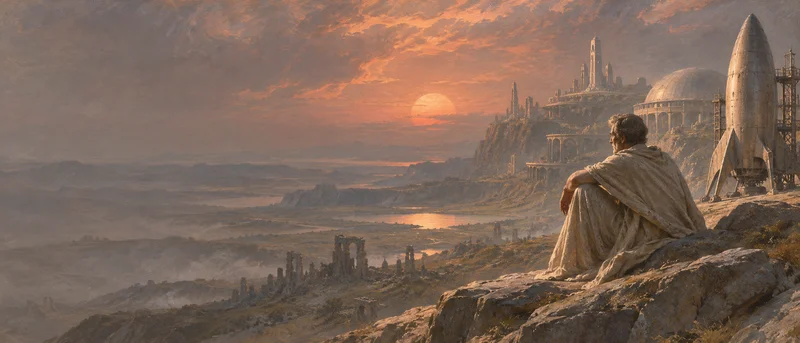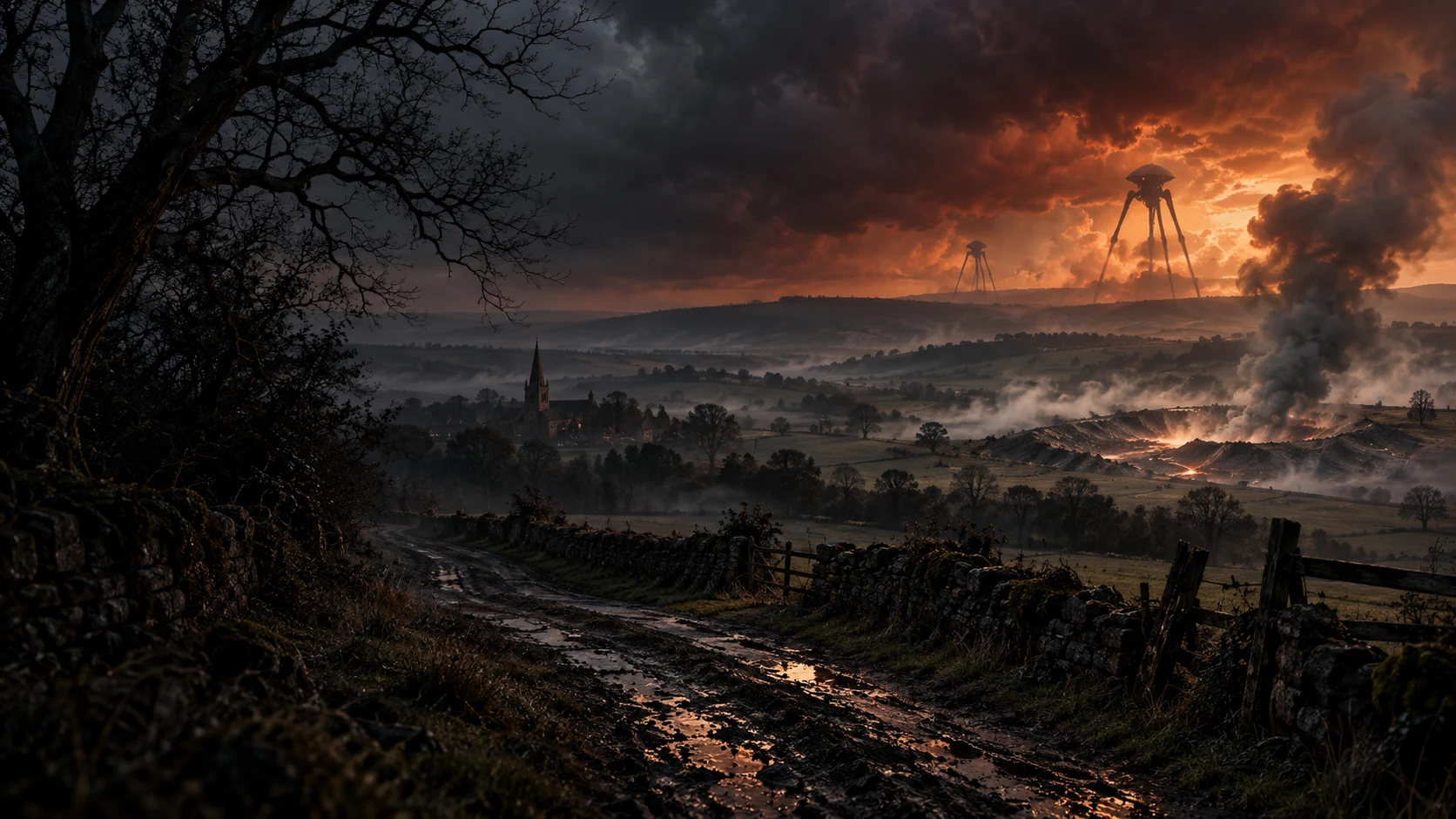

At eight o’clock on the evening of Sunday 30 October 1938, CBS listeners tuning in to The Mercury Theatre on the Air heard an announcer introduce Orson Welles in an adaptation of The War of the Worlds. Within minutes the play had disguised itself as an ordinary night of radio: a weather report, dance music from “Ramon Raquello and His Orchestra”, then a run of increasingly urgent bulletins about explosions on Mars and a strange object landing on a farm at Grovers Mill, New Jersey.
That much nobody disputes. What happened next is another matter. The legend of the War of the Worlds radio panic has millions of Americans fleeing into the night. Historians who have gone back to the evidence believe the frightened audience was far smaller, and that the newspapers did most of the panicking the following morning.
Did the War of the Worlds broadcast really cause a panic?
Some people were genuinely scared. Police and newspaper switchboards took anxious calls, and the neighbourhood around Grovers Mill, a real hamlet a few miles from Princeton, had an alarming night. But the scale of the fright has grown with every retelling.
On the night itself, the ratings firm C. E. Hooper telephoned 5,000 households for its national survey and asked what they were listening to. About two per cent named the Welles play. Not one said they were listening to a news broadcast. A large share of the country was tuned instead to Edgar Bergen’s enormously popular comedy hour on NBC, and several CBS stations had dropped the play in favour of local programmes.
The headline figures come from The Invasion from Mars, a 1940 study led by the Princeton psychologist Hadley Cantril. It estimated that about six million people heard the broadcast and that roughly 1.2 million were frightened or disturbed by it. Later critics noted that the survey behind those numbers was taken six weeks afterwards, when everyone had read about the “panic”, and that being disturbed by a radio play is a long way from running for the hills.
Why the newspapers ran with the story
By breakfast the next day the panic was front-page news. Radio had been drawing advertising away from print all through the Depression, and a tale of reckless broadcasters terrifying the nation suited editors nicely. In 2013, for the broadcast’s seventy-fifth anniversary, the media historians Jefferson Pooley and Michael Socolow argued that the press built the myth from wire reports of anonymous hysterical listeners. Rumours of deaths and crowded hospital wards circulated; none was ever confirmed.
Welles met reporters the following day, said he was sorry and insisted nobody at the Mercury Theatre had expected such a reaction. The regulators grumbled, but neither he nor CBS was punished. The notoriety did him no harm at all: RKO lured him to Hollywood, and his first feature film, Citizen Kane, opened in 1941.
- 1897
The War of the Worlds is serialised in Pearson’s Magazine in Britain and Cosmopolitan in America
- 1898
William Heinemann publishes the novel as a book
- 30 Oct 1938
The Mercury Theatre broadcasts Howard Koch’s adaptation on CBS
- 1940
Hadley Cantril publishes his study, The Invasion from Mars
- Oct 1940
Wells and Welles meet for the only time, on a San Antonio radio station
- Feb 1949
A Spanish-language version on Radio Quito in Ecuador ends in a riot in which several people die
How the radio play changed the novel
Howard Koch’s script, reworked by the Mercury team in the days before the broadcast, kept Wells’s invaders much as he imagined them, from the cylinders to the Heat-Ray, but moved them from Victorian Surrey to modern New Jersey. Welles even borrowed the novel’s famous opening sentence, which in the book reads:
No one would have believed in the last years of the nineteenth century that this world was being watched keenly and closely by intelligences greater than man’s and yet as mortal as his own
H. G. Wells, The War of the Worlds (1898)
On air it became “the early years of the twentieth century”, spoken as though the invasion were already history. The truly grim sequel came a decade later and thousands of miles south. When Radio Quito in Ecuador staged its own version in 1949, the revelation that it was fiction turned fear into a riot, and at least seven people died.
Wells himself doubted the American panic had been real. When the two men finally met in 1940, he is reported to have wondered aloud whether it had all just been Halloween fun.
Is the novel worth reading after the broadcast?
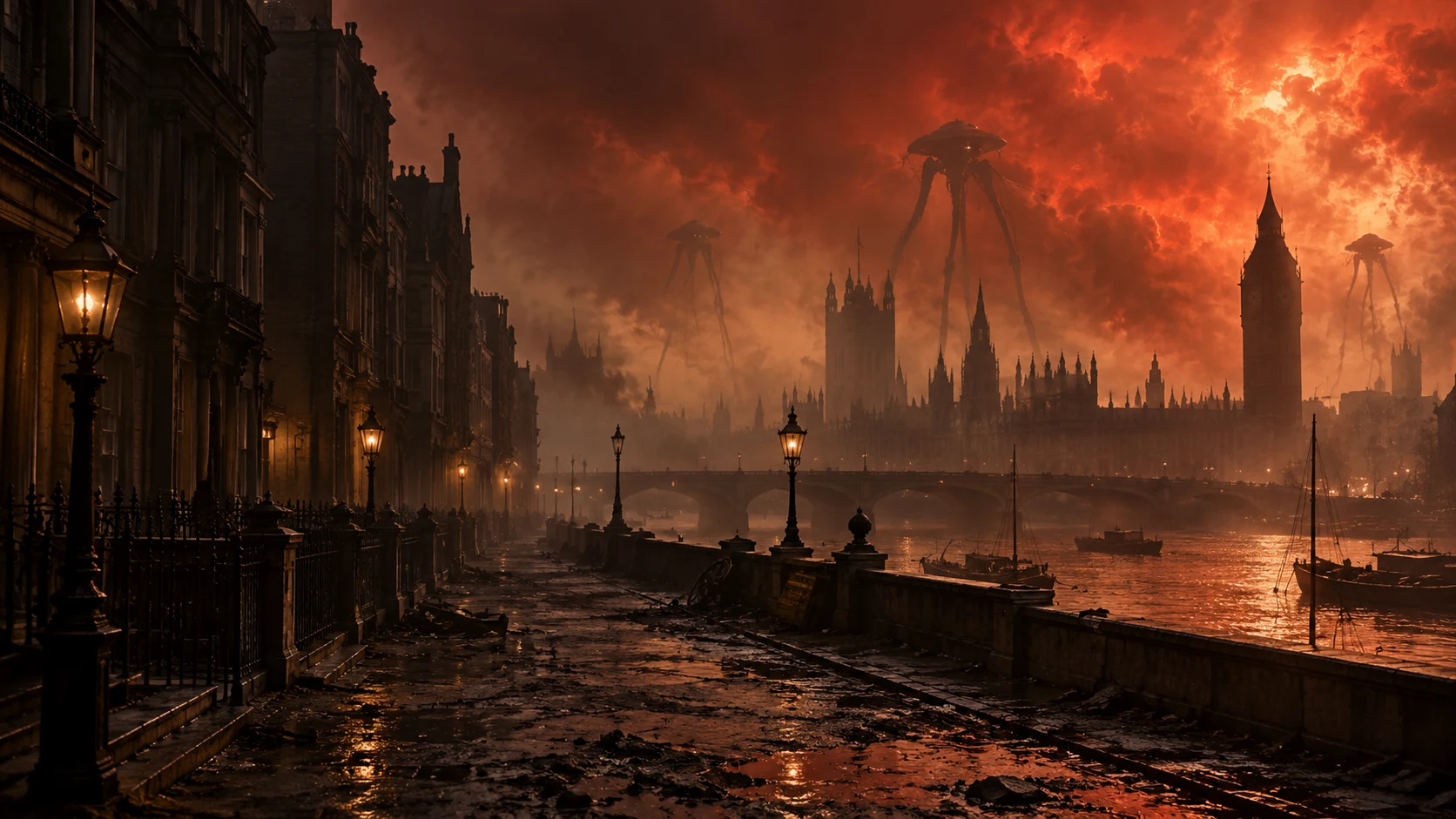
Very much so, because it is a different and darker experience. The radio play is an hour of breathless bulletins. The book is a slow, mounting nightmare told by a man trying to get his wife to safety as the Martians advance from Horsell Common near Woking towards London. There is the Black Smoke, the terrible days trapped in a ruined house with a curate who is coming apart, and an ending that still catches first-time readers off guard.
The War of the Worlds
1898. One of the first great alien-invasion novels, told by a frightened, observant Surrey man. The scenes of London emptying in terror are the real panic of this story.
The Time Machine
1895. Wells’s breakthrough, a time traveller’s journey into a far future that is anything but comforting. Short, eerie and endlessly imitated.


For more on Wells’s uncanny gift for anticipating the future, read Did you know H. G. Wells predicted the atomic bomb? and Did you know The Time Machine popularised time travel?. Our wider tour of the genre’s beginnings is Science fiction firsts, and there is more about the man himself on the H. G. Wells page.
Turn the radio off, then, and go to the source. Open The War of the Worlds at that first sentence about intelligences watching us, and see how quickly a quiet Surrey evening turns into something nobody, in 1898 or 1938, could quite believe.
Questions readers ask
Did the War of the Worlds broadcast really cause mass panic?
Not on the scale the legend claims. Some listeners were frightened, but a ratings survey on the night found only about two per cent of households listening, and historians argue that newspapers exaggerated the panic to discredit radio.
When was the War of the Worlds radio broadcast?
It aired on CBS on the evening of Sunday 30 October 1938, the night before Halloween, as an episode of Orson Welles’s series The Mercury Theatre on the Air.
Who wrote the 1938 War of the Worlds radio script?
Howard Koch adapted H. G. Wells’s 1898 novel, moving the Martian landing to Grovers Mill, New Jersey. Welles directed and narrated the broadcast.
 The Invisible Man138 pages · $12.99
 The Island of Doctor Moreau126 pages · $11.99
 The Wonderful Visit140 pages · $12.99
 The First Men in the Moon192 pages · $13.99