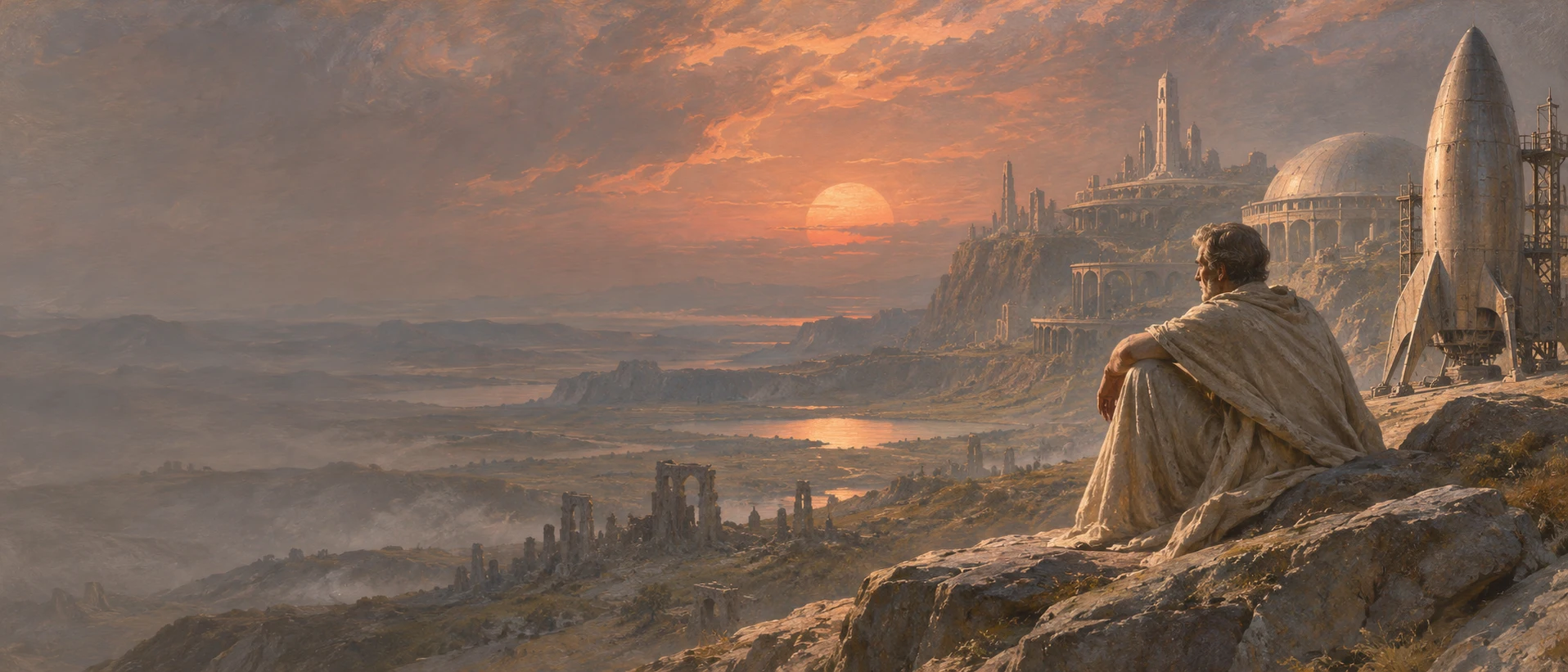
Two thousand million years. That is the span of Last and First Men, Olaf Stapledon’s 1930 “story of the near and far future”, in which the history of humanity is told from our own century to the death of the last human beings on Neptune. Along the way there are eighteen distinct human species, of which we are only the first, a war with Mars, a migration to Venus, and civilisations that rise and fall more often than anyone could count.
It is one of the boldest experiments in science fiction, and one of the strangest novels of its century. There is no central character. Whole species appear, flourish and die in a few pages. The book reads less like a novel than like a history textbook written by someone who has seen the end of everything, which is exactly what it pretends to be.
How does Last and First Men work?
Stapledon’s narrator is one of the Eighteenth Men, the final human species, living on Neptune at the end of the solar system’s life. He explains in an introduction that he has been influencing the mind of a writer in our own time, and that the book you are holding is the result. The device is outrageous, and Stapledon knew it. In a preface he admits that he has strayed into extravagance and defends the trick as the only way to suggest that time may hold more than we think.
He was equally frank about what kind of book he was writing. He did not want to forecast the future, which he thought futile, nor to write mere fantasy. He wanted something else.
But it is not prophecy; it is myth, or an essay in myth.
Olaf Stapledon, Last and First Men, preface
To help the reader keep hold of the scale, the original book included five time-scale charts, each covering a vaster stretch than the last. When the story reaches Neptune, the narrator remarks that the whole career of the First Men, from the earliest ape-men to the final catastrophe, has become “an unanalysable point”.
The eighteen human species
The first six chapters belong to us, the First Men. Europe tears itself apart in a series of wars, America and China fight for the world and merge into a single World State, and when the coal and oil run out, civilisation collapses. Some hundred thousand years later a new culture rises in Patagonia, and ends in a catastrophe that leaves only a few dozen survivors at the North Pole.
From them, ten million years on, come the Second Men: larger, longer-lived and far less selfish than us. After that the story accelerates.
- The Second Men fight a long war against invading Martians, intelligent clouds who do not at first recognise humans as minds at all.
- The Third Men, small and musical, become obsessed with breeding new forms of life, and design the Fourth Men, who are little more than enormous brains.
- The Fourth Men in turn design the Fifth Men, the greatest of the early species, who move humanity to Venus when the Moon threatens to fall onto Earth.
- On Venus the Seventh Men are bred to fly, and live in the air.
- Driven from Venus, humanity ends on Neptune, where its later species sink almost to the level of animals and rise again.
- The Eighteenth Men, the narrator’s own kind, achieve a shared group mind just as a dying star dooms them.
What holds this together is Stapledon’s tone, grave and compassionate, and his conviction that each species, however brief, matters. The closing pages are among the most moving in science fiction, and they end with a sentence that sounds like an epitaph for the reader as well as the narrator: “It is very good to have been man.”
Who was Olaf Stapledon?
He was a philosopher before he was a novelist. Born on the Wirral in 1886 and educated at Balliol College, Oxford, he took a doctorate in philosophy at Liverpool in 1925 and lectured there. Last and First Men was his first novel, and its success let him become a full-time writer. He followed it with a sequel, Last Men in London (1932), and with Star Maker (1937), which goes further still and tells the history of the whole universe.
His influence was enormous among writers rather than the wider public. Arthur C. Clarke said no other book had a greater influence on his life. H. P. Lovecraft, in letters of 1936, urged the young Fritz Leiber not to miss it and praised its unparalleled power. C. S. Lewis admired Stapledon’s invention while detesting his philosophy, and built the villain of his space trilogy around the idea, which Stapledon’s Fifth Men act on, that humanity has the right to take another world for itself.
Last and First Men
1930. Eighteen human species, three planets and two thousand million years, narrated by one of the last. A history of the future written with the feeling of an elegy.
The Last Man
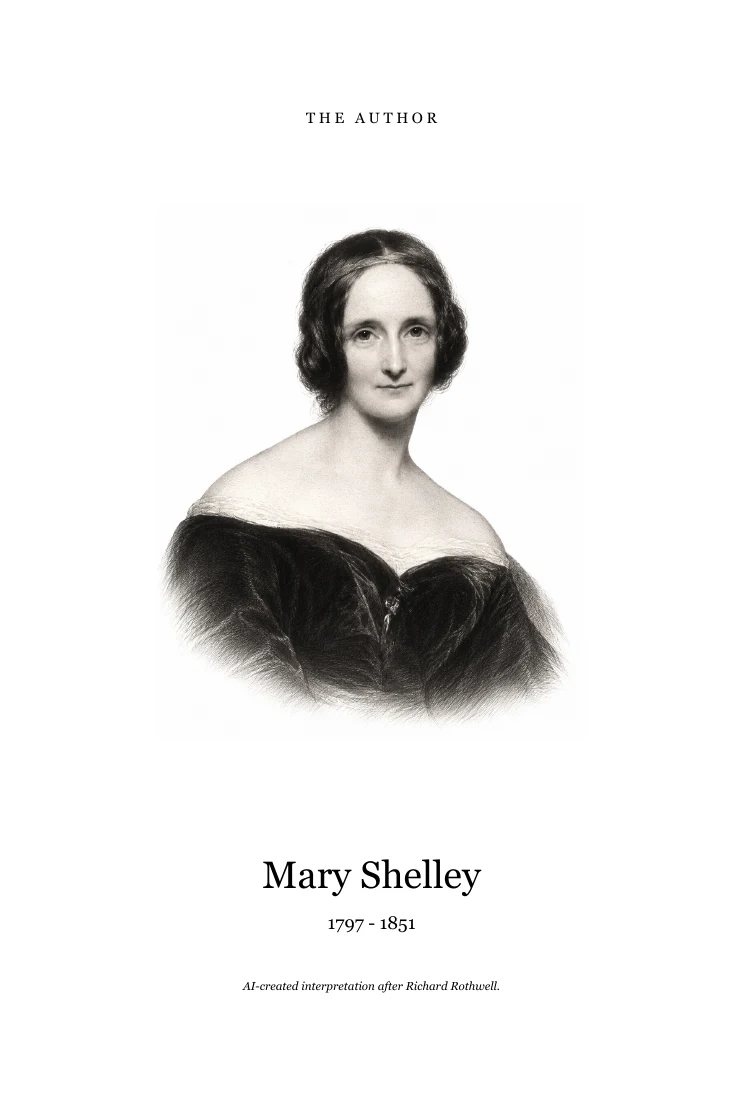
1826. Mary Shelley’s plague-stricken twenty-first century and its last survivor. A century before Stapledon, an earlier novelist imagined the end of humankind.
The Time Machine
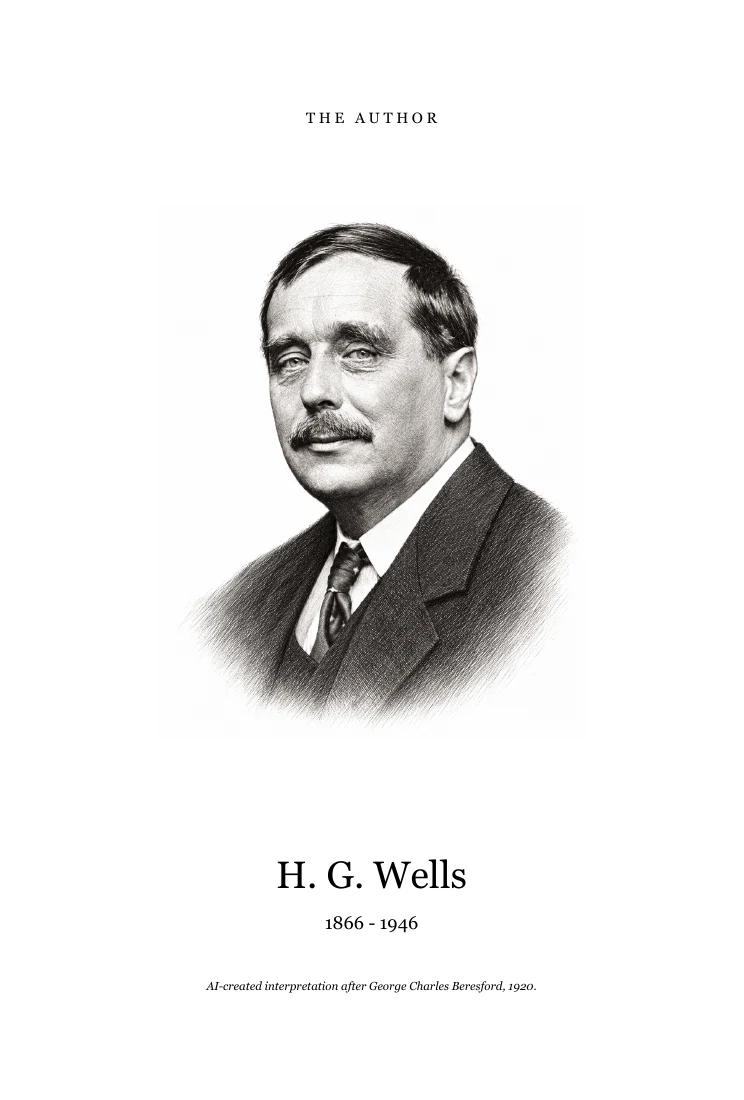
1895. Wells’s Time Traveller journeys hundreds of thousands of years ahead and on to a dying Earth. An obvious ancestor of Stapledon’s deep time.


If you like your science fiction big, see our science fiction firsts and the classics in books that predicted the future. Shelley’s darker vision is the subject of Mary Shelley’s The Last Man, and for the great forecaster of Stapledon’s youth, see how H. G. Wells predicted the atomic bomb.
Last and First Men is not a quick read, but it is a book that changes the size of the world you carry around in your head. Begin with the introduction, in which a voice from the end of time asks you to imagine your own era from the outside, and then open Last and First Men at its first chapter, which begins with a war in Europe.
Questions readers ask
What is Last and First Men about?
It is a fictional history of humanity over about two thousand million years, following eighteen successive human species from our own to the last humans on Neptune, narrated by one of those last humans.
When was Last and First Men published?
Methuen published it in London on 23 October 1930. It was Olaf Stapledon’s first novel.
Is Star Maker a sequel to Last and First Men?
Not directly, though it is often read as a companion. Star Maker (1937) covers the history of the whole universe, while Stapledon’s direct sequel is Last Men in London (1932).
How many human species are in Last and First Men?
Eighteen. The First Men are our own species, and the Eighteenth, or Last, Men are the narrator’s.