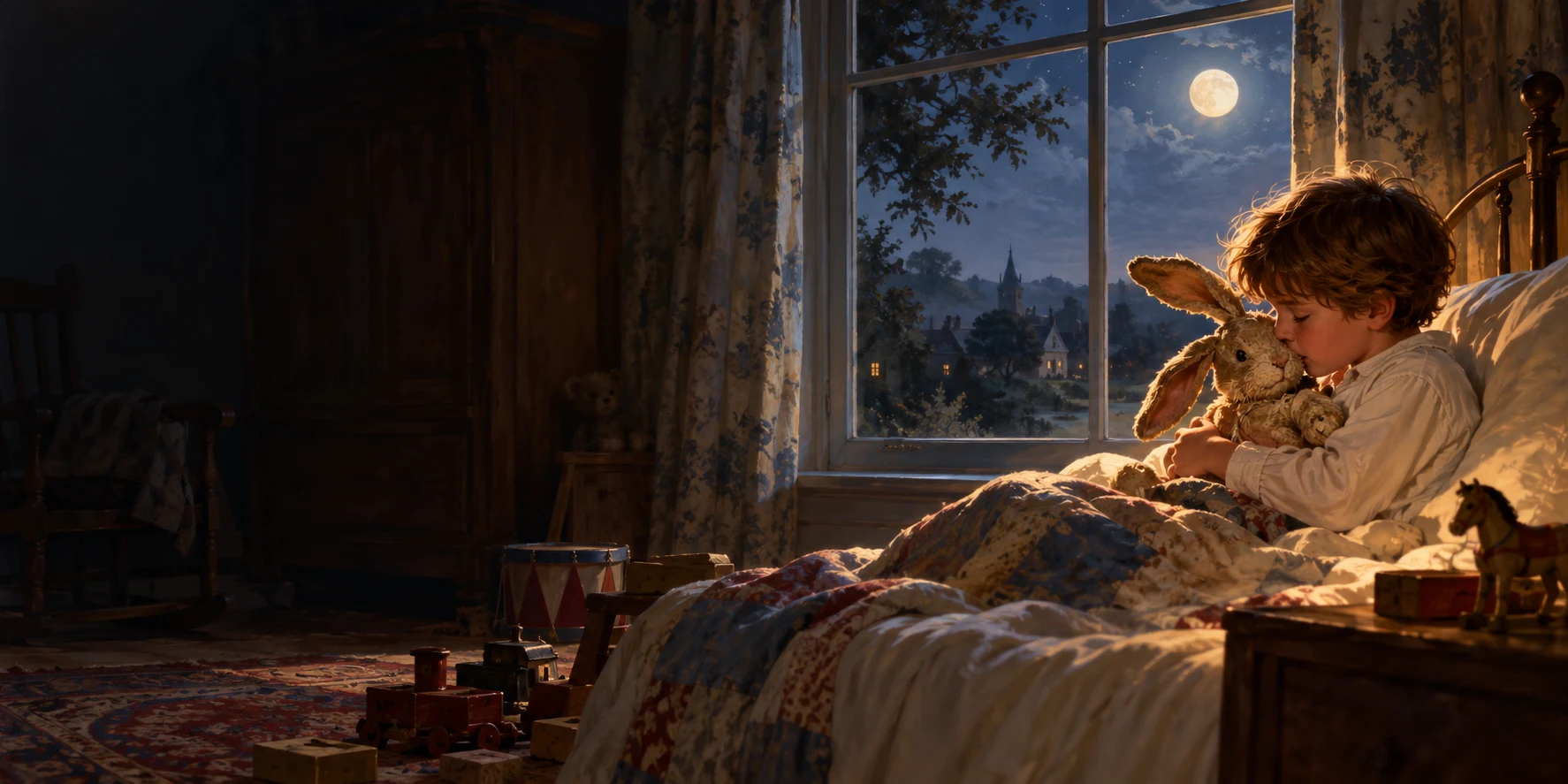
Long before there was a Velveteen Rabbit there was Tubby. He was a toy rabbit Margery Williams owned as a child, half-forgotten by the time she was grown, and she later traced her most famous character back to him. The wise old Skin Horse came from a real toy too, an old Dobbin from the same nursery. Together they became the heart of The Velveteen Rabbit, published in 1922 with the subtitle How Toys Become Real.
So the story behind “becoming Real” begins with a grown woman remembering what it was like to love a toy, and wondering what the toy made of it.
What does the Skin Horse say about becoming Real?
The Rabbit arrives in the Boy’s stocking one Christmas morning, is briefly adored, and is then forgotten among the grander mechanical toys of the nursery. The only one who is kind to him is the Skin Horse, a toy so old that his coat is bald in patches and most of his tail hairs have been pulled out to string bead necklaces. One day, lying near the nursery fender, the Rabbit asks him a question:
“What is REAL?” asked the Rabbit one day, when they were lying side by side near the nursery fender, before Nana came to tidy the room. “Does it mean having things that buzz inside you and a stick-out handle?” “Real isn’t how you are made,” said the Skin Horse. “It’s a thing that happens to you. When a child loves you for a long, long time, not just to play with, but REALLY loves you, then you become Real.”
Margery Williams, The Velveteen Rabbit (1922)
He goes on to warn that it can hurt, that it takes a long time, and that it rarely happens to those who break easily or have sharp edges. By the time you are Real, he says, most of your hair has been loved off and your eyes have dropped out, but none of that matters, because once you are Real you cannot be ugly, except to people who do not understand.
It is a speech about toys, and it is plainly about more than toys, which is how readers of every age have taken it ever since. Williams never spells that out. She lets the Rabbit puzzle over it, as a child would.
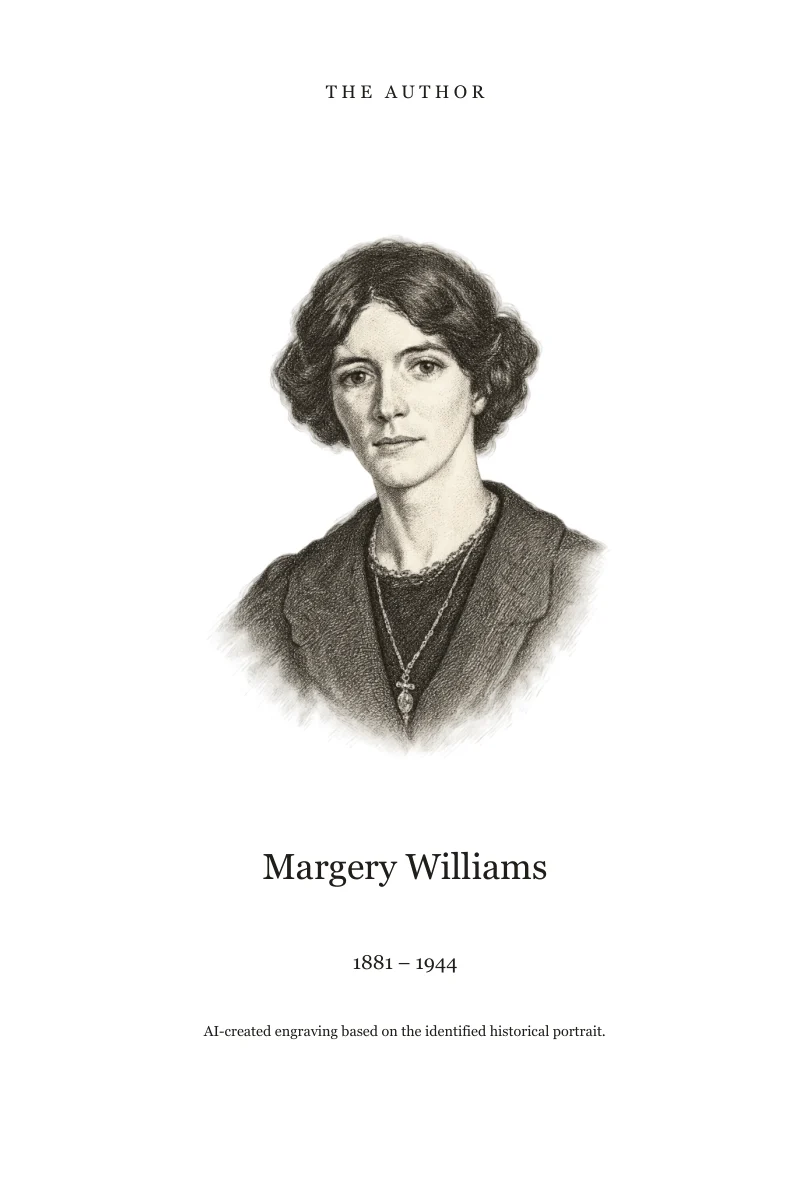
Who was Margery Williams?
She was born in London in 1881. Her father, Robert Williams, a barrister and classical scholar who encouraged her reading, died when she was seven, a loss one recent writer has called formative. As a girl she was taken to the United States, where she was educated at a convent school in Pennsylvania, and at nineteen she went back to London determined to become a writer.
By 1906 she had published several novels for adults and married Francesco Bianco, a dealer in rare books. They had two children, Cecco and Pamela. The family lived in Paris and then Turin during the First World War, while Francesco served in the Italian army, and in 1921 they settled permanently in America.
How The Velveteen Rabbit was written
Williams had stopped writing for some years when she discovered the children’s poems and fantasies of Walter de la Mare, which inspired both Pamela’s art and her mother’s return to fiction. Her first story for children drew on the tales she had invented for Cecco and Pamela about their own toys, mixed with memories of the toys she had loved herself.
The story first appeared in Harper’s Bazaar in 1921, illustrated by Pamela. The book edition of 1922 used new pictures by the painter William Nicholson, and Williams dedicated it to her husband in the Rabbit’s name: “To Francesco Bianco from The Velveteen Rabbit”. It was her first children’s book, and it led to many more, among them The Little Wooden Doll and The Skin Horse, both illustrated by Pamela, and Winterbound, which earned a Newbery Honor in 1937.
Is The Velveteen Rabbit sad?
A little, and honestly so. Late in the book the Boy falls ill with scarlet fever, and the doctor orders that the toys in his bed must be burned. Williams does not soften this for her readers, but she does not abandon the Rabbit either, and the ending turns on a nursery magic that rewards everything the Skin Horse promised. Many children find it comforting rather than upsetting; many adults find it harder to read aloud than they expected.
The Velveteen Rabbit
1922. A stuffed rabbit, a wise old horse and a boy who loves him. Short enough for one bedtime, and the Skin Horse’s speech alone repays a lifetime of rereading.
The Adventures of Pinocchio
1883. A wooden puppet who longs to become a real boy, and gets into a great deal of trouble on the way. Funnier and wilder than most people remember.
Winnie-the-Pooh
1926. Christopher Robin’s nursery toys, from a bear of very little brain to a gloomy donkey, given whole lives in the Hundred Acre Wood.


For more nurseries where the toys wake up, see Classic stories about toys that come alive and Did you know Winnie-the-Pooh was named after a real bear?. Parents looking for something to share at the end of the day will find more in Classic bedtime stories to read aloud, and Williams herself has a page of her own: Margery Williams.
Find a quiet evening and a child, or just a quiet evening. Read The Velveteen Rabbit aloud, and listen to what the Skin Horse has to say.
Questions readers ask
What is the meaning of “Real” in The Velveteen Rabbit?
The Skin Horse explains that being Real is not about how a toy is made but about being loved by a child for a long time. It takes time, it can hurt, and once it happens it lasts for always.
When was The Velveteen Rabbit written?
It first appeared in Harper’s Bazaar in 1921 and was published as a book in 1922, illustrated by William Nicholson. It was Margery Williams’s first children’s book.
What inspired The Velveteen Rabbit?
Margery Williams drew on toys from her own childhood, including a rabbit called Tubby and an old toy horse, and on the stories she told her own children about their toys.