In July 1881 a Roman children’s magazine, the Giornale per i bambini, began printing a serial called The Story of a Puppet by Carlo Collodi. Its hero was a wooden boy carved from a talking log, and its first instalments ran through his disobedience, his bad company and his narrow escapes.
Then, at what is now chapter 15, the story seemed to end. Pinocchio, chased through the woods by two assassins, is caught and hanged from the branch of a great oak, and left there. That is the original Pinocchio ending, and for a few months it was the only one.
What was Pinocchio’s original ending?
Collodi appears to have meant it as a final warning. Pinocchio has lied, skipped school, sold his schoolbook and trusted every stranger who flattered him, and the story had been building a long case against him. The hanging was the bill coming due, in the stern tradition of cautionary tales for children.
His young readers did not accept it. The magazine’s editors wanted more, letters of protest are said to have arrived, and in early 1882 the serial returned under a new title, The Adventures of Pinocchio. In the new chapter 16, a fairy with blue hair sees the puppet hanging from the oak and has him cut down. The story carried on until early 1883, when it appeared as a book with thirty-six chapters.
How the continuation changed the story
The first fifteen chapters are a tale about a boy who will not learn. The chapters that follow are something larger: a long, strange journey towards becoming good. The Fairy becomes a kind of mother to him, Pinocchio’s nose grows when he lies, and the adventures range from the Land of Toys to the inside of an enormous fish.
Collodi never quite softened, though. The book keeps its sharp edges right to the end: Pinocchio is cheated, imprisoned, turned into a donkey and nearly drowned, and the morals are delivered with a straight face. But the ending he eventually wrote is a reward rather than a punishment, and it is the ending everyone now remembers.
The Adventures of Pinocchio
1883. A puppet carved from a talking log runs away, falls in with a fox and a cat, and slowly learns what it costs to be good. Odder, darker and funnier than the film.
The Velveteen Rabbit
1922. A stuffed rabbit who longs to become real. A gentler cousin to Pinocchio, and a perfect short read-aloud.
Peter and Wendy
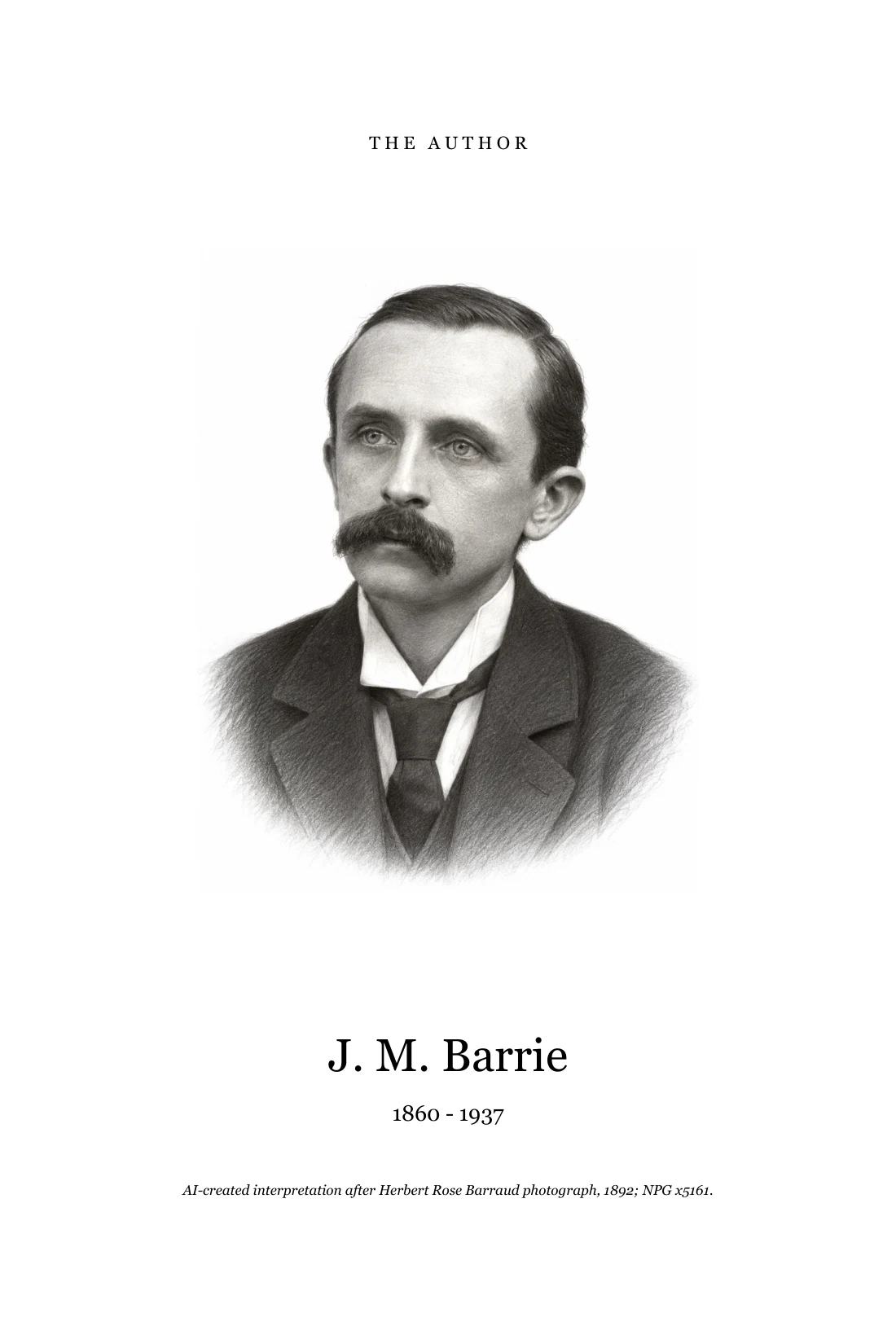
1911. J. M. Barrie’s novel of the boy who would not grow up, with its own sharp edges beneath the magic.


Who was Carlo Collodi?
Collodi was the pen name of Carlo Lorenzini, a Florentine journalist, satirist and patriot born in 1826, who took the name from the Tuscan village where his mother grew up. He came to children’s writing fairly late, first by translating the French fairy tales of Charles Perrault into Italian, then by writing school books.
That background shows in Pinocchio. It is full of the poor of rural Tuscany: hungry carpenters, crooked innkeepers, police who arrest the wrong person. The comedy is quick and slapstick, and the satire is aimed as much at adults as at naughty boys.
The finished book appeared in Florence in 1883, with pictures by the illustrator Enrico Mazzanti. Collodi lived only seven more years and could not have guessed what was coming: the first English translation was published in 1892, and Pinocchio is now often said to be one of the most translated books ever written.
Is the original Pinocchio suitable for children?
Yes, for most, though it is worth knowing what you are getting. The book is more frightening than the 1940 Disney film, and it does not shy away from hunger, cruelty or death. Children of seven or eight usually relish this, in the way they relish Grimm; very sensitive listeners may prefer to wait a year or two.
The chapters are short and end on cliffhangers, which is the serial origin showing through, and they make a natural bedtime unit. It is one of the books we recommend in Classic chapter books for 7 to 9-year-olds and Short classics for reluctant readers. For how the film reshaped the story, see Disney films based on classic books.
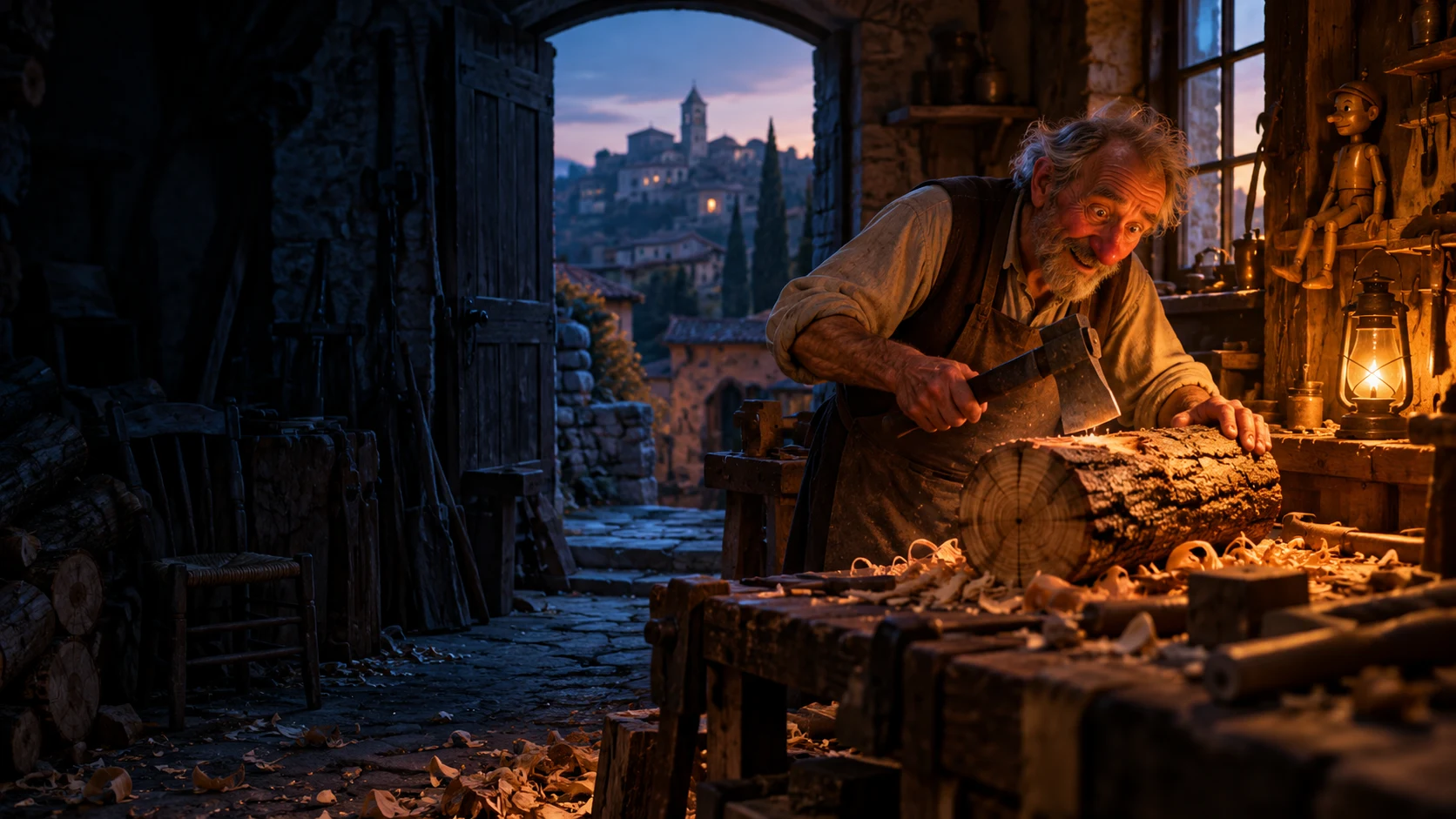
Read it once with the knowledge that it nearly ended at the oak tree, and chapter 15 becomes one of the most suspenseful moments in children’s fiction. Begin with a carpenter, a block of wood that complains when it is struck, and The Adventures of Pinocchio.
Questions readers ask
How did the original Pinocchio end?
In the first serial version, Pinocchio is caught by two assassins and hanged from an oak tree at the end of what is now chapter 15. Collodi resumed the story months later, and in chapter 16 the Fairy with blue hair rescues him.
Why did Collodi continue Pinocchio?
Young readers and the magazine’s editors wanted more. The serial returned in 1882 and ran until 1883, when the complete story was published as a book of thirty-six chapters.
Is the book Pinocchio darker than the Disney film?
Yes. Collodi’s Pinocchio is harsher and stranger: he kills the talking cricket in chapter four, is hanged, imprisoned and turned into a donkey. It is also very funny, and it still ends well.