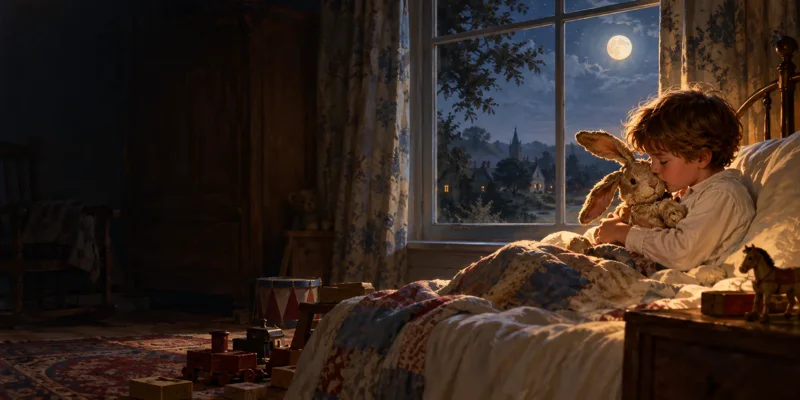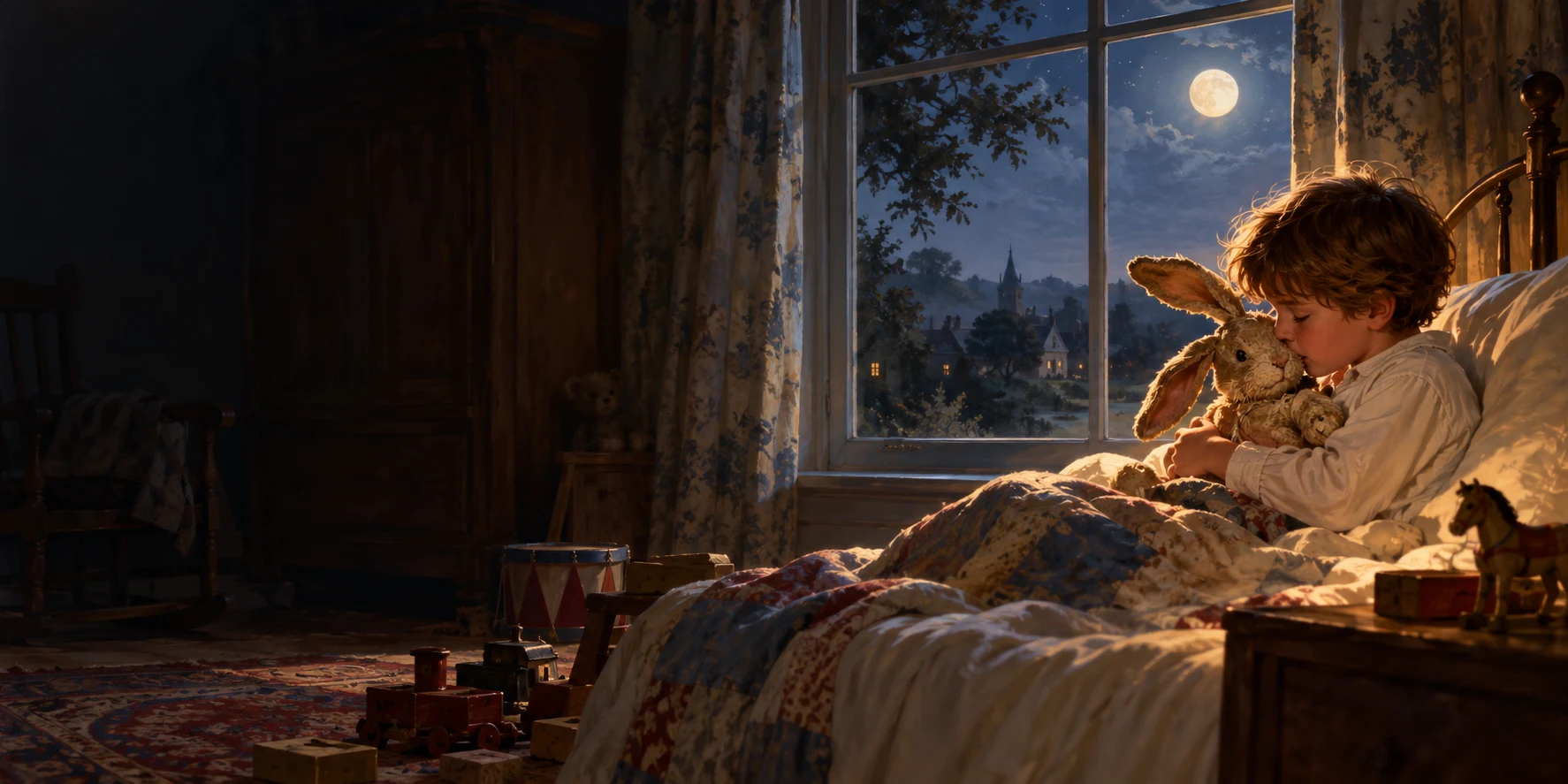
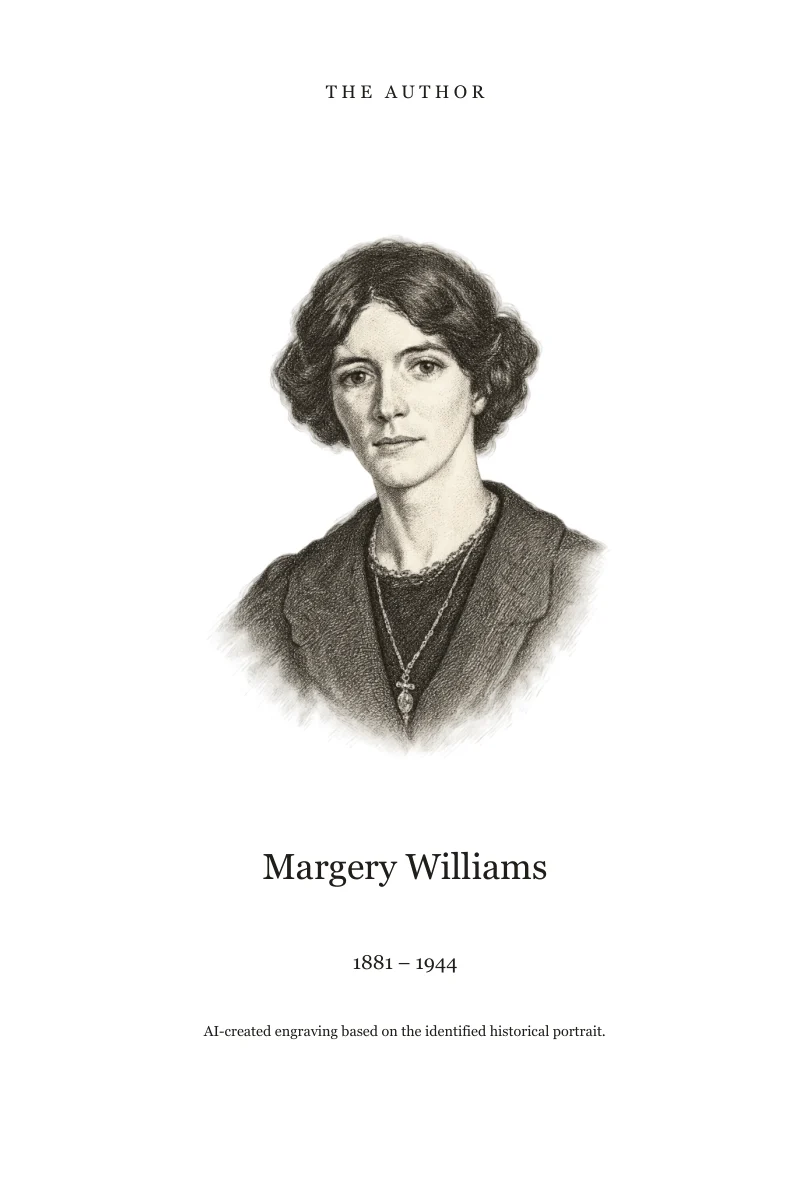
“What is REAL?” asks the Rabbit, lying beside the nursery fender in Margery Williams’s The Velveteen Rabbit (1922). It is the question behind nearly every classic story about toys that come alive, and the old books answer it in very different ways: through a child’s love, through a fairy’s kiss, or through a splash of elixir that was never meant for the bread dough.
Below are the books about toys we would hand a child first, running from a forty-page story you can finish in one sitting to a long, wild adventure. Each comes with a note on the sad or frightening moments, because toy stories are rarely as cosy as their covers suggest.
Classic books about toys, gentlest first
The Velveteen Rabbit
1922. A stuffed rabbit, a wise old Skin Horse and a boy who falls ill with scarlet fever. Ages 4 and up, though the moment the nursery toys are ordered to be burnt needs a hand to hold.
Winnie-the-Pooh
1926. Not a toy story in plot, but most of the friends in the Hundred Acre Wood began as toys in a real nursery. Ages 3 and up, and just as funny for the adult reading it.
The House at Pooh Corner
1928. The second book of Pooh stories brings in Tigger and ends with a goodbye that grown-ups tend to feel more than children do.
The Patchwork Girl of Oz
1913. A girl stitched from an old patchwork quilt and brought to life with the Powder of Life, then given rather too generous a helping of brains. Ages 6 and up.
The Adventures of Pinocchio
1883. A puppet carved from a log that already talks. He lies, runs off and is nearly eaten more than once. Far darker and funnier than the film; ages 7 and up.
John Dough and the Cherub
1906. A life-sized gingerbread man baked with an elixir of life, pursued across strange islands by a man who wants to eat him. Baum at his most freewheeling; ages 7 and up.



What makes a toy real?
The Skin Horse, the oldest and wisest toy in the nursery, once belonged to the Boy’s uncle. His answer to the Rabbit is the passage most readers remember long after the rest has faded.
It’s a thing that happens to you. When a child loves you for a long, long time, not just to play with, but REALLY loves you, then you become Real.
The Skin Horse, in Margery Williams, The Velveteen Rabbit (1922)
The story first ran in Harper’s Bazar in 1921 and became a book the following year, with pictures by William Nicholson. It was Williams’s first book for children. What keeps it from being merely sweet is its honesty. The Rabbit is loved until he is shabby, and when the Boy recovers from scarlet fever the doctor orders his room disinfected and his toys burnt. The rescue that follows is magical, but the Boy never learns what became of his old Bunny. We look at that ending more closely in what it means to become Real.
Pinocchio: the toy who refuses to behave
Carlo Collodi’s puppet first appeared in an Italian children’s magazine in July 1881. Geppetto carves him from a log that already talks back, and Pinocchio is rude before he is even finished. Within a few chapters he has run away, landed his father in trouble with the police and thrown a hammer at the Talking Cricket, killing him.
Collodi originally stopped the serial at what is now chapter 15, with Pinocchio hanged from a tree by two assassins. Readers and the magazine’s editor wanted more, so the story resumed in 1882, turning the fairy with turquoise hair, glimpsed just before the hanging, into his rescuer and setting him on the long road towards becoming a real boy. The complete book came out in 1883. The full story of that first ending is in Pinocchio’s original ending.

John Dough and the Cherub: Baum’s gingerbread man
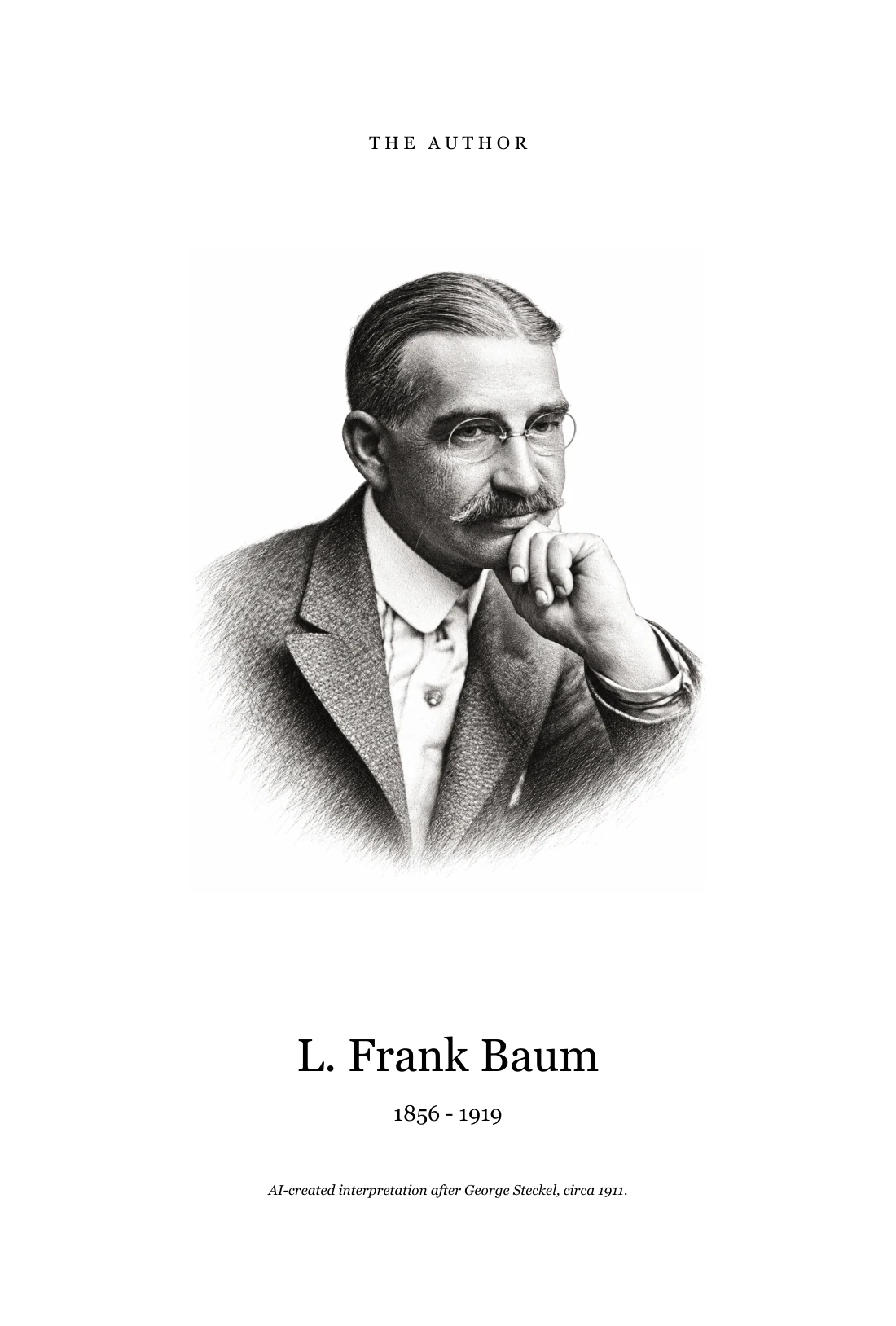
L. Frank Baum published John Dough and the Cherub in 1906, between Oz books. Baking at three in the morning on the Fourth of July, a baker mixes his dough with water that happens to hold the Great Elixir, and the gingerbread man who comes out of the oven puts on a top hat, picks up a candy cane and walks out into the world. A stray firework rocket carries him off to a chain of very peculiar islands.
His companion is Chick the Cherub, “the first and only Original Incubator Baby”, and Baum never says whether Chick is a boy or a girl. His publishers are said to have turned the puzzle into a contest for young readers. Closest of all to a nursery toy is Para Bruin, a bouncing rubber bear. One caution for reading aloud: the villain chasing John, Ali Dubh, is drawn as a crude Arab stereotype of the period.
Why are classic toy stories so often sad?
Because a toy’s fate depends on being loved, and children grow up. Hans Christian Andersen knew this in “The Steadfast Tin Soldier” (1838), and E. T. A. Hoffmann’s “The Nutcracker and the Mouse King” (1816) turned a Christmas present into a hero long before the ballet. The books here keep that edge. The Rabbit is nearly burnt, Pinocchio is nearly fried by a fisherman, and the last chapter of the Pooh stories opens with the words “Christopher Robin was going away.”
That is no reason to avoid them. Read aloud, they give children a safe place to think about change and loss, and every one of them ends more kindly than it threatens to. For more in the same spirit, try our classic bedtime stories to read aloud or Baum’s books beyond Oz.
For a four- or five-year-old, though, begin with the smallest book on the list. The Velveteen Rabbit takes twenty minutes to read aloud and a good deal longer to forget.
Questions readers ask
What are some classic books about toys that come alive?
The Velveteen Rabbit (1922), The Adventures of Pinocchio (1883), Winnie-the-Pooh (1926) and L. Frank Baum’s John Dough and the Cherub (1906) are four of the best. Andersen’s “The Steadfast Tin Soldier” and Hoffmann’s “The Nutcracker and the Mouse King” are older short tales on the same theme.
Is The Velveteen Rabbit sad?
Partly. The Boy falls ill and his toys are ordered to be burnt, but a fairy rescues the Rabbit and makes him real, so the ending is gentle. Most children of four and up cope well with it read aloud.
Is the original Pinocchio book suitable for young children?
It is best from about seven. Collodi’s puppet kills the Talking Cricket, is hanged by robbers and is nearly fried by a fisherman, all told with a light, comic touch, but it is much darker than the Disney film.
Who wrote John Dough and the Cherub?
L. Frank Baum, the author of The Wonderful Wizard of Oz. It was published in 1906 and its characters later make a cameo at Ozma’s birthday party in The Road to Oz.