In a saloon in Medicine Bow, Wyoming, a gambler named Trampas loses at cards and calls the man opposite him a name. The man does not stand up. He takes out his pistol, rests it on the table without aiming it, and speaks very softly.
with a voice as gentle as ever, the voice that sounded almost like a caress, but drawling a very little more than usual, so that there was almost a space between each word, he issued his orders to the man Trampas: “When you call me that, SMILE.”
Owen Wister, *The Virginian*, chapter II
That is the scene everyone remembers from Owen Wister’s The Virginian (1902), and it has been carried into every adaptation since. The book itself was a phenomenon, reported to have sold over 200,000 copies in its first year, and it fixed the cowboy hero in place for a century: quiet, courteous, slow to anger and lethal when pushed. Scholars still argue over whether it was truly the first cowboy novel, since earlier examples exist, but it is often called that, and it is the book that made the Western respectable.
What is The Virginian book about?
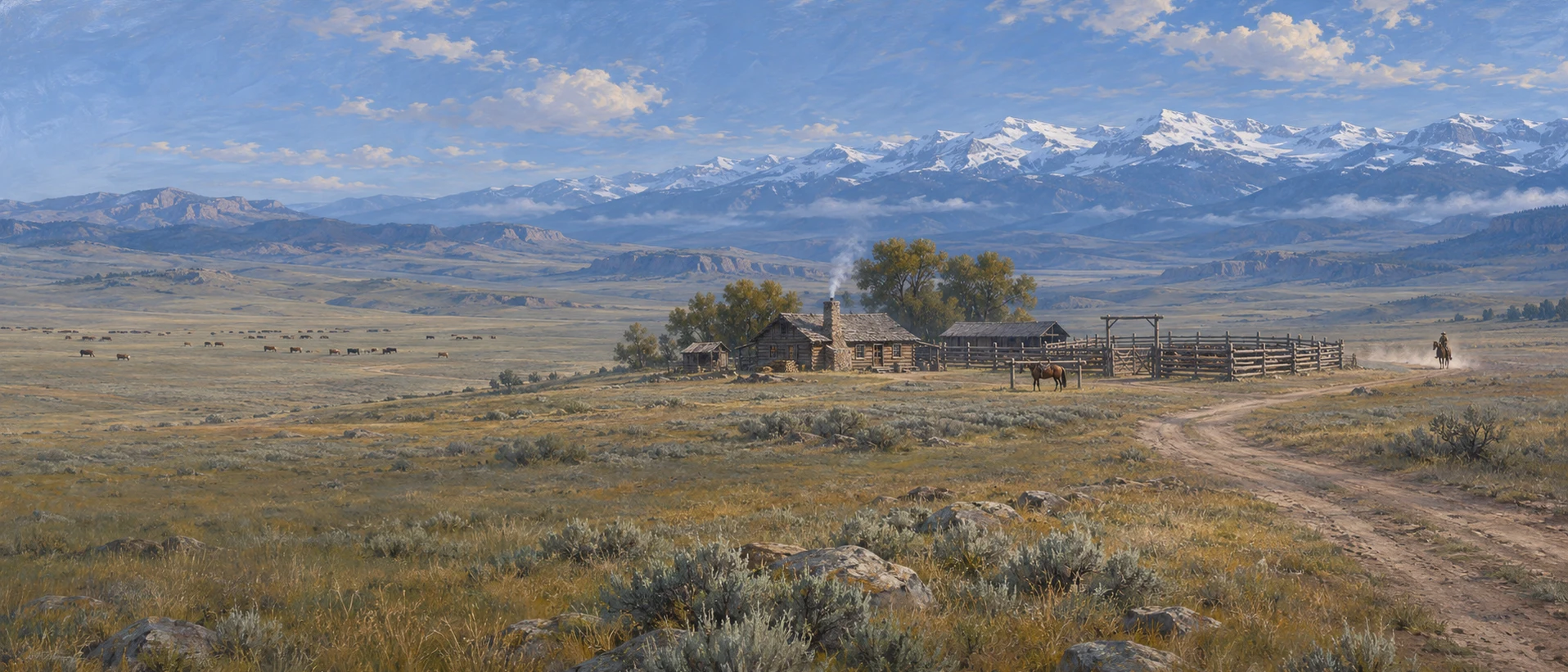
An Eastern narrator, known as the Tenderfoot, arrives in Wyoming in the 1880s and is escorted to Judge Henry’s ranch at Sunk Creek by a tall stranger known only as the Virginian. Over the following years he watches his friend rise to foreman, court Molly Stark Wood, a schoolteacher from Vermont, and carry on a long feud with Trampas.
The novel is episodic, built from stories Wister had published in Harper’s and The Saturday Evening Post since 1893, and it is gentler and more comic than its legend. There is a scene in which the cowboys swap the babies at a barbecue dance, and a long, tender courtship conducted partly through the books Molly lends him, Shakespeare and Scott among them. The darkest chapter, in which the Virginian helps hang his old friend Steve for cattle rustling, is the moral centre of the book. Its final showdown has been called the first in fiction.
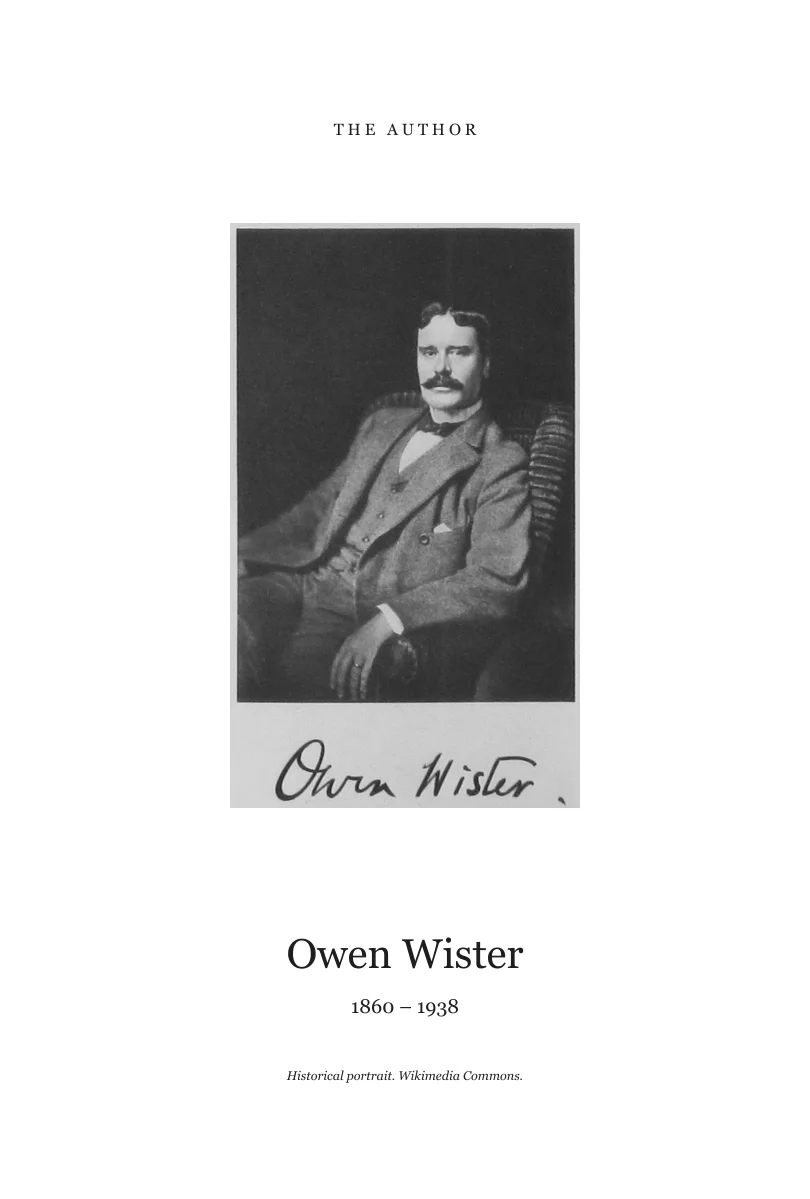
Wister was not a cowboy himself. He was a Philadelphian, a Harvard man and a grandson of the actress Fanny Kemble, who first went West in 1885 to recover his health and returned almost every summer for the next fifteen years to gather material. In his note to the reader he insists the book is a historical novel, a picture of Wyoming between 1874 and 1890, a world he says had already vanished by the time he wrote.
The Virginian films: DeMille, Cooper and McCrea
Wister and the playwright Kirke La Shelle turned the book into a Broadway play in 1904, and the early films drew on that stage version as much as on the novel. Cecil B. DeMille directed the first, in 1914, with Dustin Farnum repeating his stage role. Tom Forman’s 1923 silent starred Kenneth Harlan, with Florence Vidor as Molly.
The version that lasted was Victor Fleming’s, released in November 1929. It was Fleming’s first sound film and Gary Cooper’s first all-talking picture, and it is usually counted as the role that made Cooper a star. Walter Huston plays Trampas, Richard Arlen plays Steve and Mary Brian plays Molly. Much of it was shot outdoors around Sonora and Lone Pine in California, and its use of natural sound, cattle and wind and silence, was unusual for an early talkie.
Fleming’s film reshapes the story. Steve becomes the Virginian’s rival for Molly and then a member of Trampas’s gang of rustlers, and the famous line is softened into a more conversational version, delivered in an accent Cooper is said to have been coached in by Randolph Scott. Paramount remade it in Technicolor in 1946 with Joel McCrea and Brian Donlevy. A television film with Bill Pullman and Diane Lane followed in 2000, and a low-budget version with Trace Adkins in 2014.
The Virginian TV series (1962–1971)
For many readers the name means NBC’s series, which ran from 1962 to 1971 and starred James Drury as the Virginian, with Doug McClure and Lee J. Cobb. It was a ninety-minute series, filmed in colour from the start, and ran for 249 episodes, renamed The Men from Shiloh in its last season. Only Bonanza and Gunsmoke ran longer among network Westerns.
It owes the book very little beyond its hero. The Virginian is foreman of the Shiloh Ranch rather than Sunk Creek, Judge Henry becomes Judge Garth, and Trampas, the novel’s villain, is the Virginian’s cheerful top hand and friend. Apart from the Virginian himself, he is the only regular to stay for all nine seasons.
We set the novel among its descendants in classic westerns, and more Hollywood adaptations sit side by side in The Last of the Mohicans: book vs. film and essential American classics.
If all you know is the TV ranch, start The Virginian with the card game in chapter two. The voice is as quiet as the films made it, and the man is a good deal more complicated.
Questions readers ask
Is The Virginian TV series based on a book?
Loosely. NBC’s The Virginian (1962–1971) takes its hero and some names from Owen Wister’s 1902 novel, but invents most of its stories and turns Trampas, the novel’s villain, into the Virginian’s friend.
Who played the Virginian in the 1929 film?
Gary Cooper, in Victor Fleming’s 1929 film for Paramount, with Walter Huston as Trampas. It was Cooper’s first all-talking picture and the role that made him a star.
Was The Virginian the first Western novel?
It is often called the first cowboy novel and was hugely influential, but scholars point to earlier examples, such as Emma Ghent Curtis’s The Administratrix (1889). It is safest to call it a landmark of the genre.
What is the Virginian’s real name?
Wister never gives it. He is known throughout simply as the Virginian; a friend calls him Jeff, apparently as a nickname.