In March 2009, visitors to the Paris book fair could pick up a badge that said simply Je lis La Princesse de Clèves: I am reading The Princess of Cleves. They went fast. The badge was a joke, a protest and a reading recommendation all at once, and it was aimed at one reader in particular, the President of the Republic, Nicolas Sarkozy.
Sarkozy had been making fun of the novel for years. In response, students, lecturers and readers across France turned Madame de La Fayette’s quiet court romance of 1678 into a symbol of resistance, and sales of The Princess of Cleves climbed.
What did Sarkozy say about La Princesse de Clèves?
The first remark came on 23 February 2006, in a speech in Lyon, when Sarkozy was interior minister and preparing to run for president. As French reports recorded it, he mocked the fact that the exam for a civil-service administrative post included questions on La Princesse de Clèves, suggested that whoever had set it was either a sadist or an idiot, and invited his audience to picture a counter clerk being asked what she thought of the book.
He returned to the theme in June 2006, telling party members that he had read it so long ago he would probably have failed the exam. In 2008, by then president, he was reported to have said that he had nothing against the novel but had suffered a great deal over it at school. For many teachers and academics the jokes summed up an attitude to learning they disliked: that literature was a luxury with no place in ordinary working life.
- March 1678
La Princesse de Clèves is published in Paris, without an author’s name
- 23 Feb 2006
In Lyon, Sarkozy mocks its place in a civil-service exam
- June 2006
He repeats the joke to members of his party
- 2007
Sarkozy is elected president
- 2008
Christophe Honoré’s film La Belle Personne moves the story to a Paris lycée
- Feb–Mar 2009
University protesters stage public readings of the novel
- March 2009
“I am reading The Princess of Cleves” badges are handed out at the Paris book fair
- 2014
The novel enters the prestigious Pléiade library of French classics

How did The Princess of Cleves become a protest symbol?
In 2009 French universities were in uproar over government reforms to higher education. Lecturers and students went on strike and marched, and they reached for the book the president had mocked. Pages were read out through megaphones at demonstrations. There were marathon readings, lasting hours, in squares, outside universities and in theatres. Teachers posted copies to the Élysée.
Someone even wrote a parody of the novel’s famous first sentence, casting the president as a king with a passion for speed. Sarkozy’s own remarks were scarcely covered at first, but by 2009 every protester knew them. The joke had turned the oldest book on the syllabus into the most topical.
What is The Princess of Cleves about?
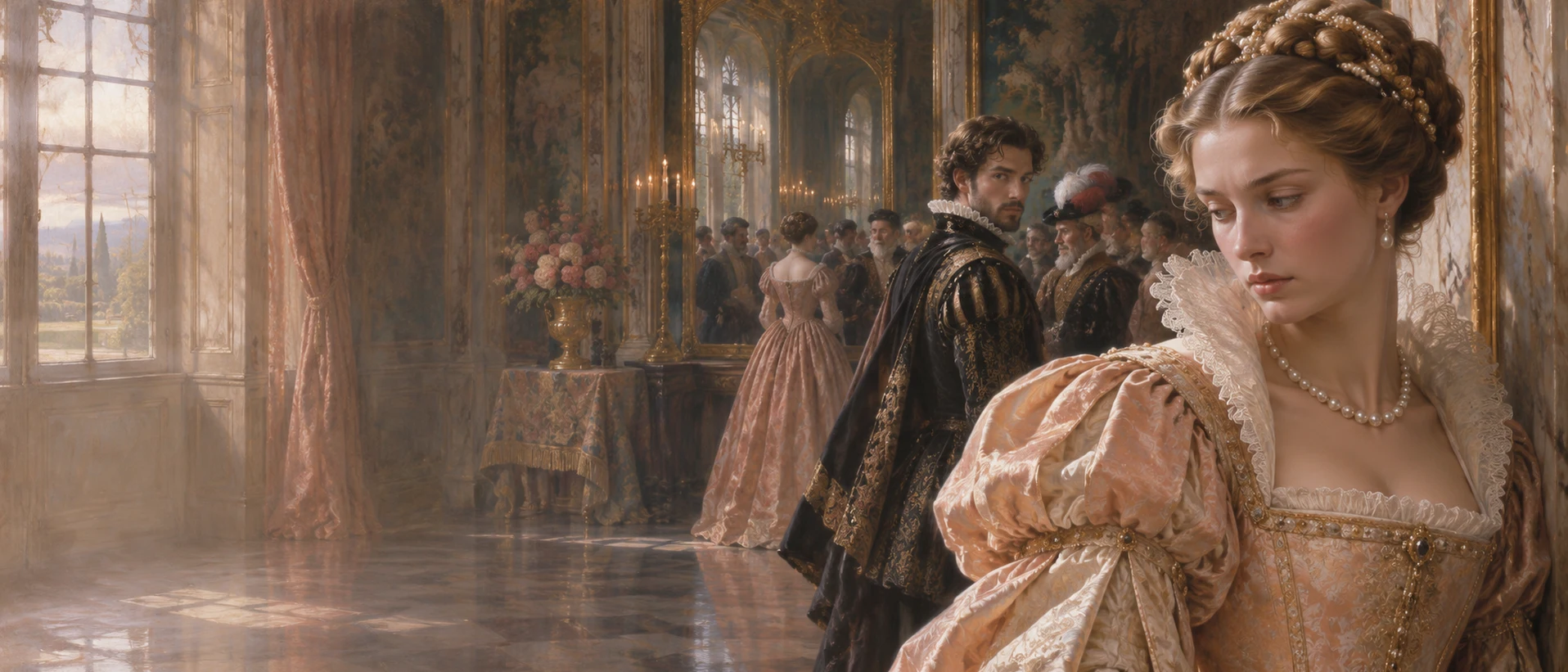
The story is set at the court of Henri II of France between 1558 and 1559, and almost every character except the heroine is a real historical figure. A beautiful sixteen-year-old heiress, Mademoiselle de Chartres, is brought to court by her mother and married to the Prince of Cleves, who adores her. She respects him but does not love him. Then, at a ball, she meets the Duke of Nemours, the most dazzling man at court, and they fall in love.
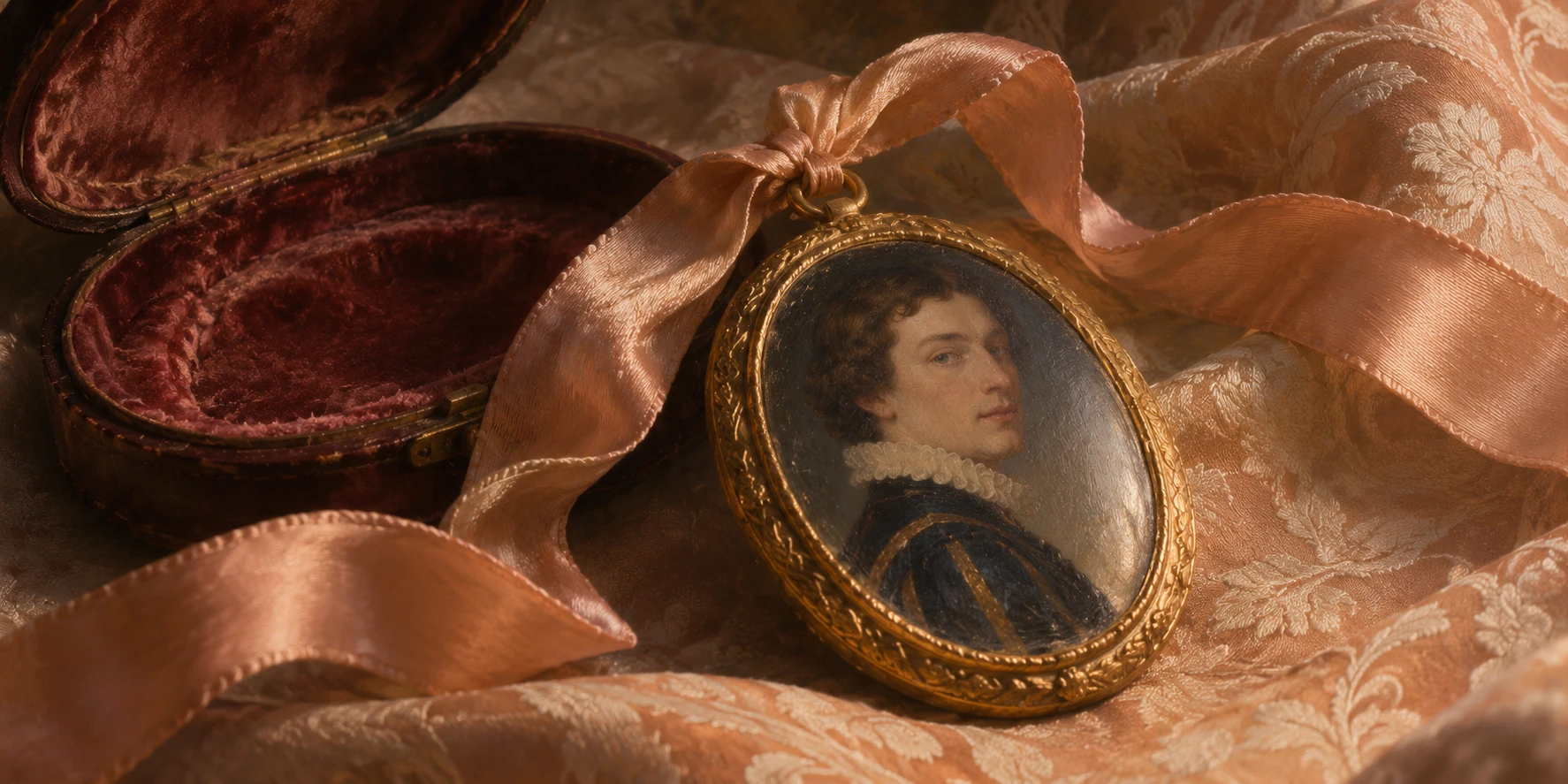
Nothing happens, in the usual sense. What the novel follows instead is feeling: glances noticed across a room, a stolen portrait, a letter that falls into the wrong hands, and the princess’s struggle to keep a passion she will not act on hidden from a court where everyone watches everyone. At its centre is one of the boldest scenes in early fiction, when she does something her first readers could scarcely believe.
I am going to make a confession to you, such as no woman ever yet made to her husband; but the innocence of my intentions, and of my conduct, give me power to do it.
Madame de La Fayette, The Princess of Cleves
Readers argued about that confession as soon as the book appeared: was it noble, or foolish, or simply unbelievable? They have argued just as hard about the choice she makes at the end, which we will leave for you to discover.
Why is it called the first modern novel?
Because it turned the long, adventure-crowded French romance of its day inward. Earlier romances could run to many volumes of abductions and duels. La Princesse de Clèves is short, precise and realistic, and its drama is almost entirely in its characters’ minds. It is often called the first French psychological novel, and one of the first historical novels in any language. It was published anonymously, but its author is generally held to be Madame de La Fayette, a Parisian aristocrat and friend of the moralist La Rochefoucauld.
The Princess of Cleves
1678. A young wife, a dazzling duke and a court where every glance is noticed. The short, piercing novel that taught French fiction to look inside its characters, and the book a president made famous.
Madame Bovary
1857. Flaubert’s provincial wife who lets her longings run away with her, and a novel that landed its author in court. An instructive companion to the princess’s self-command.


For more of the French tradition, see French classics in translation and the story of the Madame Bovary trial. And for another book that the French authorities once wished away, read how Candide was banned.
Then do what the protesters did and read it for yourself. Open The Princess of Cleves at its opening sentence, where grandeur and gallantry never appeared with more lustre than at the court of Henri II, and see what a president found so unsettling.
Questions readers ask
Why did Sarkozy criticise La Princesse de Clèves?
In 2006, as interior minister, he mocked the inclusion of the novel in a civil-service entrance exam, arguing in effect that it was absurd to test clerks on a seventeenth-century romance. He repeated the jibe several times.
How did people protest with The Princess of Cleves?
During the 2009 university protests in France, lecturers and students held public readings of the novel, read passages through megaphones, sent copies to the Élysée Palace and wore badges reading “I am reading The Princess of Cleves”.
Who wrote The Princess of Cleves?
It was published anonymously in Paris in 1678, but it is generally attributed to Madame de La Fayette (1634–1693).
What is The Princess of Cleves about?
A young married woman at the court of Henri II falls in love with the Duke of Nemours and struggles to master her feelings, in a court where every gesture is watched.