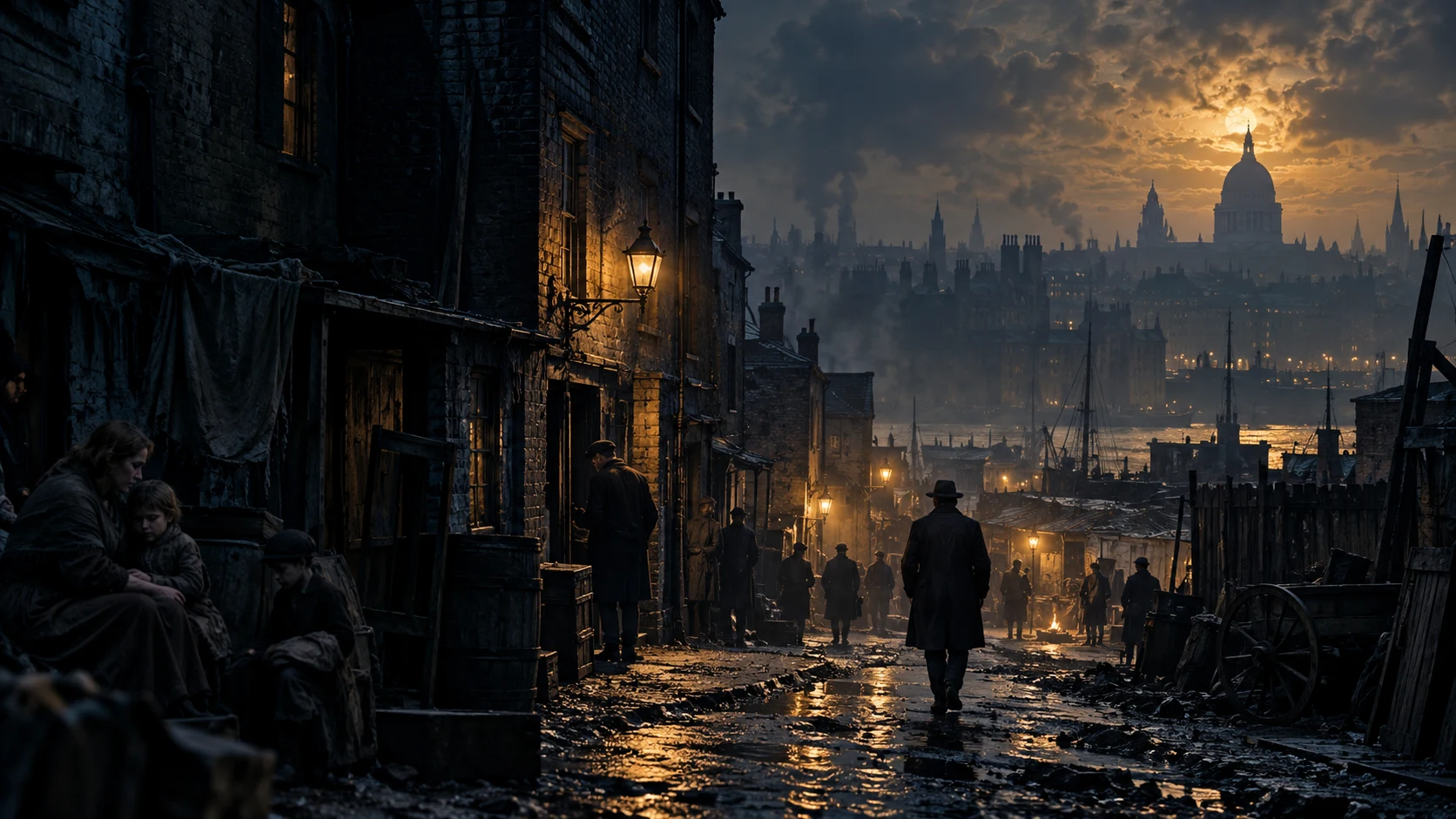
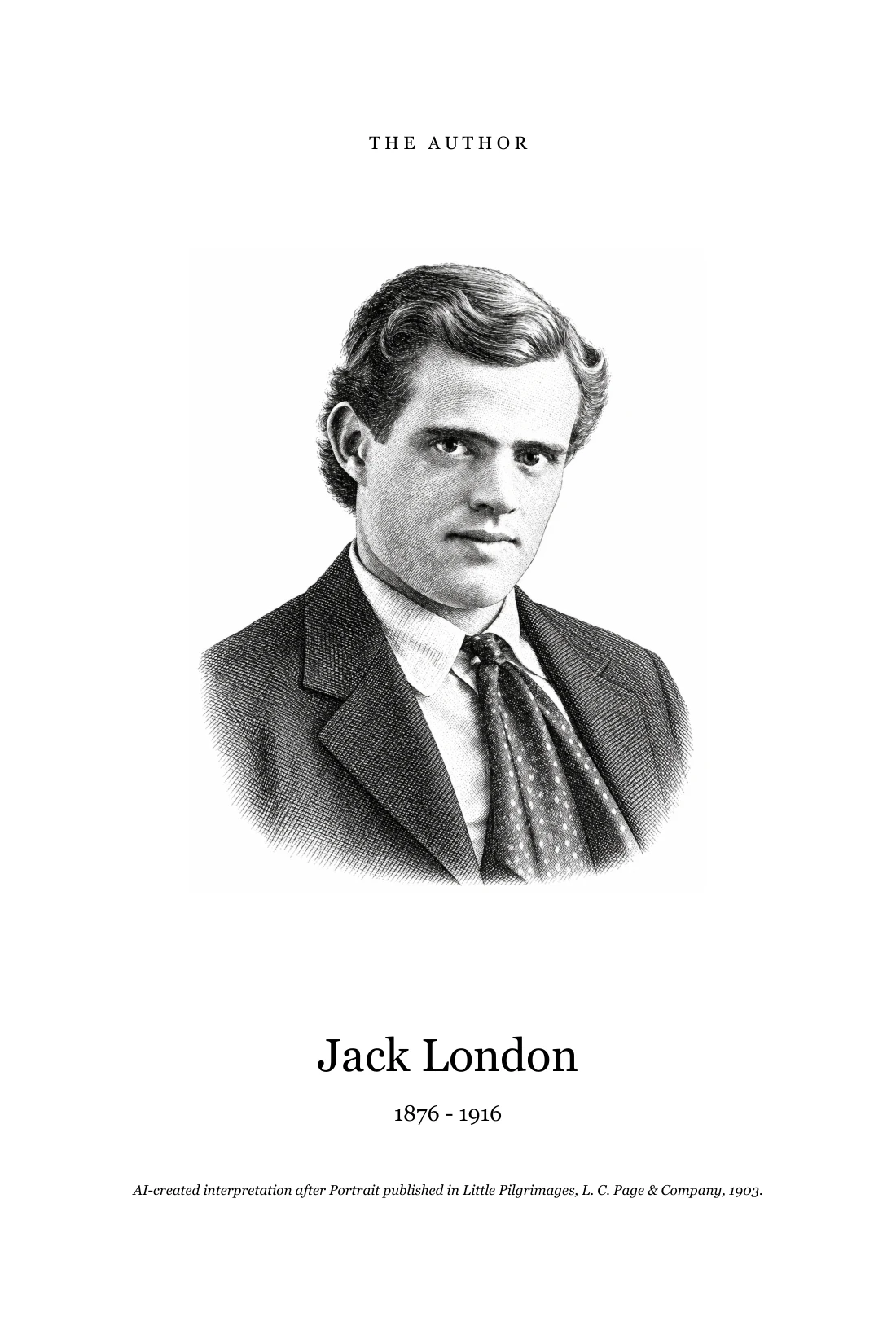
“We are not accustomed to taking travellers to the East End; we receive no call to take them there, and we know nothing whatsoever about the place at all.” That was the answer Jack London got at the Cheapside branch of Thomas Cook & Son in the summer of 1902, when he walked in and asked for help getting into the poorest district of the capital of the British Empire. The firm that could send a traveller to Darkest Africa or Innermost Thibet, he noted, did not know the way to Whitechapel.
So he went on his own. London was twenty-six, a socialist from California who had grown up poor, worked twelve-hour shifts in a cannery and sailed on a sealing schooner, and he meant to see the East End as its people did. The People of the Abyss, published in 1903, is the record of what he found.
How did Jack London go undercover?
With old clothes and a cover story. At a second-hand shop he bargained for “a pair of stout though well-worn trousers, a frayed jacket with one remaining button”, a pair of heavy work boots that had plainly seen service shovelling coal, a thin belt and “a very dirty cloth cap”, all for ten shillings. Underneath went a coarse stoker’s singlet, and inside the singlet, under the armpit, he sewed a gold sovereign for emergencies.
He also arranged a bolt-hole. Through a veteran East End detective whom he calls Johnny Upright, he rented a room in a respectable street where he could keep his notes and his clean clothes, and change back into himself when he needed to. Out on the streets he let the men he met believe he was an American sailor who had spent his pay and lost his kit and was waiting for a ship. It explained his accent and his ignorance of how things worked, and they took it without question.
Then he lived as they did. He queued for a bed in the casual ward of the Whitechapel Workhouse, known to its inmates as the spike, and paid for his bread and bed next morning with scavenging work at the Whitechapel Infirmary, holding open sacks of hospital rubbish. He slept in doss-houses, ate in Salvation Army shelters, and spent nights “carrying the banner”, the street phrase for walking all night because there was nowhere to sleep. On 9 August 1902, the day Edward VII was crowned, he watched the procession pass through Trafalgar Square, having come not from a hotel but from the East End.
“To carry the banner” means to walk the streets all night; and I, with the figurative emblem hoisted, went out to see what I could see.
Jack London, *The People of the Abyss* (1903)

What is The People of the Abyss about?
It is part reportage, part sermon. London tells individual stories, a carter and a carpenter trudging to the workhouse, a docker dying in poverty, a family of several people sharing one room, and sets them beside wages, rents and death rates. His conclusion is angry: in the capital of the largest empire in the world, a great many people lived permanently on the edge of starvation, and the system that kept them there had failed. The title phrase, “the Abyss”, was already in use for the life of the urban poor, but London’s book made it his.
Not every reader liked it. Reviewing it for the Daily Express, the journalist Bertram Fletcher Robinson said it would be difficult to find a more depressing volume. That was rather the point.
Who did it influence?
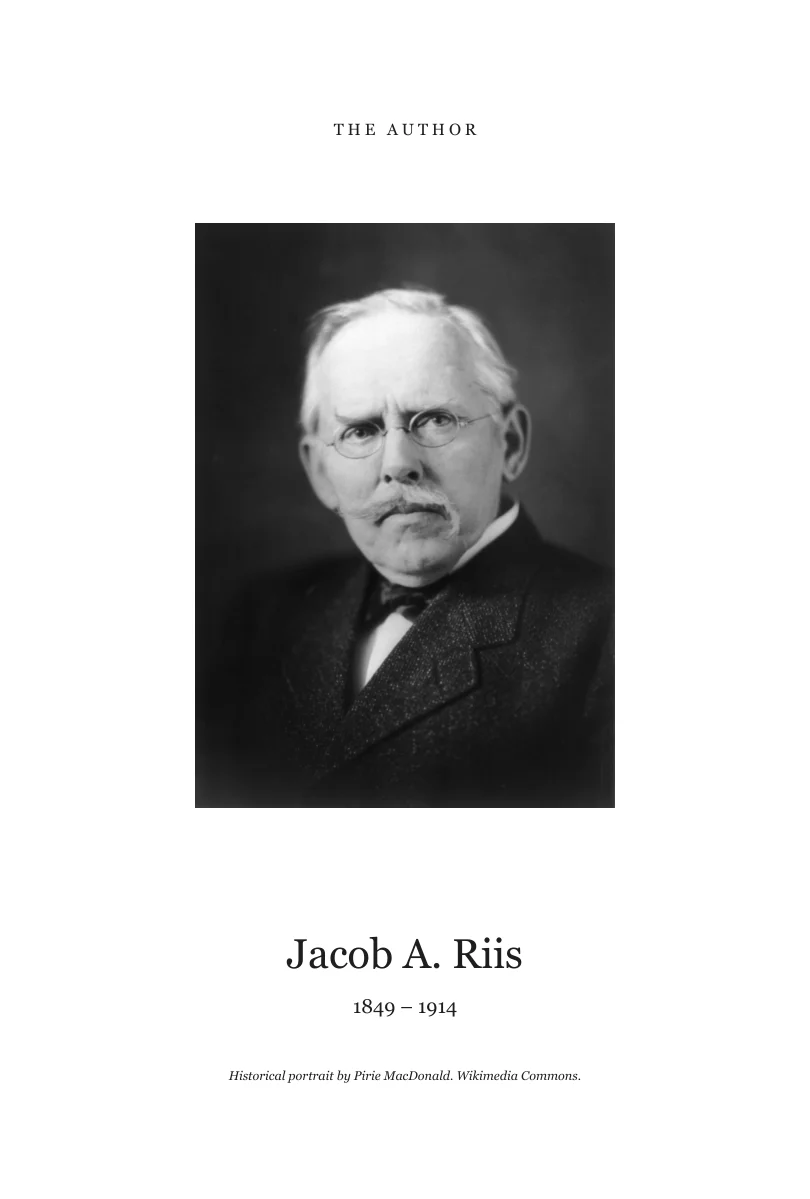
London was not the first to write about the East End, but most earlier accounts had been second-hand, assembled from reports and interviews. Living among his subjects was what made the book new. A contemporary advertisement compared it to Jacob Riis’s How the Other Half Lives (1890), the Danish-born police reporter’s exposé of the New York tenements, which had used flash photography to show readers rooms they would never otherwise enter.
Among the writers it influenced was George Orwell, who read The People of the Abyss as a teenager. Years later he too dressed as a tramp and went into the lodging houses and casual wards, and the echoes are clear in Down and Out in Paris and London and The Road to Wigan Pier.
The People of the Abyss
1903. Jack London’s weeks among the poorest people in London, from the spike to the coronation crowds. Furious, compassionate and still shocking.
How the Other Half Lives
1890. Jacob Riis takes his readers, and his camera, into the tenements of New York’s Lower East Side. A contemporary advertisement for London’s book compared the two.


The same year went very differently for London in other ways. The Call of the Wild came out in 1903 too and made him rich and famous; our post on Jack London in the Klondike tells that story. His later dystopia The Iron Heel borrows the phrase “the people of the abyss” for the poor of an imagined America. For more of the city he walked through, see classic novels set in London.
Pick up The People of the Abyss and read its first chapter, “The Descent”. The scene at Thomas Cook’s is one of the funniest things London ever wrote, and it is the last time in the book you will laugh for a while.
Questions readers ask
What is The People of the Abyss about?
It is Jack London’s first-hand account of living among the poor of London’s East End in the summer of 1902, sleeping in workhouses, doss-houses and on the streets, published in 1903.
How long did Jack London spend in the East End?
Several weeks in the summer of 1902. He kept a rented room nearby as a base, and went out disguised in second-hand clothes.
Did The People of the Abyss influence George Orwell?
Yes. Orwell read it in his teens, and his own experiments in living as a tramp, described in Down and Out in Paris and London, follow London’s method.
Is The People of the Abyss fiction?
No. It is non-fiction reportage, though London tells it as a vivid personal narrative with real conversations and characters.
 The Call of the Wild110 pages · $11.99
 White Fang170 pages · $13.99
 The Sea-Wolf290 pages · $16.99
 Martin Eden372 pages · $18.99