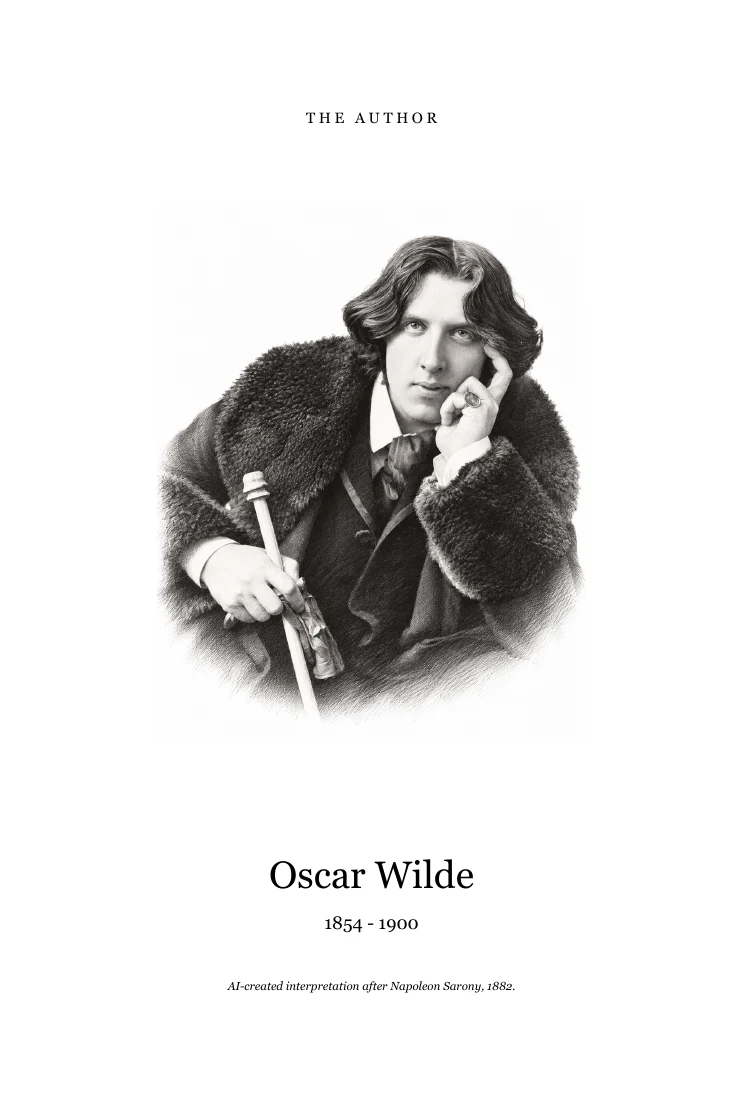
One of the finest Oscar Wilde films contains none of his spoken wit at all. In 1925 Ernst Lubitsch filmed Lady Windermere’s Fan as a silent, with Ronald Colman as Lord Darlington, May McAvoy as Lady Windermere and Irene Rich as Mrs Erlynne. With the epigrams gone, Lubitsch told the story through glances, gestures and a misplaced fan, and the result was good enough to be chosen for the US National Film Registry in 2002.
It is a useful place to begin, because every adaptation of Oscar Wilde’s society comedies faces the same choice. Keep the dialogue, and you risk a filmed play. Cut it, and you lose the reason anyone loves him. The best films find a third way; the weaker ones open the windows and let the jokes blow out.
Lady Windermere’s Fan and A Good Woman
Wilde subtitled his 1892 play “A Play About a Good Woman”. A young wife suspects her husband of paying a notorious woman, Mrs Erlynne, and a fan left in the wrong room threatens to ruin her. It reached the screen first as a British silent in 1916, then in Lubitsch’s version, and in 1949 as Otto Preminger’s The Fan, with Jeanne Crain, Madeleine Carroll and George Sanders, from a script co-written by Dorothy Parker.
The most recent version took its title from that subtitle. Mike Barker’s A Good Woman, shown at the Toronto festival in 2004 and released in Britain in 2005, moves the story to the Amalfi coast in 1930 and makes the Windermeres rich newlyweds. Scarlett Johansson plays the wife, Helen Hunt the woman with a past, and Tom Wilkinson the twice-divorced suitor. Reviewers were mostly unkind, and Hunt’s casting drew particular criticism, but the sunlit Italian locations are lovely and the central situation still works.
I can resist everything except temptation.
Lord Darlington, *Lady Windermere’s Fan*, first act
An Ideal Husband on film: 1947 and 1999
An Ideal Husband (1895) is the most political of the comedies. Sir Robert Chiltern, a rising politician, built his fortune on a cabinet secret sold in his youth, and Mrs Cheveley arrives in London with the letter that proves it. His idle friend Lord Goring, who claims to care for nothing but buttonholes, turns out to be the only person in the play with any sense.
Alexander Korda produced and directed a lavish Technicolor version in 1947, with Paulette Goddard as Mrs Cheveley and Michael Wilding as Goring, costumes by Cecil Beaton and a script by Lajos Bíró. It was the last film Korda directed.
Oliver Parker’s 1999 An Ideal Husband is the version most people know, and arguably the best Wilde film with sound. Rupert Everett plays Goring, Jeremy Northam is Chiltern, Cate Blanchett his upright wife, Julianne Moore the blackmailer and Minnie Driver the bright young Mabel. It closed the Cannes Film Festival that year, and both Everett and Moore were nominated for Golden Globes.
Parker kept much of Wilde’s dialogue but rearranged the plot. He cut the episode of Mrs Cheveley’s stolen brooch, which in the play is how Goring outwits her, and added a bet between the two that makes the ending more complicated.
The Importance of Being Earnest on screen
The Importance of Being Earnest, Wilde’s last and most perfect comedy, opened on 14 February 1895. Its most celebrated film is Anthony Asquith’s 1952 Technicolor version, with Michael Redgrave as Jack, Michael Denison as Algernon, Joan Greenwood as Gwendolen, Dorothy Tutin as Cecily and Margaret Rutherford as Miss Prism. Asquith’s script is largely faithful, and Edith Evans’s Lady Bracknell, especially her outraged two words on hearing where Jack was found, became so famous that later actors have struggled to escape it.
Parker returned to Wilde in 2002 with a brighter, looser Earnest, starring Colin Firth and Everett as Jack and Algernon, Reese Witherspoon and Frances O’Connor as Cecily and Gwendolen, and Judi Dench as Lady Bracknell, a part she had already played at the National Theatre in 1982. Critics enjoyed Dench but felt the film softened Wilde’s satire.
An Ideal Husband
1895. A minister’s secret, a blackmailer with a letter and a dandy who is wiser than he pretends. Wilde’s comedy of public life and private lies.
Lady Windermere's Fan
1892. “A Play About a Good Woman”: a wife, a fan and a woman with a past at a birthday ball. Wilde’s first West End success.
The Importance of Being Earnest
1895. Two young men called Ernest, neither of whom is. Pure farce, with not a wasted line.


For the order in which Wilde wrote them, see Oscar Wilde’s plays in order; for more stage comedy, the funniest classic plays. How his own life turned into a courtroom drama is told in how Dorian Gray was used against Wilde.
Every one of these films loses something in translation, usually a dozen of the best lines. Read An Ideal Husband or The Importance of Being Earnest in an evening, and you get all of them.
Questions readers ask
What is the best Oscar Wilde film?
Two of the most admired are Anthony Asquith’s The Importance of Being Earnest (1952), with Edith Evans as Lady Bracknell, and Oliver Parker’s An Ideal Husband (1999). Lubitsch’s silent Lady Windermere’s Fan (1925) is in the US National Film Registry.
Is A Good Woman based on Lady Windermere’s Fan?
Yes. Mike Barker’s A Good Woman, first shown in 2004, adapts Wilde’s 1892 play, whose subtitle is “A Play About a Good Woman”, moving it to the Amalfi coast in 1930 with Scarlett Johansson and Helen Hunt.
Who is in the 1999 An Ideal Husband?
Rupert Everett, Jeremy Northam, Cate Blanchett, Julianne Moore and Minnie Driver, directed by Oliver Parker. It closed the 1999 Cannes Film Festival.
How many times has The Importance of Being Earnest been filmed?
It has been adapted for English-language cinema at least three times, most famously by Anthony Asquith in 1952 and by Oliver Parker in 2002, and many more times for television.
 The Picture of Dorian Gray226 pages · $14.99
 The Happy Prince, and Other Tales46 pages · $9.99
 A Woman of No Importance76 pages · $10.99
 A House of Pomegranates84 pages · $10.99