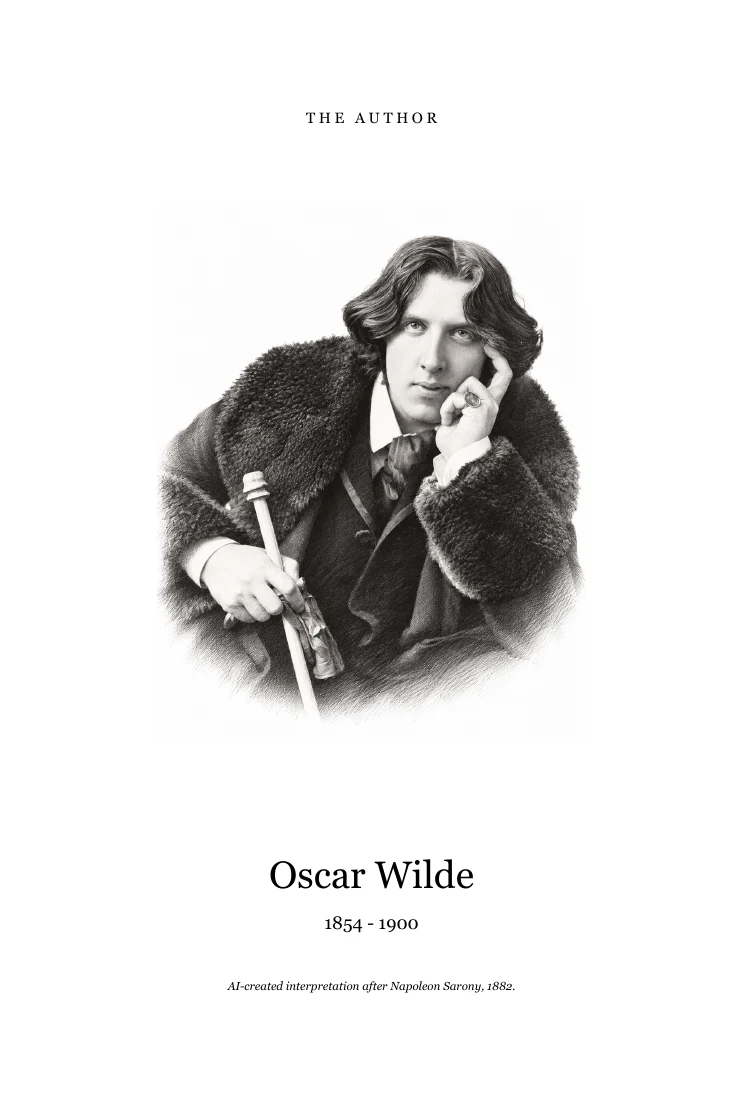
In April 1895 Oscar Wilde was in the witness box at the Old Bailey, and the lawyer questioning him was reading from his novel. Wilde had brought a prosecution for criminal libel against the Marquess of Queensberry, the father of his young friend Lord Alfred Douglas, who had left a card at Wilde’s club accusing him of posing as a sodomite. Queensberry’s defence set out to prove the accusation true, and The Picture of Dorian Gray became part of its case.
That is the Dorian Gray trial in brief: a work of fiction, written five years earlier, offered as evidence about its author’s character. Wilde’s case collapsed, and within weeks he was himself on trial.
The Dorian Gray trial: how the novel was used against Wilde
Queensberry’s barrister, Edward Carson, had been a contemporary of Wilde’s at Trinity College Dublin. In his cross-examination he read passages from the novel, particularly the version first published in a magazine, and pressed Wilde on whether it described improper relationships between men. He wanted the jury to see the book as proof of its author’s character.
Wilde defended the book as a work of art, insisting that its morality was a matter for the reader, and he answered with much of the wit that had made him famous. But the strategy was dangerous. The libel case collapsed, Wilde was arrested, and in May 1895, after a second criminal trial, he was convicted of gross indecency, then a crime in Britain, and sentenced to two years’ hard labour.
There is no such thing as a moral or an immoral book. Books are well written, or badly written. That is all.
Oscar Wilde, preface to The Picture of Dorian Gray (1891)
Why was The Picture of Dorian Gray so controversial?
The novel first appeared in Lippincott’s Monthly Magazine in July 1890, and many reviewers were hostile, calling it unhealthy and corrupting. Wilde replied to his critics in letters to the press, and when he expanded the story into a book the following year, he added several chapters, toned down some of the passages that had caused most offence, and added a preface of defiant aphorisms about art.
The story itself is simple and unforgettable. Dorian Gray, a beautiful young man, has his portrait painted by an admiring artist, Basil Hallward, and under the influence of the witty, cynical Lord Henry Wotton he wishes that the picture might grow old instead of him. The wish comes true. As Dorian pursues pleasure without limit, his face stays young and innocent while the hidden portrait records every sin.
De Profundis: what Wilde wrote in prison
Wilde served his sentence in several prisons, most of it at Reading Gaol. There, in the early months of 1897, he was allowed to write a long letter to Lord Alfred Douglas, reckoning with their relationship, his downfall, suffering and art. He was not allowed to send it, and on his release he gave it to his friend Robert Ross.
Ross published parts of it in 1905, five years after Wilde’s death in Paris, under the title De Profundis, from the opening words of a psalm: “out of the depths”. It is a very different book from Dorian Gray: sorrowful, searching and often beautiful, the work of a man trying to make sense of what had happened to him.
The Picture of Dorian Gray
1891. A young man stays beautiful while his portrait ages and decays. Wilde’s only novel, and the book read against him in court.
De Profundis
1905. Wilde’s long letter from Reading Gaol on love, suffering and art. A short, moving read.
The Importance of Being Earnest
1895. Wilde’s most famous comedy, which opened in London only weeks before his trials began.


Is The Picture of Dorian Gray worth reading today?
Absolutely. It is short, quotable and genuinely unsettling, a Gothic novel dressed in evening clothes. Lord Henry’s epigrams are as sharp as anything in Wilde’s plays, and the central idea, a face that never shows what its owner has done, feels more relevant than ever in an age of carefully curated images.
Some passages, especially a long chapter cataloguing Dorian’s collections of jewels, perfumes and embroideries, slow the pace, and readers are free to skim them. It suits older teenagers and adults, and pairs naturally with other Gothic classics in The best Gothic novels, from Otranto to Dracula.
For more on writing done behind bars, see Classic books written in prison, and for the gentler side of Wilde, Did you know Oscar Wilde wrote fairy tales?
Read Dorian Gray first, then De Profundis, and you will see Wilde from both sides of the courtroom. Begin in Basil Hallward’s studio, with the scent of roses drifting through the window, and open The Picture of Dorian Gray.
Questions readers ask
Was The Picture of Dorian Gray used in Oscar Wilde’s trial?
Yes. In April 1895, during Wilde’s libel case against the Marquess of Queensberry, the defence barrister Edward Carson questioned Wilde about passages from the novel to suggest it was immoral and revealed his own conduct.
What was Oscar Wilde convicted of?
In May 1895 Wilde was convicted of gross indecency, then a criminal offence for sexual relationships between men in Britain, and sentenced to two years’ hard labour.
What is the difference between the 1890 and 1891 versions of Dorian Gray?
The 1890 magazine version has thirteen chapters. For the 1891 book, Wilde added six new chapters and a preface, split the last chapter in two to make twenty, and softened some passages that critics had attacked.
Where was De Profundis written?
Wilde wrote De Profundis in Reading Gaol in early 1897, as a long letter to Lord Alfred Douglas. A shortened version was published in 1905, after Wilde’s death.
 The Happy Prince, and Other Tales46 pages · $9.99
 Lady Windermere's Fan68 pages · $9.99
 An Ideal Husband100 pages · $11.99
 A Woman of No Importance76 pages · $10.99