The first performance of Wilde’s Salomé took place in Paris on 11 February 1896, given by the Théâtre de l’Œuvre company. Its author was not there. He was in Reading Gaol, less than a year into a two-year sentence, and the play he had written in French more than four years earlier was still banned in his own country. In Britain the censor kept it off the public stage until 1931.
That paradox sits at the centre of the story. Oscar Wilde’s plays in order of first performance run Lady Windermere’s Fan (1892), A Woman of No Importance (1893), An Ideal Husband (January 1895) and The Importance of Being Earnest (February 1895), with Salomé written in 1891, banned in 1892, printed in 1893 and finally staged in 1896. Before them came two early melodramas that failed, Vera and The Duchess of Padua.
- 1883
Vera; or, The Nihilists, Wilde’s first play, opens in New York and closes within a week or so.
- Late 1891
In Paris, Wilde begins Salomé, written in French.
- 20 Feb 1892
Lady Windermere’s Fan opens at the St James’s Theatre and runs for 197 performances.
- June 1892
Sarah Bernhardt rehearses Salomé in London; the Lord Chamberlain refuses a licence because it shows biblical characters.
- 19 Apr 1893
A Woman of No Importance opens at the Haymarket.
- 1893–94
Salomé is published in French, then in English with Aubrey Beardsley’s drawings.
- 3 Jan 1895
An Ideal Husband opens at the Haymarket.
- 14 Feb 1895
The Importance of Being Earnest opens at the St James’s, giving Wilde two hits in the West End at once.
- May 1895
Earnest closes on 8 May; later that month Wilde is convicted of gross indecency and sentenced to two years’ hard labour.
- 11 Feb 1896
Salomé is finally performed, in Paris.
Oscar Wilde’s plays in order
- $9.99
Lady Windermere's Fan
1892. A young wife suspects her husband of an affair with a woman with a past, and a fan left in the wrong room nearly ruins her. Subtitled “A Play About a Good Woman”, and sharper about goodness than it first lets on.
- $9.99
Salomé: A Tragedy in One Act
Written 1891, staged 1896. A one-act tragedy of Herod’s court: the princess, the prophet and the dance. Incantatory, strange and nothing like the comedies; Richard Strauss turned it into his 1905 opera.
- $10.99
A Woman of No Importance
1893. An American girl, a charming dandy and the mother who knows exactly what he is. The most melodramatic of the four, with some of Wilde’s best epigrams wrapped round a serious grievance.
- $11.99
An Ideal Husband
1895. A rising politician whose fortune rests on one dishonest act, and a blackmailer who knows it. Wilde’s comedy about public men and private lies, with the idle Lord Goring stealing every scene.
- $11.99
The Importance of Being Earnest
1895. Two young men invent people called Ernest to escape their obligations. The perfect farce, begun in a summer at Worthing, and the last play Wilde finished.


The four society comedies
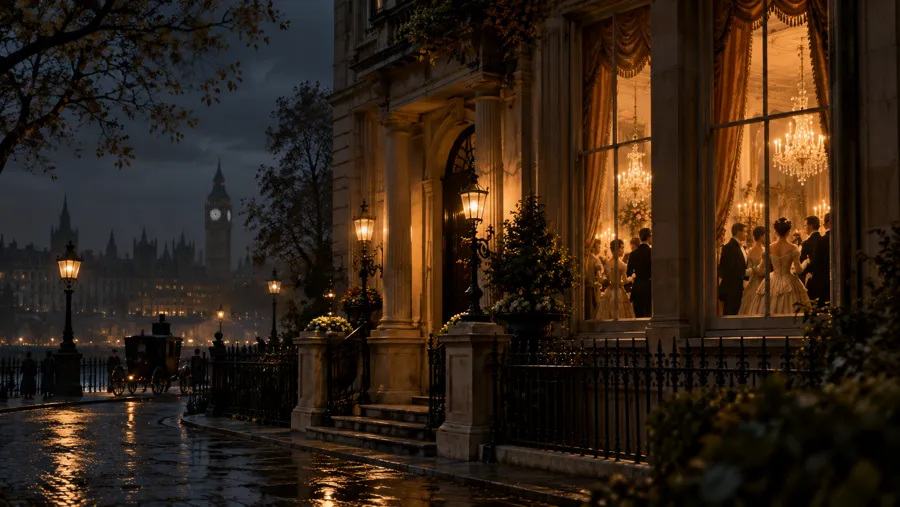
A Woman of No Importance was billed as “a new and original play of modern life”, and all four share a formula Wilde made his own: a drawing room, a secret from the past, a fallen woman or a compromised man, and a stream of epigrams from people who say the opposite of what is expected. The first three are part melodrama, with real tears among the jokes. The voice was there from the start. In Lady Windermere’s Fan, among a group of men gossiping late at night in his rooms, Lord Darlington turns the talk on its head.
No, we are all in the gutter, but some of us are looking at the stars.
Oscar Wilde, Lady Windermere’s Fan (1892)
The Importance of Being Earnest throws the melodrama out. Nobody in it is wronged, nothing is at stake except cucumber sandwiches and a christening, and the plot exists purely to let everyone be ridiculous at full speed. It is usually the one people mean when they call Wilde the funniest playwright in English. Its subtitle, “A Trivial Comedy for Serious People”, is the whole philosophy in six words.
The truth is rarely pure and never simple.
Oscar Wilde, The Importance of Being Earnest (1895)
Why is Salomé so different?
Because Wilde wanted it to be. He wrote it in French in Paris, as a symbolist poem for the stage, and Sarah Bernhardt, the great French actress, accepted it for her London season. Its sentences are short and repeated like a chant; the moon is described over and over, differently by every character who looks at it. The ban did not stop it travelling: it became popular abroad, especially in Germany, where Strauss found his libretto. The English version was made by Lord Alfred Douglas and heavily revised by Wilde.

Which Oscar Wilde play should you read first?
The Importance of Being Earnest, without question. It is short, flawless and funny on every page, and reading it aloud with friends is one of the great pleasures in drama. Then go back to Lady Windermere’s Fan and An Ideal Husband to see how he got there, and read Salomé last, as a reminder of how far his range ran.
For the films and television versions, see Oscar Wilde’s comedies on screen. The story of how his novel was turned against him is in Did you know The Picture of Dorian Gray was used against Oscar Wilde in court?, and his gentler side is in Did you know Oscar Wilde wrote fairy tales? For more stage comedy, try The funniest classic plays.
Few first acts in English are funnier than the one set in Algernon’s flat in Half Moon Street, with a piano in the next room and a plate of cucumber sandwiches about to vanish. Read The Importance of Being Earnest aloud if you can, and take the parts in turn.
Questions readers ask
What order did Oscar Wilde write his plays in?
After two early failures, Vera and The Duchess of Padua, Wilde wrote Lady Windermere’s Fan and Salomé in 1891, then A Woman of No Importance (staged 1893), An Ideal Husband and The Importance of Being Earnest (both staged in 1895).
How many plays did Oscar Wilde write?
Wilde completed seven plays: Vera, The Duchess of Padua, Salomé and the four society comedies. He also left fragments, including A Florentine Tragedy.
Why was Salomé banned in Britain?
The Lord Chamberlain refused it a licence in 1892 under a rule forbidding biblical characters on stage. It was first performed in Paris in 1896, and the ban on public performance in Britain lasted until 1931.
What is Oscar Wilde’s most famous play?
The Importance of Being Earnest (1895), a farce about two young men who invent alter egos called Ernest. It is the best known of all his plays.
 The Picture of Dorian Gray226 pages · $14.99
 The Happy Prince, and Other Tales46 pages · $9.99
 A House of Pomegranates84 pages · $10.99
 Intentions144 pages · $12.99