

An ancient critic had already made up his mind. The Greek treatise On the Sublime, traditionally credited to Longinus and usually dated to the first century AD, argued that Homer wrote the Iliad in his prime and the Odyssey in old age, when his genius had begun to cool. It is an unprovable theory, and almost certainly a fanciful one. But the instinct behind it, that these are two very different poems, is exactly right.
So, Iliad or Odyssey first? Here is the short answer. If you like to take things in order, start with the Iliad: it comes first in the story, and scholars generally think it was composed first too. If you want the friendlier, faster book, or you are not sure you will enjoy Homer at all, start with the Odyssey. Neither choice spoils the other.
Which came first, the Iliad or the Odyssey?
In the story, plainly the Iliad. It is set in the tenth year of the siege of Troy, and the Odyssey begins ten years after the city has fallen, with Odysseus still not home. Characters who fight in the first poem turn up in the second as old men telling war stories, or as ghosts.
As for composition, no one can be sure, because no one knows exactly how or when either poem took its final shape. But the linguistic evidence suggests the Iliad is slightly older, and many scholars think the Odyssey followed it by up to a generation. Most date both to somewhere between the late eighth and the seventh century BC.
Hence Homer in his Odyssey may be compared to the setting sun: he is still as great as ever, but he has lost his fervent heat.
Longinus, On the Sublime, translated by H. L. Havell
What is the difference between the Iliad and the Odyssey?
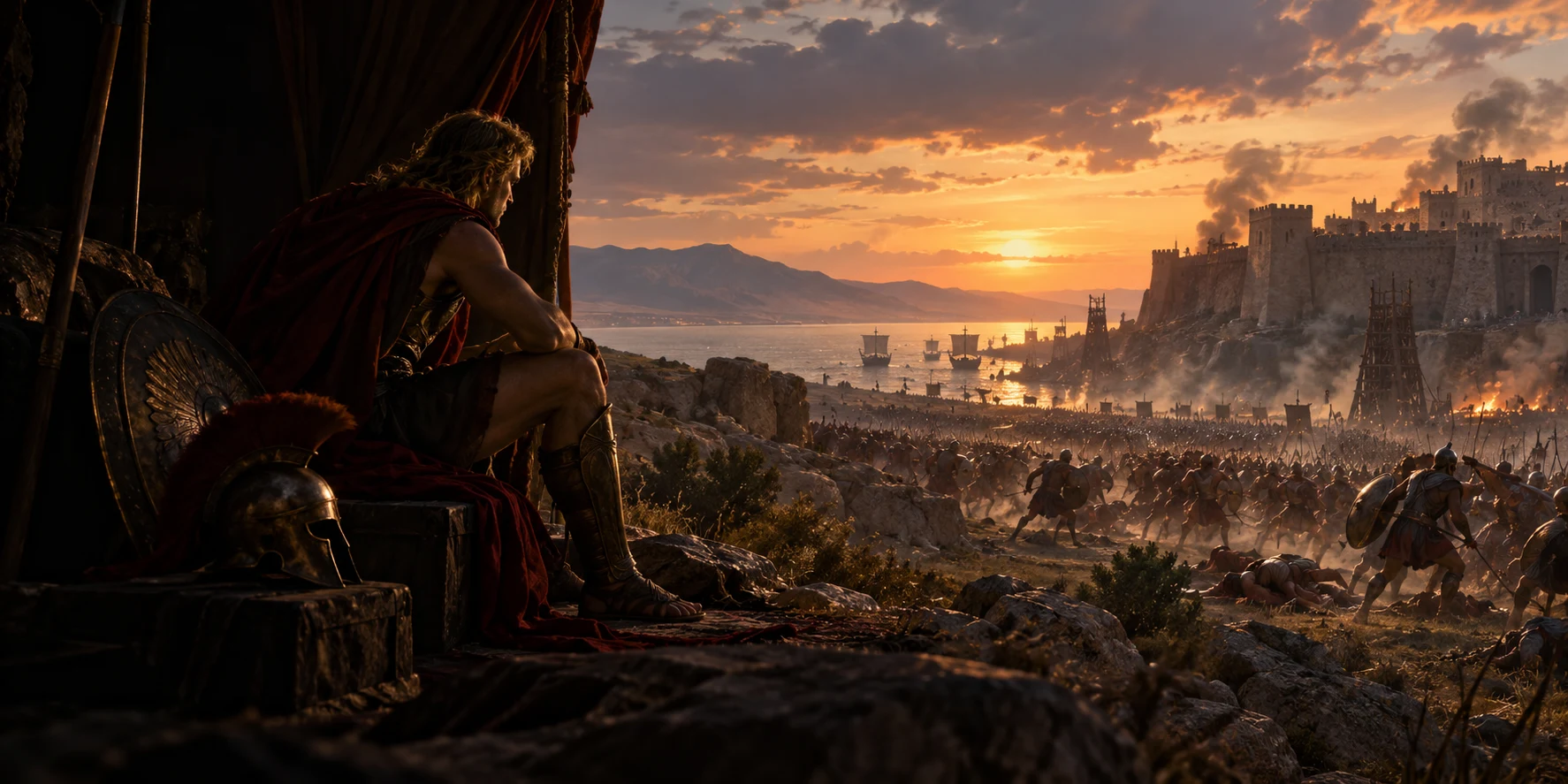
The Iliad is a war poem with a narrow focus. Its first word, in Greek, is “wrath”: the anger of Achilles, the greatest Greek warrior, after his commander Agamemnon takes away his prize. Achilles withdraws from the fighting, the Greeks suffer for it, and the poem follows the consequences through book after book of relentless battle to a quiet, devastating close. It does not include the wooden horse or the fall of Troy. It ends with a funeral.
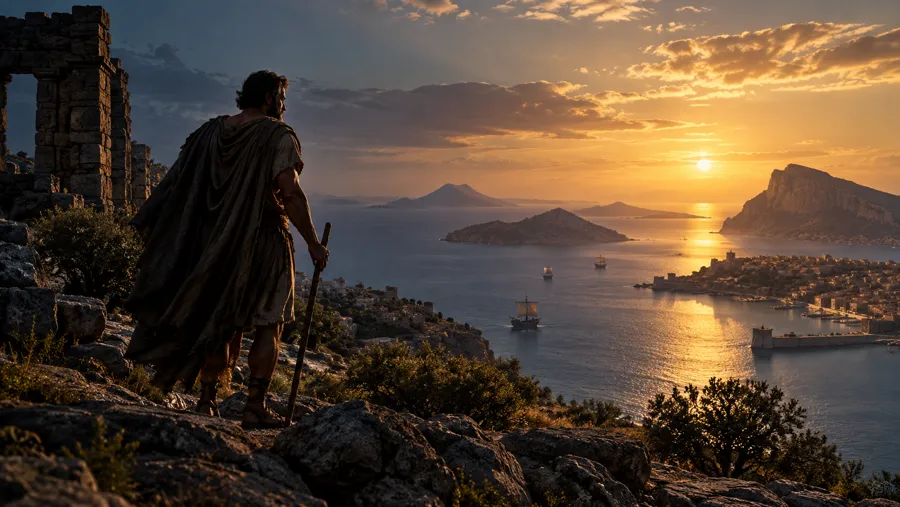
The Odyssey is the opposite in almost every way. It is a homecoming story, full of disguises, storytelling and strange islands: the Cyclops, the witch Circe, the Sirens, a journey to the land of the dead. It opens not with Odysseus but with his son Telemachus at home in Ithaca, where suitors are eating the family out of house and home. And it is far more comfortable with cunning than with courage. Its hero survives by lying well.
Who should start with the Iliad?
Readers who enjoy tragedy, history and big emotional set pieces, and anyone who wants the Odyssey’s backward glances to land with their full weight. When Odysseus meets the ghost of Achilles in the underworld, and Achilles says he would rather be “a paid servant in a poor man’s house and be above ground than king of kings among the dead”, it hits much harder if you have watched him choose glory over a long life.
Be warned that the Iliad asks for patience. Book Two contains the long Catalogue of Ships, and the battle books in the middle are relentless. Skimming the catalogue on a first reading is no crime.
Who should start with the Odyssey?
Almost everyone else. It is shorter, more varied and more like a novel, with a family drama at its heart and adventures that half the world already half knows. Its opening invocation sets the tone, asking the Muse to sing of “that ingenious hero who travelled far and wide after he had sacked the famous town of Troy”, as Samuel Butler’s prose version puts it. If it wins you over, the Iliad will be waiting.
The Iliad
Achilles’ anger, Hector’s defence of Troy and the gods taking sides. The longer, darker and more concentrated of the two poems.
The Odyssey
Odysseus’s ten-year voyage home and his return in disguise to a house full of suitors. Adventure, comedy and suspense in equal measure.
The Aeneid
Virgil’s Roman answer to both poems: its first half is a voyage like the Odyssey, its second a war like the Iliad, told from the Trojan side.


Help for your first Homer
Once you have chosen, How to read The Odyssey for the first time will help you through, and How long is The Iliad? and How long is The Odyssey? will help you plan. The wider shelf of epics is in The great epics: where to begin, and for a film that borrowed Homer’s plot, see Did you know O Brother, Where Art Thou? is based on The Odyssey?.
If you are still torn, toss a coin. Heads, The Odyssey and the journey; tails, The Iliad and the war. Either way, the other poem becomes your reward.
Questions readers ask
Should I read the Iliad or the Odyssey first?
Read the Iliad first if you want story order and the full effect of the Odyssey’s references back to Troy. Read the Odyssey first if you want the more accessible, adventurous poem. Each stands on its own.
Is the Odyssey a sequel to the Iliad?
Not exactly, though it is set after it. The Odyssey takes place ten years after the fall of Troy and follows a different hero, but characters from the Iliad reappear and the war is constantly remembered.
Which is longer, the Iliad or the Odyssey?
The Iliad. Both have 24 books, but the Iliad runs to about 15,700 lines in Greek against about 12,100 for the Odyssey.
Does the Iliad include the Trojan horse?
No. The Iliad ends with the funeral of Hector, before Troy falls. The wooden horse is described in the Odyssey and, most fully, in Virgil’s Aeneid.

