


The Magic Pudding started as a disagreement. Norman Lindsay’s friend, the critic Bertram Stevens, insisted that children liked reading about fairies. Lindsay thought they would much rather read about food, and about fighting. To settle the matter he wrote and illustrated a book with no fairies in it at all and a great deal of eating and brawling, and The Magic Pudding was published by Angus & Robertson in Sydney in 1918.
More than a century later it is regarded as a classic of Australian children’s literature, often compared with Alice in Wonderland, and Philip Pullman has been quoted calling it the funniest children’s book ever written. Lindsay, it seems fair to say, won the argument.
What is The Magic Pudding about?
Its full title gives the cast: The Magic Pudding: Being the Adventures of Bunyip Bluegum and his friends Bill Barnacle and Sam Sawnoff. Bunyip Bluegum is a young koala who leaves home because he can no longer bear his Uncle Wattleberry’s whiskers. On the road he meets Bill Barnacle, a sailor, and Sam Sawnoff, a penguin, who are sitting down to lunch with the most remarkable possession in Australia.
The pudding’s name is Albert. He is a steak-and-kidney pudding, or an apple dumpling, or a Christmas pudding, depending on what you fancy, and however many slices are cut from him he is always whole again. Bill explains:
The more you eats the more you gets. Cut-an’-come-again is his name, an’ cut, an’ come again, is his nature.
Norman Lindsay, The Magic Pudding (1918)
Albert is not a gracious host. He is bad-tempered, insulting and prone to running off on his thin legs, and he would rather be eaten than ignored. Bill and Sam have to keep reminding him of his manners. Bunyip is invited to join the Noble Society of Puddin’-Owners, whose duties, Bill assures him, are light: wandering the roads, indulging in conversation, song and story, and eating at regular intervals.

The Puddin’ Thieves
Somebody always is trying. The villains are a Possum and a Wombat, Patrick and Watkin, a pair of shabby, scheming Puddin’ Thieves who try every trick they can think of to make off with Albert. The friends defend him with fists, songs and insults, and at one point their brawling brings the Mayor of Tooraloo and his banana-eating Constable running. The thieves keep coming back regardless. It is pure slapstick, written in a gloriously confident comic voice.
Lindsay divided the book not into chapters but into four “Slices”, and scattered verses and songs all the way through. Many of them are about eating. Reading them aloud is half the fun.
Who was Norman Lindsay?
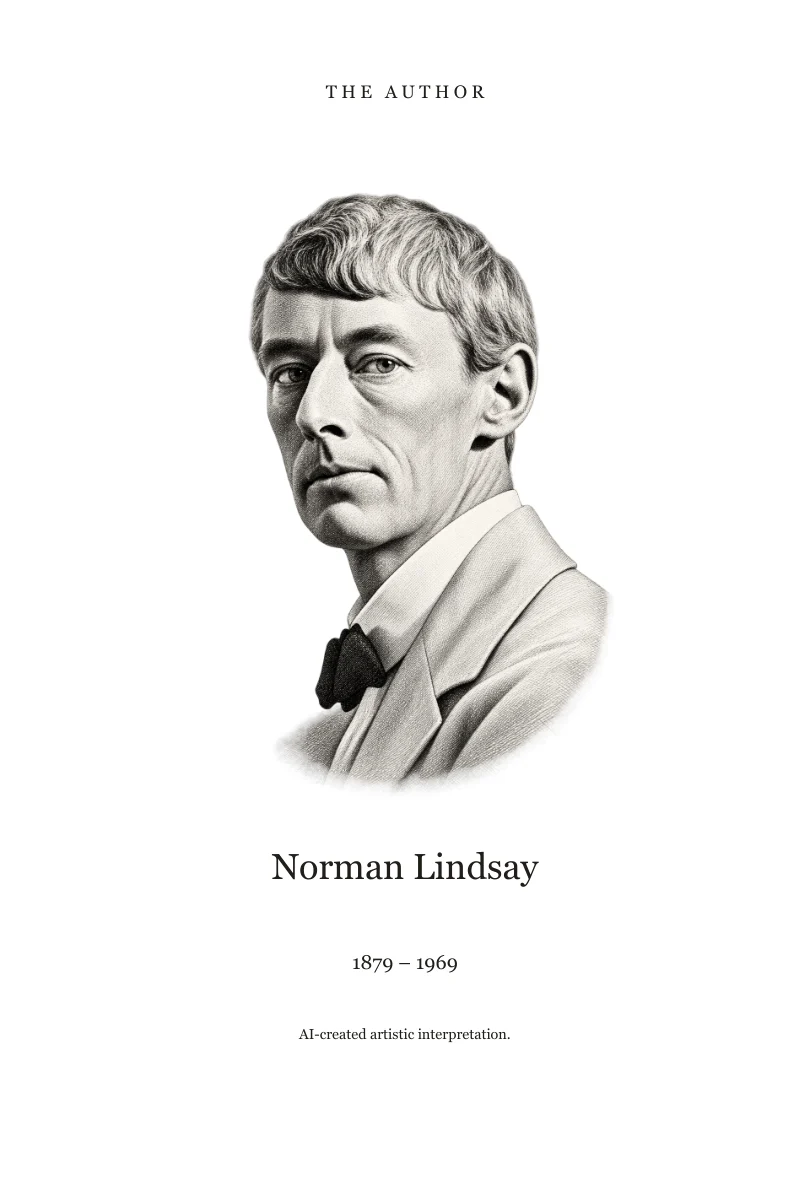
Lindsay was born in Creswick, Victoria, in 1879 and died in Sydney in 1969. He was one of Australia’s best-known artists and a famously provocative one: his painting The Crucified Venus caused a scandal in Melbourne in 1913, and his nudes drew furious attacks from critics. For more than half a century he drew cartoons for The Bulletin, work that often reflected that magazine’s racist and right-wing views, and in the First World War his cartoons were used in recruiting campaigns.
The Magic Pudding came not long after the death of his brother Reg in France in December 1916, which makes its relentless good humour all the more striking. He returned to children’s fiction with The Flyaway Highway in 1936. His home in the Blue Mountains is now the Norman Lindsay Gallery and Museum, and his life was fictionalised in the 1994 film Sirens, with Sam Neill as a version of Lindsay.

The Magic Pudding after 1918
In Australia it never went away. Peter Scriven adapted it for puppets in 1960, and his company performed it around the country until 1988. Australia Post put it on a stamp in 1985. An animated film in 2000 gave Albert the voice of John Cleese, with Hugo Weaving, Geoffrey Rush and Sam Neill as Bill, Bunyip and Sam, though it changed the story heavily. Outside Australia the book was hard to find for years, until the New York Review Children’s Collection reissued it in 2004.
The Magic Pudding
1918. A koala, a sailor, a penguin and a pudding with a temper, on the road and under attack. Rowdy, rhyming and perfect for reading aloud.
Alice's Adventures in Wonderland
1865. The book The Magic Pudding is most often compared with: another anarchic journey through a world of rude creatures and impossible food.
The Wind in the Willows
1908. Mole, Rat, Badger and the irrepressible Toad. The English cousin of Lindsay’s tale of loyal friends and a much-coveted possession.


For more books that make children laugh, see Funny classic books for kids, and for other journeys through upside-down worlds, Books like Alice in Wonderland and Books like The Wizard of Oz. Lindsay’s wider career is covered on our Norman Lindsay page.
Find someone young to read it to, or read it out loud to yourself. Open The Magic Pudding at the First Slice, meet Bunyip and his uncle’s whiskers, and see whether Bertram Stevens could possibly have been right.
Questions readers ask
What is The Magic Pudding about?
It follows Bunyip Bluegum the koala, Bill Barnacle the sailor and Sam Sawnoff the penguin as they travel with Albert, a bad-tempered talking pudding that can never be finished, and defend him from two Puddin’ Thieves, a possum and a wombat.
When was The Magic Pudding written?
Norman Lindsay wrote and illustrated it in 1918, reportedly to settle an argument with his friend Bertram Stevens, who believed children preferred stories about fairies to stories about food.
What age is The Magic Pudding for?
It makes an excellent read-aloud for children from about five, while confident readers of seven or eight can enjoy it alone. Its comic verse and wordplay amuse adults too.
