
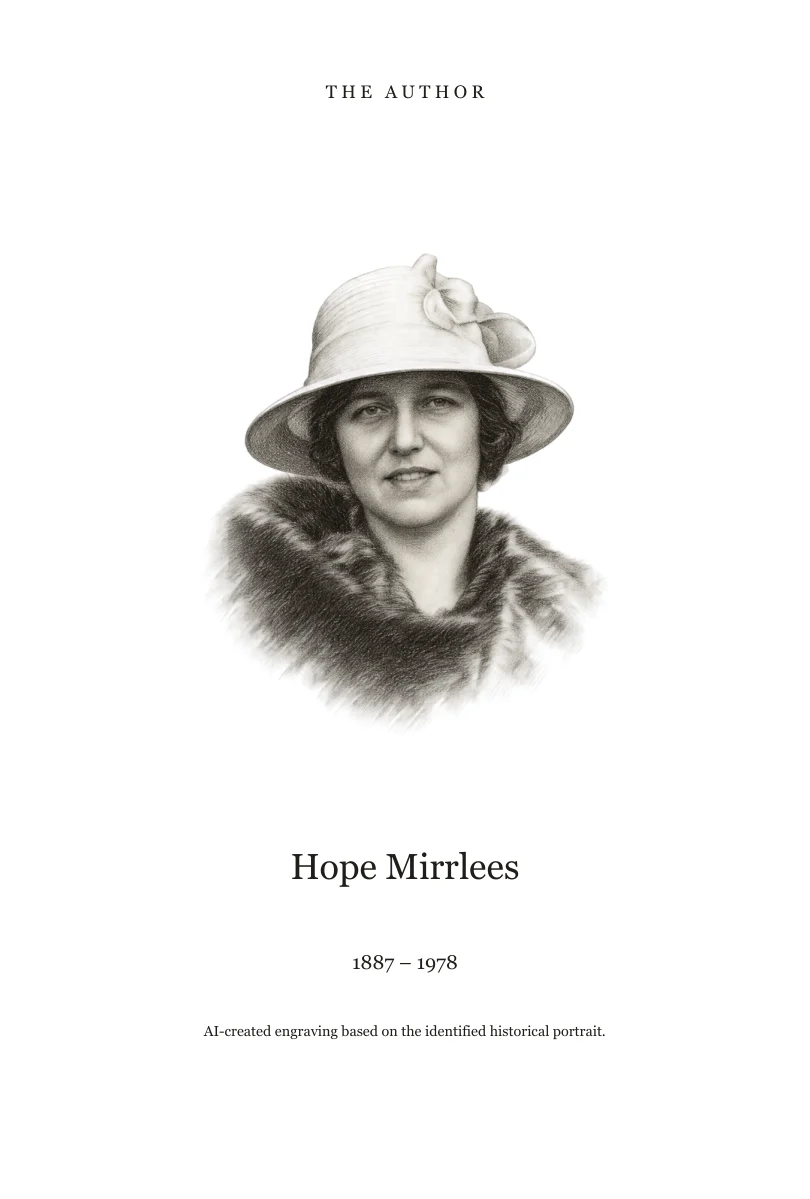
In March 1970 Ballantine Books put a 95-cent paperback of Lud-in-the-Mist into American shops as part of its Adult Fantasy series. In his introduction the series editor, Lin Carter, confessed that he had tried and failed to trace the author. He did not know whether she was still alive. She was: Hope Mirrlees was eighty-two, and she would live until 1978.
That is the short story of how a forgotten fantasy classic was rescued. The novel had appeared in Britain in 1926, sold modestly and gone out of print. Its American copyright was never renewed in the 1950s, so by 1970 it was in the public domain there, and Carter could reprint it without anyone’s permission. Nobody had planned a revival. One editor had simply been told about a book he had never heard of, liked it, and published it.
What is Lud-in-the-Mist about?
The Free State of Dorimare is a small, prosperous country of merchants and magistrates. Its capital, Lud-in-the-Mist, stands where two rivers meet, the Dawl and the Dapple, and the Dapple rises in Fairyland, which lies just beyond the Debatable Hills to the west. Some two centuries before the story opens, the Dorimarites threw out their last ruler, Duke Aubrey, and with him every trace of fairy things. Since then the law has simply refused to admit that Fairyland exists.
The trouble is fairy fruit. Eating it is the town’s unmentionable vice, a habit for sailors in low taverns, and yet it keeps arriving. Mirrlees’s best joke is the way the authorities deal with a thing their own law says is not there:
In vain they invented a legal fiction (as we have seen, the law took no cognisance of fairy things) that turned fairy fruit into a form of woven silk and, hence, contraband in Dorimare.
Hope Mirrlees, Lud-in-the-Mist (1926)
At the centre is Master Nathaniel Chanticleer, Mayor of Lud-in-the-Mist and High Seneschal of Dorimare: rotund, rubicund, red-haired and, beneath the jokes, haunted by a small nameless fear. When his son Ranulph eats fairy fruit, and strange things begin at Miss Primrose Crabapple’s Academy for young ladies, the most comfortable man in town has to go looking for the thing he has spent his life pretending away.

Why was Lud-in-the-Mist forgotten?
Partly because of who wrote it. Mirrlees moved in modernist circles rather than among fantasy writers. She had studied Greek at Newnham College, Cambridge, and lived from 1913 with the classical scholar Jane Harrison until Harrison’s death in 1928. Virginia and Leonard Woolf’s Hogarth Press printed her long experimental poem Paris, and T. S. Eliot was a friend. Lud-in-the-Mist was her third novel, and her last.
After Harrison died, Mirrlees converted to Catholicism, spent the years from 1948 to 1963 in South Africa, and turned to a biography of the antiquary Sir Robert Cotton. Fiction was behind her. In 1926 there was also no fantasy shelf for a book like this to sit on. It was too strange for most readers of literary novels and too slow and ironic for readers of adventure, and it slipped between them.
- 1926
William Collins publishes Lud-in-the-Mist in London
- 1950s
The American copyright is not renewed, leaving the novel in the US public domain
- March 1970
Ballantine reprints it in the Adult Fantasy series, edited by Lin Carter
- 1977
Del Rey brings out another paperback edition
- 1978
Hope Mirrlees dies, aged ninety-one
- 2000
The novel joins the Fantasy Masterworks list in Britain
- 30 October 2021
BBC Radio 4 broadcasts Joy Wilkinson’s dramatisation
Who brought it back?
Carter gave it readers; other writers gave it a reputation. Michael Swanwick called it one of the least known and most influential of modern fantasies. Elizabeth Hand and Tim Powers have both named it as an inspiration. Neil Gaiman wrote a foreword for a later edition, listed it among his favourite books and, when Radio 4 dramatised it in 2021, played Duke Aubrey himself.

What is it like to read?
Unhurried, funny and then, without warning, unsettling. Mirrlees writes like someone describing a Dutch painting: a guildhall that looks like a rotten apricot in the sun, doves on a lawn, a pleached alley of hornbeams that seems to shrink behind you. The comedy is civic and dry. The menace creeps in through songs, dreams and the sound of a fiddle.
It is a novel about what happens when a sensible society outlaws the irrational, and what the irrational does in return. That theme makes it feel closer to Shakespeare’s comedies, or to Kenneth Grahame, than to quest fantasy. There are no battles worth the name, and no dark lord. There is a mystery, though, and its resolution is best met unspoiled.
Lud-in-the-Mist
1926. A prosperous town that has outlawed Fairyland, and a mayor who must cross the border. Ironic, lyrical and stranger the further you read.
The King of Elfland’s Daughter
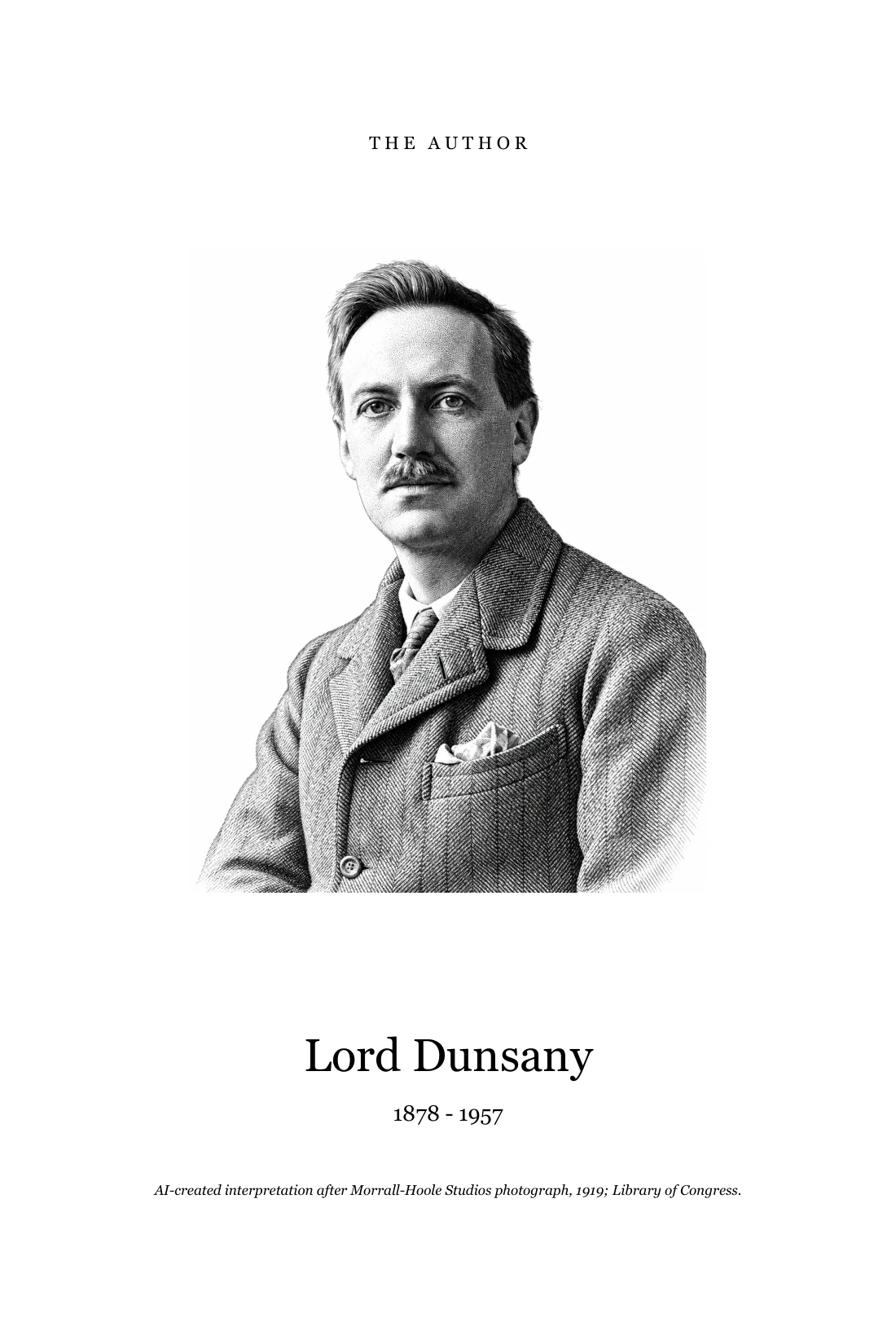
Lord Dunsany’s novel of a mortal prince who weds a princess out of Elfland. Read it beside Mirrlees for a richer, more incantatory picture of the same perilous border.
The Wood Beyond the World
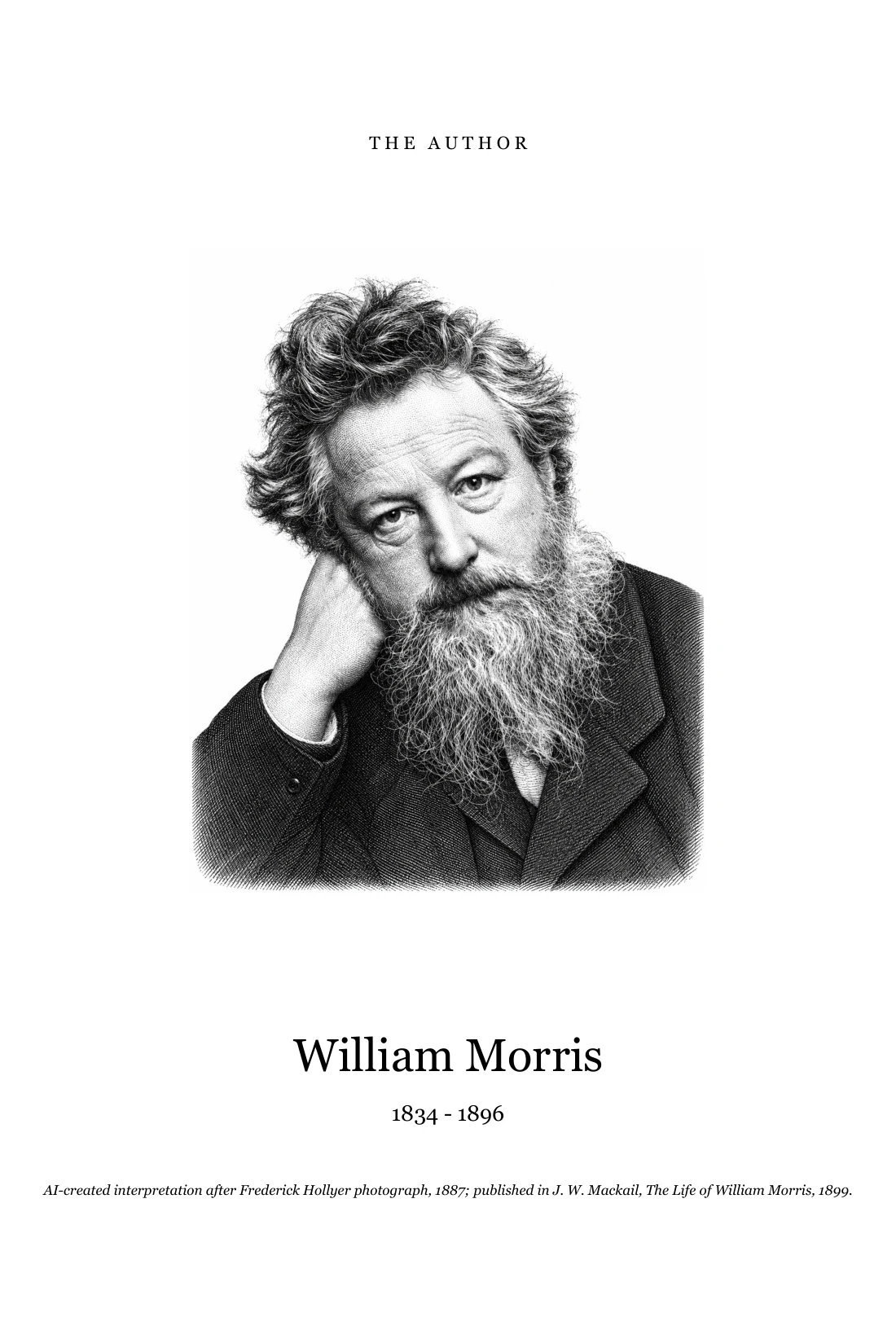
William Morris’s 1894 romance of a voyager stranded in an unknown land and drawn into a wood ruled by a mysterious Lady. One of the books that made fantasy a form of its own, a generation before Lud.


Where to go next
Lud-in-the-Mist belongs to a small, odd shelf of fantasy written before The Hobbit. We follow it in Fantasy novels before Tolkien, and meet two of its neighbours in Lord Dunsany, the fantasist who shaped Tolkien and Lovecraft and Did you know the designer William Morris helped invent the fantasy novel?. The whole shelf is in our fantasy collection.
Begin with the first chapter of Lud-in-the-Mist, in the Chanticleers’ garden by the Dapple. Read it slowly. By the time the fiddle starts playing, you will understand why the people who found this book refused to let it disappear again.
Questions readers ask
Who wrote Lud-in-the-Mist?
Hope Mirrlees (1887–1978), a British poet, novelist and translator best known otherwise for her modernist poem Paris. Lud-in-the-Mist was her third and final novel.
When was Lud-in-the-Mist published?
It was first published by Collins in London in 1926. It fell out of print until Ballantine reprinted it in the United States in 1970.
Why is Lud-in-the-Mist considered a forgotten classic?
It sold modestly and disappeared for decades, then found a devoted readership after its 1970 paperback reprint. Writers including Michael Swanwick, Elizabeth Hand and Tim Powers have since praised it or named it as an influence.