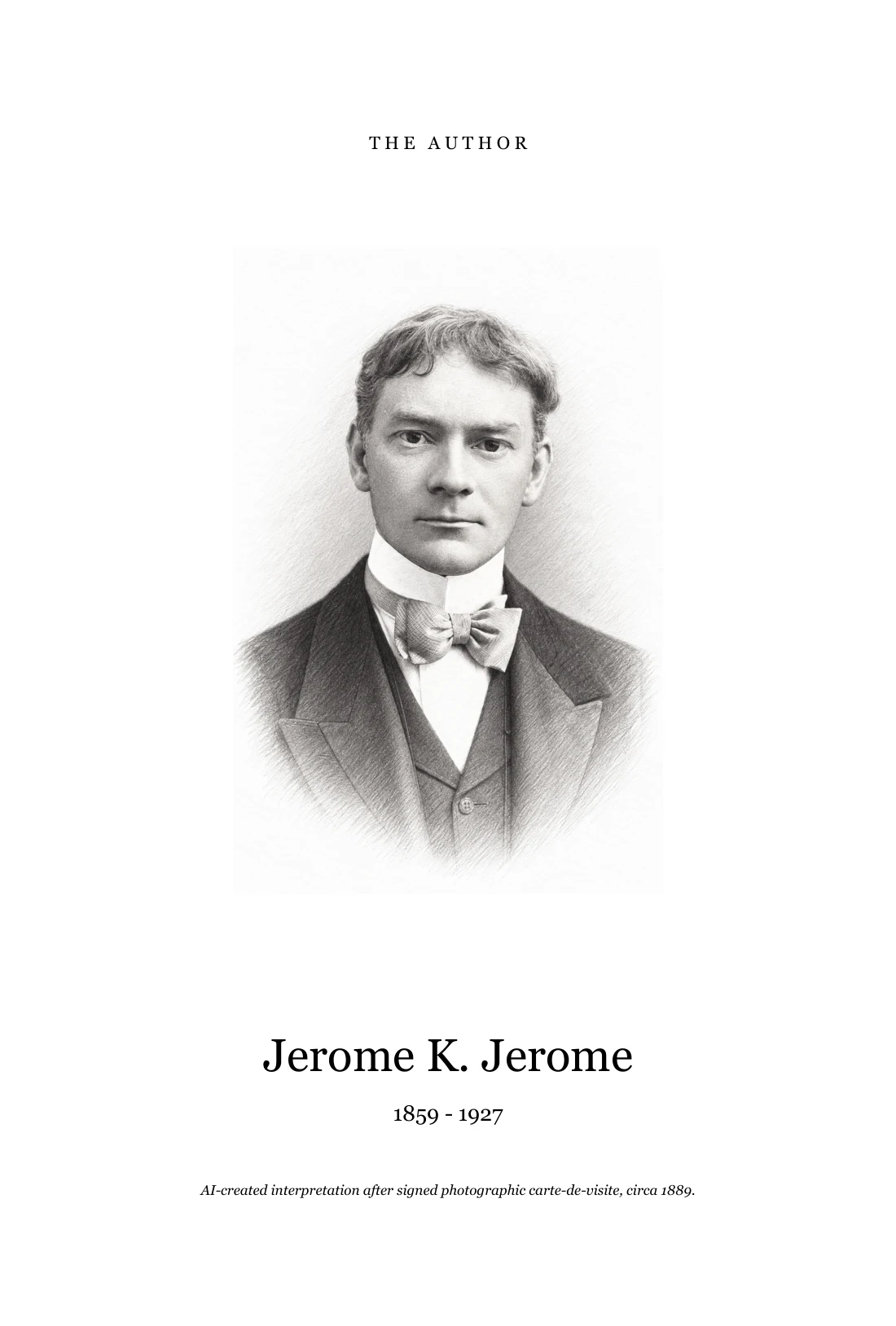
Jerome K. Jerome was registered at birth, in Walsall in May 1859, as Jerome Clapp Jerome. The Klapka came later, borrowed from György Klapka, an exiled Hungarian general who is said to have lodged with the family around the time the boy was born. Quite when Klapka replaced Clapp, and how a hero of the Hungarian rising of 1848 came to be staying in the Black Country, nobody has ever satisfactorily explained.
It is a fitting start for a writer whose most famous book, Three Men in a Boat, is a true story told by someone who could not resist improving it. Jerome wrote plays, essays, novels and an autobiography, and edited two magazines, but that one comic account of a Thames holiday, published in 1889, is the reason his name survives.
Who was Jerome K. Jerome?
A man who tried most jobs before he found the one that stuck. His father’s coal-mining venture failed, the family drifted to east London, and when his father died in 1871 the boy left school to become the family’s breadwinner, as a clerk with the London and North Western Railway. Over the next decade he was also a touring actor, a schoolmaster, a packer and a solicitor’s clerk, writing in every spare hour and collecting rejections.
His first success was a comic memoir of his three years with a shoestring theatre company, On the Stage – and Off (1885). The essays of Idle Thoughts of an Idle Fellow followed in 1886 and sold so well that he could afford to marry. His biographer Joseph Connolly tells how the publisher printed “Second Edition” on the cover after every thousand copies, until the book world believed it had reached its twelfth.
Three Men in a Boat, and the critics who hated it
Soon after his marriage, Jerome proposed a boating holiday up the Thames with his old friends George Wingrave and Carl Hentschel, a trip he had made several times before, and he took a notebook. The result made him famous and, among reviewers, slightly notorious. They found it vulgar, colloquial and full of slang. Readers adored it for exactly those reasons: it sounded like people talking.
I like work: it fascinates me. I can sit and look at it for hours. I love to keep it by me: the idea of getting rid of it nearly breaks my heart.
Jerome K. Jerome, Three Men in a Boat (1889)
The book sold enormously in America too, but in unauthorised editions that paid him nothing, since the United States had not signed the international copyright agreements of the day. Years later Jerome admitted, with some weariness, that whatever else he wrote, the public insisted on remembering him as the author of Three Men in a Boat. We tell the story of how the book began life as a guide to the river in Did you know Three Men in a Boat was meant to be a travel guide?.
Three Men in a Boat
1889. J., George, Harris and the fox terrier Montmorency row from Kingston towards Oxford, losing arguments with tins, tents and each other. The digressions are half the fun.
The Diary of a Nobody
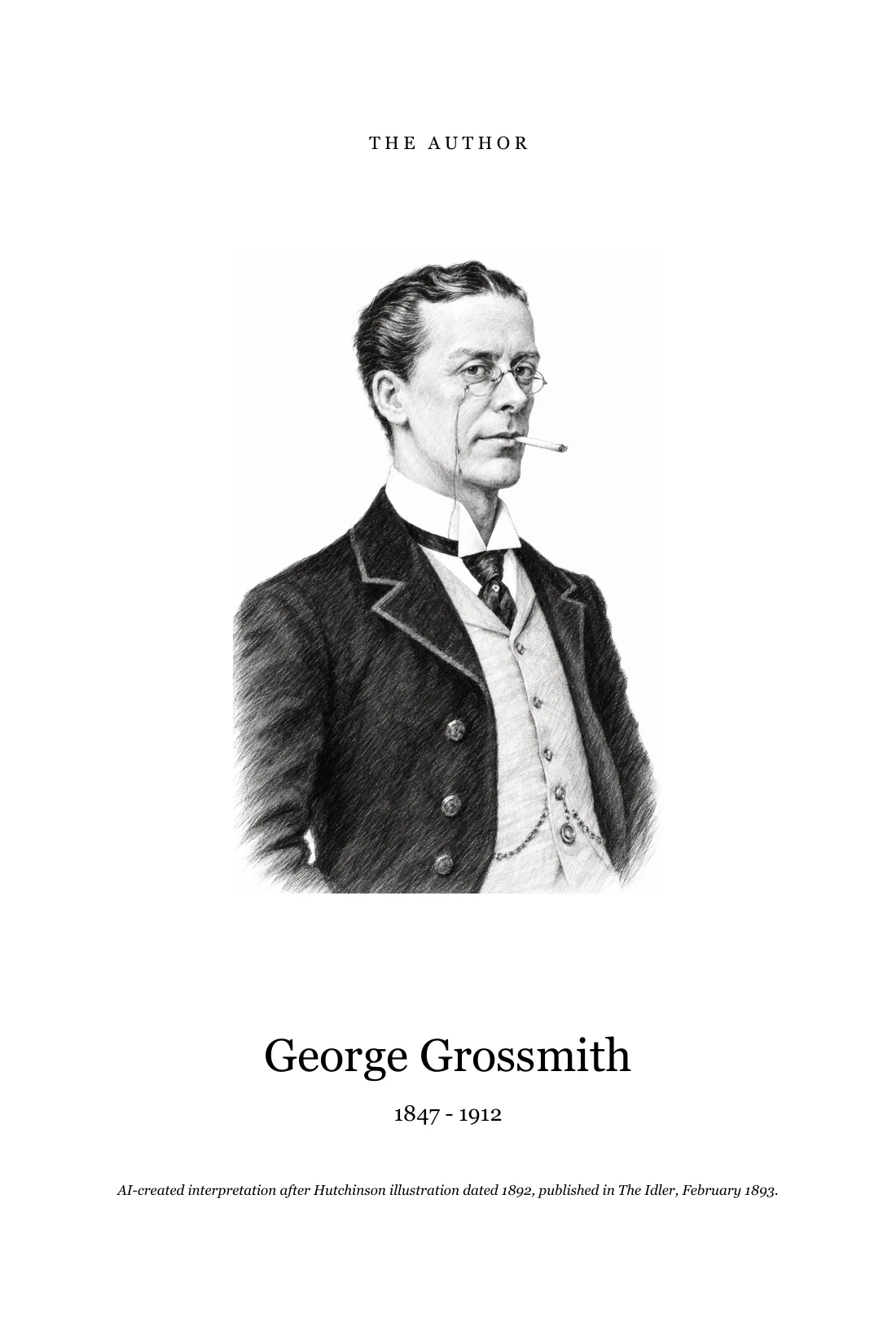
1892. The diary of Charles Pooter, a London clerk who takes himself very seriously. Written by the Grossmith brothers, and the natural companion to Jerome.


The editor, the playwright and the libel case
In 1892 Jerome became co-editor, with Robert Barr, of The Idler, an illustrated monthly whose contributors included Mark Twain, Rudyard Kipling and Arthur Conan Doyle. The next year he launched a weekly, To-Day, which published George Gissing among others; we meet Gissing, a very different kind of writer, in George Gissing: the novelist of money and writers.
To-Day proved his undoing as an editor. A column accusing the industrialist Samson Fox of misleading investors brought a libel action. The jury awarded Fox damages of one farthing, but each side had to pay its own costs, and Jerome was forced to sell his interests in both magazines.

What else did Jerome K. Jerome write?
- Three Men on the Bummel (1900): George, Harris and J. on bicycles in Germany. Some readers think its set pieces are even funnier than the boat’s.
- Paul Kelver (1902): a semi-autobiographical novel of a London boyhood, which critics finally praised and Jerome considered his best book.
- The Passing of the Third Floor Back (1908): a modern morality play about a mysterious stranger in a boarding house. It was a huge popular success; Max Beerbohm hated it.
- My Life and Times (1926): his autobiography, published the year before he died.
He died in Northampton in June 1927, having fallen ill on a long motoring tour, and his ashes lie in the churchyard at Ewelme in Oxfordshire, not far from the river that made him. If his voice wins you over, try The funniest classic novels for more in the same spirit.
Start, though, where his readers always have: three men and a dog in a room in London, each convinced he is ill, deciding that what they need is a change. Open Three Men in a Boat and let J. talk.
Questions readers ask
What does the K in Jerome K. Jerome stand for?
Klapka. He was registered at birth as Jerome Clapp Jerome, and later took the name of György Klapka, an exiled Hungarian general said to have stayed with his family.
What is Jerome K. Jerome best known for?
Three Men in a Boat (To Say Nothing of the Dog), his comic account of a boating trip up the Thames, published in 1889. Its sequel, Three Men on the Bummel, followed in 1900.
Were the three men in Three Men in a Boat real?
Yes. They were Jerome and his friends George Wingrave and Carl Hentschel, who appears as Harris. The dog, Montmorency, was Jerome’s invention.