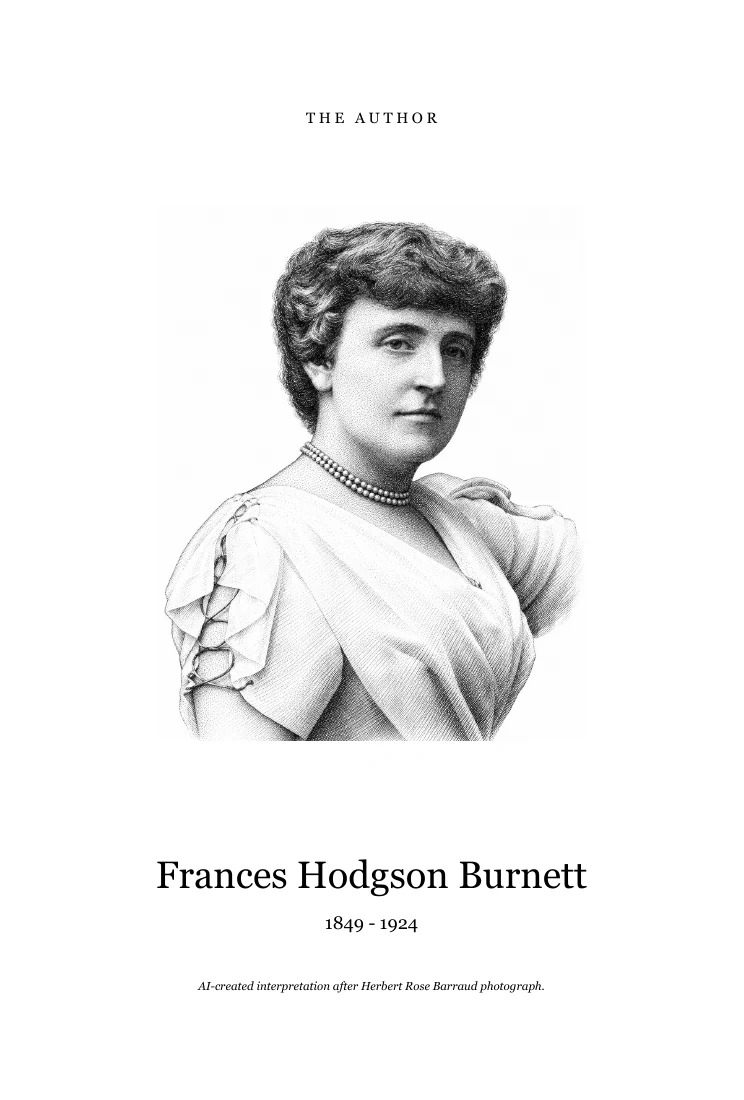
Draw a line from Cheetham, in Manchester, to a log cabin outside Knoxville, Tennessee, and you have the most important journey of Frances Hodgson Burnett’s life. She made it in 1865, at fifteen, with her widowed mother and her brothers and sisters. Her father had died in 1853, before her fourth birthday, the family business had struggled ever since, and an uncle, William Boond, who ran a thriving dry goods store in Knoxville, had invited them over.
So yes: Frances Hodgson Burnett grew up in Tennessee. The family spent its first winter in a log cabin at New Market, outside Knoxville, and it was in Tennessee, short of money and determined to help, that the teenager began writing stories for magazines. She was an American writer long before she was a famous one, and she became an American citizen in 1905.
How a Manchester girl became an American writer
Her first story appeared in Godey’s Lady’s Book in 1868, and soon she was writing regularly for Scribner’s Monthly, Peterson’s Magazine and Harper’s Bazaar. She later described herself in those years as “a pen driving machine”, turning out story after story with little thought for quality, and by 1869 she had earned enough to move the family to a better house in Knoxville. It stood on an isolated hilltop, and she called it “Noah’s Ark, Mt. Ararat”.
The Hodgsons’ neighbours across the road were the Burnett family, and Frances became friends with their son Swan, introducing him to the Dickens, Scott and Thackeray she had read in England. He went away to college and became a doctor, and they married in Knoxville in September 1873. A year later their first son, Lionel, was born, and in the same year she began her first full-length novel. After two years in Paris, where their second son, Vivian, was born, the Burnetts settled in Washington, D.C.
Frances Hodgson Burnett’s American stories
Not everything she wrote in America was about America. Her first novel looked back across the Atlantic, and several of the books that followed are about Americans arriving in England, a theme that runs all the way to The Shuttle (1907). But these five show the American side of her imagination at work.
- $14.99
That Lass O' Lowrie's 1877
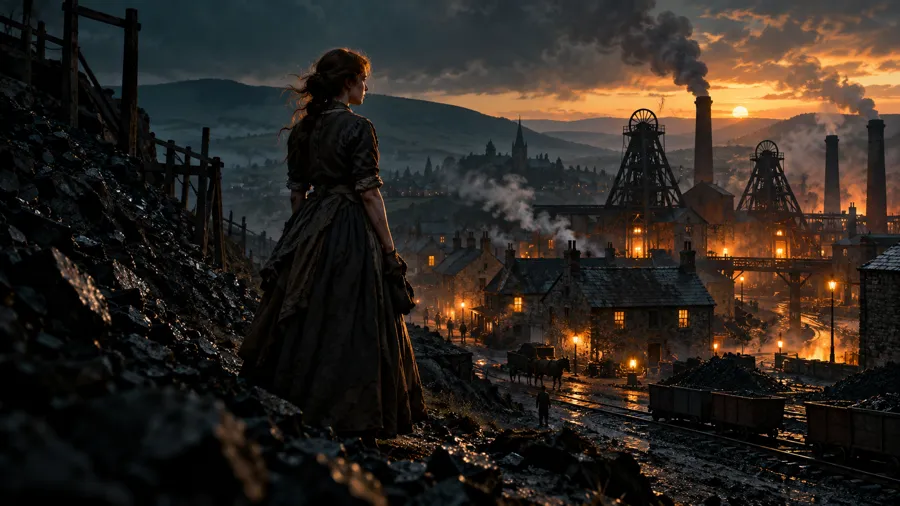
1877. Her first novel, begun in 1874: Joan Lowrie, a proud, fierce young woman who works at a Lancashire coal pit. Written in America about the England she had left, and the book that made her name in Britain and America alike.
- $12.99
A Fair Barbarian
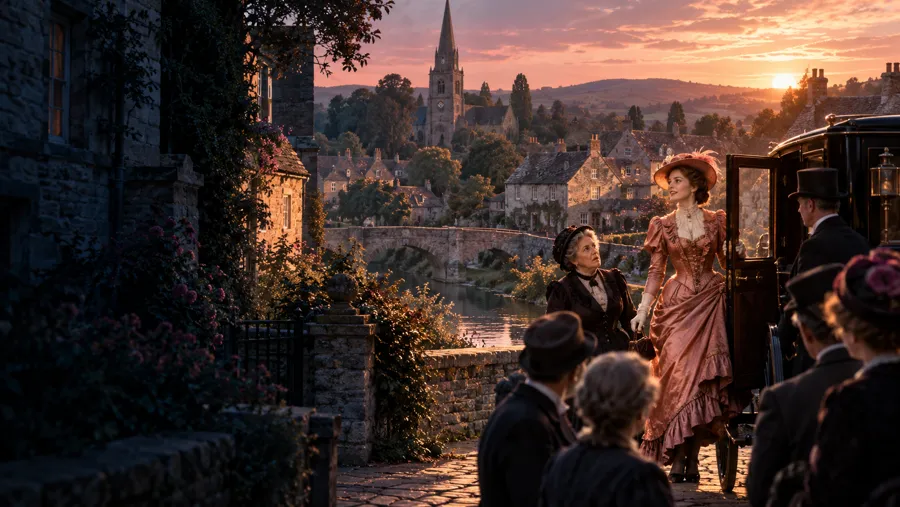
1881. Octavia Bassett arrives from the mining country of Nevada in the sleepy English town of Slowbridge and sets its ladies talking. An American girl abroad, five years before Fauntleroy.
- $12.99
Little Lord Fauntleroy
1886. Cedric Errol, living in genteel poverty on a New York side street, learns he is heir to an English earl. The American boy who charms an English castle, modelled on her son Vivian.
- $11.99
Two Little Pilgrims' Progress: A Story of the City Beautiful
1895. The twins Meg and Robin slip away from their hard-driving aunt’s Illinois farm to see the great exposition in Chicago. A short, warm book about a real American wonder.
- $18.99
In Connection with the De Willoughby Claim
1899. Tom De Willoughby, black sheep of an old Tennessee family, keeps a store at a crossroads in the Southern mountains, far from the grand relations he no longer talks about. Her most American novel.


A Fair Barbarian and the American abroad
A Fair Barbarian (1881) is a small comic gem and the clearest sign of where Burnett was heading. Slowbridge is the kind of English town where nothing has happened for decades, and Octavia Bassett, frank, rich and unimpressed, is the most exciting thing that has ever happened to it. It belongs with Louisiana (1880) and Through One Administration (1883), a novel of Washington society, among the adult books that kept her busy in the years before Little Lord Fauntleroy.
Five years later she turned the idea round. In Little Lord Fauntleroy, serialised in St. Nicholas Magazine from November 1885 and published as a book in 1886, the American is a small boy from a shabby New York street, and the England he conquers is his crusty grandfather’s. It was a sensation; read more in Did you know Frances Hodgson Burnett wrote mostly for adults?.
Two Little Pilgrims and the World’s Fair
In 1893, the year Chicago hosted the World’s Columbian Exposition, Burnett had a set of her books displayed at the fair. Two years later she put it into a novel. Two Little Pilgrims’ Progress follows the twins as they escape the Straw Parlor, the secret den they have made high in their aunt’s barn, and travel to Chicago to see the fair for themselves.
The De Willoughby Claim: back to Tennessee
In Connection with the De Willoughby Claim (1899) is the book in which she went home. It opens on a blazing day in the hill country:
High noon at Talbot’s Cross-roads, with the mercury standing at ninety-eight in the shade—though there was not much shade worth mentioning in the immediate vicinity of the Cross-roads post-office…
Frances Hodgson Burnett, In Connection with the De Willoughby Claim (1899)
The loungers on the post-office porch are dozing on goods boxes, and the postmaster dozing inside is the stranger who set up the store there years before. He is a De Willoughby, of Delisle County, Tennessee, a proud family that was among the best known in its part of the state before the war, and he has turned his back on them. It is the book in which Burnett went back, more than thirty years on, to the American South of her teens, and its red dust and drawling talk are a long way from The Secret Garden.
For the gardens that came later, see Did you know a real walled garden is thought to have inspired The Secret Garden?, and for more great American books of the period, Essential American classics. But if you want the Tennessee that shaped her, open In Connection with the De Willoughby Claim and sit down on the post-office porch at Talbot’s Cross-roads.
Questions readers ask
Did Frances Hodgson Burnett live in America?
Yes. She emigrated from Manchester to Tennessee with her family in 1865, at fifteen, began her writing career there, married in Knoxville and later lived in Washington, D.C. and on Long Island. She became an American citizen in 1905.
Where did Frances Hodgson Burnett live in Tennessee?
Her family spent its first winter in a log cabin at New Market, near Knoxville, and then moved into Knoxville itself, where she wrote her first stories and married Swan Burnett in 1873.
Was Frances Hodgson Burnett English or American?
Both. She was born in Manchester, England, in 1849, grew up in Tennessee from 1865, and became a US citizen in 1905, though she also spent long periods living in England.
 The Secret Garden210 pages · $14.99
 A Little Princess168 pages · $13.99
 The Lost Prince256 pages · $15.99
 The Shuttle566 pages · $24.99