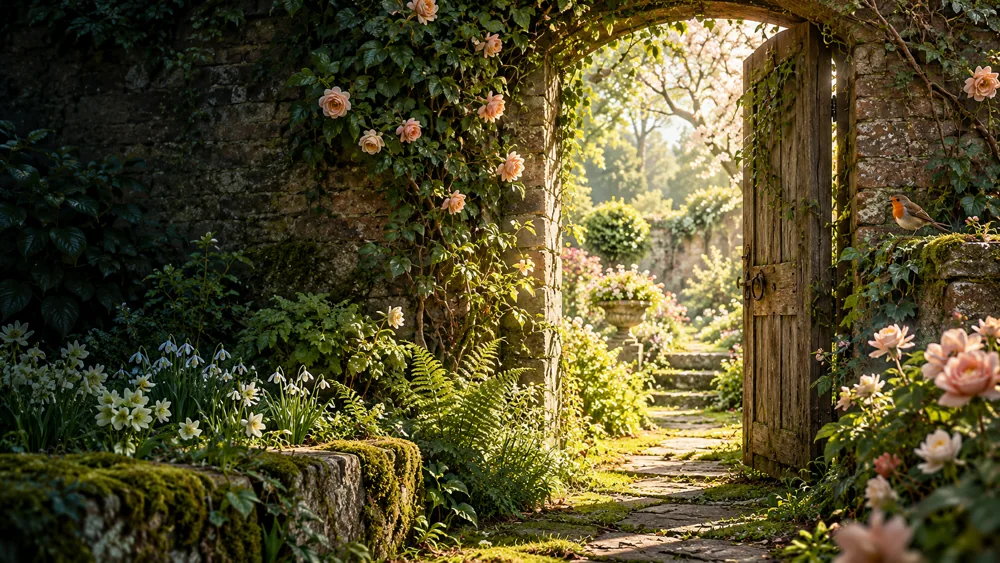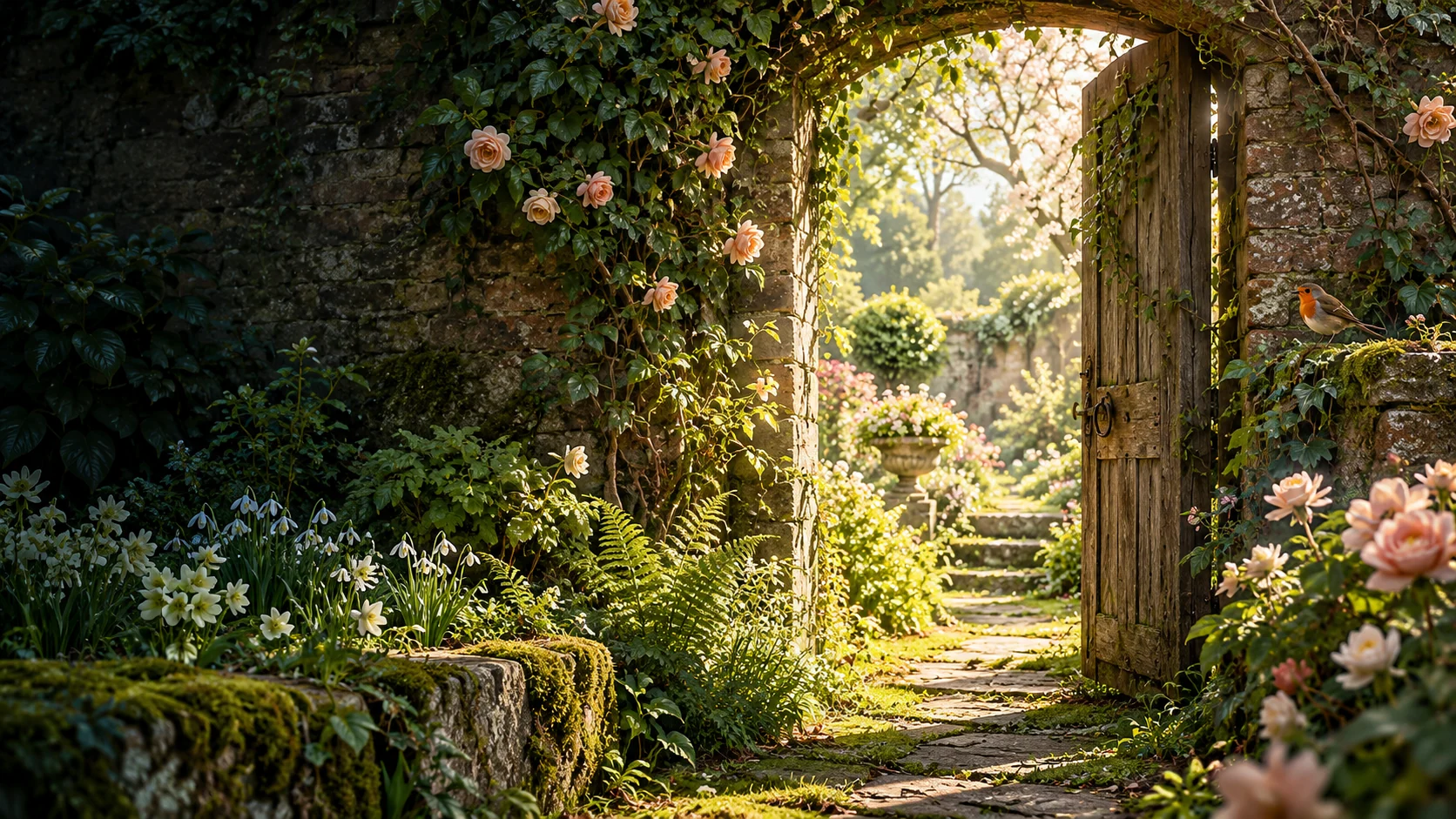
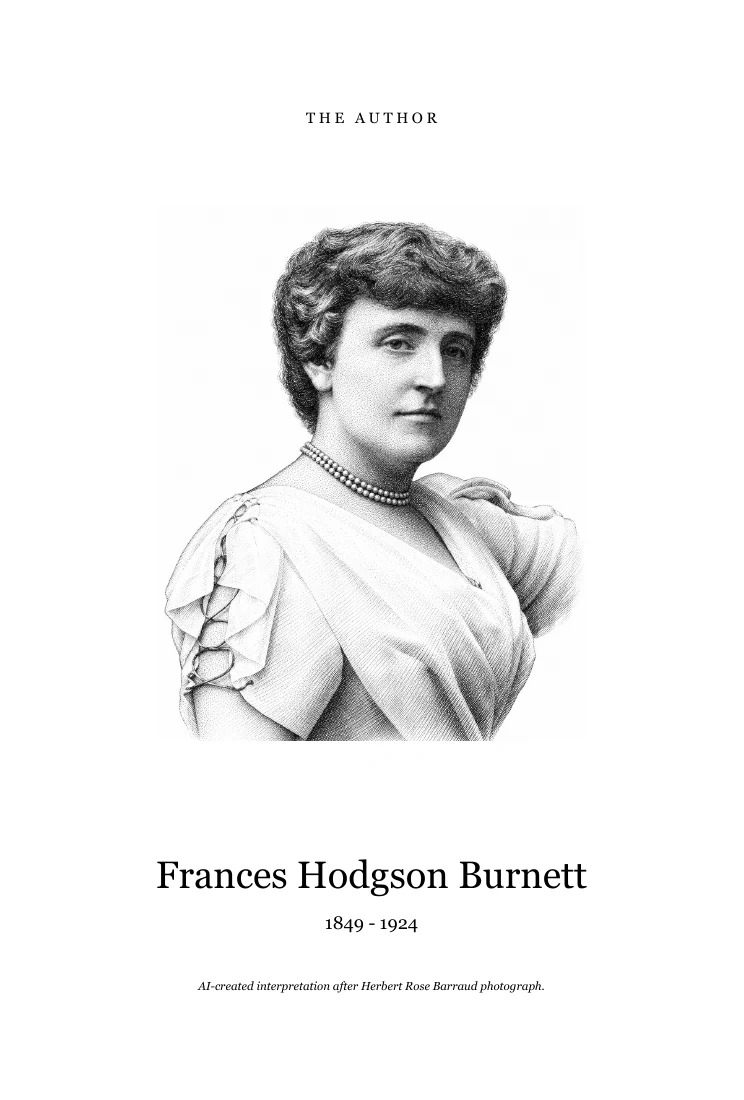
In 1898, Frances Hodgson Burnett, already famous for Little Lord Fauntleroy, took a lease on Great Maytham Hall, a country house near the village of Rolvenden in Kent. Its grounds included an old walled garden, and Burnett threw herself into restoring it, planting roses and spending long summer days out there, often writing out there under an old tree hung with roses.
She lived at Maytham for about a decade, and that garden is widely believed to be the seed of The Secret Garden, published in 1911. Burnett never wrote a simple statement that Maytham was the model, so the connection is a matter of strong likelihood rather than proof. But the parallels are hard to miss: a high-walled garden, a neglected tangle brought back to life, and a robin who seems to be showing the way.
The robin who became a character
The robin was real too. While she worked in the Maytham garden, Burnett befriended a robin bold enough to come close and keep her company. She later wrote a short memoir of him, My Robin, published in 1912, in reply to a reader of The Secret Garden who asked whether she had owned the original of its robin. In it she describes their friendship, in her rose garden in Kent, with obvious delight.
In the novel, it is a robin who first catches lonely Mary Lennox’s attention, and a robin who leads her to the buried key and the hidden door. Anyone who has read both can hardly doubt where that bird came from.
What else inspired The Secret Garden?
Grief, perhaps. Burnett’s elder son, Lionel, died of tuberculosis in 1890 while still a teenager, and many readers have seen something of that loss in the sickly, frightened Colin Craven and the hope that he might be made well. Burnett was also drawn to ideas popular in her time about the power of positive thought to heal the body, which surface in the novel’s talk of “Magic”.
And there was Yorkshire. Although the garden in Kent was in the south of England, she set the story on the wide moors of the north, which give the book its wind, space and broad dialect.
The novel was serialised in The American Magazine in 1910 and 1911 before appearing as a book. In Burnett’s lifetime it was overshadowed by Little Lord Fauntleroy, and its reputation as her masterpiece grew mainly after her death in 1924.
What is The Secret Garden like to read today?
Bracing and unsentimental at the start. Its heroine is not sweet at all, and Burnett says so in her first sentence:
When Mary Lennox was sent to Misselthwaite Manor to live with her uncle everybody said she was the most disagreeable-looking child ever seen.
Frances Hodgson Burnett, The Secret Garden (1911)
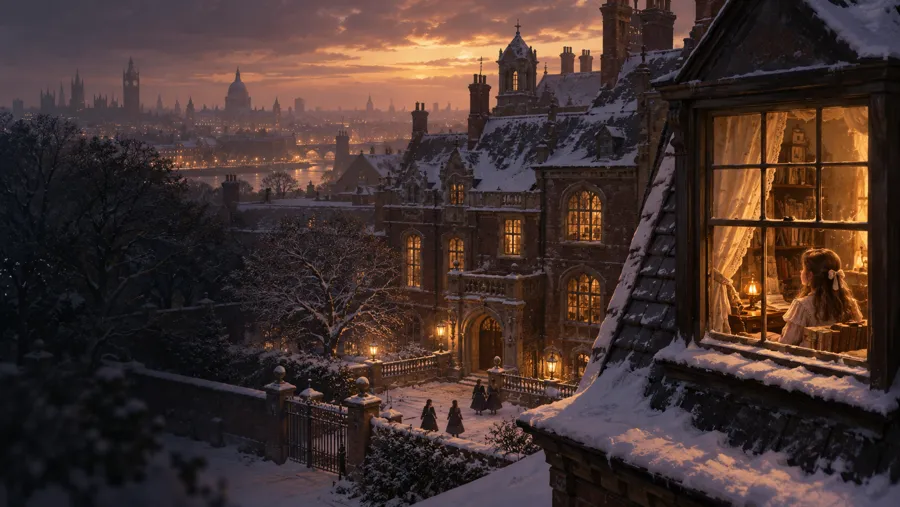
Mary, orphaned in India and sent to a gloomy house on the Yorkshire moors, is spoiled, sour and lonely, and the pleasure of the book is watching her change as the garden does. The chapters in which she first slips through the door and starts clearing space around the green shoots are among the most quietly satisfying in children’s fiction. Dickon, Martha and old Ben Weatherstaff speak in thick Yorkshire dialect, which is great fun to read aloud once you have the hang of it.
One honest note: the opening chapters reflect the attitudes of the British Empire, including Mary’s contempt for the Indian servants who raised her and some casual racial language. It is brief, and worth talking through if you are reading with children.
The book suits confident readers of about nine and up and works beautifully as a family read-aloud through spring. Adults coming back to it often find it more moving than they remembered.
The Secret Garden
1911. Orphaned Mary Lennox finds the key to a garden locked for ten years, and a secret inside the house as well. The classic that grew out of Burnett’s own garden.
A Little Princess
1905. Burnett’s other beloved children’s novel: wealthy Sara Crewe loses everything at her London boarding school but never loses her imagination.



Where to go next
Burnett wrote far more for adults than for children; discover the range in Did you know Frances Hodgson Burnett wrote mostly for adults?. If you want more of the same feeling, try books like The Secret Garden and classic novels about gardens. For adults, Elizabeth von Arnim’s The Enchanted April, with its Italian garden in full flower, makes a lovely companion.
As the year turns and the garden sleeps, it is the perfect moment to begin. Open The Secret Garden, follow the robin, and look for the door in the wall.
Questions readers ask
What inspired The Secret Garden?
Frances Hodgson Burnett is widely believed to have drawn on the old walled garden she restored at Great Maytham Hall in Kent, where she lived from 1898 and befriended a tame robin.
Is the Secret Garden a real place?
Misselthwaite Manor and its garden are fictional, but the walled garden at Great Maytham Hall in Rolvenden, Kent, which Burnett tended, is often identified as its inspiration and still survives.
What age is The Secret Garden suitable for?
It suits confident readers of about nine and up and makes an excellent read-aloud for younger children. Adults often enjoy it just as much.
 The Lost Prince256 pages · $15.99
 Little Lord Fauntleroy158 pages · $12.99
 The Shuttle566 pages · $24.99
 Emily Fox-Seton204 pages · $14.99