
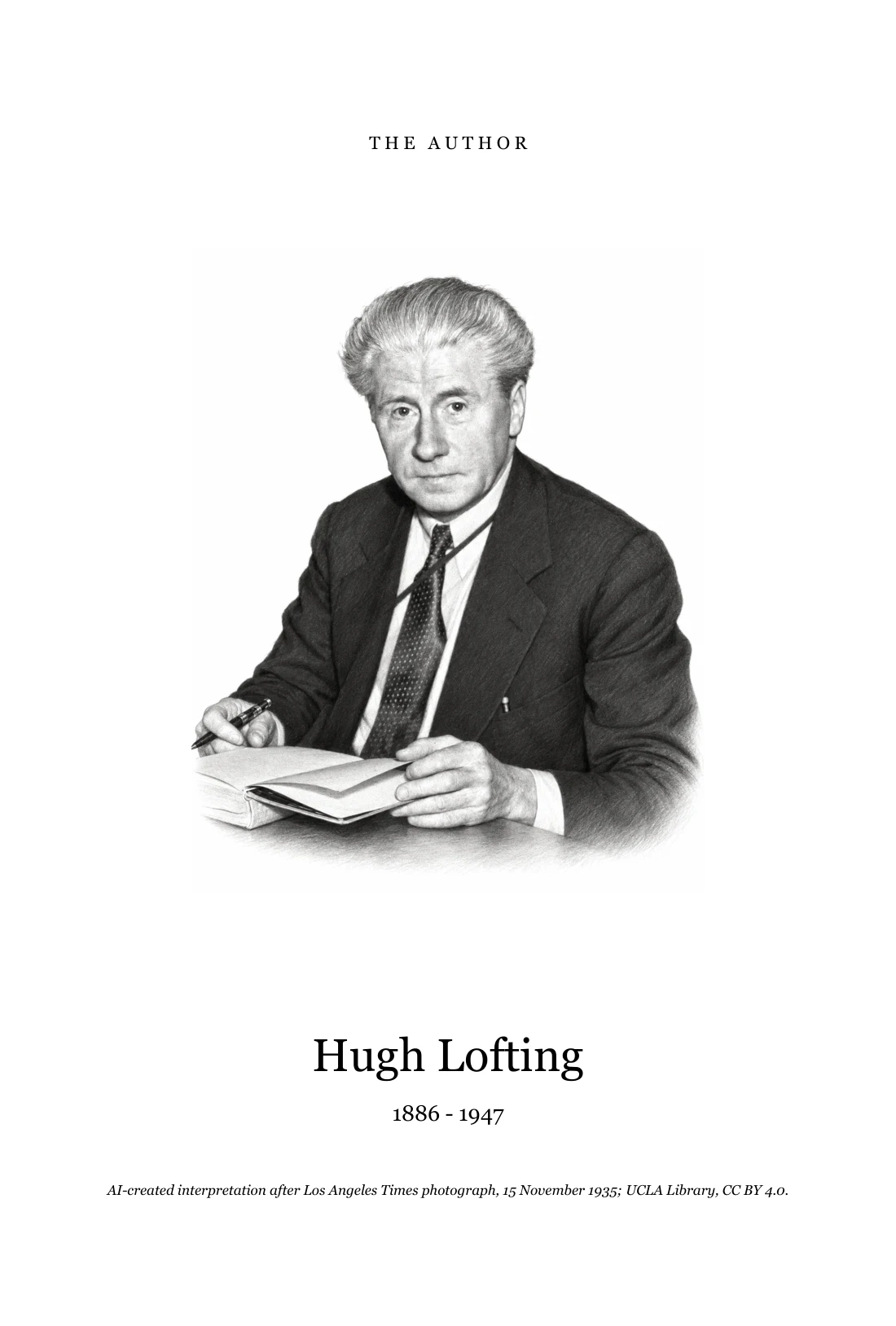
Hugh Lofting was serving as an officer in the Irish Guards during the First World War when he began writing illustrated letters to his young son and daughter in England. He did not want to tell them about the war, so he told them a story instead: about a country doctor in the village of Puddleby-on-the-Marsh who learns to speak the languages of animals.
Those letters became The Story of Doctor Dolittle, published in 1920. The doctor went on to star in a long series, and the origin of the series in the trenches is one of the most touching stories in children’s literature.
Why did Hugh Lofting write Doctor Dolittle?
Lofting later explained that he had been struck by the part animals played in the war, above all the horses. It seemed to him that a badly wounded horse could expect a bullet, while a wounded soldier could expect a hospital. He began to imagine a doctor who could understand animals well enough to treat them properly, and who might one day choose them as his patients over people.
News from the front, he said, was either too horrible or too dull to put in a letter. A man who could talk to his parrot was a much better subject. Lofting was himself badly wounded before the war ended, and after the war he moved with his family to the United States, where the letters were turned into a book with his own drawings.

What is The Story of Doctor Dolittle about?
John Dolittle is a kind, round, untidy doctor whose human patients desert him because his house is full of animals. His parrot, Polynesia, teaches him to speak to them, and he becomes the greatest animal doctor in the world. When a terrible sickness breaks out among the monkeys of Africa, he sets sail to help, with Jip the dog, Dab-Dab the duck, Gub-Gub the pig and Chee-Chee the monkey. On the way he meets the shy and wonderful pushmi-pullyu, a creature with a head at each end.
The Voyages of Doctor Dolittle is longer and richer. It is narrated by Tommy Stubbins, a cobbler’s son who becomes the doctor’s assistant, and follows a voyage in search of a famous naturalist and a floating island. Many readers think it is the best of the series.
The Story of Doctor Dolittle
1920. The first adventure: Puddleby, Polynesia, the voyage to Africa and the pushmi-pullyu. Short chapters, ideal for reading aloud.
The Voyages of Doctor Dolittle
1922. Tommy Stubbins joins the doctor for a longer, stranger voyage. Winner of the 1923 Newbery Medal and often called the best Dolittle book.


Are the Doctor Dolittle books suitable for children today?
Mostly, with one important caution. The original 1920 text of The Story of Doctor Dolittle includes a racist episode involving an African prince, Bumpo, who wants to become white, along with language and pictures that reflect the colonial attitudes of the time. Later editions, revised in the 1980s with the approval of Lofting’s family, removed this material. If you are reading the original aloud, it is worth deciding in advance how you will handle that chapter.
The rest is pure delight. Lofting’s humour is gentle, his animals are full of personality, and the doctor’s kindness and curiosity make him one of the most likeable heroes in children’s fiction. The first book suits read-alouds from around five or six; confident readers of eight or nine can manage both alone.
The doctor has been filmed several times, from the 1967 musical starring Rex Harrison to later versions with Eddie Murphy and Robert Downey Jr. The films borrow little beyond the premise, so the books still hold plenty of surprises for children who know Dolittle only from the screen.

Where to go next
We list the whole series in Doctor Dolittle books in order. For more animal classics, see Classic animal stories for children, and for another children’s classic that began as a story told to real children, read Did you know Alice in Wonderland began as a story told on a boat trip?. Kenneth Grahame’s The Wind in the Willows grew partly out of bedtime stories and letters to his son, too.
Start with the first book, and with Polynesia’s first lesson in animal talk. The Story of Doctor Dolittle is short, funny and kind, and it was written by a father who wanted to give his children something better than the news.
Questions readers ask
How did Hugh Lofting come up with Doctor Dolittle?
Lofting invented Doctor Dolittle in illustrated letters to his children while serving in the First World War. He was moved by the suffering of horses at the front and imagined a doctor who could talk to animals.
When was the first Doctor Dolittle book published?
The Story of Doctor Dolittle was published in 1920. The Voyages of Doctor Dolittle followed in 1922 and won the Newbery Medal.
Why were the Doctor Dolittle books changed?
The original texts contain racist episodes and language. Revised editions published in the late 1980s, with the family’s approval, removed or rewrote them.