
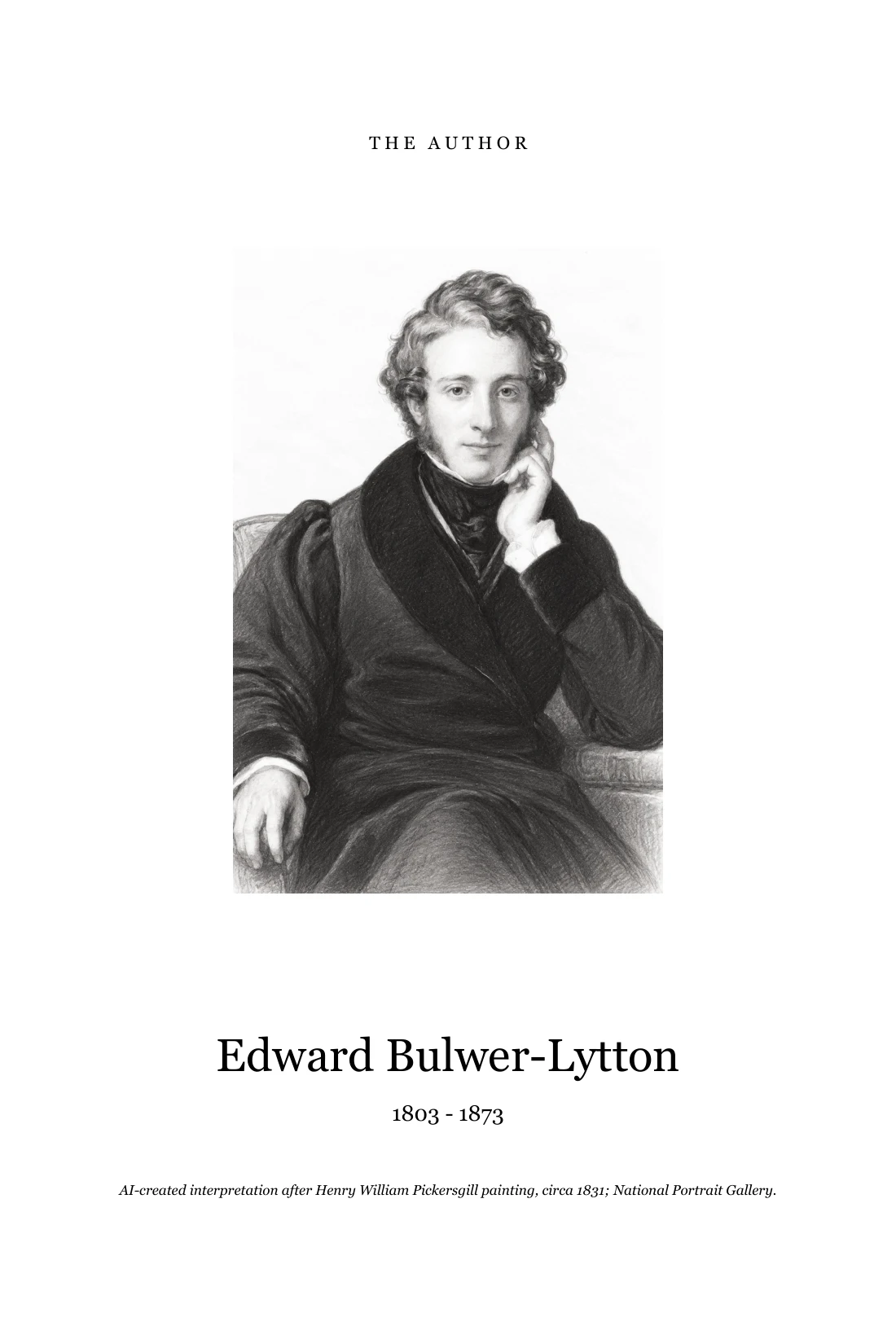
Bovril is a blend of two words. The first half comes from the Latin for ox, bos, the root of our word bovine. The second comes from vril, the mysterious power at the heart of The Coming Race, a novel by Edward Bulwer-Lytton published in 1871. When the Scottish businessman John Lawson Johnston needed a name for his beef extract in the 1880s, he borrowed the most fashionable word for strength and vitality he could find.
It was a good choice. In the novel, vril is a kind of all-purpose energy that can heal, destroy, light cities and drive machines. By naming his drink after it, Johnston was promising, with a wink, that a spoonful of Bovril would do much the same for you.
Bovril, vril and The Coming Race
Johnston had developed his beef extract in Canada in the 1870s, originally under the plain name Johnston’s Fluid Beef. The catchier Bovril came later, in the 1880s, and with it a famous run of advertising that sold the drink as a source of strength for invalids, athletes and soldiers alike. Few of the people drinking it can have known they were taking a sip of Victorian science fiction.
In 1871 Bulwer-Lytton was already one of the best-known writers in Britain, the author of The Last Days of Pompeii and a string of bestsellers. When The Coming Race appeared anonymously that year, readers had fun guessing who had written it, and the word vril soon caught on.

What is vril in The Coming Race?
The narrator of The Coming Race is an American who climbs down a mine shaft and finds a vast underground world lit by artificial light. Its people, the Vril-ya, are tall, calm and immensely powerful, because they have learned to control vril. With it they can fly on mechanical wings, cure illness, and destroy a city from miles away. Their society has abolished war, crime and poverty, largely because everyone is capable of annihilating everyone else.
Bulwer-Lytton leaves vril vague on purpose. It is part electricity, part magnetism, part will, and that vagueness made it irresistible. For a while “vril” became a fashionable byword for vigour and energy, which is exactly the association Johnston wanted when he coined Bovril.
The Coming Race
1871. An American traveller discovers the Vril-ya, a hidden race beneath the earth whose mastery of a strange energy has made them peaceful, perfect and terrifying.
Looking Backward, 2000 to 1887
1888. Edward Bellamy’s Bostonian wakes in the year 2000 to find a society without poverty. Another Victorian vision of a perfected world, meant far more seriously.


What is The Coming Race like to read today?
Short, curious and more ambiguous than you might expect. The Vril-ya live in comfort and harmony, but the narrator finds their world eerie and a little bloodless, and he soon realises that a people this powerful might not stay underground forever. The title is a warning as much as a prophecy. Whether Bulwer-Lytton admired them or feared them is still debated.
There is plenty of comedy too. Among the Vril-ya the women, the Gy-ei, are larger and stronger than the men and do the courting, and the narrator spends a good part of the book trying to avoid the attentions of a formidable young woman called Zee. Bulwer-Lytton enjoys turning Victorian assumptions upside down, even if he does not always know what to put in their place.
It is also a book of its time. Its speculation about racial hierarchy and the survival of the fittest reflects ideas common in the 1870s and uncomfortable now, and later occult writers spun legends about a secret “Vril Society” that historians have found little evidence for. Read it as an early piece of science fiction, and an odd one.

Where to go next
The Coming Race sits at the start of a long line of hidden-world and future-society stories. H. G. Wells took the idea of a race living underground somewhere much darker in The Time Machine, and Yevgeny Zamyatin pushed the perfect society to its logical end in We. We trace the line in Dystopian novels written before Nineteen Eighty-Four and The science fiction firsts, and look at Zamyatin’s legacy in Did you know We inspired Nineteen Eighty-Four?
Next time you stir a spoonful of Bovril into hot water, you will know where the name came from. Better still, take The Coming Race down with you. It is short enough to finish before the kettle goes cold twice.
Questions readers ask
Where does the name Bovril come from?
Bovril combines the Latin for ox (bos, as in bovine) with vril, the life-giving energy in Edward Bulwer-Lytton’s 1871 novel The Coming Race.
What is vril?
In The Coming Race, vril is a mysterious all-purpose energy that a subterranean people use to heal, power their machines and destroy their enemies. For a time the word became a byword for vigour.
Is The Coming Race science fiction?
Yes. Published in 1871, it is one of the earliest English novels about a technologically advanced hidden civilisation and is often counted among the founding works of science fiction.
 Paul Clifford540 pages · $23.99
 Alice, or the Mysteries484 pages · $22.99