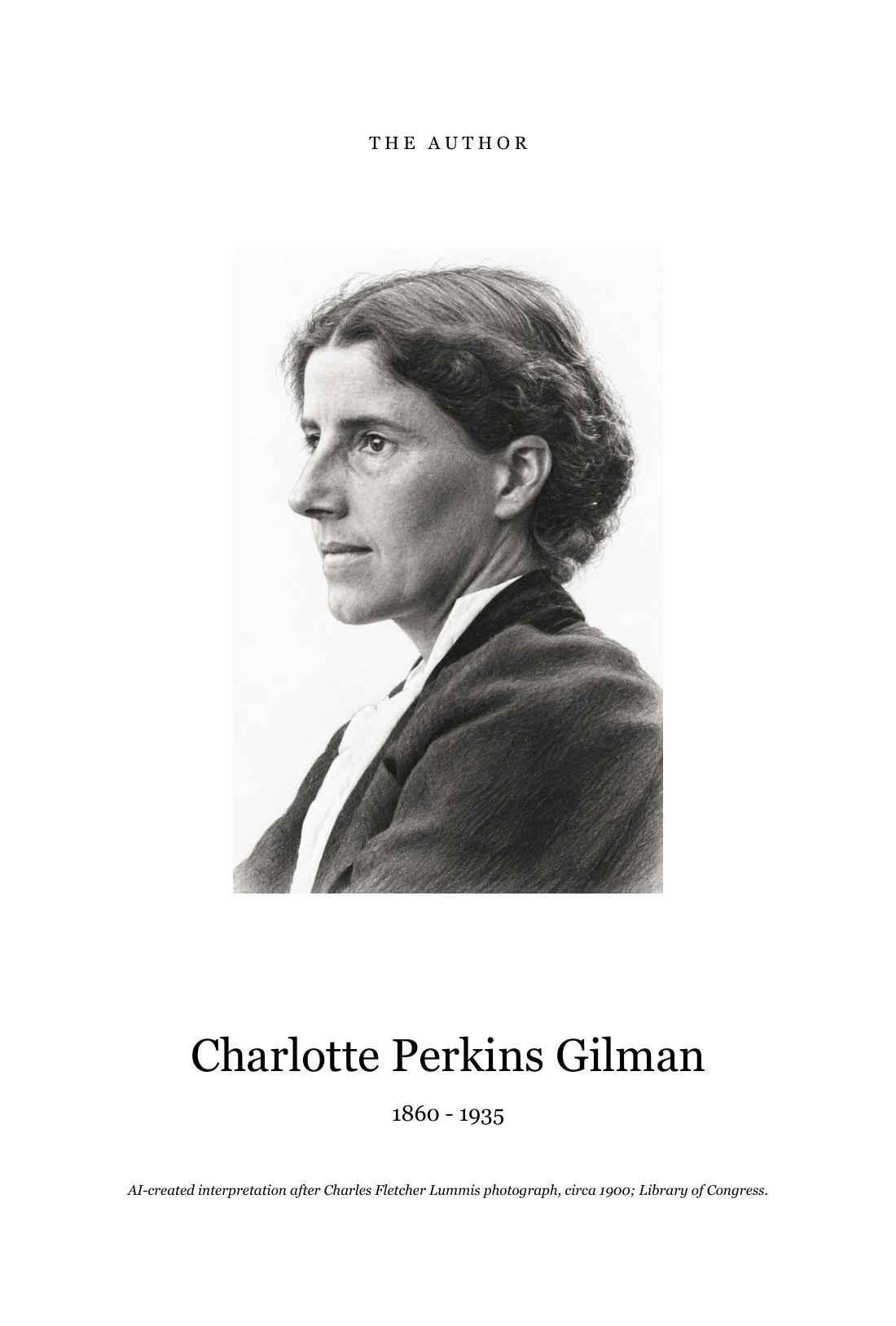
What does The Yellow Wallpaper mean? At its simplest, it is a protest. Charlotte Perkins Gilman wrote the story in 1890, after being treated for depression with the “rest cure”, a fashionable therapy that forbade her to work, write or think too hard. The story imagines that cure taken to its conclusion. It was published in 1892, and two decades later Gilman explained exactly why she had written it.
That explanation, in a short essay of 1913, is one of the clearest statements of purpose any writer has made about a story. Knowing it does not spoil The Yellow Wallpaper. It makes it hit harder.
What was the rest cure?
After the birth of her daughter in 1885, the young Charlotte Perkins Stetson — as she then was — fell into a deep depression. In 1887 she went to Philadelphia to be treated by Silas Weir Mitchell, one of the most celebrated nerve specialists in America and the champion of the rest cure.
Mitchell’s treatment, prescribed mainly to women diagnosed with “nervous” illness, meant weeks of bed rest, isolation from family and friends, heavy feeding and an almost total ban on activity. When Gilman was sent home, she later wrote, she was advised to live as domestic a life as possible, to restrict herself to two hours of intellectual life a day, and never to touch pen, brush or pencil again.
She tried. By her own account it brought her close to complete mental collapse. She recovered only by doing the opposite: going back to work, separating from her husband, and eventually building a career as a writer, lecturer and campaigner.
It was not intended to drive people crazy, but to save people from being driven crazy, and it worked.
Charlotte Perkins Gilman, “Why I Wrote The Yellow Wallpaper” (1913)

What is The Yellow Wallpaper about?
A young woman, recently a mother, is taken by her husband John, a doctor, to a grand old house rented for the summer. She is suffering from what he calls a temporary nervous depression, and he prescribes rest. She is to do nothing, see no one stimulating, and above all not write. She writes anyway, in secret, and the story is her journal.
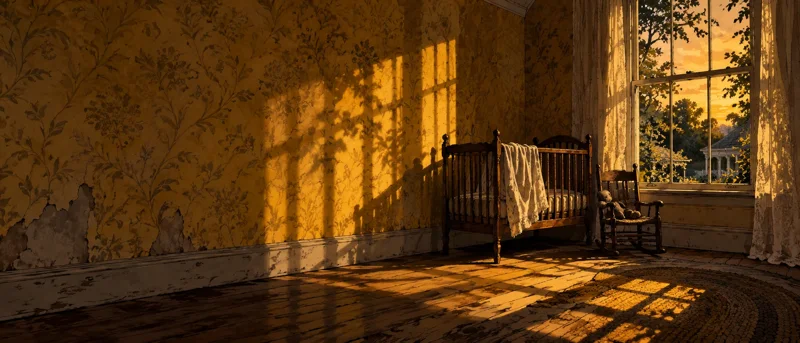
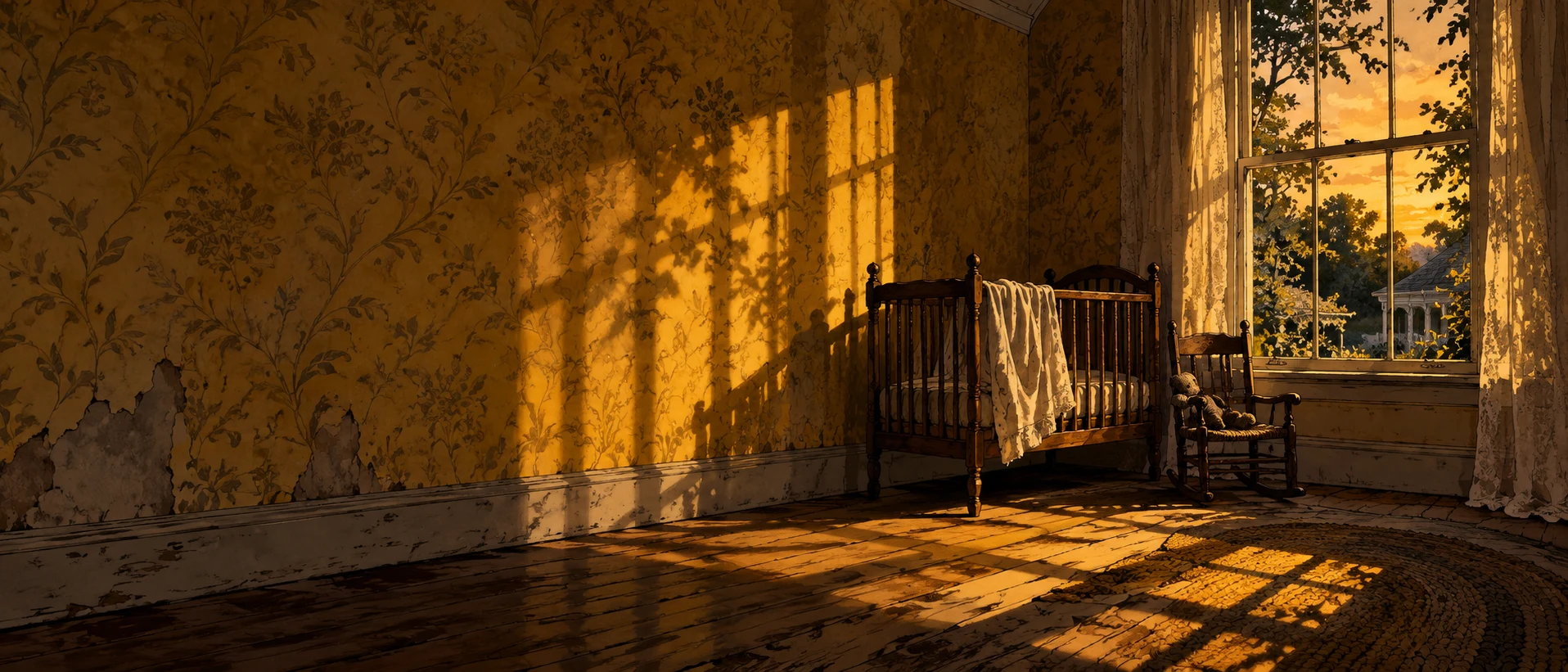
John installs her in a large room at the top of the house — a former nursery, she thinks, with barred windows and rings in the walls — papered in a faded, sprawling, unsettling yellow pattern. With nothing else to do, she begins to study it. The longer she looks, the more she sees.
John laughs at me, of course, but one expects that in marriage.
Charlotte Perkins Gilman, The Yellow Wallpaper
We will leave it there: the story is short, and the ending deserves to be met fresh. What makes it so powerful is that the narrator is perfectly reasonable on the surface, and John is not a villain. He loves her, and he is doing exactly what the best medicine of the day advised. That is the point.
The Yellow Wallpaper
1892. A young mother, a rented summer house and a room with yellow wallpaper. One of the most chilling short stories in American literature.
Herland
1915. Gilman’s witty utopia: three male explorers discover a country of women that has thrived for two thousand years without men.
The Awakening, and Selected Short Stories
1899. Kate Chopin’s novel of a woman who awakens to her own desires one summer on the Louisiana coast, and the world that will not allow them.


How should you read The Yellow Wallpaper today?
In one sitting, if you can — it takes well under an hour. It works as a psychological horror story, as an account of postnatal depression long before the term existed, and as a sharp picture of a marriage in which one person’s word is law. The story was half forgotten for decades and then rediscovered in the 1970s, since when it has been one of the most widely taught American stories.
If it leaves you wanting more Gilman, try Herland, which shows a completely different side of her — playful, satirical and optimistic. We introduce more of her work in Charlotte Perkins Gilman’s books and set her beside other pioneers in feminist classics. For other short masterpieces, see classics you can read in one evening.
Then pull up a chair and open The Yellow Wallpaper. It begins, innocently enough, with a woman pleased to have rented a beautiful old house for the summer — and wondering, just slightly, why it was so cheap.
Questions readers ask
What is the meaning of The Yellow Wallpaper?
It is a critique of the “rest cure” and of a medical and marital system that treated women’s minds as fragile. Gilman wrote it, she said, to save people from being driven mad by such treatment.
Is The Yellow Wallpaper based on a true story?
Partly. Gilman was treated with the rest cure by the physician Silas Weir Mitchell in 1887 and was told to give up intellectual work, an experience she said brought her close to breakdown.
What was the rest cure?
A nineteenth-century treatment for nervous illness, mainly prescribed to women, involving prolonged bed rest, isolation, heavy feeding and a ban on mental or physical activity.
How long does it take to read The Yellow Wallpaper?
Most readers finish it in thirty to forty-five minutes. It is a short story of around six thousand words.