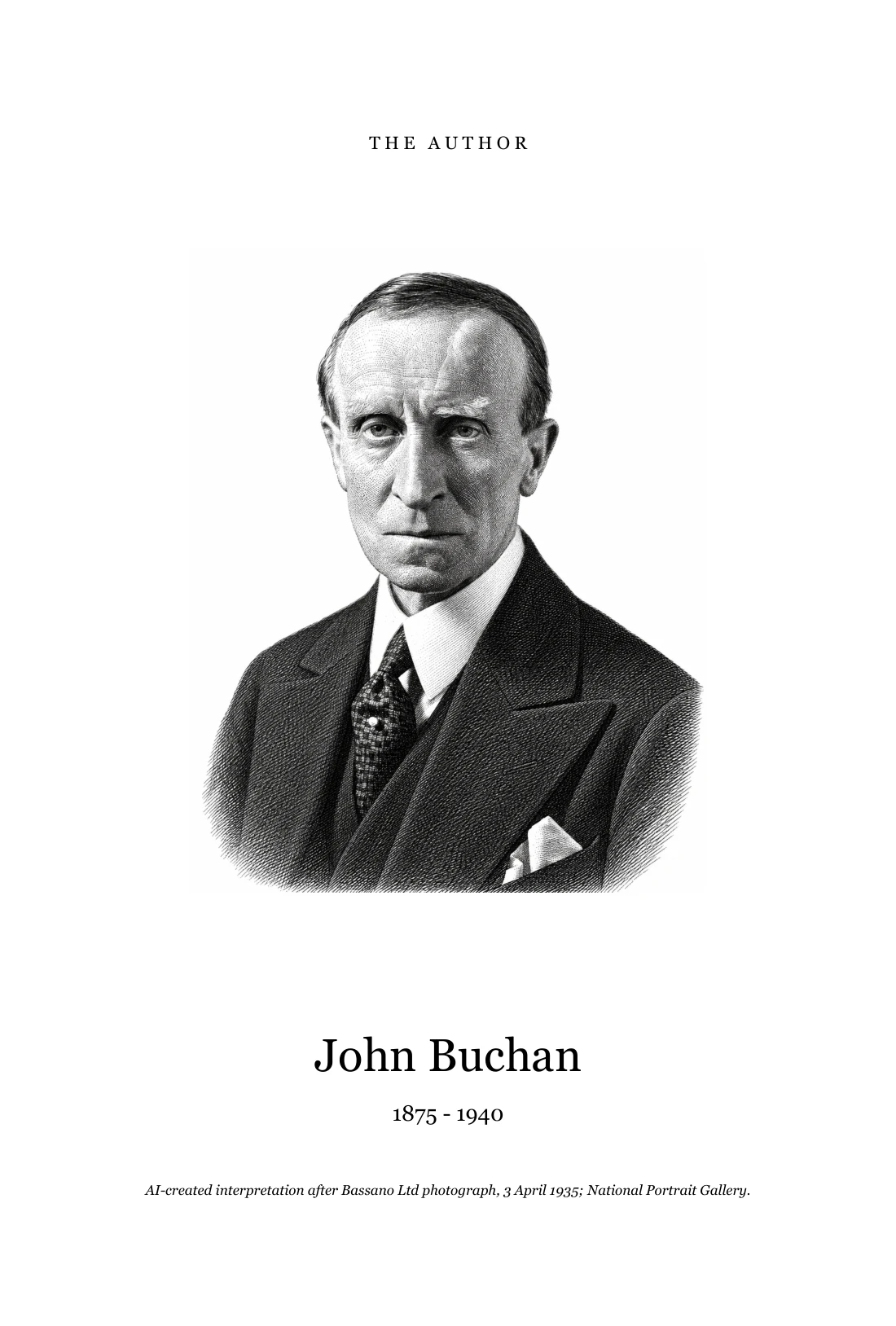
Thirty-nine: that, the story goes, was the number of wooden steps running down to the beach from St Cuby, a nursing home on the cliffs at Broadstairs in Kent. John Buchan was convalescing there from a duodenal ulcer, and his young daughter amused herself by counting them. According to Buchan’s son William, that is where the title came from. Buchan, bored and unwell, had run out of thrillers to read, so he wrote one.
The result was The Thirty-Nine Steps, published in 1915 and filmed by Alfred Hitchcock twenty years later. Put simply, book and film share a hero, a premise and a stretch of Scotland, and very little else. The longer answer is more interesting, because Hitchcock’s changes are a lesson in what cinema needs that a novel does not.
the romance where the incidents defy the probabilities, and march just inside the borders of the possible.
John Buchan, dedication to *The Thirty-Nine Steps*, September 1915
What happens in the book
Richard Hannay is a mining engineer back from Rhodesia, rich enough to be idle and bored enough to leave the country. Then his neighbour, an American journalist called Franklin Scudder, knocks on his door in Portland Place with a story of an assassination plot meant to start a European war. Days later Scudder is dead in Hannay’s flat with a knife through his heart, and Hannay, the obvious suspect, escapes disguised as the milkman with Scudder’s coded notebook in his pocket.
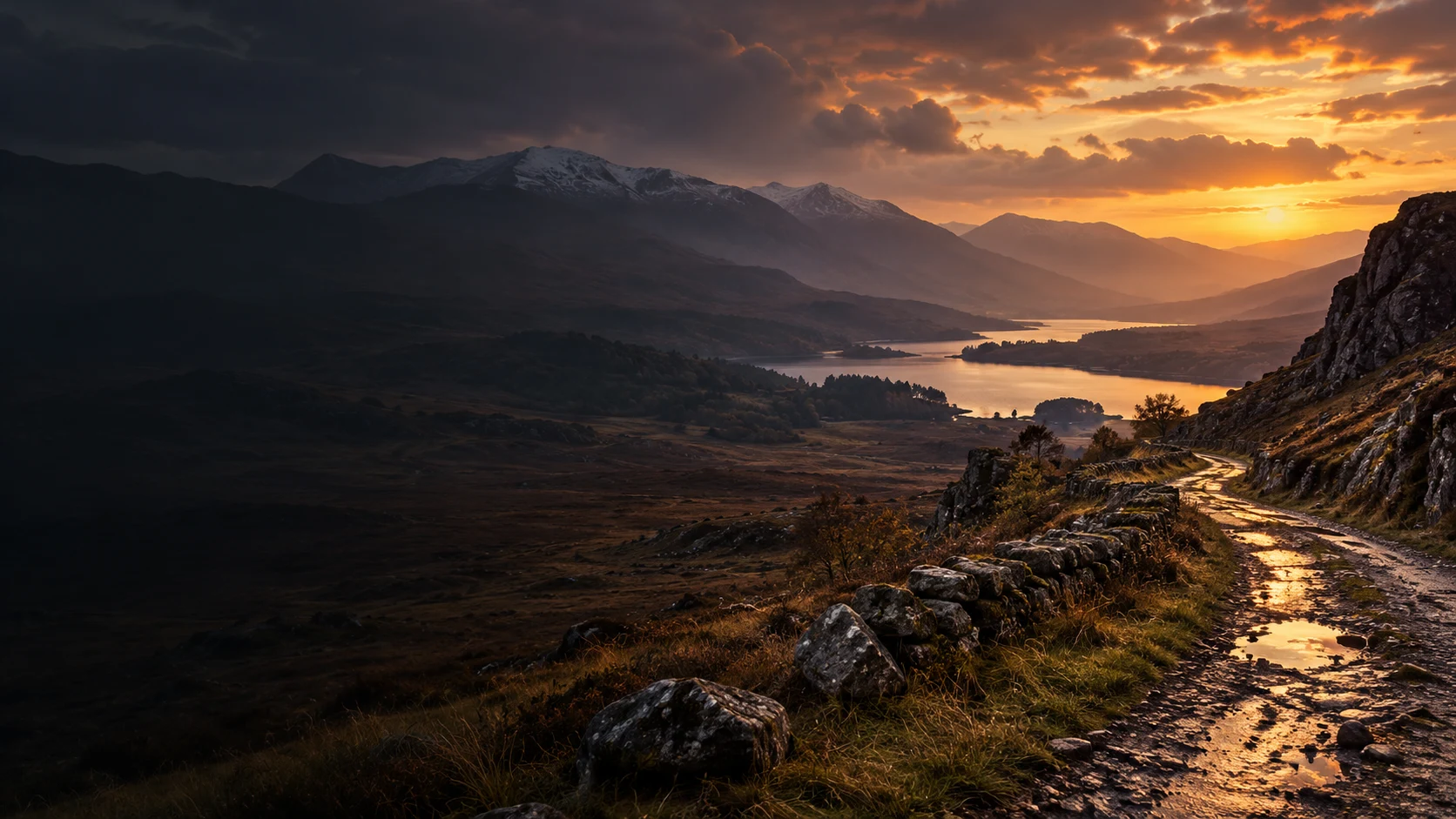
He takes a train to Galloway and spends the middle of the book on the run across the moors, chased by the police and by a gang of German agents who hunt him with a monoplane. He poses as a roadman, stumbles into a radical candidate’s election meeting and makes a speech, and walks straight into the house of the very man he is fleeing. The last chapters bring him back south for the endgame, set on the eve of the First World War.
There is almost no woman in it. The book is a man-on-the-run story told in Hannay’s brisk first person, a little over a hundred pages long in our edition, and it moves at the speed of a man who has not slept.

What Hitchcock changed
Hitchcock’s The 39 Steps (1935), written by Charles Bennett with dialogue by Ian Hay, starred Robert Donat as Hannay and Madeleine Carroll as Pamela. Its plot departs from Buchan almost at once.
- It opens in a London music hall, with a performer called Mr Memory answering questions from the crowd. Neither the music hall nor Mr Memory is in the book; the character was based on a real stage mnemonist known as Datas.
- Scudder becomes Annabella Smith, a female spy who fires shots in the theatre as a diversion and goes home with Hannay. Because she tells him she is heading for a particular house in Scotland, the film also avoids the book’s biggest coincidence, in which Hannay, with the whole country to hide in, happens on the one house he should avoid.
- The train north crosses the Forth Bridge, a setting the book never uses.
- Peggy Ashcroft appears as the young wife of a dour crofter, a short, sad scene with no source in Buchan.
- Pamela, the heroine, is entirely invented, and she spends a long stretch of the film handcuffed to Hannay.
- The secret everyone is chasing changes. Buchan’s is about naval plans; Hitchcock’s is a design for a silent aircraft engine, a classic example of what he called the MacGuffin, the thing that matters to the characters and hardly at all to us.
What survives is the shape: an innocent man accused of murder, pursued by police and spies at once, who can only clear his name by solving the conspiracy himself. Both versions also have Hannay improvise a political speech. In the book a young Liberal candidate, Sir Harry, ropes him in as a speaker; in the film he hides in a hall, is mistaken for the guest of honour and talks his way through, in one of the film’s best-loved scenes.
Book vs. film: which is better?
They are good at different things. Buchan’s novel is faster on the page than the film is on screen, and its landscape writing is superb: you feel the heather, the wind and the open sky that leaves Hannay nowhere to hide. Hitchcock’s film is wittier and sexier, and it invents the pattern he would use for decades, the wrongly accused man and the reluctant woman thrown together on the run, all the way to North by Northwest.
The book has its period blind spots. Its villains are Germans in a story written as war broke out, and an early character voices antisemitic conspiracy theories that read uncomfortably now. The film, set in the 1930s, leaves the war and the ugliness behind.
We won’t spoil what the thirty-nine steps turn out to be. Each version gives a different answer, and neither is the obvious one.
Later versions of The Thirty-Nine Steps
Ralph Thomas’s 1959 remake, the first in colour, starred Kenneth More and borrowed heavily from Hitchcock, music hall and Forth Bridge included. Don Sharp’s 1978 film with Robert Powell went back to the 1914 setting and much of Buchan’s plot, then added a climax at the clock face of Big Ben that is entirely its own. A 2008 BBC film with Rupert Penry-Jones added a romance of its own.
The most surprising version is a comedy. A stage adaptation for four actors, first devised in North Yorkshire in the 1990s and rewritten by Patrick Barlow in 2005, played the whole film for laughs. It ran for nine years in the West End, won the Olivier Award for Best Comedy and took two Tony Awards on Broadway.
The Thirty-Nine Steps
1915. Hannay’s first adventure: a dead man in the flat, a coded notebook and a chase across Galloway, told at a gallop.
Greenmantle
1916. The sequel, and a bigger book: Hannay crosses wartime Europe in disguise to stop a plot in the Ottoman Empire.


Hannay returned as the hero of four more novels; see the Richard Hannay books in order, or read about Buchan’s other life in John Buchan, Governor General. For Hitchcock’s other literary sources, see Hitchcock films based on books.
Give The Thirty-Nine Steps by John Buchan a free evening. By the time Hannay is crouching in the heather with an aeroplane circling overhead, you will see why every chase thriller since has borrowed his running shoes.
Questions readers ask
Is The 39 Steps film faithful to the book?
Not very. Hitchcock’s 1935 film keeps Richard Hannay, the murder in his flat and the chase across Scotland, but adds the music hall, Mr Memory, the Forth Bridge and the heroine Pamela, and changes what the spies are after.
Is there a woman in The Thirty-Nine Steps book?
Barely. Buchan’s novel has no romantic heroine. Pamela, played by Madeleine Carroll, was invented for the 1935 film.
Where did the title The Thirty-Nine Steps come from?
According to Buchan’s son William, from a wooden staircase down to the beach at St Cuby, the Broadstairs nursing home where Buchan was convalescing, whose steps his daughter counted.
Which film version of The Thirty-Nine Steps is closest to the book?
The 1978 version with Robert Powell, which keeps the 1914 setting and more of Buchan’s plot, though it adds a climax at Big Ben.
 Mr. Standfast306 pages · $17.99
 The Power-House86 pages · $10.99
 Midwinter214 pages · $14.99
 The Courts of the Morning338 pages · $17.99