
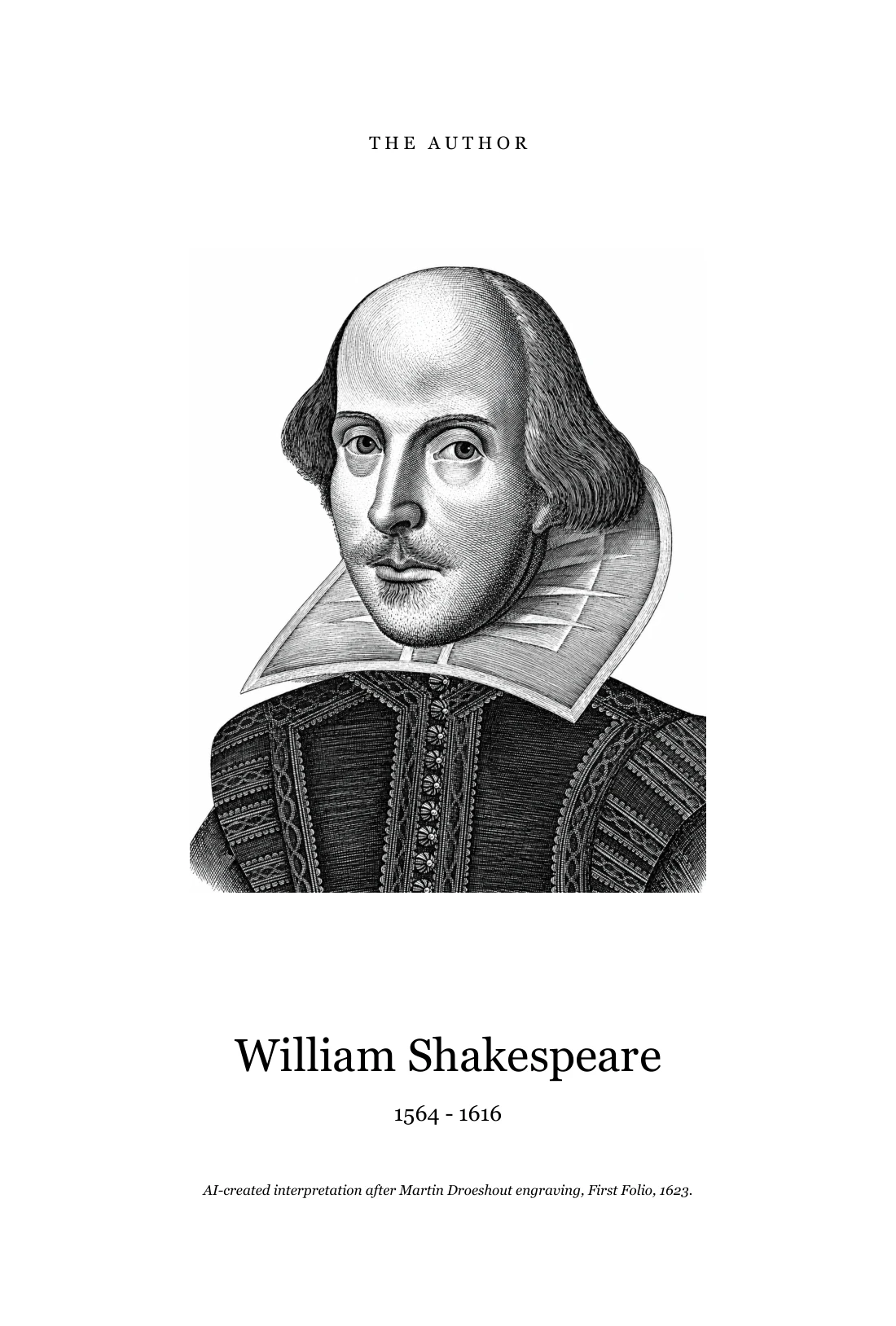
Some movies based on Shakespeare announce it in the title. Many more do not. The Lion King borrows the bones of Hamlet, Akira Kurosawa’s Ran reworks King Lear, West Side Story is Romeo and Juliet in 1950s New York, and the science-fiction classic Forbidden Planet is The Tempest in space. Once you have read the plays, you start to see William Shakespeare everywhere.
Here are the best of the disguised adaptations, play by play, with a note on what each film keeps and what it leaves behind.
Hamlet: The Lion King and others
The Lion King (1994) follows Hamlet closely in outline: a king is murdered by his envious brother, the young heir sees his father’s spirit, and he must come home to set things right. Its makers have acknowledged the debt. What the film leaves out is much of what makes Hamlet itself: the doubt, the delay, the madness real or pretended, and the tragic ending.
Kurosawa took a looser route in The Bad Sleep Well (1960), a thriller about corporate corruption in postwar Japan, in which a young man sets out to expose the men behind his father’s death. And Rosencrantz and Guildenstern Are Dead (1990), which Tom Stoppard directed from his own play, retells Hamlet from the point of view of two minor courtiers who never quite understand what is going on.

King Lear and Macbeth: Kurosawa’s samurai Shakespeare
Akira Kurosawa’s Ran (1985) moves King Lear to sixteenth-century Japan, where an ageing warlord divides his domain among three sons rather than three daughters. Kurosawa drew on a Japanese legend about a warlord and his sons as well as on Shakespeare, and his film is, if anything, more savage than the play. Nearly thirty years earlier he had turned Macbeth into Throne of Blood (1957), set in feudal Japan and famous for its ending in a storm of arrows.
A Thousand Acres (1997), from Jane Smiley’s Pulitzer Prize-winning novel, sets King Lear on an Iowa farm and tells it from the point of view of the eldest daughter. Both films ask the question the play leaves open: what was it like to be one of the children? King Lear itself is the bleakest of Shakespeare’s tragedies, and the one many readers think his greatest.
Romeo and Juliet: West Side Story and Warm Bodies
West Side Story began as a Broadway musical in 1957, with music by Leonard Bernstein and lyrics by Stephen Sondheim, and became the 1961 film directed by Robert Wise and Jerome Robbins. Steven Spielberg filmed it again in 2021. The Montagues and Capulets become rival New York gangs, the Jets and the Sharks.
The play has since been rewritten as everything from a garden-gnome cartoon, Gnomeo & Juliet (2011), to a zombie romance, Warm Bodies (2013), whose lovers are called R and Julie. Few stories have been dressed up in as many costumes.

The comedies: Kiss Me Kate, 10 Things I Hate About You and She’s the Man
The Taming of the Shrew has been adapted far more cheerfully than its uncomfortable plot might suggest. Kiss Me Kate (1953) films Cole Porter’s backstage musical, in which two feuding actors staging the play mirror Katherina and Petruchio. 10 Things I Hate About You (1999) moved the story to a Seattle high school and swapped Katherina’s final speech for a poem of Kat’s own. Audiences still argue about how the play itself ends.
Twelfth Night became She’s the Man (2006), with Amanda Bynes as Viola, disguised as her twin brother at a school called Illyria. The film keeps the twins, the disguise and the love tangle, and moves it all onto the football pitch. For more high-school versions, see Did you know Clueless is based on Emma?
The Tempest: Forbidden Planet
Forbidden Planet (1956), directed by Fred M. Wilcox, carries The Tempest to a distant planet. Prospero becomes Dr Morbius, a scientist living in exile with his daughter; Ariel becomes Robby the Robot; and Caliban becomes an invisible monster conjured out of Morbius’s own id. It is a landmark of 1950s science fiction, and it is Shakespeare all the way through.
The Shakespeare plays behind the films
Hamlet
The Lion King (1994), The Bad Sleep Well (1960). The longest and most argued-over of the plays, and worth every scene.
King Lear
Ran (1985), A Thousand Acres (1997). An old king, three children and a kingdom torn apart.
Macbeth
Throne of Blood (1957). A soldier, a prophecy and an ambitious wife: the shortest of the great tragedies.
Romeo and Juliet
West Side Story (1961 and 2021), Warm Bodies (2013). The love story every generation retells.
The Taming of the Shrew
Kiss Me Kate (1953), 10 Things I Hate About You (1999). A comedy that still starts arguments.
Twelfth Night
She’s the Man (2006). Shipwrecked twins, a girl in disguise and a romantic tangle that only the last scene can unpick.
The Tempest
Forbidden Planet (1956). A magician, his daughter and an island of spirits, often thought to be the last play Shakespeare wrote alone.


If you know the film, start with its play. Plays are shorter than novels, most can be read in an evening, and knowing the story already frees you to enjoy the language. For a gentler way in, see which Shakespeare play to read first, or try E. Nesbit’s prose retellings in Beautiful Stories from Shakespeare.
Our suggestion: read Hamlet, then watch The Lion King again. You will never hear a friendly uncle in quite the same way.
Questions readers ask
What movies are based on Shakespeare?
Movies based on Shakespeare include The Lion King (Hamlet), Ran (King Lear), Throne of Blood (Macbeth), West Side Story (Romeo and Juliet), Forbidden Planet (The Tempest), 10 Things I Hate About You (The Taming of the Shrew) and She’s the Man (Twelfth Night).
Is The Lion King based on Hamlet?
Largely, yes. Its story of a king murdered by his brother, a father’s spirit and an exiled heir who must return closely follows Hamlet, though the film has a happy ending and draws on other sources too.
Which Shakespeare play is West Side Story based on?
West Side Story is based on Romeo and Juliet, with the feuding families replaced by rival street gangs in 1950s New York.
 Othello158 pages · $12.99
 A Midsummer Night’s Dream92 pages · $10.99
 Much Ado about Nothing114 pages · $11.99
 As You Like It114 pages · $11.99