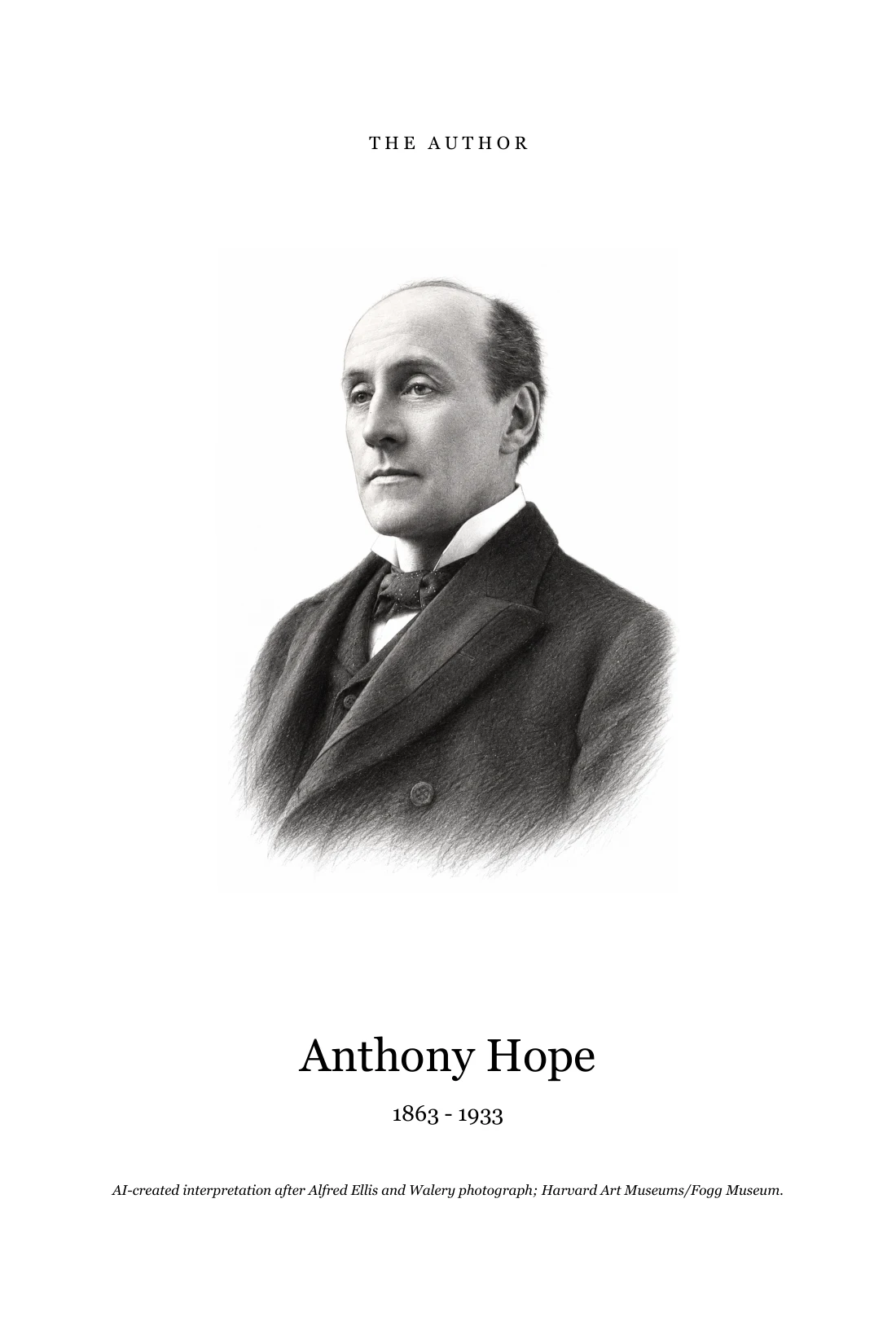
Ruritania is an imaginary kingdom somewhere in central Europe, invented by Anthony Hope as the setting of The Prisoner of Zenda. The book was such a success that the name escaped into the language. Today Ruritania means any small, romantic, made-up monarchy, and “Ruritanian” describes anything that feels like one: gilded, operatic, full of plots and duels and gorgeous uniforms.
That is the Ruritania meaning in a sentence. Few novelists manage to add a single word to the dictionary. Hope added a whole country, and a genre to go with it.
What does Ruritania mean?
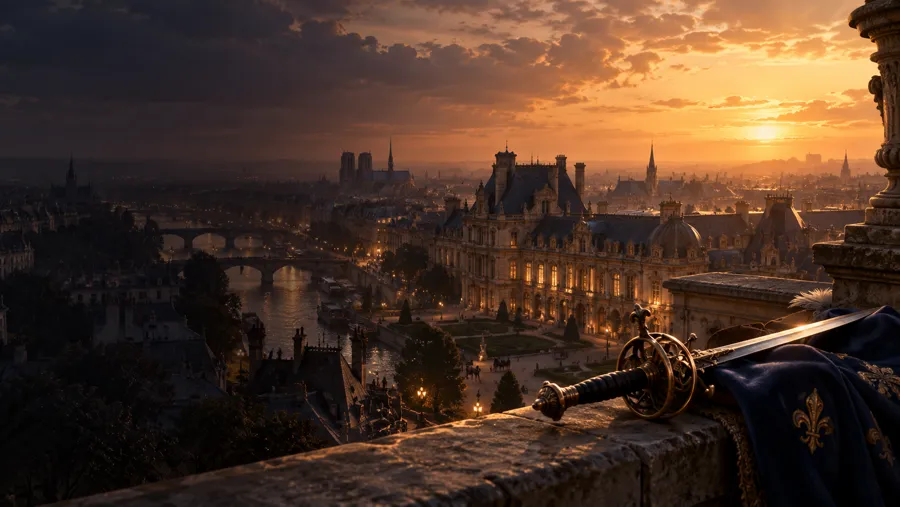
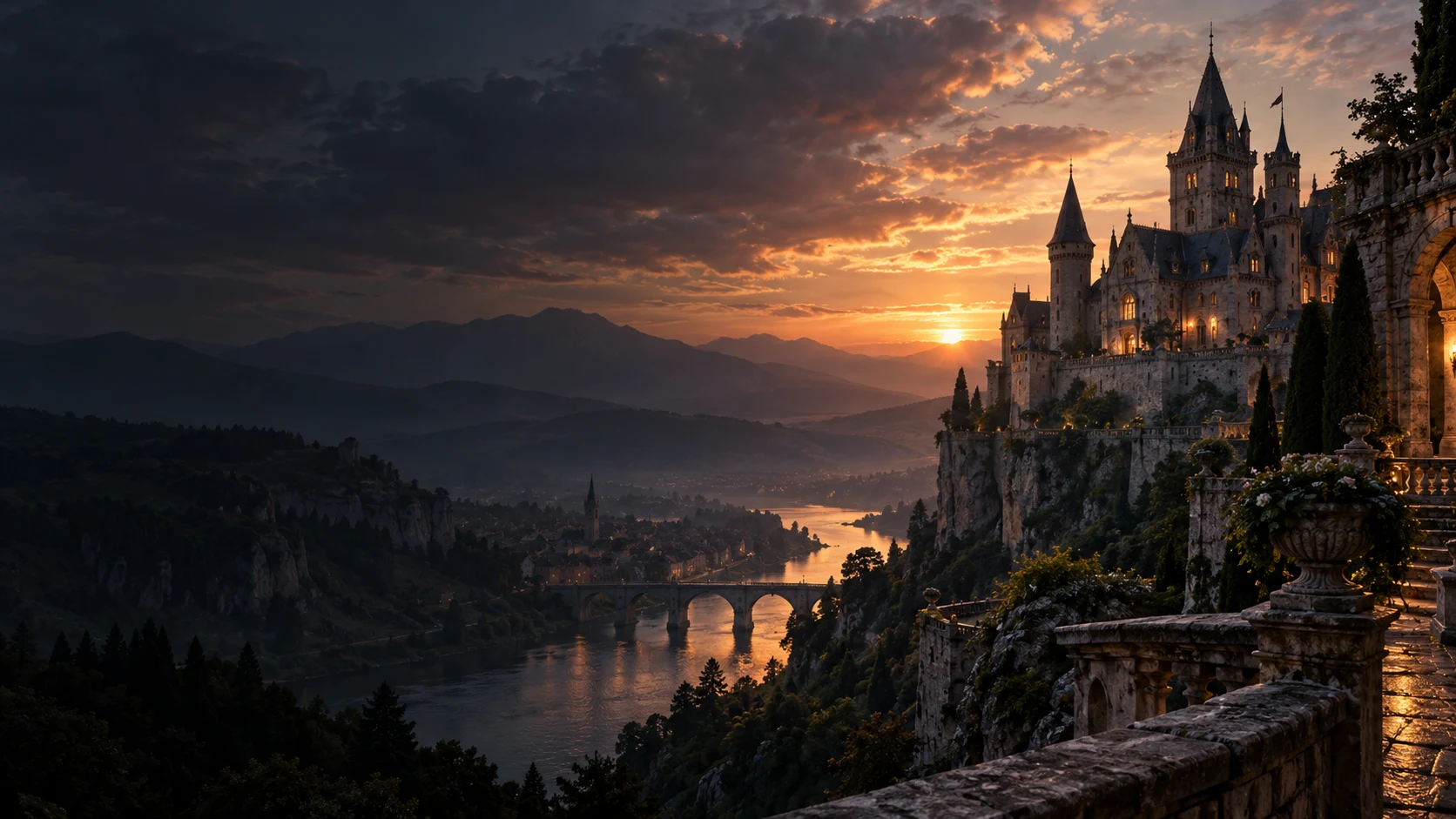
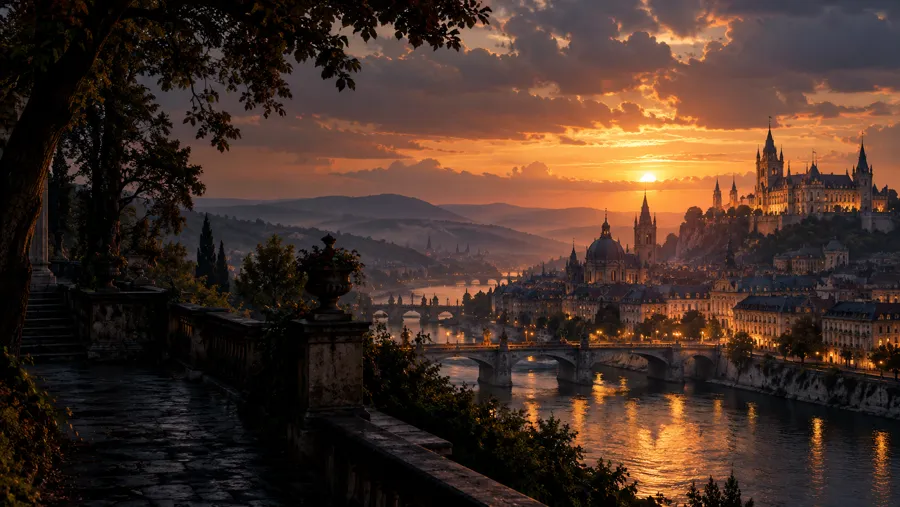
In the novel, Ruritania is a German-speaking kingdom with a capital called Strelsau, a royal family called the Elphbergs, famous for their red hair, and a castle at Zenda guarded by a moat and a drawbridge. It has forests, hunting lodges, a cathedral for coronations and a nobility much given to conspiracy. Rudolf reaches it by train through Germany, but Hope never pins it to a real map.
That vagueness is part of the appeal. Ruritania is close enough to the real Europe of the 1890s, with its trains, telegrams and minor monarchies, to feel plausible, and far enough from it to let anything happen. It is a stage built for adventure.
The story of The Prisoner of Zenda
Rudolf Rassendyll is a rich, idle young Englishman whose family has a secret: generations back, a scandal linked them to the Ruritanian royal house, and every so often a Rassendyll is born with the Elphberg red hair and the long Elphberg nose. Rudolf is one of them. Bored in London, he decides to travel to Ruritania to watch the coronation of the new king.
On the eve of the coronation he meets the king, and discovers that they look almost exactly alike. When the king is drugged by agents of his ambitious half-brother, Black Michael, and cannot appear at his own coronation, Rudolf is persuaded to take his place for a day. A day becomes much longer, and Rudolf finds himself impersonating a king, falling in love with the king’s intended bride, Princess Flavia, and fencing with the most charming villain in the book, Rupert of Hentzau.
How Ruritania became a genre
The Prisoner of Zenda started a craze for what became known as Ruritanian romance: adventure stories set in invented European kingdoms, full of royal impostors, secret marriages and palace coups. Imitations poured out in the years that followed; the American writer George Barr McCutcheon’s Graustark is among the best known. Hope himself returned to his kingdom in a book of stories and in a sequel, Rupert of Hentzau.
The idea has never really gone away. Invented kingdoms of the same kind turn up in comic books, musicals and Hollywood comedies, and the story of a commoner who must impersonate a royal double has been retold many times. The Prisoner of Zenda itself has been filmed repeatedly, most famously in 1937 with Ronald Colman.
The Prisoner of Zenda
1894. An Englishman who happens to look exactly like the king of Ruritania is drawn into a plot to save the throne. The book that invented Ruritania.
Rupert of Hentzau
1898. The sequel, darker and more romantic, in which the dashing Rupert returns to make trouble in Strelsau. Read it after Zenda.
The Scarlet Pimpernel
1905. Baroness Orczy’s English hero of disguise and daring rescues during the French Revolution. The next great swashbuckler after Zenda.


Is The Prisoner of Zenda still worth reading?
Yes, and it is short enough to read in a weekend. Rudolf narrates with a light, ironic touch, so the book is as funny as it is exciting, and the sword fights, night raids on the castle and moonlit escapes are written with real dash. Rupert of Hentzau, who is wicked, witty and entirely without shame, has been stealing scenes for more than a century.
The ending is quieter and braver than many readers expect, and it is best not to know it in advance. Read Rupert of Hentzau afterwards; we explain why the sequel is worth it in Rupert of Hentzau: the sequel to The Prisoner of Zenda. For more sword fights, see Swashbuckling classics for when you need a sword fight, and for another hero who arrived on stage first, Did you know The Scarlet Pimpernel was on stage before it was in print?
Begin in London, with a sister-in-law scolding Rudolf for doing nothing with his life, and then follow him to a kingdom that has never existed anywhere but in readers’ heads. Open The Prisoner of Zenda.
Questions readers ask
What does Ruritania mean?
Ruritania is the imaginary central European kingdom in Anthony Hope’s novel The Prisoner of Zenda (1894). The word is now used for any small, romantic, made-up monarchy, and Ruritanian describes anything with that air of castles, uniforms and intrigue.
Is Ruritania a real country?
No. Ruritania is fictional. Hope placed it somewhere in central Europe, a train journey beyond Germany, but never on a real map.
What is a Ruritanian romance?
A Ruritanian romance is an adventure story set in an invented European kingdom, usually involving royal impostors, court plots and duels. The genre takes its name from The Prisoner of Zenda.