


In 2013 the Crime Writers’ Association asked its members, some six hundred working crime novelists, to name the best crime novel ever written. They chose The Murder of Roger Ackroyd, calling it the finest example of the genre ever penned. It was an odd fate for a book that has spent most of its life being accused of breaking the rules.
The Murder of Roger Ackroyd first appeared as a newspaper serial, Who Killed Ackroyd?, in the London Evening News in 1925, and as a book from William Collins in June 1926. It was Christie’s third novel starring Hercule Poirot and her first with William Collins, the firm that went on publishing her for half a century. And it ends with a solution that readers have been arguing about ever since.
Why was The Murder of Roger Ackroyd controversial?
Golden Age detective fiction was played as a game between writer and reader. The writer hid the truth in plain sight; the reader, given every clue, tried to get there first. Withholding essential information was considered frightfully bad form. Christie’s solution struck some critics as a breach of that contract, and the charge that she had cheated has followed the book from the 1920s to the present day.
Without saying anything about the answer, the complaint was that Christie had used a device the unwritten rules seemed to forbid. Her defenders reply that she broke no rule at all. Every clue is on the page, and the trick lies entirely in what readers assume. Dorothy L. Sayers is said to have put it most briskly: it is the reader’s job to suspect everybody.

Was it really a scandal in 1926?
Less than the legend suggests. The official Christie estate has called the idea of a great public backlash a popular myth, and the contemporary reviews bear that out. The New York Times Book Review said the novel could not be too highly praised. The Times Literary Supplement predicted that very few readers would solve it, which was meant as a compliment. Most of the grumbling came from people annoyed that they had not seen it coming.
The real argument came later, as the genre wrote itself rulebooks. By the end of the decade Ronald Knox had drawn up his “Decalogue” of ten commandments for detective writers and S. S. Van Dine his twenty rules, and Roger Ackroyd became the standard test case in every debate about fair play. In 1945 the critic Edmund Wilson attacked the whole genre in an essay with the memorable title “Who Cares Who Killed Roger Ackroyd?”. Plenty of people did, and still do.
Where did the idea come from?
Christie credited the basic notion to her brother-in-law, James Watts, who had wondered aloud about a particular kind of detective story. In March 1924 a young naval officer, Lord Louis Mountbatten, wrote to her out of the blue with a very similar suggestion. Christie later acknowledged both. What she did with the idea, the misdirection and the patient placing of clues, was entirely her own.

What else makes it worth reading?
The trick gets the attention, but the book around it is one of Christie’s most enjoyable. The setting is King’s Abbot, a village where gossip travels faster than the post, and the gossip-in-chief is Caroline Sheppard, a woman who knows everybody’s business before they do. Christie later suggested that Miss Marple grew partly out of the fun she had writing Caroline.
Poirot has retired to the village, supposedly for good, and is trying to grow vegetable marrows. It is not going well. He makes his entrance by hurling the biggest one over the garden wall, and his apology is pure Poirot:
For some months now I cultivate the marrows. This morning suddenly I enrage myself with these marrows.
Agatha Christie, The Murder of Roger Ackroyd (1926)
Six months after the book came out, Christie herself became front-page news when she vanished from her home for eleven days in December 1926. Between the novel and the disappearance, 1926 made her famous far beyond the detective shelves.
The Murder of Roger Ackroyd
1926. A rich man dead in his study, a village of secrets and a retired Belgian who cannot keep away. The most debated solution in detective fiction.
The Mysterious Affair at Styles
1920. Christie’s first novel and Poirot’s first case, a poisoning at an Essex country house. It shows her already laying false trails with relish.
The Murder on the Links
1923. Poirot’s second novel-length case takes him to the French coast and a rival detective he cannot abide.


Roger Ackroyd on stage and screen
It was the first Christie story to be adapted for the stage. Michael Morton’s Alibi opened in London in May 1928 with Charles Laughton as Poirot, in a version Christie disliked for turning Caroline into a young girl, and a 1931 film of the same name is now lost. David Suchet’s television version for ITV followed in 2000. None of them is a substitute for meeting the book unprepared.
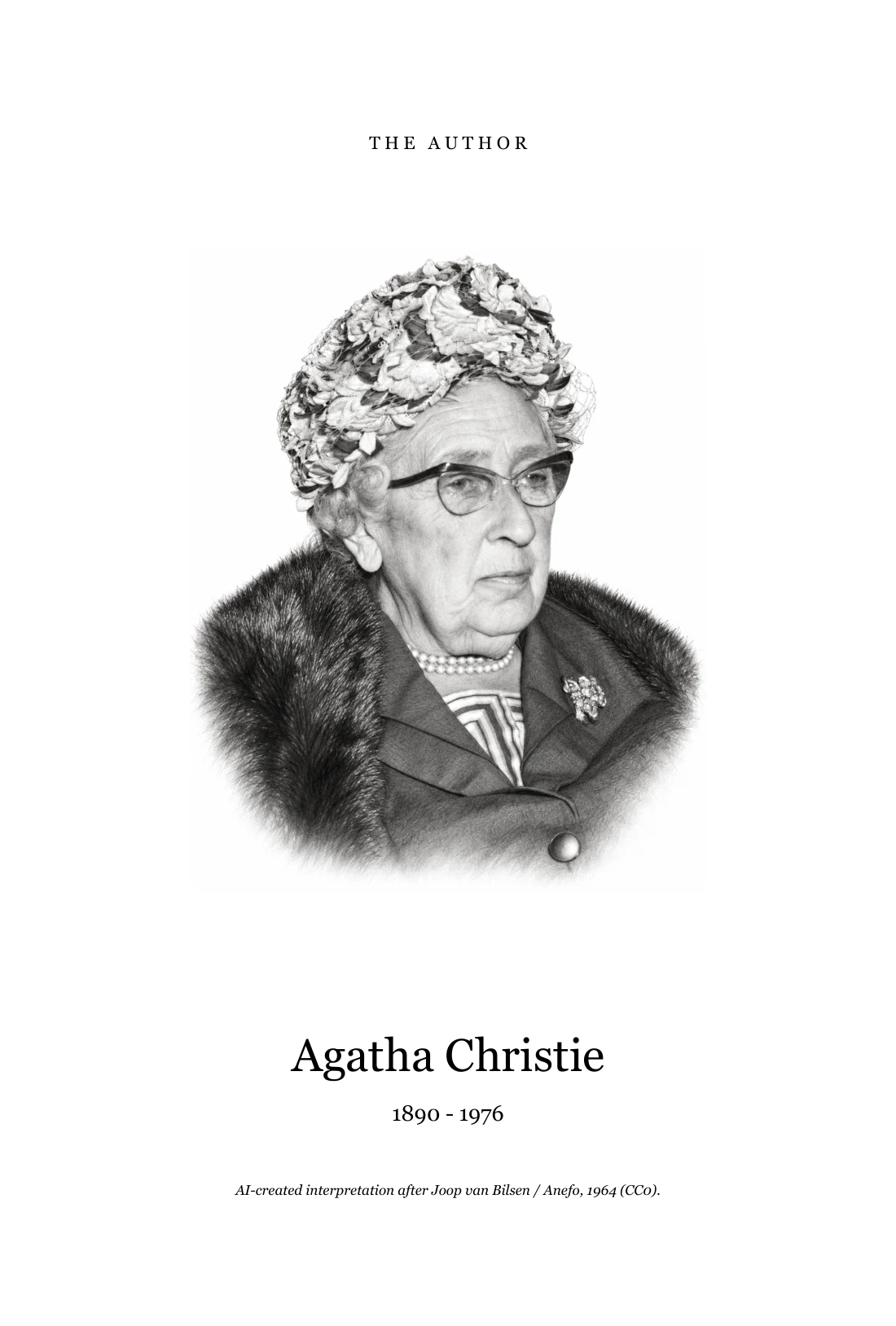
To read Poirot in order, see Hercule Poirot’s first cases, in the order they were published. For the genre’s house rules and the other writers who played by them, try Golden Age detective novels to start with, and for Christie’s other identity, Did you know Agatha Christie also wrote romance novels under another name? More on the author herself is on our Agatha Christie page.
Then stop reading about it. Avoid the film summaries, skip the online discussions and open The Murder of Roger Ackroyd at its first page. Decide for yourself, at the end, whether Christie played fair.
Questions readers ask
Why is The Murder of Roger Ackroyd so famous?
Its solution is one of the most surprising in detective fiction, and critics have argued for nearly a century about whether Christie broke the rules of fair play to achieve it. In 2013 the Crime Writers’ Association voted it the best crime novel ever.
Did Agatha Christie cheat in The Murder of Roger Ackroyd?
Some critics have said so, but her defenders argue that every clue is fairly given and the deception lies in what readers assume. Most contemporary reviews in 1926 were admiring.
Do you need to read other Poirot books before Roger Ackroyd?
No. It works perfectly on its own, though it is Poirot’s third novel, after The Mysterious Affair at Styles and The Murder on the Links.
 The Murder at the Vicarage216 pages · $14.99
 The Secret Adversary246 pages · $15.99
 The Man in the Brown Suit234 pages · $14.99
 The Secret of Chimneys248 pages · $15.99
