


The curse of the pharaohs was a newspaper story before it was a legend, and novelists had been telling versions of it for decades. A worker in the Valley of the Kings uncovered a step cut into the rock on 4 November 1922, the first sign of Tutankhamun’s tomb. When Lord Carnarvon, who had paid for the dig, died the following spring, the newspapers decided a curse had killed him. One of the people who helped the story along was a novelist, Marie Corelli, whose letter warning of “dire punishment” for anyone who broke into a sealed tomb was published shortly before his death.
Corelli was drawing on a tradition more than half a century old: Louisa May Alcott had published “Lost in a Pyramid; or, The Mummy’s Curse” in 1869. The classic mummy books below were all written before Tutankhamun, during the long Victorian and Edwardian craze for ancient Egypt, and between them they fixed most of what we now expect from a mummy story: the curse, the walking corpse, the doomed scholar and the museum after dark.
The mummy wakes: Conan Doyle’s two tales
The Captain of the Polestar, and Other Tales
1890. Includes “The Ring of Thoth”, in which a scholar who falls asleep among the Egyptian collections of the Louvre wakes to find an attendant at work on a mummy case. A strange, sad love story rather than a horror.
Round the Red Lamp
1894. Medical stories, including “Lot No. 249”: an Oxford athlete grows uneasy about the student on the floor below, the mummy in his rooms and the noises at night.


“Lot No. 249” first appeared in Harper’s Magazine in 1892. Re-animated mummies had turned up in English fiction before, but Doyle’s is often said to be the first that is truly dangerous, a mummy that does not stay in its case and stalks the lanes around an Oxford college. It is the ancestor of every bandaged figure lurching through a film studio’s fog. Doyle wrote a great deal besides Holmes, and we look at it in Did you know Arthur Conan Doyle didn’t think Sherlock Holmes was his best work?

The Egyptian queen: Stoker’s Jewel of Seven Stars
The Jewel of Seven Stars is Bram Stoker’s other great supernatural novel, and in some ways the stranger of the two. Its heroine, Margaret Trelawny, keeps vigil over her stricken father with a household of doctors, a police detective and a young barrister in love with her, as if this were a mystery novel. A 1912 edition replaced the original bleak ending with a different one, so you may meet either version depending on which text you read. More of Stoker’s range is in Bram Stoker wrote much more than Dracula.
Mummies and detectives
After the horror writers came the crime writers, who realised that a mummy case is the perfect place to hide almost anything. These two are genuine detective stories, so we will say no more about their solutions than the first chapters do.
The Eye of Osiris
1911. The Egyptologist John Bellingham vanishes from a relative’s house without anyone seeing him go, leaving a strangely worded will. Dr Thorndyke takes up the case, armed with science and patience. Published in America as The Vanishing Man.
The Green Mummy
1908. Professor Braddock, an Egyptologist eager to compare Egyptian and Peruvian embalming, sends to Malta for a royal Inca mummy wrapped in green bandages, on sale there for a thousand pounds. It is due at his house by the marshes near the village of Gartley, and then the trouble starts.


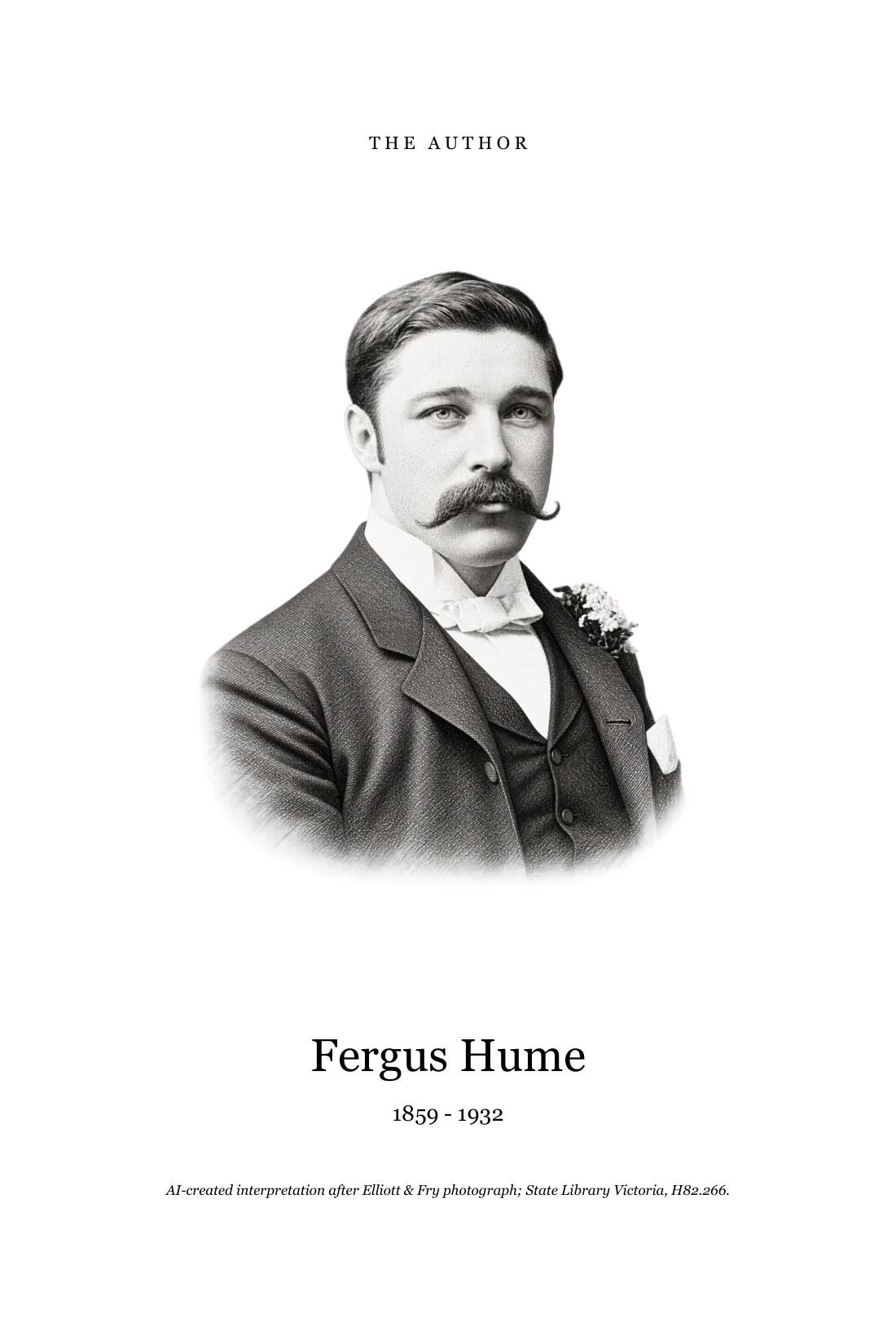
R. Austin Freeman, a doctor himself, wrote some of the most carefully reasoned detective fiction of his age, and The Eye of Osiris is a favourite with many Thorndyke readers; read our Dr Thorndyke books in order for the rest. Fergus Hume’s Green Mummy is lighter, a country-house puzzle with a mummy at its centre, from the author of the bestselling Mystery of a Hansom Cab. Its mummy, note, is not Egyptian at all, but the professor’s Egyptian obsession runs through the whole book.

Egypt for real
Which mummy book should you read first?
If you have only an hour, choose “Lot No. 249”: it is short, atmospheric and the origin of the menacing mummy. For a long night of Gothic dread, The Jewel of Seven Stars. And if you prefer a puzzle to a shudder, The Eye of Osiris is the most satisfying book here, a mystery in which every clue is fair and the British Museum plays a part.
Start with Doyle, though. Open Round the Red Lamp at “Lot No. 249”, follow Abercrombie Smith up the stairs of his Oxford college and listen, as he does, for the sound of something moving in the rooms below.
Questions readers ask
What is the first mummy horror story?
Mummies had appeared in fiction earlier in the nineteenth century, but Arthur Conan Doyle’s “Lot No. 249” (1892) is often called the first story to make a reanimated mummy a dangerous monster.
Did Bram Stoker write a mummy novel?
Yes. The Jewel of Seven Stars (1903) is about an Egyptologist’s attempt to revive the mummy of an ancient Egyptian queen named Tera. A revised edition in 1912 changed the ending.
What are the best classic mummy books?
Conan Doyle’s “Lot No. 249” and “The Ring of Thoth”, Bram Stoker’s The Jewel of Seven Stars, R. Austin Freeman’s The Eye of Osiris and Fergus Hume’s The Green Mummy are the best early examples.