Orson Welles’s rough cut of The Magnificent Ambersons ran 131 minutes. The film RKO released in July 1942 ran 88. Between the two, the studio removed more than forty minutes, reshot the ending without him, and later destroyed the negatives of the cut footage to free vault space. A print of the longer version was sent to Welles in Brazil and has never been found.
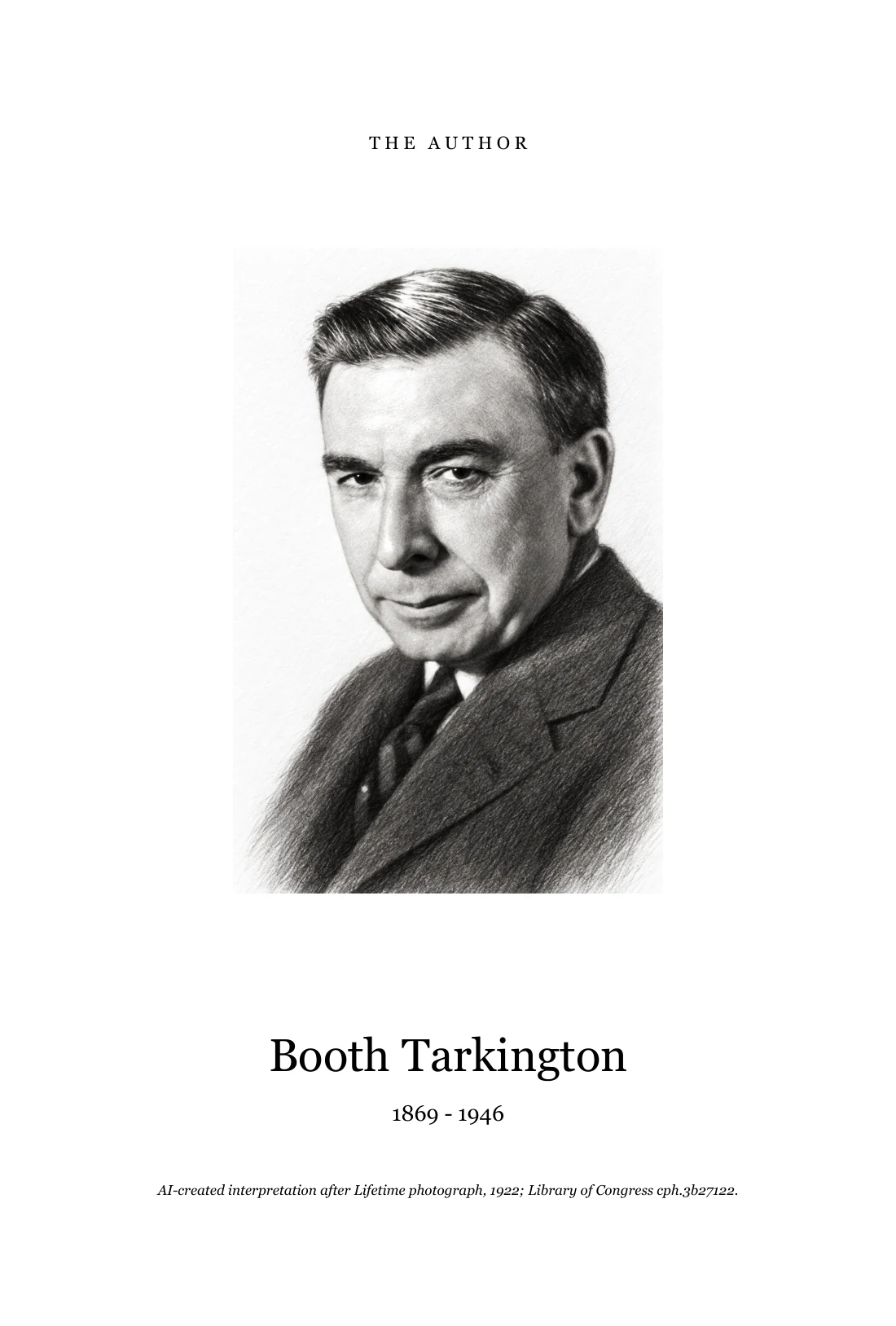
So if you want to know what The Magnificent Ambersons was meant to be, the most complete version available is the one that came first: Booth Tarkington’s 1918 novel, which won the 1919 Pulitzer Prize. It is a book about a family that thinks it will always be important, written by a man who grew up watching families like it fade.
What is The Magnificent Ambersons book about?
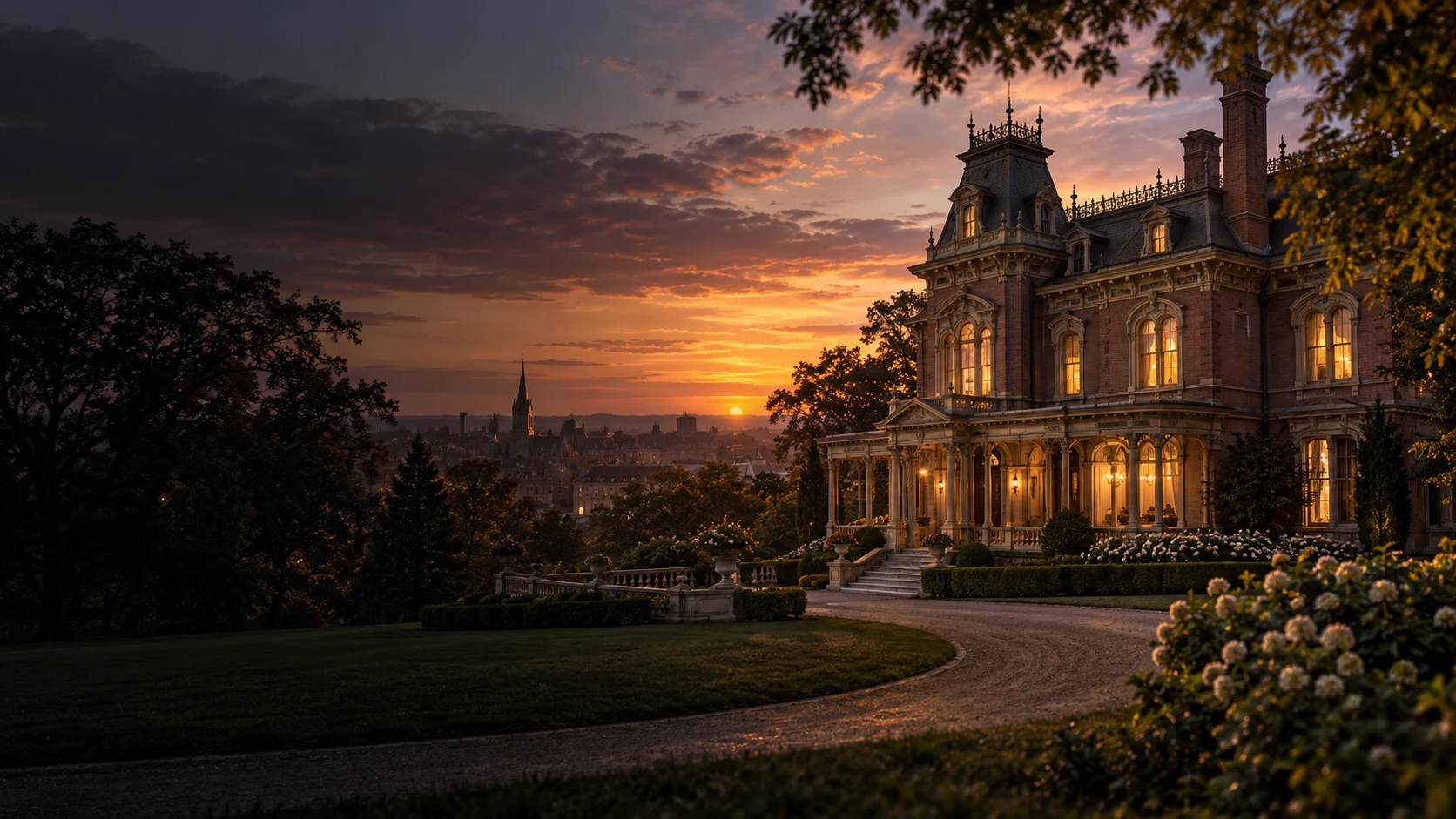
The Ambersons are the first family of an unnamed Midland town, modelled on Tarkington’s Indianapolis. Major Amberson made his fortune in 1873, built a mansion and filled it with things. His grandson George Amberson Minafer grows up so spoiled and so rude that half the town longs to see him humbled, and the novel follows him from boyhood tantrums to adulthood as the town turns into a smoky industrial city around him.
Two other threads run through it. George’s mother, Isabel, is loved by Eugene Morgan, the suitor she turned down years before, who returns a widower with a daughter, Lucy, and a new invention: the horseless carriage. George despises the motor car, despises Eugene, and falls for Lucy anyway. The family decline, the romance and the automobile all collide.
Georgie Minafer had got his come-upance, but the people who had so longed for it were not there to see it, and they never knew it.
Booth Tarkington, *The Magnificent Ambersons*, chapter XXXIII
That sentence is the novel’s heart. Tarkington spends dozens of pages on the townspeople waiting for George’s fall, and when it finally arrives there is no one left who remembers to enjoy it. The joke turns into an elegy, and Welles kept the idea for his own narration.
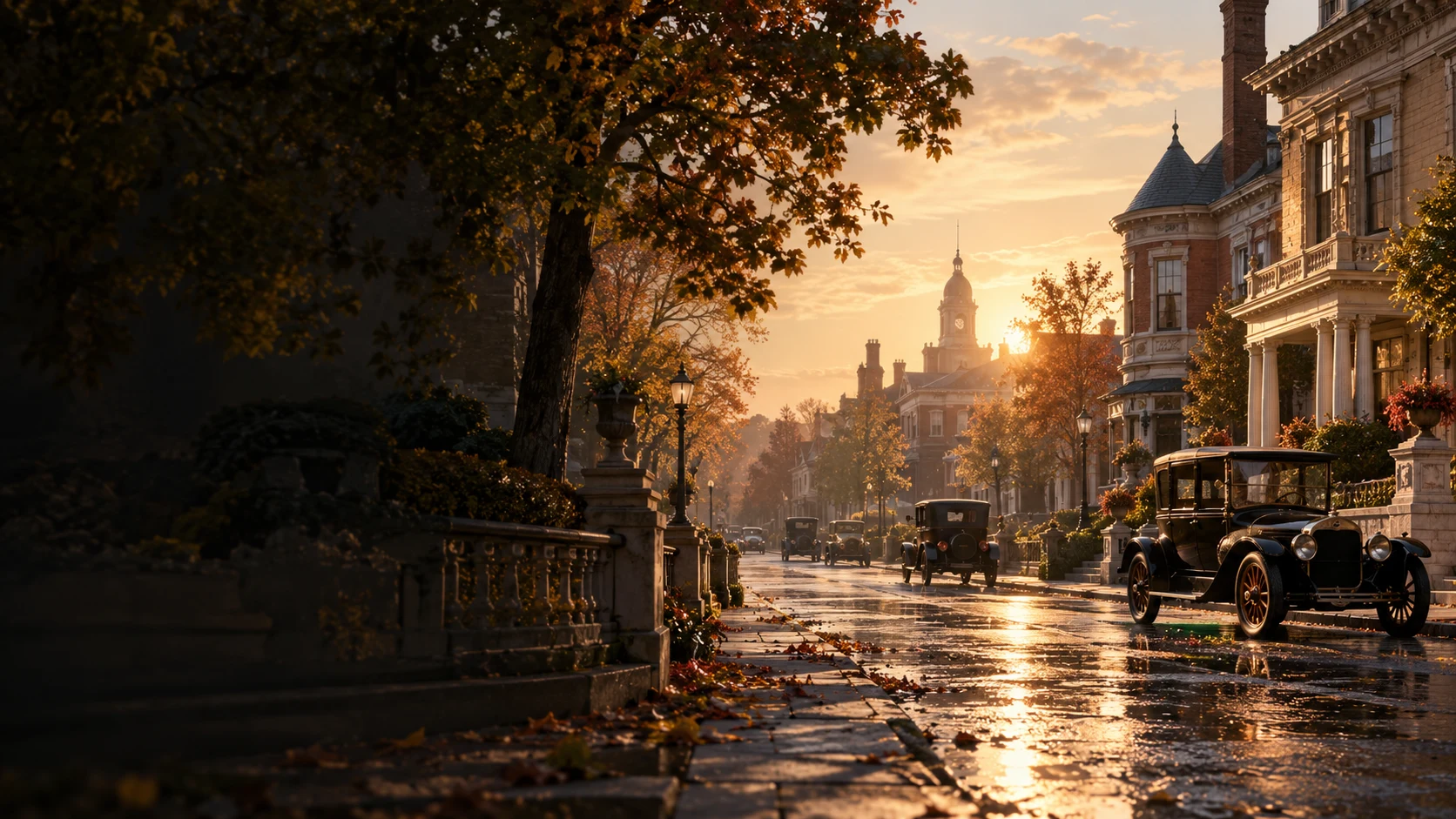
How Welles came to the novel
Welles first adapted the book for radio, as an hour-long episode of The Campbell Playhouse broadcast on 29 October 1939, playing George himself and narrating. When he followed Citizen Kane with a second feature for RKO, he chose the same story, cast Tim Holt as George and Joseph Cotten as Eugene, and gave himself only the narrator’s voice. Dolores Costello played Isabel, Anne Baxter Lucy, and Agnes Moorehead the poor-relation aunt, Fanny.
Filming ran from October 1941 to January 1942. The Amberson mansion was built as a full set with walls that could be raised or rolled away so the camera could glide from room to room, and Stanley Cortez shot it in deep, dim black and white.
- 1918
Tarkington publishes The Magnificent Ambersons, the second novel of his Growth trilogy
- 1919
It wins the Pulitzer Prize; Tarkington wins again in 1922 for Alice Adams
- 1925
A silent version, Pampered Youth, is released; the full film is lost, though an abridged print survives
- Oct 1939
Welles adapts the novel for The Campbell Playhouse on radio
- Mar 1942
A 131-minute cut is previewed in Pomona, California, to a poor response
- Spring 1942
With Welles filming in Brazil, RKO cuts the film further and shoots a new ending
- Jul 1942
The 88-minute version is released
- 1991
The film is added to the US National Film Registry
What RKO cut, and what the book keeps
Welles had given up his right to the final cut, and when audiences in Pomona reacted badly, the studio took over. He was in Brazil making It’s All True, a wartime goodwill project, and could only protest from thousands of miles away. The editor Robert Wise and others removed more than forty minutes and shot a softer final scene. Bernard Herrmann was so angered by the cuts to his score that he had his name removed from the credits.
The irony is that the replacement ending, a hospital reconciliation, follows the novel. Tarkington’s book ends on a note of forgiveness, in its own melancholy way. What Welles had filmed instead was bleaker, ending in a boarding house, and he later said that without his version there was hardly any plot left. That version survives only on paper, in scripts, notes and studio records.
What the novel offers that no version of the film can is time. Tarkington takes his chapters slowly: the balls and the sleigh rides, the Major’s gradual failing, George’s first sight of the smoke-blackened streets, and Fanny’s quiet desperation.
Is The Magnificent Ambersons worth reading?
Yes, especially if you love the film. Tarkington was a bestseller in his day and one of only four novelists to win the fiction Pulitzer twice, and this is often called his best book: funny about snobbery, sharp about money, and unexpectedly moving about a city that grows so fast it forgets its own founders.
For the prize that made Tarkington’s name, see Edith Wharton, the first woman to win the Pulitzer for fiction, the next winner after him, and The Age of Innocence on screen for another old-money novel on film. The era Tarkington wrote about has its own story in how the Gilded Age got its name.
Watch the 88 minutes RKO left behind, then read The Magnificent Ambersons. The forty-odd minutes that were burned for vault space are, in a sense, still there on the page.
Questions readers ask
Is The Magnificent Ambersons based on a book?
Yes. Orson Welles’s 1942 film is based on Booth Tarkington’s 1918 novel The Magnificent Ambersons, which won the 1919 Pulitzer Prize for the Novel.
Why was The Magnificent Ambersons cut?
After a poor preview in March 1942, RKO took control of the editing while Welles was working in Brazil. The studio removed more than forty minutes, shot a new ending and later destroyed the cut footage to free vault space.
Does the film have the same ending as the book?
The released version does. RKO’s replacement hospital scene follows Tarkington’s ending, while Welles’s own bleaker ending was cut and is lost.
Has the lost footage of The Magnificent Ambersons been found?
No. The negatives of the cut scenes were destroyed, and the print of Welles’s longer cut that was sent to him in Brazil has never been found.
 Penrod164 pages · $12.99
 Alice Adams216 pages · $14.99
 Gentle Julia194 pages · $13.99