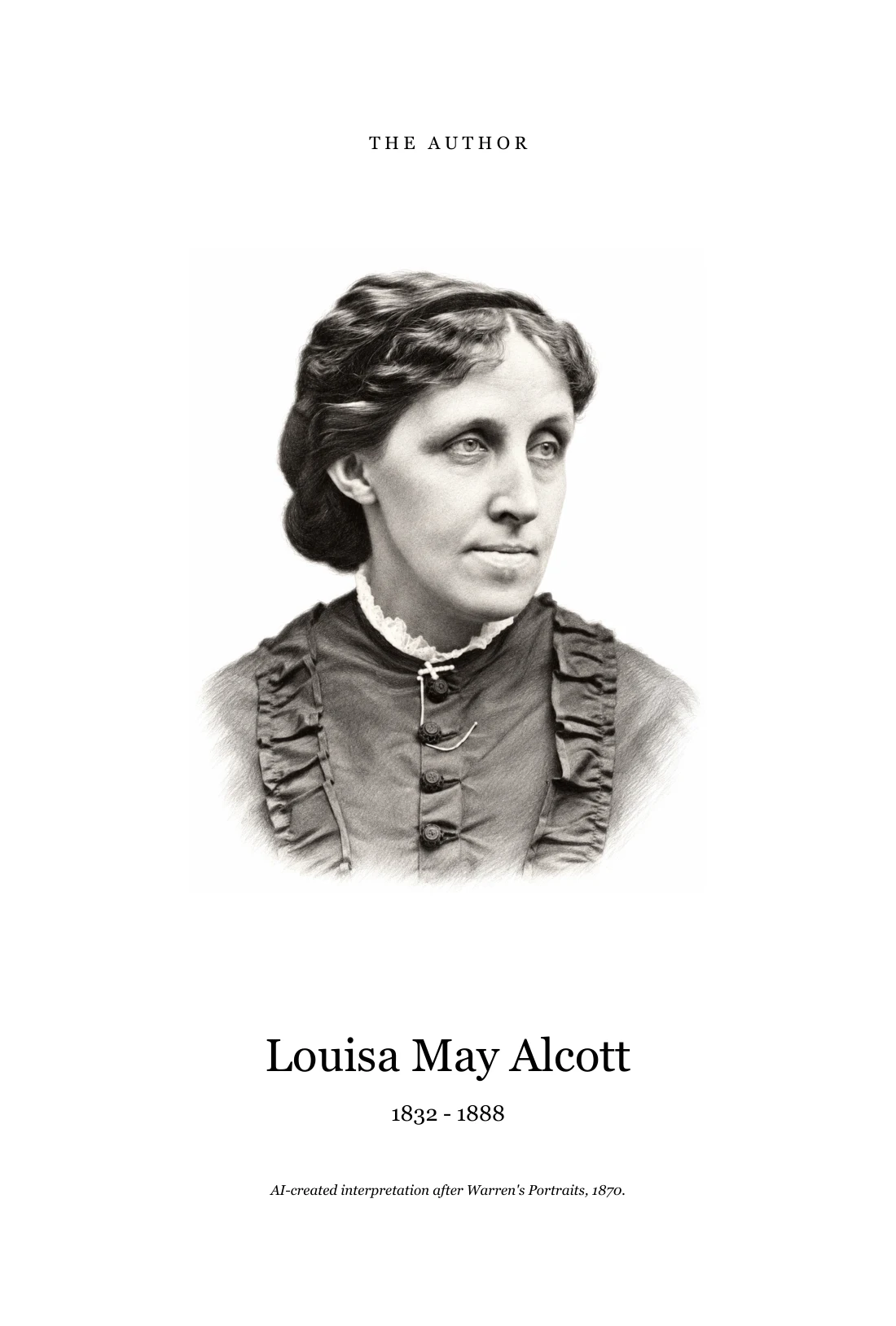
She did, and she was rather good at it. In the 1860s, years before Little Women made her famous, Louisa May Alcott wrote a stream of thrillers for American story papers: tales of manipulation, imprisonment, madness and revenge. Many appeared anonymously or under the name A. M. Barnard, and for the better part of a century almost nobody connected them with the chronicler of the March sisters.
They paid, and in a household that was chronically short of money, that mattered a great deal. Today the best of them are back in print, and they make a startling companion to the novel everyone knows. Start with Behind a Mask, her sharpest, then try the two darker tales collected in A Modern Mephistopheles, and A Whisper in the Dark.
What thrillers did Louisa May Alcott write?
Alcott’s sensation stories ran in weekly papers such as Frank Leslie’s Illustrated Newspaper and The Flag of Our Union, which sold excitement by the column. The titles give you the flavour: “Pauline’s Passion and Punishment”, “A Marble Woman”, “The Abbot’s Ghost”. Their heroines are clever, angry and short of options, and they get what they want by playing a part.
That theme of performance is the key to the best of them. Alcott knew all about acting a role: the dutiful daughter, the cheerful provider, the respectable New England author. In her thrillers, women who are expected to be quiet and grateful turn that expectation into a weapon, and the men around them rarely see it coming.
Behind a Mask; or, a Woman's Power
1866, as A. M. Barnard. A new governess arrives at an English country house and charms every member of the family. She is not what she seems, and the pleasure lies in watching her work.
A Modern Mephistopheles, and A Whisper in the Dark
Two tales, published together after Alcott’s death. A Whisper in the Dark (1863) puts a young heiress at the mercy of a scheming uncle; A Modern Mephistopheles (1877) reworks the Faust legend as a psychological drama.
The Mysterious Key and What It Opened
1867. A short Gothic tale of an English family, a dying man’s secret and the key that unlocks it. An hour’s read, and a good taster.


Why did Alcott use a pen name?
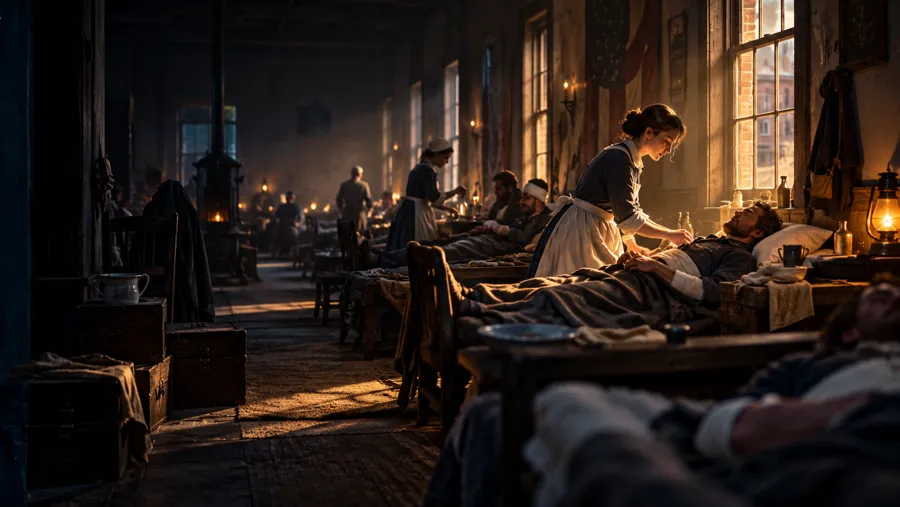
Partly respectability, partly business. Sensation stories were popular but looked down upon, and Alcott was also building a reputation with serious work: Hospital Sketches (1863), drawn from her weeks as a Civil War nurse, and her first adult novel, Moods (1864). A separate name kept the two careers apart. Story papers printed a great deal of unsigned fiction anyway, so few readers would have thought to ask.
The money was the point. Alcott was the most reliable earner in a family that often struggled, and the story papers paid promptly. The thrillers let her write quickly, wildly and for cash, while her own name was saved for the books she hoped would last.
Jo March’s secret stories
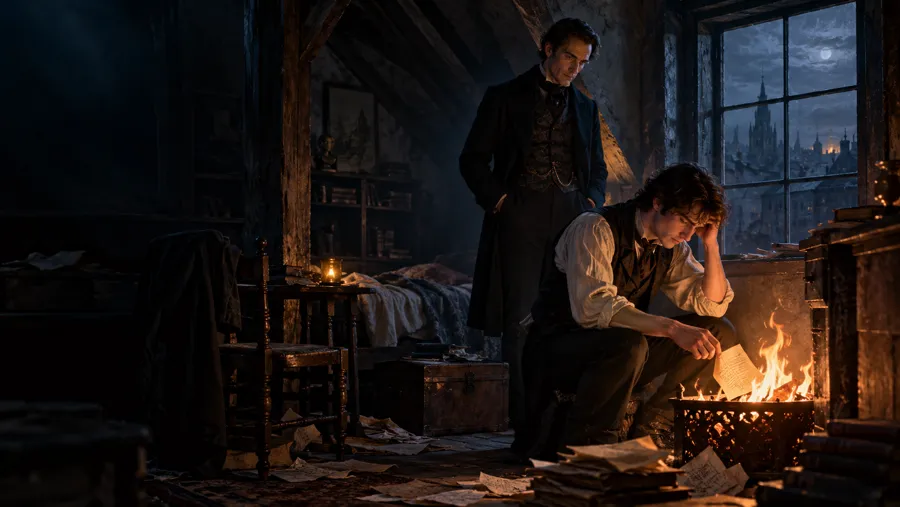
Readers of Little Women have met this side of Alcott without knowing it. In the second half of the novel, Jo writes sensational stories for a paper called the Weekly Volcano, earns good money doing it, and keeps it quiet. When Professor Bhaer speaks scornfully of such papers, she rereads her own work with fresh eyes and burns the lot.
It is tempting to read that scene as straight autobiography, and up to a point it is. But Alcott’s own thriller-writing faded for a simpler reason: Little Women (1868–69) made her famous and comfortable, and her publishers wanted more books for young readers. She was famously reluctant to write Little Women in the first place; read more in Did you know Louisa May Alcott didn’t want to write Little Women?
Where to start with Louisa May Alcott’s thrillers
Behind a Mask is the place to begin. It is short, fast and gleefully wicked, and its heroine, Jean Muir, is one of the great manipulators of nineteenth-century fiction. If you enjoy it, A Whisper in the Dark turns the screw further, and A Modern Mephistopheles, first published anonymously in a publisher’s series of unsigned novels, shows Alcott taking the sensational mode somewhere more serious.
Then go back to Little Women. Knowing what Jo was capable of, and what Louisa was, makes the March sisters’ attic theatricals, Jo’s homemade melodramas and her fierce wish to earn her own living read rather differently. For the rest of the family saga, see Did you know Little Women has two sequels?
Alcott was not the only famous author with a second identity. The Queen of Crime kept one too: see Did you know Agatha Christie also wrote romance novels under another name?
Begin with Behind a Mask on a dark evening. Jean Muir’s secret comes out early, and from then on you are her accomplice. You may never see Marmee’s cheerful daughters in quite the same light again.
Questions readers ask
Did Louisa May Alcott write under a pseudonym?
Yes. In the 1860s she published sensational stories under the name A. M. Barnard, and others appeared anonymously. The connection was only established in the 1940s.
What is Behind a Mask by Louisa May Alcott about?
It follows Jean Muir, a governess who wins over a wealthy English family while pursuing a hidden plan of her own. It was published in 1866 under the name A. M. Barnard.
Is Little Women based on Louisa May Alcott’s life?
Loosely. The March sisters draw on Alcott and her own sisters, and Jo’s sideline in sensational stories echoes Alcott’s own career as a thriller writer.
 Little Women526 pages · $23.99
 Little Men278 pages · $16.99
 Jo’s Boys258 pages · $15.99
 An Old-Fashioned Girl266 pages · $15.99